Supply of Medical Drugs, consumables and Equipment.

Doctors with Africa CUAMM, under the project titled “ Supporting faith-based health facilities at the frontlines in Tigray-ETI 78552” is pleased to inform you that your company has been invited to take part in the simplified procedure for the supply of Medical Drugs, Consumables and  Equipment.

01 Invitation form

02 Contract Notice

03 Instructions to Bidders

Annex I – Tender Form

Annex II & III – Technical Specifications- Mekelle and Shire

Annex IV – Financial offer

Annex V – Administrative Compliance Grid

Annex VI – Evaluation Grid

Annex VII – Contract Form

Annex VIII – Special Conditions

Annex IX – General Conditions

Annex X – Checklist

Invitation to tender for rehabilitation work of St.Louise Eye Clinic-Mekelle, Tigray Region, Ethiopia.

Doctors with Africa CUAMM, under the project titled “Improving equitable access to quality health services Tigray, Ethiopia ETI 78714 is pleased to inform you that your company has been invited to take part in a Simplified Procedure to carry out construction work for the rehabilitation of the essential buildings – civil works of St.Louis Eye Clinic, Mekelle, Tigray Region, Ethiopia.

01 Invitation form

02 Contract Notice

03 Instructions to Bidders

ANNEX I -Tender Form

ANNEX Ia – Declaration of Honour

ANNEX II – Legal Identity form

ANNEX III – Financial Capacity

ANNEX IV – Technical and professional capacity

ANNEX V – Financial Identification

ANNEX VI – Administrative Compliance Grid

ANNEX VII – Evaluation Grid

ANNEX VIII – Contract Form

ANNEX IX – Special Conditions for Works Contract 

ANNEX X – General Conditions

ANNEX XI – Technical Specifications

ANNEX XII – Financial Offer

ANNEX XIII – Checklist 

BOQ- St Louise – Eye Clinic_Mekelle REV with estimation

Invitation to tender for rehabilitation work of St.Mary HC-Edaga Hamus, Tigray Region, Ethiopia

Doctors with Africa CUAMM, under the project titled “Functional recovery of St.Mary’s Health Center, in Tigray ETI78552”, is pleased to inform you that your company has been invited to take part in a Simplified Procedure to carry out construction work for the rehabilitation of the essential buildings – civil works of St.Mary HC-Edaa Hamus Tigray Region, Ethiopia.

01 Invitation form

02 Contract Notice

03 Instructions to Bidders

ANNEX I -Tender Form

ANNEX Ia – Declaration of Honour

ANNEX II – Legal Identity form

ANNEX III – Financial Capacity

ANNEX IV – Technical and professional capacity

ANNEX V – Financial Identification

ANNEX VI – Administrative Compliance Grid

ANNEX VII – Evaluation Grid

ANNEX VIII – Contract Form

ANNEX IX – Special Conditions for Works Contract 

ANNEX X – General Conditions

ANNEX XI – Technical Specifications

ANNEX XII – Financial Offer

ANNEX XIII – Checklist  

BOQ- St Mary HC – Edaga Hamus REV with estimation

Invitation to tender for rehabilitation work of St.Mary HC-Edaga Hamus, Tigray Region, Ethiopia

Doctors with Africa CUAMM, under the project titled “Functional recovery of St.Mary’s Health Center, in Tigray ETI78552”, is pleased to inform you that your company has been invited to take part in a Simplified Procedure to carry out construction work for the rehabilitation of the essential buildings – civil works of St.Mary HC-Edaa Hamus Tigray Region, Ethiopia.

01 Invitation form

02 Contract Notice

03 Instructions to Bidders

ANNEX I -Tender Form

ANNEX Ia – Declaration of Honour

ANNEX II – Legal Identity form

ANNEX III – Financial Capacity

ANNEX IV – Technical and professional capacity

ANNEX V – Financial Identification

ANNEX VI – Administrative Compliance Grid

ANNEX VII – Evaluation Grid

ANNEX VIII – Contract Form

ANNEX IX – Special Conditions for Works Contract 

ANNEX X – General Conditions

ANNEX XI – Technical Specifications

ANNEX XII – Financial Offer

ANNEX XIII – Checklist  

BOQ- St Mary HC – Edaga Hamus REV with estimation

Mozambique Catastrophic Flooding Impacts Thousands of People

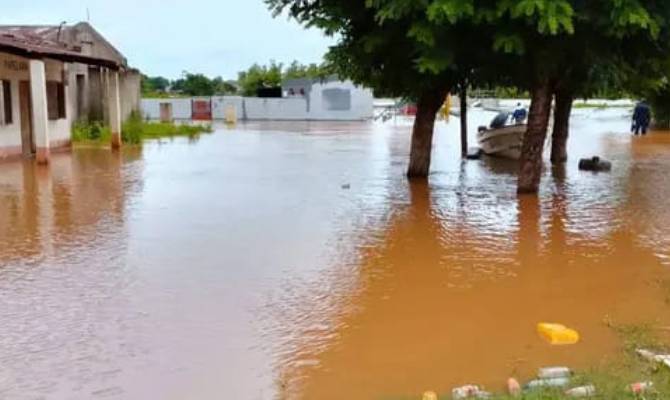
The situation is catastrophic in Mozambique where days of relentless rainfall and the overflow of major river basins have put the life of thousands at risk. Gaza, Maputo and Sofala are the hardest-hit areas: according to official estimates, nearly 600,000 people have been affected by the recent deadly floods.

The impact on housing and the economy is devastating.

Nationwide, an estimated 74,000 homes have been flooded and more than 1,600 destroyed, including 200 in Maputo Province, particularly in the districts of Moamba and Sabie. This is the area where health centres supported through INCLUDE Project are located and where CUAMM teams operate daily.
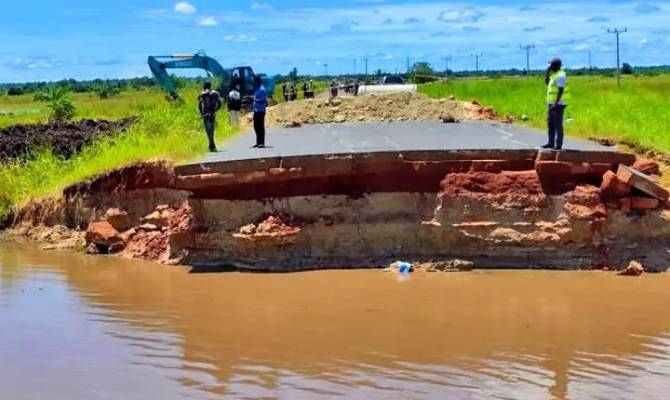
In the Incomáti Valley, over 10,000 hectares of farmland have been lost, wiping out maize and vegetable crops in just a few hours—crops on which the livelihoods of thousands of families depend.

The Mozambican government has declared a national red alert and has requested support from the international community for rescue and relief operations.

The floods of 17 January, driven by persistent rainfall and the overflow of the Corumana dam, severely affected the administrative posts of Moamba Sede, Sabie and Ressano Garcia. Around 200 homes were damaged and 900 people displaced, many of whom have found shelter in temporary resettlement centres.

Serious concern also surrounds the Buzi District in Sofala, where some of our staff are based. There, heavy rains began as early as the first week of January.

“The situation is very serious,” says Estevão Ilidio Bochana – CUAMM Data collector in Sofala Province. “The river has swept away the bridge, and access to the district hospital has been compromised. People are forced to use boats to cross the river. Some of our activists have also been affected and had to move to emergency shelters because their homes are flooded.”

In Moamba Sede, the locally established resettlement centre is hosting 40 families, for a total of 182 people, mostly women and children. In Sabie, the situation remains particularly fragile: 95 families (495 people) have found shelter in the Samora Machel primary school, while another 35 families (167 people) are being hosted in the secondary school. The neighbourhoods of Incomate, Chiquizela, Matadouro and Magawane are among the most severely affected.
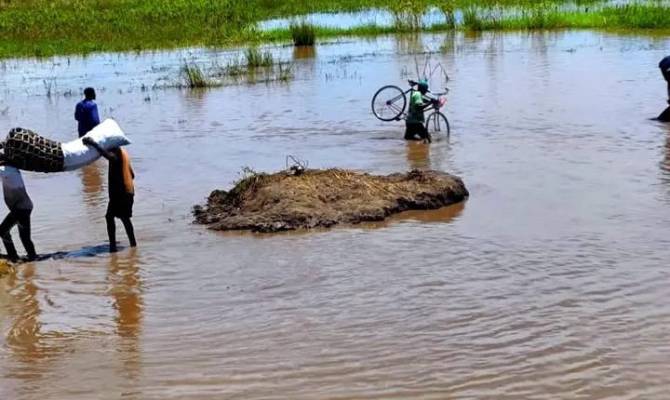
“We are coordinating with the Mozambican Emergency Operations Centre and the Ministry of Health to provide initial assistance to affected communities,” explains Giorgia Gelfi, CUAMM Country Manager in Mozambique. “At this stage, it is crucial to reduce the risk of epidemics—particularly cholera—and to be prepared to manage a surge in malaria cases, especially among the most vulnerable groups, women and children.”

Some families are attempting to return to their homes despite the damage, for fear of looting. Meanwhile, district authorities are carrying out assessments to evaluate the impact of the floods on public and private infrastructure, including essential services. Health centres remain a vital lifeline in an emergency that is not yet over and continues to put the lives and hopes of thousands of people at risk.

The crisis is immense, and the response is stretched beyond capacity. Additional resources are urgently needed.
 

Kyiv Enduring the Cold of War

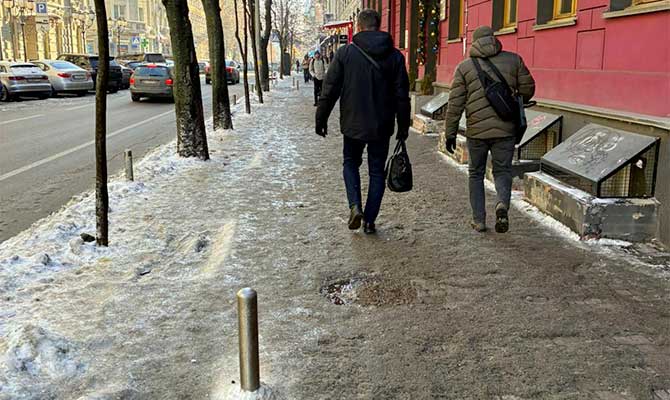
“Yesterday the temperature was -14°C during the day, and at night it dropped to -20°C. We are without lighting, without power, without heating, and those living in taller buildings—from the second floor upwards—are also without water. The cold penetrates you and gives no respite. The bombardments continue, increasingly intense; since 6–7 January, military actions on Kyiv have escalated targeting mainly energy facilities. The intention is to strike people—the entire civilian population—without distinction. The outskirts are in worse conditions than the city centre, because that is where the taller, newly built apartment blocks are. At present, there are areas of the city that have been without electricity, heating and water for as many as three days.

CUAMM field workers in Ukraine are working tirelessly to maintain emergency response operations. They describe the harsh realities faced by the population and the immense challenges of delivering humanitarian assistance in a war-torn country.

“Work resumed after the Orthodox holiday break but unfortunately CUAMM Office is unusable due to the lack of heating and electricity. However, the staff continue working from home, often gathering in the warmest house. At present, CUAMM is engaged in purely emergency assistance, distributing medicines and supplies to the four hospitals located along the front line. In the coming days we should also be provided with the CUAMM vehicle for travel. In addition, we are working with a local NGO to provide psychological support to the communities of Kharkiv and Sumy.”

“In Kyiv the situation is very strange. People try, as best they can, to carry on with their lives and their daily routines. They work, move around, go to the gym or do their grocery shopping (also because having more powerful generators shops offer a bit of warmth). But everything feels suspended. It can happen that, because of a bombardment, for example, the water is cut off while you are in the shower, suddenly”

“In my life, I also witnessed the war in Sarajevo, where there was a clear sense of a city under siege. In Ukraine, instead, you never know what might happen, or when.” said CUAMM Public Health expert in Ukraine then he adds: “For us, who came to Kyiv by choice to help these people, operating is becoming increasingly difficult with each passing day. But I think of the sick, the elderly, and people with disabilities who find themselves without heating or electricity. Until around 4:30 p.m. there is some daylight, and then darkness until the following morning. For them it is even harder. If you are lucky, around 10 p.m. a bit of electricity may return, but only for a very short time. The Mayor of Kyiv has advised families who have the possibility to move towards the west of the country, where there are still difficulties, but to a lesser extent.”

In about a month, on 24 February, it will be four years since the outbreak of the war in Ukraine. For the fourth consecutive winter, the Ukrainian people are facing an exhausting conflict that shows no sign of ending.

“People are tired. There is discouragement and bitterness. They have become accustomed to the constant clashes and to the many words and promises of those who hold the fate of this war in their hands, but they fear that if they give up or give in, the situation will be even worse for them.”

CUAMM has been operating in Ukraine since the outbreak of the war, implementing a wide range of interventions to support primary, secondary, and tertiary health facilities in the areas most affected by the conflict. These activities include the procurement and distribution of medicines, specialised traumatology and orthopaedic kits, obstetric supplies, and other essential medical materials.

In parallel, CUAMM provides multisectoral assistance to people affected by the emergency, with particular focus on the most vulnerable groups, including people with disabilities, women, and children. The current activities are being carried out in collaboration with CESVI under the SHIELD: Strengthening Health and Protection for Vulnerable Communities in Conflict-Affected Sumska and Kharkivska project, funded by the Italian Cooperation.

Learning to Nourish

Pili Mtundu ha dodici figli. Vive con il marito ei figli nel villaggio di Mlodaa, nel distretto di Chamwino, in Tanzania. Una semplice casa di due stanze ospita l’intera famiglia. La vita quotidiana ruota attorno all’agricoltura, che fornisce il sostentamento primario della famiglia. Entrambi i genitori si prendono cura dei figli con dedizione e possono contare sul sostegno della comunità e dei leader locali.

Tuttavia, qualcosa è cambiato con la nascita dei membri più piccoli della famiglia: tre gemelli. Bahati, Shukrani e Baraka sono nati a 36 settimane di gestazione con pesi alla nascita molto bassi: 1,5 kg, 1,5 kg e 2 kg. Pili li ha allattati al seno e ha gradualmente introdotto un’alimentazione complementare, composta principalmente da porridge di cereali. Ma a 15 mesi, le condizioni dei tre piccoli sono peggiorate rapidamente. Ricoverati all’ospedale distrettuale di Chamwino, il personale sanitario ha diagnosticato loro una malnutrizione acuta grave , accompagnata da diarrea e vomito. Per 14 giorni, i tre gemelli sono stati curati presso il Centro di trattamento intensivo (ITC).

La causa di questa situazione non era la mancanza di cibo. Infatti, le forme acute di malnutrizione non sono sempre legate alla povertà estrema, ma spesso alla scarsa consapevolezza di quali nutrienti siano fondamentali per una crescita sana nei primi anni di vita. Nel caso della famiglia Mtundu, la dieta quotidiana si basava quasi esclusivamente su ciò che veniva prodotto nei campi: cereali e frutta secca, con pochissima diversità alimentare.

Per Bahati, Shukrani e Baraka, il percorso di recupero non si è fermato alla fase più critica. Dopo essere stati dimessi dall’ITC, i bambini hanno continuato il trattamento ambulatoriale con controlli settimanali. Nel frattempo, ha preso forma un’iniziativa altrettanto decisiva: l’educazione alimentare per la famiglia. Attraverso visite domiciliari e un dialogo costante con il personale sanitario, Pili e suo marito hanno ricevuto indicazioni sull’alimentazione infantile, l’igiene, l’uso dell’acqua e la prevenzione delle infezioni. Non si trattava solo di cosa mangiare, ma di come e quando farlo, soprattutto durante i primi anni cruciali. Questa iniziativa è stata resa possibile dal progetto “Diverse Food System: Migliorare la nutrizione sostenendo un sistema alimentare diversificato e sostenibile”, sostenuto dall’Agenzia Italiana per la Cooperazione allo Sviluppo (AICS) e dalla Fondazione Zanetti .

Grazie alla continuità delle cure e al cambiamento delle abitudini quotidiane, Bahati, Shukrani e Baraka sono guariti e ora possono crescere sani con le loro famiglie. La loro storia evidenzia la centralità della prevenzione e dell’educazione alimentare come parte integrante della salute infantile.

Marburg Our Emergency Response in Ethiopia

A Marburg outbreak has recently been confirmed by the Ethiopian Ministry of Health in the South Omo region.
The first case dates back to 14 November and was later confirmed by the Ministry on 22 December, when the outbreak was officially declared.

By readjusting project priorities, Doctors with Africa CUAMM intervened from the very beginning to respond to this emergency in a timely and effective manner. In the districts of Hamer— the epicentre of the outbreak— and Dasenech, we provided emergency support to Turmi Primary Hospital and seven affiliated health centres, focusing on five key areas: surveillance; triage and screening; infection prevention and control; staff training; and Risk Communication and Community Engagement (RCCE) activities.

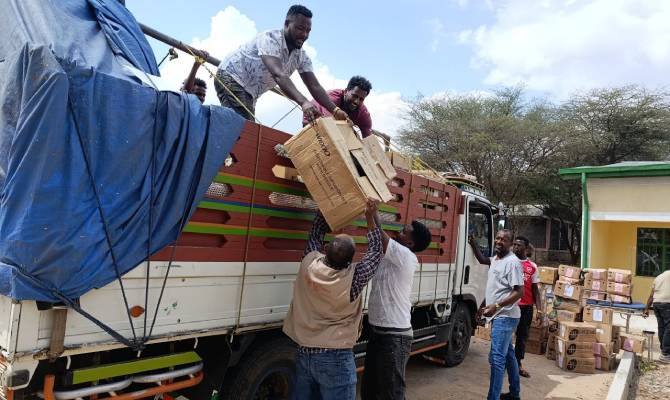
Essential medicines, medical supplies and personal protective equipment were provided to facilities under strain, with the aim of improving preparedness, strengthening emergency response capacity, protecting healthcare workers and ensuring the continuity of essential health services.

Among the donated materials were: antibiotics and antimicrobials for the treatment of infections and the prevention of complications; emergency and life-stabilising medicines for acute cases; analgesics and drugs for symptomatic treatment; as well as significant quantities of intravenous fluids and rehydration supplies.

To reduce the risk of transmission, infection prevention and control materials such as gloves, eye protection, disinfectants and denatured alcohol were distributed. Surgical and consumable supplies supported the safety of clinical procedures, maternal health services and emergency interventions. Diagnostic materials, including pregnancy tests and Hepatitis C tests, ensured the continuity of essential diagnostic services.

Marburg is a severe viral disease caused by the Marburg marburgvirus (MARV), which belongs to the same family as the Ebola virus. With a case fatality rate of around 50%, this haemorrhagic fever can be transmitted through direct contact with the blood or other bodily fluids of an infected person, or through indirect contact with contaminated surfaces or objects. Prevention and control measures are therefore crucial to containing the outbreak.

The Marburg outbreak response in South Omo was made possible thanks to the support of the Italian Cooperation and funding amounting to 2.4 million birr allocated under the IMPACT project.

Building new opportunities of care

A major initiative is taking shape in Abidjan, involving us as partners alongside the University of Padua in the renovation and extension of the Abobo Hospital and in strengthening two affiliated health facilities: Abobo Avocatier and Abobo Baoulé.

In May, we launched this major initiative with an official ceremony held in Abidjan. Now, several months later, the commitment is becoming tangible. Construction is progressing at a rapid pace, even during the holiday season, in order to return to the population as soon as possible new, more functional spaces and new opportunities for care. This starts with expanding patient capacity, strengthening maternity and neonatology units, and introducing support services such as a blood bank and an oxygen center.

On Monday, December 22, we visited Abobo to see firsthand the progress of the construction site which involve the rehabilitation of existing spaces, the reorganization of services, and a major expansion of maternal and child health services. Specifically, the unit dedicated to gynecology-obstetrics and neonatology will cover 2,250 sqm, compared to the 770 sqm currently available; the number of gynecology-obstetrics inpatient beds will increase from 28 to 56, and the number of neonatology inpatient beds from 12 to 32.

The visit, conducted inside the large construction site, was attended by  Roberta Ronzitti, Italian Vice-Ambassador to Ivory Coast; Alessandro Rabbiosi, Representative of the Italian Agency for Development Cooperation in Abidjan (AICS); project partners from the University of Padua, represented by Professor Liviana Da Dalt; as well as representatives of Ivorian institutions, including Yeo Pena, Director of DIEMP (Direction Infrastructures Equipment Manutention et Patrimonie) and Representative of the Cabinet of the Ministry of Health; Dr. Kassi Georges, Regional Health Director of Abidjan 1; Dr. Kanga Charles, Director of the Abobo Est Health District; and representatives of the hospital itself: Dr. Nathalie Tan Fondio, Hospital Director, and Dr. Kouadio Kouadio Marcellin, Medical Director.

“Two words capture the spirit of this project: thank you, mothers and children.

Thank you first—because without Italy’s concrete and long-term support to strengthen Côte d’Ivoire’s health system, we would not be here today. Special thanks also go to the Ministry of Health for its constant commitment to the people of Abobo and for its trust in this partnership. Mothers and children are at the heart of this project. The high number of women and children we saw here reflects both the scale of the needs and the central role of Abobo Hospital in maternal and child health. Infrastructure matters, but so does training local health staff. In this regard, the partnership between CUAMM and the University of Padua is key. Together, we will continue to strengthen local capacities to ensure lasting, high-quality care for mothers and children.” said father Dante Carraro – CUAMM Director General.

“Maternal and child health is a top priority for the Ivorian government. National programs have been launched to expand quality care, including free targeted services and strong investments in training nurses, midwives, and doctors through institutional partnerships. Reducing maternal and child mortality is essential for Ivory Coast’s ambition to become a health hub in West Africa. This project fully supports that goal, and we are grateful for it. Training, in partnership with the University of Padua, is especially important: infrastructure matters, but well-trained health workers make the difference. We thank CUAMM, the University of Padua, and the Italian State for their commitment to mothers and children in Abobo.” affirmed Mr. Yeo Pena.

“The needs of the Abobo district were identified in 2024, and by the end of 2025 we are already working on the ground. This was made possible thanks to the strong commitment of a high-level Italian and Ivorian team. While challenges remain, particularly in space planning and facility organization, the progress achieved is very encouraging. In just a year and a half, we have reached a strong level of implementation.” concluded Roberta Ronzetti – Italian Vice-Ambassador to Ivory Coast.

Abobo Est is a rapidly expanding urban area. As the vibrant heart of the autonomous district of Abidjan, this neighborhood is home to approximately 750,000 people. In Abobo Hospital alone, 8,000 births were recorded in 2024. This average is expected to rise, making the strengthening of services essential. Hence the decision to intervene by working alongside government health authorities through a key health initiative implemented under the Mattei Plan, with financial support from the Ministry of Foreign Affairs and International Cooperation through the Italian Agency for Development Cooperation.