Thank You Pope Francis

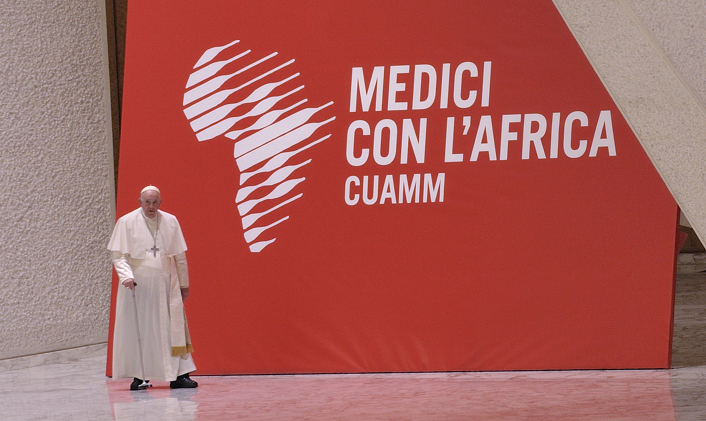
«Pope Francis has left us, and the emptiness and sorrow are deep. Until the very end – even as recently as yesterday – he continued to be present. With his people. With his Urbi et Orbi blessing, he wanted to give one final sign of love for our world, so torn apart by wars and yet so beloved and dear to him. We feel an emptiness because we feel we have lost a father – a gentle and firm guide, clear-minded and courageous, a protective presence who walked with us on our journey. A gift. A gift who, until the end, chose to stand with the poor – near and far – and with Africa in particular. He visited some of its most fragile countries, such as the Democratic Republic of Congo, the Central African Republic, and South Sudan. He chose to be with them, with these people. And we felt him close. He was a great help, a great source of hope for all of us at CUAMM Doctors with Africa. He loved that continent – so rich, so beautiful, so full of potential. And he loved it also because it is a continent full of colour, hardship, and humiliation. In today’s world – a world where arrogance, abuse of power, selfish interests, and the humiliation of the poor seem to prevail – Pope Francis never stopped living out solidarity, closeness, and the defense and respect of the most vulnerable. A great gift. That is why our gratitude is so strong. Gratitude to the Good Father who gave him to us. He gave him to a Church that is bruised and weary, yet radiant in its bold declaration that the kingdom we want to build is one of brotherhood and solidarity. He was a simple man for simple people – a man who opposed all injustice and inequality until the very end. With his life, he proclaimed the Gospel of liberation, of dignity, and of hope for every creature, especially the most fragile. Thank you, Pope Francis».

Don Dante Carraro, Director of CUAMM Doctors with Africa

Making the difference in research and field work

Building lasting change from the ground up. One step at a time by working every day alongside the people most in need, without ever losing sight of the importance of dialogue with institutions. This is what Jerry Ictho, doctor and technical advisor at CUAMM Uganda, has learned to do over nearly ten years of collaboration with the Organization.

This year, in April, Jerry came to Italy as lecturer at the training course Implementation Research: three days dedicated to deepening the themes of operational research in the Global South. That’s Jerry’s expertise and his main job at CUAMM. Before joining Doctors with Africa CUAMM, he spent six years working in the national health system, deployed in the rural district of Zombo, in West Nile. Then he met CUAMM and that was an encounter which he describes as a calling: “It’s a mission that deeply touched my heart.”
The opportunity to combine clinical practice, research, and prevention into one strategy for building change convinced him to join the team.

“Our work is always moved by evidence, context analysis, and research,” he explains. “It is an integrated and differentiated approach that allows us to connect the dots and achieve quality results, even where others might get stuck. For us,” he adds, “this is the key tool to bring about structural improvement. It allows us to merge consistent and effective fieldwork with scientific research, in ongoing collaboration with universities. That’s what makes the difference.”

Not only with universities: working side by side with the local health system is also essential to improve the quality of the work being done.

“We’re not here just to provide treatment, but to build something that will last.” Working in remote areas is an essential part of this vision. Yet doctors often prefer to stay in cities, where the standard of living is higher. But with CUAMM, you’re encouraged to get to the hardest-to-reach areas. We work from the ground up: we want to be where the need is greatest.”

A choice that entails complex challenges. Among them, the recent Mpox outbreak, and malaria, which remains widespread. Also, increased rates of malnutrition resulting from the climate crisis, which brings alternating periods of extreme drought and severe flooding — threating agriculture.

And while prevention is key to success in healthcare, putting it into practice ain’t always easy. In refugee camps for example ensuring preventing measure to tackle epidemic outbreak remains a challenge and Uganda is currently the country hosting the largest refugee population in Africa and the 6th largest in the world.

 “The doors of our country are open to those in need: in recent times we’ve welcomed many South Sudanese, Congolese… but their living conditions are dare and funds are too often unsufficient”.

The situation has recently been compounded by the aid cut of USAID, which severely affected humanitarian projects in Uganda.

“We had to stop activities, let people go, suspend programs. It was a shock. Politically, the issue is more complex — some believe that this new situation may push the system to reorganize, to make better use of available resources and reduce corruption. But we were absolutely not prepared to do that. The Minister of Health presented the revised budget in light of these cuts, and the numbers are staggering. The impact has been, and continues to be, devastating.”

Despite the difficulties, Jerry doesn’t lose hope.

“With CUAMM, we walk together and find solutions together. In times of difficulty, I remind myself: if you have the chance to make a difference for your country, why wouldn’t you?”

Supplier pre-qualification for the provision of Land Freight Transport service

Supplier pre-qualification to participate in procurement procedures for the provision of  Land Freight Transport  service.

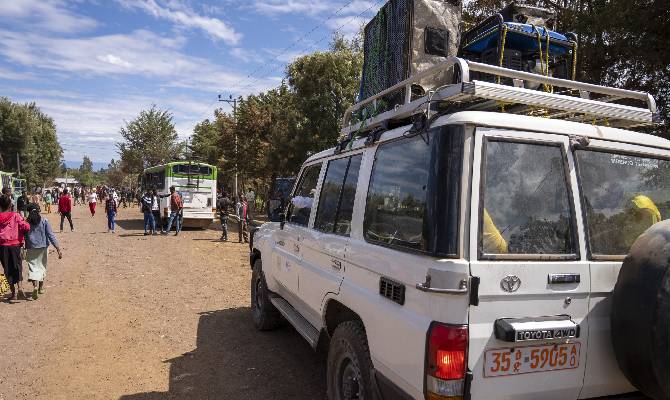
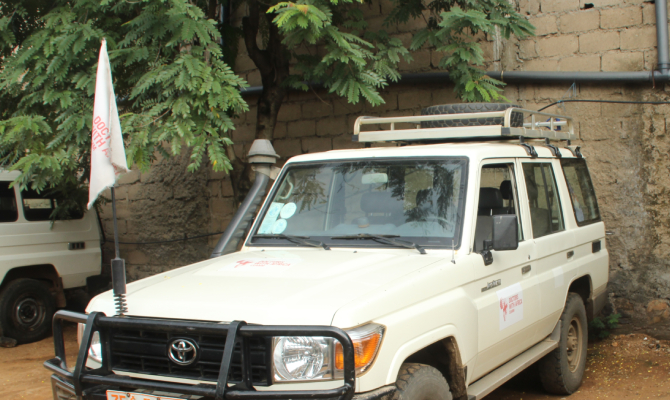
The NGO Doctors with Africa CUAMM, under the implementation of its projects in different Ethiopian Regions, is launching this Local Open Procedure for pre-qualification to participate in procurement procedures for the  provision of Land Freight Transport  service.

01 Invitation form

02 Contract Notice

03 Instructions to Bidders

ANNEX I – Tender Form

ANNEX Ia – Declaration of Honour

Annex II & III – Technical Specifications technical offer

ANNEX IV – Legal Identity form

ANNEX V – Financial Identification

ANNEX VI – Financial offer

ANNEX VII – Administrative Compliance Grid

ANNEX VIII – Evaluation Grid

Annex IX – Contract Form

Annex X – Special Conditions

Annex XI – General Conditions for Service Contracts

Annex XII – List of documents to be submitted


Supplier pre-qualification for the provision of vehicle rental service

Supplier pre-qualification to participate in procurement procedures for the provision of vehicle rental service.

The NGO Doctors with Africa CUAMM, under the implementation of its projects in different Ethiopian Regions, is launching this Local Open Procedure for pre-qualification to participate in procurement procedures for the provision of vehicle rental service.

01 Invitation form

02 Contract Notice

03 Instructions to Bidders

ANNEX I – Tender Form

ANNEX Ia – Declaration of Honour

Annex II & III – Technical Specifications technical offer

ANNEX IV – Legal Identity form

Annex IX – Contract Form

ANNEX V – Financial Identification

ANNEX VI – Financial offer

ANNEX VII – Administrative Compliance Grid

ANNEX VIII – Evaluation Grid

Annex X – Special Conditions

Annex XI – General Conditions for Service Contracts

Annex XII – List of documents to be submitted

Supplier pre-qualification for the provision of vehicle rental service

Supplier pre-qualification to participate in procurement procedures for the provision of vehicle rental service.

The NGO Doctors with Africa CUAMM, under the implementation of its projects in different Ethiopian Regions, is launching this Local Open Procedure for pre-qualification to participate in procurement procedures for the provision of vehicle rental service.

01 Invitation form

02 Contract Notice

03 Instructions to Bidders

ANNEX I – Tender Form

ANNEX Ia – Declaration of Honour

Annex II & III – Technical Specifications technical offer

ANNEX IV – Legal Identity form

Annex IX – Contract Form

ANNEX V – Financial Identification

ANNEX VI – Financial offer

ANNEX VII – Administrative Compliance Grid

ANNEX VIII – Evaluation Grid

Annex X – Special Conditions

Annex XI – General Conditions for Service Contracts

Annex XII – List of documents to be submitted

Supplier pre-qualification for the Supply of Printers and Computers

Supplier pre-qualification to participate in procurement procedures for the Supply of Printers and Computers.

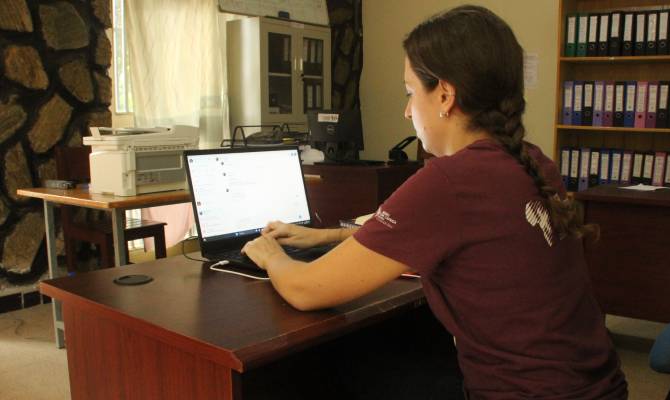
The NGO Doctors with Africa CUAMM, under the implementation of its projects in different Ethiopian Regions, is launching this Local Open Procedure for pre-qualification to participate in procurement procedures, to supply   Printers and Computers.

01 Invitation form

02 Contract Notice

03 Instructions to Bidders

ANNEX I – Tender Form

ANNEX Ia – Declaration of Honour

Annex II & III – Technical Specifications technical offer

ANNEX IV – Legal Identity form

ANNEX V – Financial Identification

ANNEX VI – Financial offer

ANNEX VII – Administrative Compliance Grid

ANNEX VIII – Evaluation Grid

Annex IX – Contract Form

Annex X – Special Conditions

Annex XI – General Conditions for Service Contracts

Annex XII – List of documents to be submitted

Pre-qualification Supply of Human medical drugs, consumables, and equipment

Supplier pre-qualification to participate in procurement procedures for the Supply of Human medical drugs, consumables, and equipment.

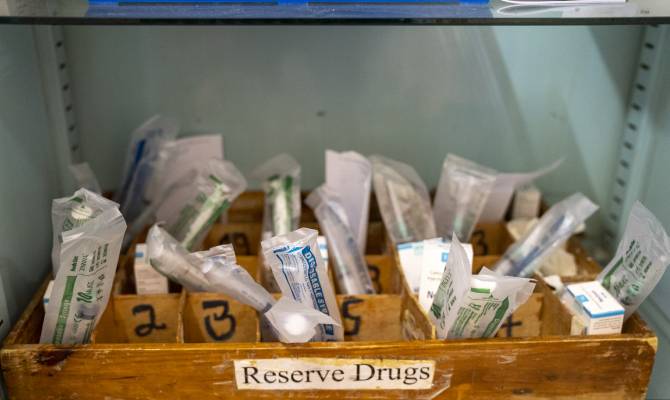
The NGO Doctors with Africa CUAMM, under the implementation of its projects in different Ethiopian Regions, is launching this Local Open Procedure for pre-qualification to participate in procurement procedures for the supply of human medical drugs, consumables, and equipment.

01 Invitation form

02 Contract Notice

03 Instructions to Bidders

ANNEX I – Tender Form

ANNEX Ia – Declaration of Honour

Annex II & III – Technical Specifications technical offer

ANNEX IV – Legal Identity form

ANNEX V – Financial Identification

ANNEX VI – Financial offer

ANNEX VII – Administrative Compliance Grid

ANNEX VIII – Evaluation Grid

Annex IX – Contract Form

Annex X – Special Conditions

Annex XI – General Conditions for Service Contracts

Annex XII – List of documents to be submitted

A classroom to disrupt HIV stigma

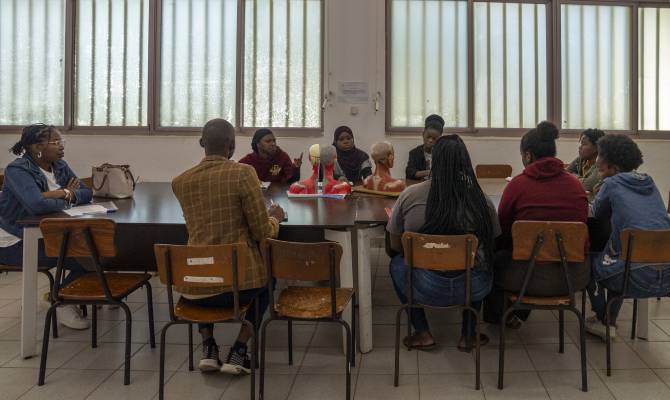
“Studying medicine is a social responsibility to these students. In that sense, The Catholic University of Mozambique – UCM supports them throughout their academic career both professionally and personally. One day, they won’t just be the health professionals of Mozambique but also responsible citizens, active members of their community.”

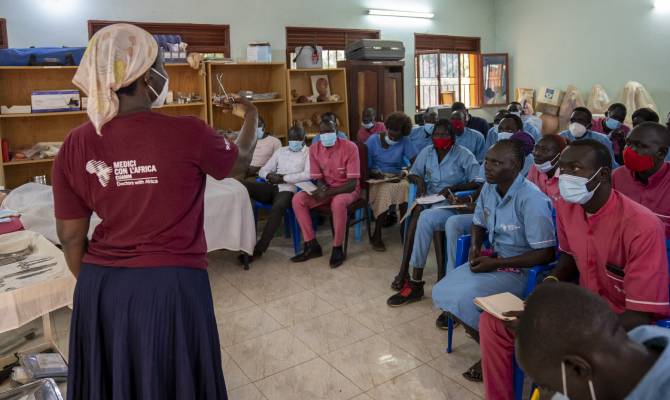
Francesco Segala – infectious disease specialist, arrived in Beira in November. He serves as coordinator for relations between CUAMM and UCM. In recent months, upon request from UCM’s pedagogical board, Francesco took charge of the infectious diseases module, working in the classroom with third-year students and supporting them as a tutor.

It was an opportunity to understand how the educational structure functions, how practical activities are defined, but above all, to build relationships with the students.

“As tutors and professors, we have a duty to nurture in them a sense of responsibility that will be essential in their medical profession,” says Francesco. “It’s truly a joy when you realize you’ve succeeded.”

Francesco truly did succeed, in his own way. He realized this a few weeks ago when he engaged his class in a focus group on the issue of HIV-related stigma.

“It’s extremely important to talk about it, because stigma ends up compromising the social aspects of everyone’s life, with serious consequences for the mental health of those living with the virus,” explains Francesco. He continues: “I started by sharing my own experience, and admitting that, without really realizing it, I too was influenced by stigma for a long time. It’s a fact that an HIV test is scarier than a complete blood count (CBC) which is considered “just a blood test” — but why?”

Mozambique is one of the countries with the highest number of people living with HIV. According to UNAIDS data (2025), there are about 2.4 million people, of which 2 million are on antiretroviral therapy.

“Knowing your HIV status is essential in order to live with the virus and prevent transmission. Moreover, antiretroviral therapy is simple: you just have to take one pill a day. That’s enough to reduce the viral load to zero, with adherence to treatment over time.”

And yet, the fear of the virus is real, especially among young people. Francesco tackled it in a university classroom, creating a safe space for his students.

“The class already knew about HIV from a clinical standpoint — they had studied it in lectures,” Francesco explains. “They didn’t need me to tell them how the virus is transmitted or how the therapy works. What I hoped to do — and what we managed to achieve together — was to create a open debate like a confession. In that way, we were able to see that the stigma was right there, among us.  Despite it being difficult, we now know that overcoming the taboo and disrupting the stigma is possible through awareness”.

Maternal and newborn health on air

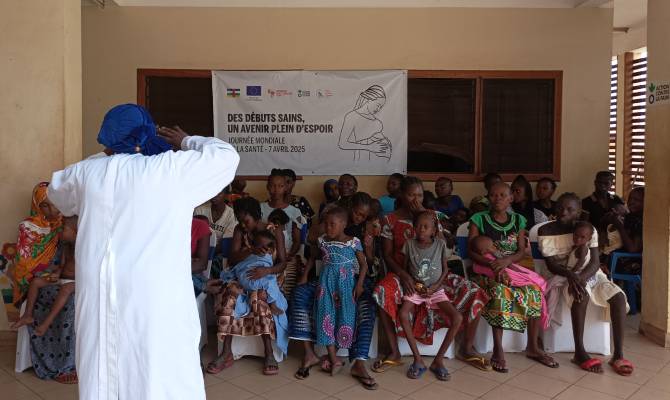
Two female voices in dialogue featured in a radio spot about maternal health – this is the initiative promoted by Doctors with Africa CUAMM in collaboration with Action Against Hunger in the Central African capital on the occasion of World Health Day.

A simple yet effective way to deliver an important message to every mother everywhere: Prenatal visits are essential to ensure the well-being of both the mother and the future baby! As one of the voices in the spot says, speaking to a young expectant mother, reminding her of the importance of prenatal visits and access to a safe, assisted delivery in a proper healthcare facility.

With this message, we wanted to celebrate World Health Day, which this year the World Health Organization (WHO) dedicated to maternal and child health under the theme “A healthy start, a future full of hope.” The spot was broadcast in French and Sango, the local language spoken by most of the population, especially in the suburban areas.

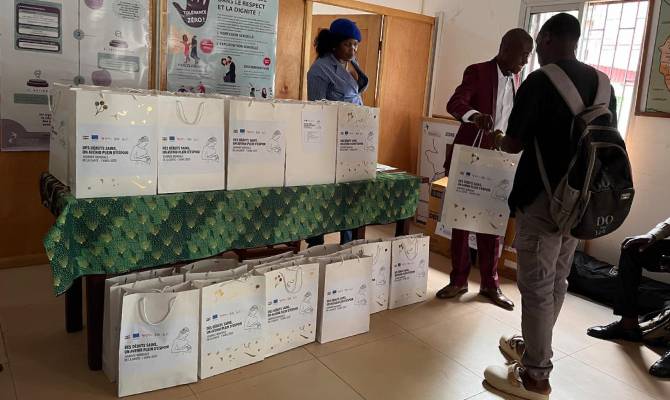
Through the collaboration with the local broadcaster Radio Ndeke Luka, the information activities continued in the following days with the airing of a prize-based quiz. The “Mandako” quiz, broadcast daily from April 7 to 11, asked listeners a series of questions on topics such as pregnancy, childbirth, weaning, and newborn health. The 40 participants took part in the radio game and then received a kit as a prize, which included essential personal hygiene and baby care items.

One of the quiz participants picks up the prize kit.

As part of the celebration, discussion groups were organized at the Bangui Pediatric Hospital (CHUPB). Activists, representatives from the hygiene office, and the person responsible for information, education, and communication activities delivered key messages with the support of a facilitator from Action Against Hunger.

The initiative is part of a project carried out by Doctors with Africa CUAMM and the NGO Action Against Hunger, with financial support from the European Union.

Powering Progress: the energy-food-health nexus for sustainable development

Today, hosted at Palazzo Borromeo in Rome, we met with partners, institutions, civil society representatives and the private sector, as well as religious organizations, on the occasion of “Powering Progress: the energy-food-health nexus for sustainable development”.

The event gave us the opportunity to delve into the connection between sustainable energy, nutrition, and health, with particular attention to the most fragile contexts—those where Doctors with Africa CUAMM works every day.

The Italian Ambassador to the Holy See, Francesco di Nitto opened the meeting welcoming both speakers and guests to then leave the floor to the opening remarks by father Dante Carraro – CUAMM Director General; Carlos Alberto Saraiva de Cravalho Fonseca – Ambassador of Angola to the Holy See; Mons. Fortunatus Nwachukwu – Secretary at Dicastery for Evangelization and Alessandra Fidanza – Ministry of Environment and Energy Security.

An introduction that provided participants with a comprehensive overview on the topic spanning from the needs of underserved communities to the importance of bilateral collaboration for mutual development to the ongoing programs promoted by the Italian government.

“I wish to express my gratitude to organizations like CUAMM for the support provided to those most in need—people who suffer due to conflicts, poverty, and human-made hardships. What you do is in perfect harmony with the call of our Holy Father to preserve and protect our common home—the world—for the good of all. Through this, we are also promoting integral human development.” Fortunatus Nwachukwu – Secretary at Dicastery for Evangelization.

“With regards to bilateral cooperation and international cooperation in sub-Saharan Africa, the Ministry of Environment and Energy Security is engaged in the application of the Mattei Plan specifically in the implementation of selected projects on energy and climate that could benefit African countries while also pursuing the implementation of 2030 Agenda” Alessandra Fidanza – Ministry of Environment and Energy Security.

Alessandra Fidanza - Ministry of Environment and Energy Security.

“With the implementation of this project dedicated to facilitating access to clean energy for people in rural areas, we have the opportunity to also promote health practices, which are at the core of our mission. We are doing this by adopting a new approach that also takes into account other health-related aspects, which are equally important for achieving sustainable development.” Father Dante Carraro – CUAMM Director General.

Also a contribution to the event was offered by Domenico Giani, President of Eni Foundation who greeted the participants with a brief speech.

“We must commit ourselves to building a sustainable model—one that, to truly be sustainable, must be able to hold together social justice, respect for creation, and human dignity. As President of the Eni Foundation and of the Confederation of the Misericordia of Italy, I experience every day the dedication of different realities united by a shared sense of responsibility—an effort that is expressed through concrete closeness to people, the nurturing of relationships, and the patient construction of paths of cooperation. In these complex times, it is essential to listen, to build networks, and to create bridges in order to face global challenges and turn them into opportunities for shared growth”. Domenico Giani, President of Eni Foundation

Before moving into the technical panel, a keynote speech by Andrea Marsianich – Head of Carbon Offset Solutions at Eni – provided participants with a detailed overview of the company’s strategy for promoting clean energy solutions, of which Clean Cooking is a key component.

“Our approach to Africa and communities we work with has always been based on collaboration and I like the fact that your name si Doctors with Africa cause “with” is the most important word. As a company, over the years we have also given great attention to cooperating with local institutions, local companies and communities because we want our present to be based on respect, value creation and development of local competencies” Andrea Marsianich – Head of Carbon Offset Solutions, Eni.


The subsequent technical panel brought together partners such as AVSI, Eni and Solar Barrel to delve deeper into the collaboration opportunities between private sector and civil society for sustainable development in underserved and vulnerable countries.

The conversation highlighted the urgent need for scalable clean cooking technologies and the importance of integrating health-related activities into these efforts. Moreover, the dialogue emphasized the value of engaging faith-based and non-governmental organizations to facilitate community acceptance and promote community ownership, which are key for achieving effective and sustainable results.

“The Clean Cooking project, like other initiatives, is closely aligned with the company’s commitment to working with communities and employees by transferring knowledge and skills. Moreover, we took the opportunity to design the project from a health perspective as well, recognizing the strong connection between energy and health. By doing so, we can offer something more—aligned with our values, mission, and the SDGs.” Simone Mortara, Head of Global Health Competence Center, Eni

“For achieving effective cooperation, we have to look at the human integral development. In that sense the improved cookstove is just a tool that might enable us to design a project for the benefit of communities. That said, I have to highlight the importance of establishing collaborative partnership, as the one we have with Eni” Alessandro Galimberti, Head of Climate Change, Environment and Energy Unit and Corporate Riskm Manager at AVSI

“Sharing best practices, expertise, and knowledge is key to serving a greater purpose—and that’s something we aim to do by transferring our know-how to communities and partnering with the third sector.” Matteo Villa, CEO of Solar Barrel

The dialogue went on with our contribution from Angola—a country where we have been working since 1997 and where we are currently implementing health activities integrated into the clean cooking strategy in rural and semi-urban communities in the northern province of Uíge. Here, we aim to reach around 200,000 households in the most remote areas of a forgotten province, where access to health services is severely limited due also to the long distances to health centers and hospitals.

“As Doctors with Africa, we have soon recognized improved cookstoves as a tool to enter into communities and engage them into wider activities related but not limited to cooking methods. We are talking about the health component which is our expertise. For an effective results, we must not forget community acceptability” Veronica Censi, CUAMM Partnership and Advocacy Manager

To conclude the meeting, emphasis was placed on the key role of faith-based organizations and NGOs which have the potential to facilitate bottom-up change, as they can bridge the technological value brought by the private sector—through partnerships—with their deep knowledge of local contexts. A role to which we remain committed.