COVID-19 EMERGENCY RESPONSE PLAN FOR ITALY AND AFRICA

[fusion_builder_container hundred_percent=”no” equal_height_columns=”no” menu_anchor=”” hide_on_mobile=”small-visibility,medium-visibility,large-visibility” class=”” id=”” background_color=”” background_image=”” background_position=”center center” background_repeat=”no-repeat” fade=”no” background_parallax=”none” parallax_speed=”0.3″ video_mp4=”” video_webm=”” video_ogv=”” video_url=”” video_aspect_ratio=”16:9″ video_loop=”yes” video_mute=”yes” overlay_color=”” video_preview_image=”” border_size=”” border_color=”” border_style=”solid” padding_top=”” padding_bottom=”” padding_left=”” padding_right=””][fusion_builder_row][fusion_builder_column type=”1_1″ layout=”1_1″ background_position=”left top” background_color=”” border_size=”” border_color=”” border_style=”solid” border_position=”all” spacing=”yes” background_image=”” background_repeat=”no-repeat” padding_top=”” padding_right=”” padding_bottom=”” padding_left=”” margin_top=”0px” margin_bottom=”0px” class=”” id=”” animation_type=”” animation_speed=”0.3″ animation_direction=”left” hide_on_mobile=”small-visibility,medium-visibility,large-visibility” center_content=”no” last=”no” min_height=”” hover_type=”none” link=””][fusion_text]The Covid-19 epidemic has shown that we’re all bound to one destiny.

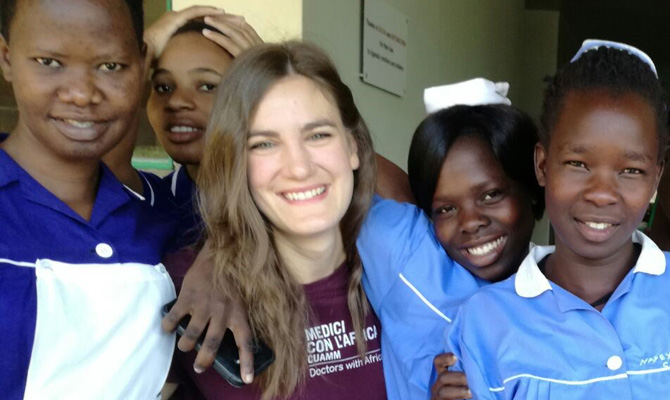
Doctors with Africa CUAMM has taken action to support some healthcare facilities in Italy, while preparing to contrast and prevent the virus from spreading in Africa, where it could have ravaging effects.

IN AFRICA: FACING THE EPIDEMIC IN 23 HOSPITALS

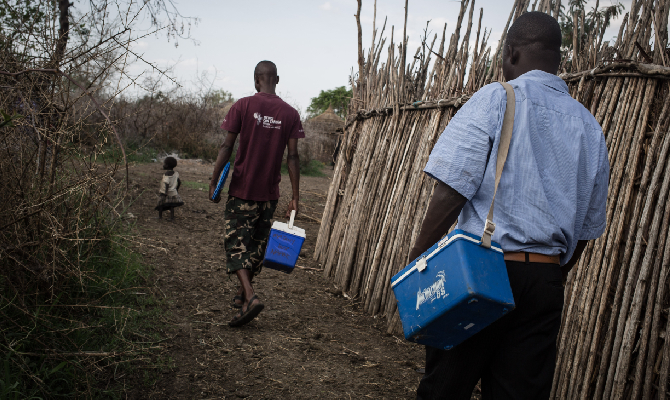
The most urgent commitment is to secure the 23 hospitals that we support in 8 countries, ensuring:

  • Personal protective equipment (PPE) to healthcare staff and the operators involved in the emergency management
  • Personal protection equipment for cleaning staff and disinfectant materials for interiors
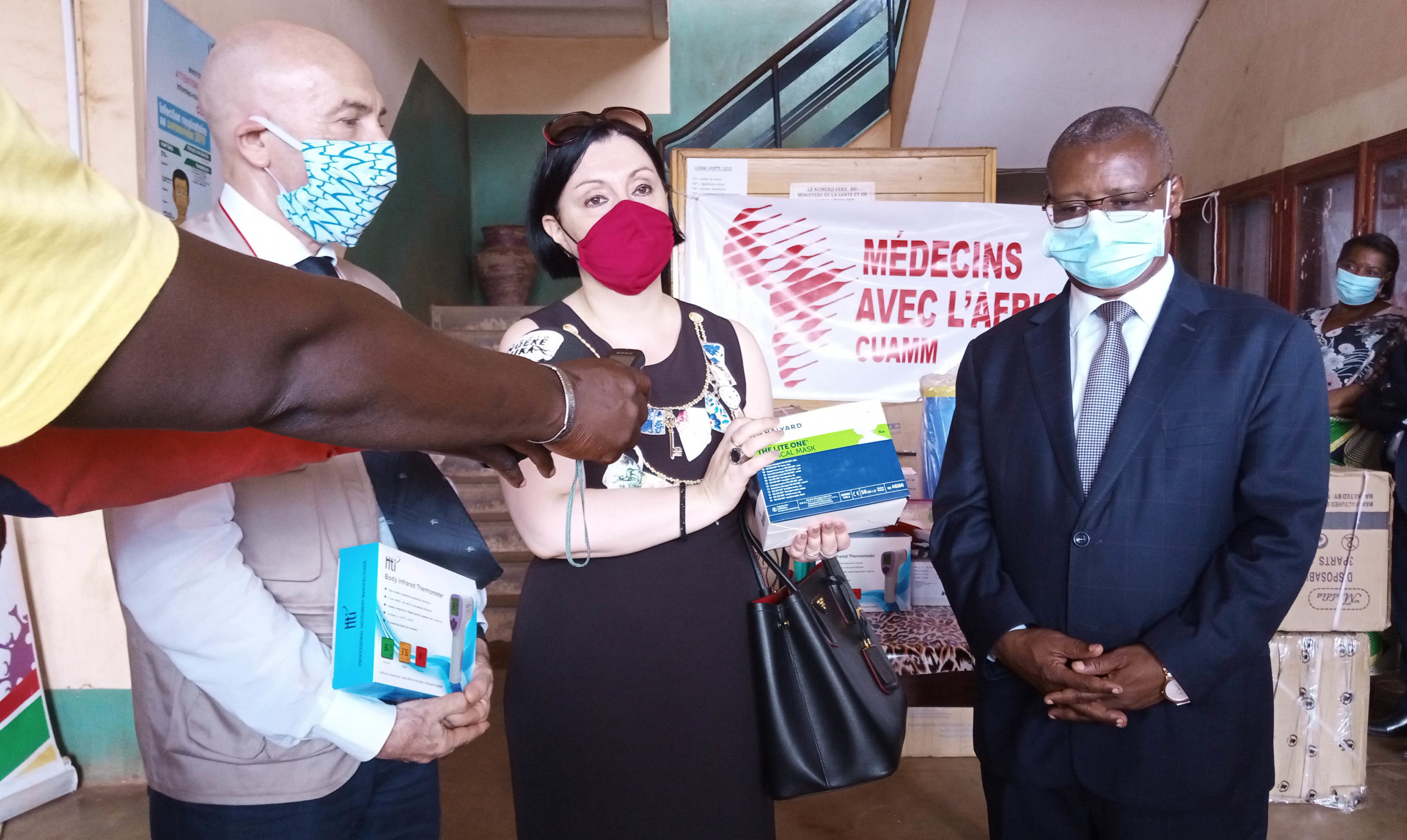
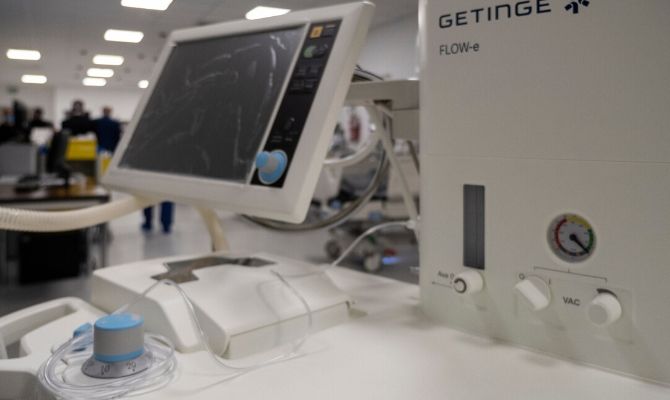
  • Minimum equipment for diagnosis and clinical management such as infrared thermometers to screen patients, oximeters to measure the status of blood oxygenation and oxygen concentrators for the supply of oxygen
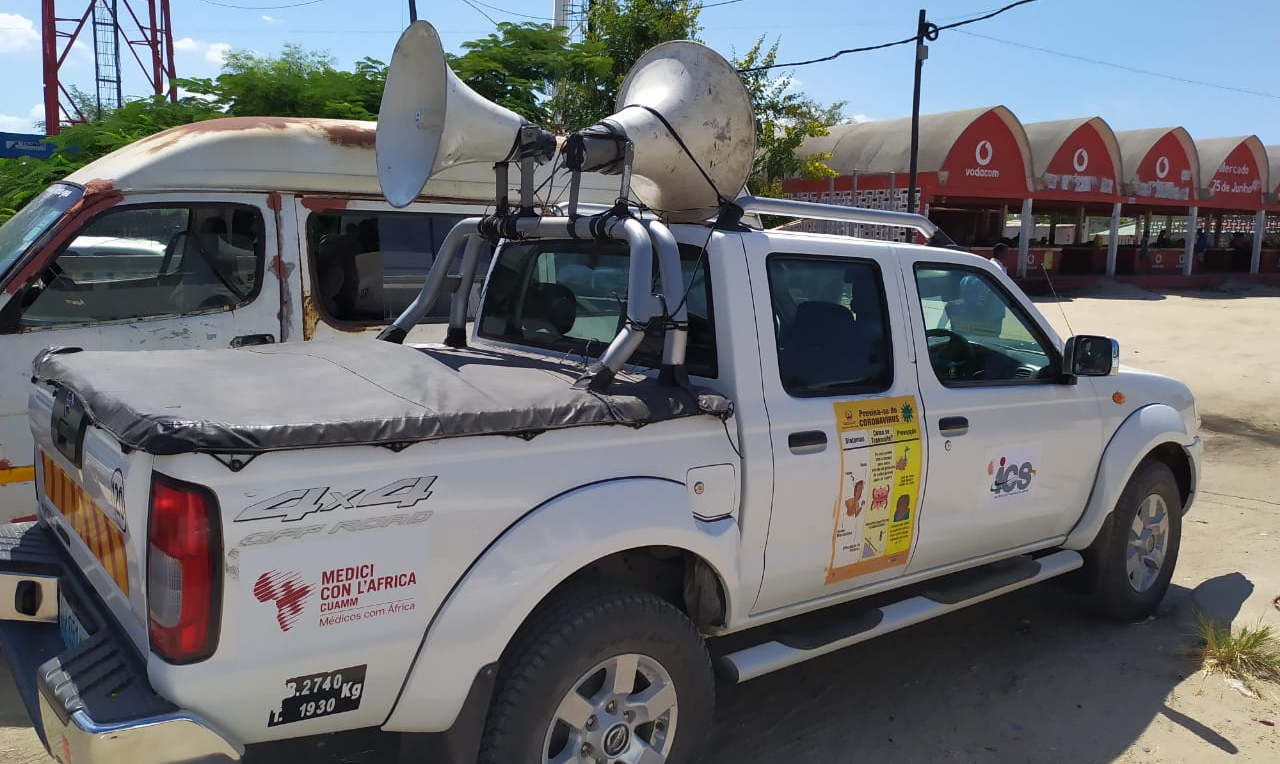
  • Extraordinary commitment in the training of operators and the involvement of the communities, to promote proper behaviours and hygienic and protection norms.

The challenge is very high and adds to the effort to assure the ordinary planned activities to provide the essential care to mothers and children.


DO YOUR PART!

15€    DISINFECTANT MATERIALS OF THE HEALTHCARE FACILITIES

Disinfectant detergents for interiors and waste bags for infected waste for 1 day

30€    PERSONAL PROTECTION EQUIPMENT KIT FOR HEALTHCARE STAFF

for 1 doctor or nurse for 1 day: mask, goggles, gloves, boots and alcoholic disinfectant solution

50€    TRAINING AND SALARY FOR A COMMUNITY ACTIVIST

100€  DIAGNOSIS AND CLINICAL MANAGEMENT OF THE PATIENT

Aid for the purchase of infrared thermometers, oximeters and oxygen concentrators[/fusion_text][/fusion_builder_column][/fusion_builder_row][/fusion_builder_container]


IN ITALY

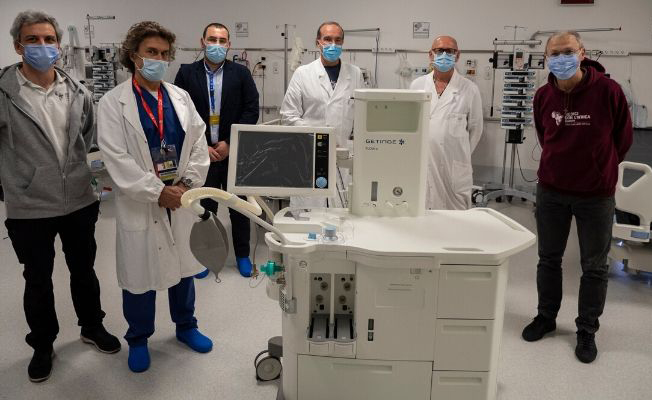
4 ventilators for 4 hospitals

Doctors with Africa Cuamm has donated 4 ventilators to some of the healthcare facilities particularly affected by the epidemic:

  • The Schiavonia hospital (Padua) which has been recently declared “Covid hospital”
  • The Carate Brianza hospital (Milan)
  • The Parma hospital
  • The Cremona hospital

Professionals, who are first of all friends, work in each of these facilities and we wish to encourage and support them in their challenging engagement. These professionals are also our ambassadors, ensuring that our aid will be used for the right purpose.

An act of closeness, to give our thanks to many people and communities that in other moments of need on the field, in Africa, have never lacked attention, helpfulness and great generosity.


CUAMM becomes a UNHRD partner

As of today, Doctors with Africa CUAMM is a partner of United Nations Humanitarian Response Depot (UNHRD), a network of six UN humanitarian emergency response hubs part of the World Food Program (WFP). This agreement gives CUAMM free access to many of the agency’s services to respond more quickly to emergency situations in Africa.

UNHRD is among the services that the UN World Food Program makes available to the global humanitarian community through six logistical hubs in six strategic points in the world: Brindisi (Italy), Accra (Ghana), Dubai (United Arab Emirates), Kuala Lumpur (Malaysia), Panama City (Panama), and Las Palmas (Spain). This network offers partner organizations a wide range of logistical services for emergency preparedness and response, including storage, purchase, and shipping, letting different agencies and humanitarian organizations respond quickly in crisis scenarios around the world.

Doctors with Africa CUAMM already has deep familiarity with African health systems and is able to intervene even in emergency situations when needed, as happened with Ebola in Sierra Leone and with the Cyclone Idai in Mozambique. Now it can count on UNHRD services to respond even more quickly and effectively in humanitarian crises.

This agreement is all the more important right now. In recent weeks, Doctors with Africa CUAMM has started to equip its hospitals to fight the spread of coronavirus in the already challenging context of Africa.

Through Doctors with Africa CUAMM’s partnership with UNHRD, it will have access to warehouses in Brindisi, Dubai, and Accra to store its material to send to the field with facilitated logistics. It will also be able to procure basic necessities with more efficient procurement procedures recognized by the Directorate-General for European Civil Protection and Humanitarian Aid Operations (DG ECHO). This is a major step for transparency and efficiency given the challenges that the coronavirus and other possible emergencies pose for Africa.


Africa-Italy: one humanity

Dear all,

an explosion of joy, of life, of celebration – I cannot take these feelings away from my heart, even if they clash with the deep estrangement we all feel in Italy in these hours. I’ve just landed in Rome on my return, via Addis Abeba, from South Sudan. I’ve visited some of our work places there, the hospitals of Rumbek and Yirol. I feel a lot of gratitude for the great and tiresome work that our volunteers do, together with their local colleagues. However, where I was overwhelmed by emotions was in one of the remotest and most forgotten places of the Country, Nyal, 40,000 people, in the State of Unity.

The locals were all there, waiting for us to arrive. The whole community had gathered to “celebrate” the new operating room annexed to the modest healthcare centre. There had never been one before. Now, eventually, moms can give birth without fear of losing their life. The chief of the community thanked us and asked us not to abandon them. I answered that for us “TOGETHER” is like a blood oath. “When we start, we stay” I added, looking into his eyes and feeling a heavy responsibility.

Health really is physical and inner “life”, energy and joy. When you’re unhealthy you feel “dead”, tired, sad. Health is creativity, desire, movement. When you’re unhealthy, you stop, there’s no development and growth. Returning to Italy, with the cities deserted and the hospitals of some of our regions working at their capacity, I’ve perceived this mood heavily. “Coronavirus” has infected our country and we’re sick, forced to rest, sheltered at home, obliged to stop. Closed shops, blocked activities, suspended offices and meetings. The weakest ones surrender and the economy collapses.

Life is a woollen thread, the line between one part and the other of the world is narrow, thin. Finding oneself on “one part” or “the other” is a matter of seconds. Humanity is just one. That’s why our gaze, that has been focused on Africa for 70 years now, today is also watching our country, participating in the challenging and hard moment we’re facing. So, in Italy, we want to be close to the elderlies who fear for their health and who find themselves even more alone facing a hard daily routine of isolation and scarcity of relations, that’s why we’re setting up a network of our local volunteers and groups. We’re still supporting the many doctors who have returned and are now working in the hospitals of our country with the same passion and competence they put in Africa. We feel the duty to give real help, selecting an especially needy healthcare facility and supporting it.

And then in Africa, where support, care, operators are always running low, there are still few assessed Covid-19 cases, but they are set to grow and we must be prepared. We’ve just heard this morning the news of the first suspected case of the disease at the hospital of Wolisso, in Ethiopia. The alert of our operators is at its highest. We must do all we can to protect the operators and contain the epidemics. The risk of failing is very high, because the healthcare systems are extremely fragile and it’s not possible to guarantee intensive treatments to sick patients, the wards are not well equipped! That’s why we’re handing out PPE in the 23 hospitals in which we are present (gloves, alcoholic gel, masks, coats, linen), preparing containment plans, training the many healthcare operators, also in the communities, on hygienic and protection rules, working with the national governments to prepare guidelines and suitable procedures to contain the epidemics.

Francesco Canova, founder of Cuamm, in January 1946 was in transit at the railway station of Caserta and, scared by the destruction he saw around him, he asked the station manager if all of Italy was like that. And that “little ill-dressed man” answered him: “Even worse, son, even worse. But don’t fear, you’ll see that things will get better soon, trust Gennarino!” (Christian sympathy and testimony, Messaggero, Padua 1983).

In this challenging time, in Italy and in Africa, we have to nurture the trust of the heart and the perseverance of the work!

I embrace you and thank you for all the help you can give us.

Don Dante Carraro, Director of Doctors with Africa CUAMM


The importance of male involvement

Within the broad spectrum of child health intervention, one of the aspects that both research and field based implementing agencies are focusing on is male engagement.

Doctors with Africa CUAMM is making efforts to integrate meaningfully men’s participation into health services and programmes, especially with regards to nutrition programs. Indeed, even if men are not directly involved in feeding children or taking them to health facilities, they are often the ones administering household’s finances or giving women permission to take part to community nutrition activities. Among barriers that men face are: lack of time and flexibility due to work, cultural habits and belief around the role of women in taking care of children, and a health system that is designed to be accessed mainly by women.

In Tanzania, in the region of Iringa and Njombe, Doctors with Africa CUAMM is implementing a program that aims at contributing to the reduction of prevalence of stunting. The program intends to create awareness on nutrition related and early childhood development issues to ensure mothers/caregivers of children under two access better health, nutrition and ECD services and fathers are well involved and participate from the very beginning in child upbringing.

Ally Yahaya Nyaulingo, 30 years old, father of Clayan who is 1 year old and seven months, is among the beneficiaries of the project and member of a counselling group in Kising’a village in Iringa DC. He has been participating in community sessions as he saw the importance of his involvement in the proper upbringing of his child with constant awareness provided by facility health care workers during clinic sessions as well as by Community Health Workers during community group counselling sessions.

I love and care for my family. I have seen other children whose fathers were not responsible and their health had deteriorated with severe malnutrition and from there I saw the importance to participate and support my wife in the upbringing of my children by attending counselling group sessions and by sending my child to village health and nutrition days with my wife.  By doing so I am in the position to understand the nutrition status and progress of my child. I want to ensure my child stay healthy, bright when starts school and not stunted or severely malnourished”.

He has advised his fellow fathers to self-recognize the responsibilities fathers have in ensuring a healthier family. Men are very much dealing with negative norms and taboos in supporting their wives on matters related to taking care of children. Having peer men counselling groups during these events would create a room for them to be more educated and discuss all issues related to positive parenting and responsive caregiving”.

COVID-19: humanity is just one

In these days we’re carefully following the evolution of #Coronavirus in Italy. We’re close to the many people who have been affected and to the more vulnerable ones, who are especially exposed to contagion. Likewise, we’re close to the healthcare operators who are in the front line tackling the epidemics.

Many of them include the doctors and nurses who came with us to Africa or were preparing to. In these hours they’re experiencing a situation of hard fatigue, facing a virus we know little of. Many are giving their contribution of knowledge and experience that they have gained when managing healthcare epidemics in limited-resource settings, where the scarcity of supports forces them to deal with challenging choices on a daily basis.

We can’t help but show solidarity to them and respect to those who have to make important decisions with not enough scientific evidence available. As healthcare operators we reiterate that in order to reduce the epidemics and restrain its impact on the Italian healthcare system, we can all do something: comply with the measures of containment and social distancing, reduce our movements, stay home.

A few days ago, don Dante Carraro, contacted in South Sudan, told the daily paper Il Mattino di Padova:

Venetian people are able to express stubbornness, quiet wilfulness and such strength that has allowed us to pick ourselves up in the challenging post-WW years, in the years of the economic crisis and in other dramatic situations. We have to keep going, without leaving anyone behind, without forgetting the most in need. Veneto and Italy as a whole will make it. United we will overcome any challenge and there’s no real development if we leave someone behind. We live in one world, it’s a system of communicating vessels. We used to fear the diseases that others would spread, now instead we risk being the spreaders of contagion. The world is one, humanity is just one and there must be one development project which involves everyone. This is the only way we can keep going.

This emergency will also pass thanks to the responsible contribution of each of us!
 
DONATE NOW

A VACCINE FOR “US” ALL

[fusion_builder_container hundred_percent=”no” equal_height_columns=”no” menu_anchor=”” hide_on_mobile=”small-visibility,medium-visibility,large-visibility” class=”” id=”” background_color=”” background_image=”” background_position=”center center” background_repeat=”no-repeat” fade=”no” background_parallax=”none” parallax_speed=”0.3″ video_mp4=”” video_webm=”” video_ogv=”” video_url=”” video_aspect_ratio=”16:9″ video_loop=”yes” video_mute=”yes” overlay_color=”” video_preview_image=”” border_size=”” border_color=”” border_style=”solid” padding_top=”” padding_bottom=”” padding_left=”” padding_right=””][fusion_builder_row][fusion_builder_column type=”1_1″ layout=”1_1″ background_position=”left top” background_color=”” border_size=”” border_color=”” border_style=”solid” border_position=”all” spacing=”yes” background_image=”” background_repeat=”no-repeat” padding_top=”” padding_right=”” padding_bottom=”” padding_left=”” margin_top=”0px” margin_bottom=”0px” class=”” id=”” animation_type=”” animation_speed=”0.3″ animation_direction=”left” hide_on_mobile=”small-visibility,medium-visibility,large-visibility” center_content=”no” last=”no” min_height=”” hover_type=”none” link=””][fusion_text]

Ensuring Africa’s access to COVID-19 vaccines is critical for containing the pandemic. Global emergencies demand global responses, and Africa cannot be left out.

We join civil society, governments and institutions that ask for it: It is right to suspend the patent on vaccines.

A global pandemic is happening and vaccination doses are not enough, here and in Africa. To date, Covax, the initiative aimed to provide vaccines to poor countries, has enough doses for only 5% of the 1.3 billion people on the African continent. More doses are needed. The suspension of the patent would allow the various production centers (India and Brazil in particular) to increase quantities, thus dampening the vaccine market. And it is urgent to avoid the development of new variants that risk frustrating current vaccines.

A vaccination program is clearly imperative there as well: not only is it the right thing to do, it will also help ensure everyone’s wellbeing, as it is the only way to put an end to the spread of this virus and its variants.

And the first vaccines are now on their way. Just days ago, Prime Minister Carlos Agostinho do Rosário enthusiastically announced the arrival of the first 200,000 doses of vaccines to Mozambique. Ghana has received 600,000, and Senegal 200,000, marking the start of a more hopeful period for the continent, which will require at least 1.3 billion vaccine doses by the end of 2021 in order to ensure a sufficient level of immunity among its population.

Now these doses must be transformed into “actual shots in the arm”, first and foremost for our many local colleagues, doctors, nurses, midwives and health support staff (for example, administrators, drivers and cleaners). As we’ve seen in Italy, these individuals are the core of health systems everywhere, selflessly putting themselves on the front line and at high risk of exposure to the virus as they work to combat its effects on the sick.

And there are so many of them, starting with those nearest to us: the colleagues, from doctors to community health workers, with whom we work side by side in 23 hospitals, 127 districts and numerous peripheral health facilities. Altogether there are around 20,000 of them in the African countries where CUAMM maintains a presence, accounting for 5% of the continent’s total health workers. It is our priority commitment – with your help – to get each and every one of them vaccinated as soon as possible.

The communities in which most of Africa’s people live, including those in the most remote areas, must be vaccinated as well, of course. Meeting this objective will require a great deal of work, for example, ensuring well-functioning logistics (including the cold chain that makes it possible to maintain minus 3 to 4 degrees Fahrenheit temperature conditions) as well as other resources – syringes, cotton wool, alcohol, staff training– that cannot be taken for granted in low-resource settings. There is also the challenge of making vaccination culturally acceptable to communities, which will require public health campaigns. Since we do this work daily, we already have the essentials – vehicles, motorbikes, generators, solar panels, cooler boxes, and personnel – but now need to ramp up. We will tackle the job as always, not as do-it-all “superheroes” eager for the spotlight, but as sober, dependable health professionals doing our level best to meet the needs of communities and help overcome the vulnerabilities of healthcare systems that, already weak prior to the pandemic, now risk total collapse. And we will support our local partners, whether at the central level (Ministries of Health) or the peripheral one (districts and individual facilities) by working with them.

We’d like to ask for your generous participation, in the form of a symbolic €10 contribution to deliver a single dose of COVID-19 vaccine to the countries where CUAMM is present in Africa, to help us get vaccines into the arms of our 20,000 colleagues there. The cost for meeting this initial challenge – vaccinating each individual fully (two doses) – is €400,000, but we hope to vaccinate many more thereafter.

Our appeal goes out to everyone, including individuals both young and older, groups, foundations, public and church institutions and international media and partners. We need all of you, because only together will it be possible to undertake such a major challenge. The renowned immunologist Alberto Mantovani is the first official supporter of our appeal.

Recently a CUAMM mission returned from Mozambique. While still there, one of our Italian doctors who had already received his vaccine was speaking with a young Mozambican colleague. The latter quietly confided in the former: “You’re so fortunate to have been vaccinated! I hope to be soon too”.

Thank you for helping us out with whatever you can. It will mean a vaccine not only for our young colleague in Mozambique, but also for “us” all.

Father Dante

Donate now

[/fusion_text][/fusion_builder_column][/fusion_builder_row][/fusion_builder_container]

WDF and CUAMM: Together to fight against NCDs

On the 27th February, at the presence of the Mozambican Ministry of Health and local health authorities, Doctors with Africa CUAMM and the World Diabetes Foundation (WDF) celebrated 3 years of joint work to fight diabetes and hypertension in Mozambique. A great event was organized in Maputo to share results and best practices.

Doctors with Africa CUAMM has been working in Mozambique since 1978, in close partnership with the Ministry of Health (MoH). In October 2016, thanks to the support of the World Diabetes Foundation, CUAMM has launched a vast and innovative three-year program to fight Diabetes (DM) and Arterial Hypertension (HTN) in 3 provinces of Mozambique: Maputo, Sofala, Cabo Delgado. The program was unique as it was the very first of this kind piloted in the country. The intervention targeted 17 districts, covering 81 health units and one central hospital, reaching a population of about 3.600.000 people and screening about 903.244 people for DM and HTN.

Doctors with Africa CUAMM is committed to continuing its efforts towards expanding and strengthening the integration of NCDs screening and treatment into quality existing services, in collaboration with the Ministry of Health and local associations.


Anthropology, the science that brings us closer to the other

«To better understand reality take a step back and observe it with a distant glance. You will thus understand that diversity, as such, cannot be inferior», wrote the renowned anthropologist Claude Lévi-Strauss.

Understanding diversity is an integral part of our work, because even before offering health care, it is necessary to ask ourselves what the needs of the population are – to learn about them, with respect and attentiveness.

It turns out that in a fertile place like Ethiopia, children suffer from malnutrition and the problem is not the lack of basic ingredients, but the fact that they all eat from one dish and the youngest of them remain behind. The need to look after large families where accompanying a child to hospital means leaving many others alone, or the desire to give birth in the traditional position of one’s own population, preferring to stay in the village rather than in a safe health centre, are just some of the challenges we face in the field: cultural challenges, which we are called on to undertake as doctors on a mission to another continent.

It is a human relationship, made up of observation and knowledge, but also a professional approach – that of anthropology. “We could define it as the science that “removes the veil” – says Edoardo Occa, Cuamm anthropologist in Mozambique – because anthropology reveals behaviors that are distant from us and enables us to read reality in a way that brings us closer to the other“.

This is how targeted interventions in the field are developed: an innovative pillow prototype that guarantees to Ugandan women that they can give birth in a safe way while maintaining traditions; direct medical visits to the villages in order to reach everyone; training for mothers on the importance of food and the proposal that they be the ones who share meals with the youngest children.

Bonadio and Girardelli, Cuamm doctors in the 1980s, already said how “it is essential to increase the channels of real communication with the local population as much as possible, so that they can be the protagonists of their own development (…) in the name of mutual respect between people belonging to different peoples that work and grow together”.

A “distant glance” of observation, then, which allows us to get up close, understand, find solutions and bring help in ways that peoples can welcome. As doctors in the field, this vocation towards the knowledge of the other is strong; it is part of our missionary spirit and, even more so, also of a human vision of medicine and cooperation.

We will also talk about it in Milan next Saturday, on February 22nd, where Anthropology Day will be celebrated and, as Cuamm, we will reflect on ways of “Fighting malnutrition by promoting a cultural change”

WORLD CANCER DAY

Today marks the 20th anniversary of World Cancer Day organized by UICC, the Union for International Cancer Control, and supported by the World Health Organization. Today focuses attention on a major issue that affects everyone’s life, inviting us to make a personal commitment to the fight against cancer, starting from prevention.  You may not know that in 2018, 9.6 million people in the world lost their lives to cancer; 70% of these people live in lower/middle-income countries. But at least a third of common cancers are preventable, making prevention key. There is still much to do on this front, especially in Africa, to ensure access to prevention and treatment. Cervical cancer is the most widespread cancer in sub-Saharan Africa and mortality remains high, because women come too late for diagnosis, as has been seen by Helena Dinis, a CUAMM nurse who works in the Sofala Region of Mozambique. The WHO has reported that in this country that, despite diagnosis, 6 out of 10 women lose their lives.

The Ministry of Health of Mozambique introduced mandatory screening in health centers in 2009. But after 10 years, in 2019, only 1,267 health centers at a primary level (76% of the total) did screenings and only 233 health centers (18.4% of the total) did cryotherapy to treat precancerous lesions.

This is why in January 2019 CUAMM launched the project “Prevention and control of non-communicable diseases,” financed by the Italian Agency for Development Cooperation with Dream Sant’Egidio and AIFO, committed to reducing mortality in Mozambique caused by diabetes, hypertension, and cervical cancer. The project aims to increase the availability and quality of services for diagnosing and treating these three diseases in 12 health centers and 2 hospitals in 3 different regions of Mozambique: Maputo, Sofala, and Zambézia. The greatest challenge is having a team of trained technicians to educate about the importance of prevention. Women need to be encouraged to get screenings at their closest health centers. This is one of Helena’s goals. Every day she works to make the health center services more efficient through a training program for health personnel working in the clinics. A key role is played by community activists who raise awareness in the population living in rural villages. Many initiatives and activities aim to inform them about the screening service that can be done out in health centers. “When we are in rural villages, I use a small leaflet with photos and ask some simple questions to get women to listen to me.  This takes a lot of patience. You can’t be in a hurry and need to take the time to get to know each other and build trust. When I see an opening and see that a woman is listening, then I can give her information that is essential for her health,” says Assuema Manuel, a CUAMM nurse in the Zambezia Region. “My working days are long and hard, but I am proud to work on this project with CUAMM because through better access to prevention and treatment, we can save the lives of many women like me.”

As reported by Paolo Massaro, project manager for “Prevention and control of non-communicable diseases.”

CHILD FIRST Let us reduce stunting!

Doctors with Africa CUAMM Tanzania, together with the local partner organization TAHEA, hosted the annual consortia meeting of “Accelerating Stunting Reduction Programme” from the 29th to 31st of January. Among local and international partner organizations, UNICEF and Regional and District Nutrition officers participated in the meeting.

Stunting is the impaired growth and development that children experience from poor nutrition, repeated infection and inadequate psychosocial stimulation, as explained by the World Health Organization (WHO). Especially the first years of a child’s life, the first 1000 days from conception to the age of two, is a crucial period for timely intervention. “Accelerating Stunting Reduction Programme” aims to reduce stunting prevalence in the southern highlands regions of Tanzania: Iringa, Njombe, Mbeya and Songwe, where the needs are greatest among other regions of the country. With the coordination of UNICEF Tanzania, the programme has been implemented by three consortia, each one of them covering different regions; in particular, CUAMM and TAHEA are intervening in Iringa and Njombe.

As entering the 5th year of the programme, the final year, the main agenda of the meeting was to review the progress of handing over the activities to the respective local government bodies in order to ensure sustainability of the programme impact.

«The programme has gained its momentum. It is not only the partner organization who is leading the programme, but also the local government bodies have been deeply engaged, taking their ownership in nutrition issues. It has been a great team play» – claimed Ruth Nkurlu, UNICEF Southern regional programme coordinator, distinguishing the programme with other nutrition interventions around the country -. «Furthermore, because of the holistic approach of this programme implementation, meaningful behaviour changes are witnessed from the community level to the local government authorities».

Even though the programme is approaching its end, the need is still very high. The fight against malnutrition is not over yet. The Iringa Regional Nutrition officer appreciated CUAMM-TAHEA’s interventions in the region highlighting how it has strengthened the nutrition management system from the community level to the district and the regional level, sensitizing and empowering the local government authorities, which is the key to sustainability.

Sustainability cannot be achieved by working alone. Doctors with Africa CUAMM will continue its journey fighting against malnutrition alongside the local government and the local and international partners.