S.K.I.L.L.E.D: Training youth for a more inclusive and sustainable healthcare system

The project “S.K.I.L.L.E.D – Strategic knowledge and inclusive lifelong learning in the health sector for youth employability and development”, implemented by CUAMM and funded by the Italian Agency for Development Cooperation, has officially kicked off in Freetown, Sierra Leone.

Contributing to sustainable, inclusive and decent employment for skilled young people, in line with national policies and priorities: this is the ambitious goal of the initiative, which will be carried out in collaboration with the Ministry of Health and important educational institutions, the University of Makeni, the University of Bologna, the Department of Anaesthesia and Resuscitation of the Sierra Leone University Teaching Hospital at Connaught Hospital, the “Joseph Berton” Technical and Vocational Institute, and the Saint Mary Home of Charity association, with the support of Mercy Ships.

4 are the districts involved in the intervention (Western Area, Bombali, Port Loko, Pujehun); 2,620 young people between the ages of 18 and 35 are involved. The intervention stems from CUAMM’s desire to respond to the shortage of qualified healthcare personnel and, at the same time, to promote a response to the high rate of youth unemployment in the country, particularly due to the lack of decent employment opportunities for young people.

The aim is to promote, in particular, equitable and inclusive access to university and technical-vocational training and to foster the development of job opportunities in the health sector and related services (supply chain), with a particular focus on the most vulnerable young people at risk of marginalisation.

Education is the beginning and foundation of an inclusive, sustainable and high-quality health system. It is essential to invest continuously in strengthening the skills of healthcare personnel so that they can respond effectively to the needs of the population and contribute to the overall improvement of the system,” said Maria Valla, CUAMM project manager.

This need is also recognised as a priority by the Ministry of Health, which emphasises the value of the project as it is fully aligned with national policies on capacity building and human resource development in the healthcare sector.

“At a time when global, regional and local health issues require creative, innovative and ethical solutions, Catholic universities can also play their part in addressing these challenges by transferring knowledge through training, research and service provision, using and involving communities,” added the representative of the University of Makeni (Unimak). “It is essential to respond to the needs of the most vulnerable populations by ensuring access to quality healthcare through trained and qualified healthcare workers. Thanks to this collaboration, the Ministry of Health will have qualified and competent health professionals and technicians to improve services, while the Ministry of Technical and Higher Education (MTHE) will introduce new study programmes in line with the labour market and with a strong practical component. In addition, we will expand our academic offering by collaborating with international experts and expanding its partnerships,” he concluded.

Promoting and supporting the education of young people from and in the most vulnerable countries is the foundation of CUAMM’s commitment, which today continues in Sierra Leone with this project even more intensely, in a continuous exchange of knowledge and experience with local institutions and partners.

Cholera outbreak in Angola CUAMM emergency response

Following the first cholera cases recorded early this year, on January 7th the Angolan Ministry of Health officially declared a cholera outbreak. The Country is currently facing one of the most serious cholera outbreaks in decades. As of May 21, more than 21,000 cases and almost 700 deaths have been recorded in 18 of the country’s 21 provinces (WHO, May 2025) being Luanda and Bengo those most severely affected.

The situation is particularly serious in Luanda province, where the lack of clean water, hygiene, and basic sanitation has accelerated the spread of the disease. Entire families are at risk, with no access to adequate means to treat water—and many without even understanding the risks and origin of the disease. The most affected age group is children between 2 and 5 years old, followed by the 10 to 14 age group.

In response to this public health threat, Doctors with Africa CUAMM in collaboration with UNICEF is delivering a emergency response to contain the outbreak and reduce transmission within communities, especially among vulnerable populations. The intervention, financed by the European Union aims to support the Ministry of Health in ending cholera epidemic thus contributing to reduce the case fatality rate.

“For the first time in the country, we are implementing the rapid response methodology known as CATI (Case Area Targeted Intervention), which involves the deployment of a mobile team to carry out disinfection, water chlorination, residual chlorine testing in drinking water, and health education, while establishing a sanitary cordon around the household of the confirmed case. This is complemented by a large-scale outreach effort aimed at raising awareness and reducing risk factors in the city’s bairros, while trained teams conduct disinfection activities and disseminate chlorine in public water sources.” said Edoardo Occa, CUAMM anthropologist and community health expert

As part of the CATI strategy, CUAMM is committed to delivering WASH and Infection Prevention and Control (IPC) activities and Risk Communication and Community Engagement (RCCE) intervention in 12 municipalities in Luanda province over the next three-months. A grassroot intervention that by combining community-based and IPC activities enhances the effectiveness of the response. While IPC focuses on reducing transmission in healthcare settings and at the household level, community interventions extend this impact across the broader population through awareness, behavior change, and local engagement. This integrated approach ensures faster case detection, wider adoption of safe practices, and addresses the environmental and social factors that drive transmission. Crucially, it also fosters trust and community ownership, which are essential for both immediate outbreak control and longer-term resilience against future epidemics.

WASH and Infection Prevention and Control (IPC)

Improving access to safe water is crucial in cholera outbreak control. A bucket chlorination strategy is being rolled out to cover hundreds of community water points —including private water tanks, water transporters (tricycles), community wells, and public fountains. Owners and operators of these points, selected by the communities, are being trained by CUAMM in proper chlorination techniques and mobilized to sustain treatment practices during and beyond the outbreak.

In addition to this, CUAMM is ensuring a proper organisation and distribution plan of the chlorination kits and providing logistical and technical support to municipal surveillance teams by ensuring they have vehicles and proper equipment to conduct the targeted household interventions package within a maximum of 48 h—including active search of cases, household disinfection, and RCCE in cases households and immediate neighbors. Visits to family are moreover an additional opportunity for the teams to identify water sources used by the cases households and the water sources most used by the neighbors of the cases houses and train the owners or managers of these water points to do bucket chlorination.

As part of the emergency response, CUAMM in collaboration with UNICEF has also invested in prevention, community mobilization, and volunteer training to ensure that information and solutions reach those who need them most. In times of health emergency, information is one of the most powerful weapons. Through awareness campaigns, CUAMM and UNICEF are working closely with community leaders, teachers, and health agents to ensure that messages on prevention, control and treatment reach everyone.

Risk Communication and Community Engagement (RCCE)

Community mobilization is being done through trained mobilizers from targeted municipalities supported by a CUAMM team leader. They are in charge of leading interactive dialogues with affected populations at specific and selected central and public gathering sites. These mobilizers are trained to demonstrate water treatment methods and the preparation of standard rehydration solutions (SRO) at Oral Rehydration Points (ORPs), and within communities.

Community engagement is paramount not only to deliver effective response but also to promote ownership within communities. Through continuous education and awareness work, they have promoted changes in hygiene habits and water treatment practices. Moreover, by involving the residents themselves in the process, they have strengthened the sense of responsibility and encouraged the population to tackle this public health issue more effectively.


Addressing health challenges with FBOs

Today in Freetown, Sierra Leone we hosted a significant event under the theme “The Role of Catholic Health Institutions in Addressing Health Challenges: Free Care versus Cost Sharing in Different Service Delivery Models.” The gathering, supported by Conrad N. Hilton Foundation brought together representatives from Catholic health institutions, government stakeholders, and international partners to reflect on how faith-based organizations (FBOs) can continue to play a vital role in strengthening the national health system.

Catholic health institutions, many of which are rooted in remote and underserved communities, represent a cornerstone of Sierra Leone’s healthcare landscape. With a long-standing commitment to the dignity of every human life, these institutions often deliver care where services lack yet are most needed.

«As faith-based organizations committed to promoting access to health, our work is driven by the values of equity and solidarity and reaching the most vulnerable and marginalized communities is our mission» said Sister Josephine Amara.

The event offered participants the opportunity to navigate and discuss a pressing dilemma: how to balance the principle of free care—especially for the most vulnerable women and children—with sustainability, quality, and resource constraints. Discussions explored innovative models of cost-sharing that ensure access without compromising on standards, while also emphasizing the need for stronger public-private collaboration.

In this context, CUAMM reaffirmed its commitment to supporting Catholic health institutions as key partners in delivering people-centered care. To date, thanks to the support of international donors like Conrad N. Hilton Foundation, CUAMM is collaborating with 150 catholic institutions across 50 African countries reaching 173 health facilities with activities that spans from technical assistance to traning and advocacy.

By bridging gaps between communities and national health systems, FBOs do not only provide services—they build trust, promote preventive practices, and uphold the moral imperative of caring for all, especially the poorest.

DISCOVER WHAT WE ARE DOING WITH FBOs ACROSS AFRICA

Advanced training in Mozambique Diploma Ceremony

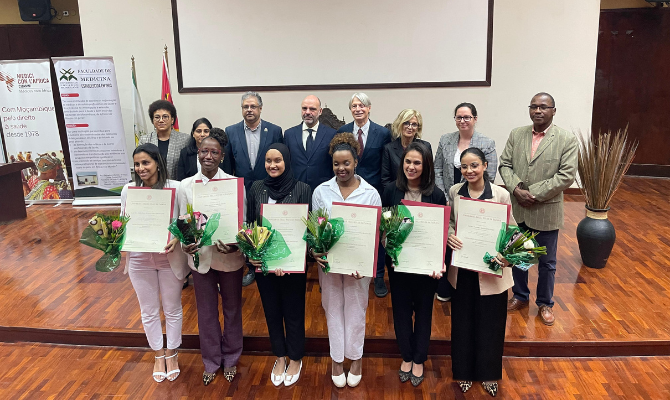
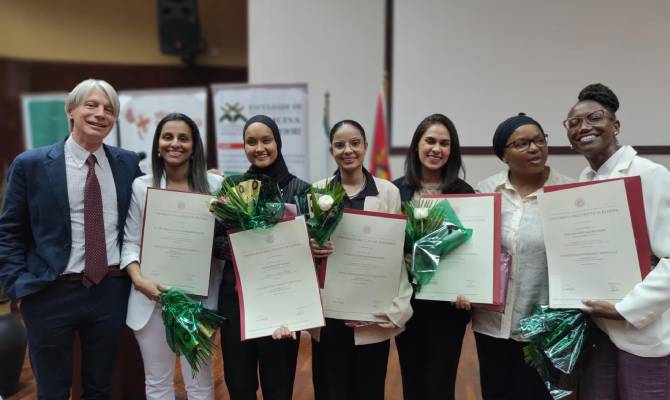
The first edition of the advanced training program on pediatric and neonatal care dedicated to Mozambican professionals has just concluded and 14 professionals now hold the degree.

The initiative, supported by the Italian Ministry of University and Research (MUR) was led by University of Padua in collaboration with CUAMM and the two main Mozambican universities: Eduardo Mondlane University and the Catholic University of Beira.
Some of the nursing students graduated together with partners and institutions involved in the initiative

The goals of the program were to internationalize higher education in Mozambique, promote exchanges between academic institutions, and strengthen professional training in pediatric and neonatal care.

“It’s been a long way to get here. First, we had to work hard to get to know better one another and then we eventually started collaborating in an effective way. This ceremony is a result that fills us with pride” said Prof. Daniele Trevisanuto

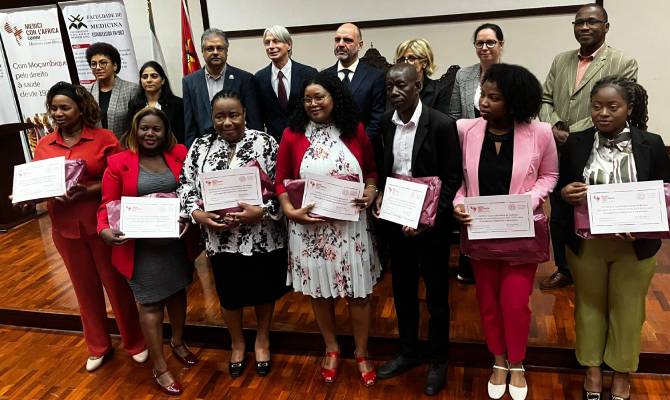
The advanced training program was launched in November 2022 at Eduardo Mondlane University in Maputo. Today, three years later, we gathered in the same location to celebrate the graduation of 14 students — 13 women and one man — from all provinces of the country. Among them: 6 doctors and 9 senior nurses. The event was attended by the Italian Ambassador to Mozambique, Gabriele Annis; Professor Jahit Sacarlal, Dean of the Faculty of Medicine at Eduardo Mondlane University; and a delegation from Padua including Prof. Liviana Da Dalt, former director of the Pediatric Emergency Department of the Department of Women’s and Children’s Health at the University of Padua; Prof. Daniele Trevisanuto, neonatologist at the University of Padua and coordinator of the program; and Giorgia Gelfi, CUAMM Country Manager.

“This master’s program is an opportunity for the doctors and nurses who took part, but above all for the health system, as they will be able to contribute to improving the health of the communities they serve, with particular attention to the most vulnerable, such as children,” said Ambassador Gabriele Annis, who concluded: “The Italian government, through the Ministry of University and Research, is committed to funding a second edition in order to continue strengthening the training of Mozambican healthcare professionals.”

The academic institutions involved collaborated in designing the joint program, drawing on the expertise of faculty members, researchers, and scholars from various disciplines. The training path included a set of general mandatory courses, followed by specific mandatory modules. Courses offered included: Ethics in Clinical Practice and Scientific Research; Communication and Expression Techniques; Fundamentals of Epidemiology; Basic Biostatistics; Advanced Research Methodology; Childhood Sociology; as well as Common Neonatal and Childhood Diseases in Mozambique; Pediatric Cardiopulmonary Diseases; Pediatric Hemato-oncological Diseases; Pediatric Neurological Diseases; Neonatal Emergencies; Pediatric Nephro-urological Diseases; and Pediatric Accidents and Poisonings.
Dr. Daniele Trevisanuto with five of the six doctors graduated and their tutor

“During the first year, we mainly focused on research and analysis and learned how to observe neonatal and pediatric care from a different perspective — one that is essential for improving the monitoring and treatment of the youngest patients. Then we delved into a more clinical part focusing on the most common diseases in Mozambique and through the studies we analyzed the main challenges and barriers to care. The visit to Italy, where we experienced a different system, made it clear to us that the most important thing is to develop effective strategies by seeking practical and achievable solutions within the local context. Only in this way can we truly make a difference” said Sara Razão Simão.

Thanks to the involvement of the University of Padua, four integrated courses were also offered:

PALS Course – Pediatric Advanced Life Support (coordinated by Dr. Andrea Pettenazzo);

Neonatal Resuscitation Course (coordinated by Prof. Daniele Trevisanuto);

Respiratory Diseases Course (coordinated by Dr. Serena Calgaro);

Pediatric Nutrition Course (coordinated by Dr. Giovanna Verlato).

To promote internationalization between universities, the training program also gave six doctors the opportunity to visit Italy and attend clinical activities at the University Hospital in Padua under the guidance of Dr. Daniele Trevisanuto, pediatric neonatologist and professor. A opportunity to explore a different care model and get to know better the Italian healthcare system.

The project, launched in Maputo in November 2022, involved Doctors with Africa CUAMM — which has long been committed to training doctors in Mozambique — and was led by the University of Padua, the initiative’s coordinator and a key actor in multiple areas: from planning the academic curriculum and training sessions, to proposing distance learning and e-learning formats; from identifying teaching staff to facilitating intercultural exchanges between faculties; from enabling access to learning for 14 students to sending materials and equipment essential for higher education.

For the six doctors who completed the advanced training course, this experience was “a unique opportunity that was no available in Mozambique,” as Yumna said, adding:

“Studying and working under the guidance of highly experienced professors allowed us to open our minds and envision new horizons of care that will help us approach our work as doctors with greater capability.”

A truly unique achievement that by combining clinical practice with academic research provided students with a methodology, an approach, and a vision that many of them consider the greatest competence gained.

“Beyond improving my clinical skills, this course has truly allowed me to adopt a broader perspective. I would say that, more than anything, now I feel capable of approaching pediatric emergencies with a new method—one that suggests me to focus on the preventive aspects necessary to define effective strategies to reduce child mortality,” said Joyce Ventura Monteiro.

“The diploma I hold today is not only a personal achievement but also a renewed commitment to the health of our children in Mozambique,” said Afsha Banu Tahibo. “The training I received has expanded my ability to intervene in critical contexts, strengthened my sense of responsibility, and provided me with concrete tools to improve neonatal and pediatric care in our country, where every intervention can make the difference between life and death.”
 

Tender for Supply of printing material service

Doctors with Africa CUAMM, under the project “ Multi sectoral intervention to improve access to health of vulnerable community in Hamer district – (Project – IMPACT) – AID12669 ” is launching the Simplified Procedure to select a supplier for the supply of printing materials service in South OMO zone, Hammer Woreda, Dimeka Town.

01 Invitation form

02 Contract notice

03 Instructions to bidders

Annex Ia – Declaration of Honour Annex I – Tender Form

Annexes II & III- Technical Specifications technical offer printing

Annex IV – Legal Identity form

Annex V – Financial Identification

Annex VI – Financial offer  

Annex VII – Administrative Compliance Grid

Annex VIII – Evaluation Grid 

Annex IX – Contract Form

Annex X – Special Conditions 

Annex XI – General Conditions for Service Contracts

Annex XII – Checklist

Rural medicine off Wolisso

The departure from St. Luke Hospital in Wolisso is scheduled for early morning. At one o’clock Ethiopian time.
The time of a people who give great importance to sunlight—for this reason, hours are counted from sunrise. So it’s 7 AM Western time when the Toyota Land Cruiser driven by Hagos leaves the hospital. In the vehicle: three CUAMM medical residents, one student, Sister Martha, and Sister Marie Rein with two nurses: Benjamin from St. Luke and Wase from Gambella.

The first stop is in Goro where we are about to visit Father Joseph’s community. He is an Indian missionary priest from Kerala, in Ethiopia for four years. He is working to improve the development of some villages in the region. He welcomes us warmly into the beautiful mission courtyard, enriched with plants from all over the world. He briefly explains the project to us. After tasting a few freshly picked grape berries from the garden’s pergola, we return to the off-road vehicle, now joined by Emanuel, another Indian priest and Joseph’s confrere, who will be our guides for the day.

We leave Goro heading west. On the bumpy road, the only motorized vehicles are our 4×4 and a motorcycle that take us to destination.

After about 20 km of jolts and shakes—and more than an hour of travel—we reach the final destination: Galiye Rogda, one of five villages inhabited by a population that, by language, traditions, and somatic traits, shares little with the other inhabitants of the region.

Perhaps it’s not exactly the “last mile”of CUAMM’s cooperation work, but it is still many miles away from the main road and basic services we might consider essential to ensuring the physical, mental, and social well-being of every human being lack. Services that will soon become even more inaccessible with the impending rainy season.

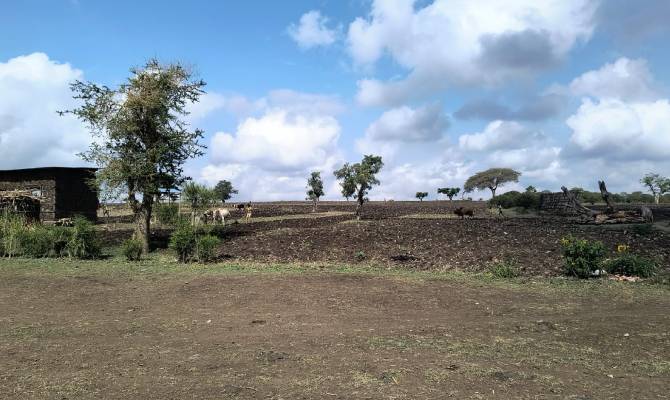
The village suddenly appears in the highland countryside—a cluster of circular huts made of wood, straw, and mud, surrounded by dark brown fields indicating the plowing season. The silence is absolute. In the foreground, everything seems frozen, captured in the short shadows of the equatorial sun. But life flows, and its rhythm is revealed in the background, with the slow and steady advance of oxen pulling wooden plows.

Waiting for us in front of the small tin school building used as a clinic is a group of curious, proud children, accompanied by a few women watching over them from a short distance. The men, all farmers, are in the fields. Soon, as word spreads about the doctors’ arrival, they will abandon their work and gather at our post.
This is not the first time doctors from the “city” have come to the village. In fact, in the past six months, Father Joseph and his congregation have already organized two similar events.
Still, our arrival is met with curiosity and suspicion. The children gaze at us from a safe distance and quickly look away when our eyes meet. Some hide. The youngest cry, protected by the older ones. A few are bold enough to touch us before darting back behind the women, who smile from the sidelines.

A few minutes after the initial meeting, people begin to gather. It’s time to begin the consultations.
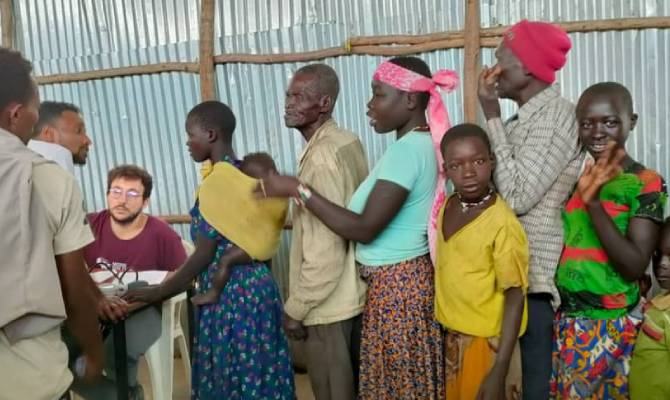
Inside the little schoolhouse, three medical stations are set up: doctor and nurse side by side, with stethoscope, pen, pulse oximeter, blood pressure cuff, and a portable ultrasound device.

The line in front of each station grows.
The flow of people is well managed by the missionary priest and two nuns from a nearby health center who have silently joined our group. From Costanza’s desk, the pediatrician, a dense and orderly line of children extends—pressed one against another, each clutching a small slip of paper where their medication prescription will be written according to their symptoms.
Our few words of Oromiffa often help us understand the main issue. The nurses are always ready to step in and assist us in Amharic.

Headaches, nausea, coughs, stomachaches, vomiting, diarrhea, fatigue, shortness of breath. Some wounds to be treated. Many children are malnourished.

“My whole body has been hurting for two years.”
“I know—you work too much.”
Despite the early skepticism, there is room for some jokes.

An accurate diagnosis isn’t always possible. But everyone leaves with a prescription. Some with painkillers, some with vitamin or iron supplements, deworming medication, only a few with antibiotics or corticosteroid therapy.
Outside the school/clinic, the nuns dispense the prescribed medications to each patient.

Not everyone is completely satisfied—some perhaps wanted more time to be listened to, feel they weren’t understood. And perhaps they weren’t. Their health issue may need to be addressed in other ways. Rural medicine is this, too: complex problems, very few resources, interpretations—sometimes right, sometimes wrong. Sometimes only short-term solutions.

Most of the patients, however, seem content with this brief encounter.
We expected 300 people, and not many fewer came. When the crowd starts to thin and the last few latecomers approach the tin door, the sun is already past its zenith. After that, the clinic closes. The patients are gone. We all look each other in the eye. A laugh.
We’re not yet fully aware of what we’ve just experienced. But this isn’t the time to process emotions. We gather our tools and begin the return to Wolisso.

We’re aware not of having made a great medical contribution, but perhaps of having taken a small step to bridge the gap between the city and the countryside, to counter the trend of abandoning rural areas in a country where the main economic resources are used to build towers and beautify the tree-lined avenues of the capital.
Perhaps a small gesture from those with more privilege toward those with less—or none at all—can shift the focus and, for a moment, center individuals and communities for whom being forgotten is often the norm.

The return to Wolisso, which until a few weeks ago we thought of as a remote rural hub in the Ethiopian countryside, now feels like arriving in a chaotic metropolis—reminding us how much in life depends on one’s point of view.


Supply of designing a dashboard for DHIS-2 system

Doctors with Africa CUAMM, under the project titled “Improving Quality and Use of Newborn Indicators (IMPULSE) phase 2,” is launching a Local Open Tender to select eligible suppliers for the Supply of designing a dashboard for the DHIS-2 system.

01 Invitation form

02 Contract Notice

03 Instructions to Bidders

Annex I – Tender Form

Annex Ia – Declaration of Honour

Annex II & III – Technical Specifications afidato_290425_u

Annex IV – Financial offer

ANNEX V – Legal Identity form

Annex VI – Financial-Identitfication-form

Annex VII – Administrative Compliance Grid

Annex VIII – Evaluation Grid  

Annex IX – Contract Form

Annex X – General Conditions

Annex XI- Special Conditions 

Annex XII – Check List

Two girls, Two stories of motherhood

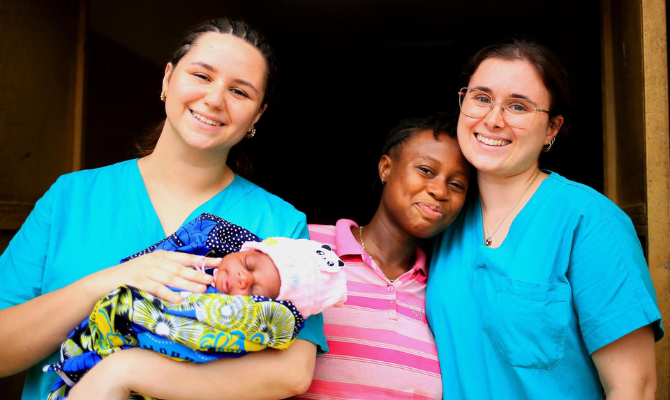
Two fifteen-year-old girls, two parallel yet vastly different stories of motherhood. We heard about them from Elisabetta, midwife who has just returned from a year of civil service with Doctors with Africa CUAMM in Pujehun, Sierra Leone. A year full of sacrifices, joy, self-discovery, and encounters with others—too rich to sum up in a single conversation. But when asked, “Which stories left the deepest impression on you?”, she has no hesitation.

Two faces, two names: Amie and Kadija. Same age, same situation—a pregnancy faced without support. What sets them apart, however, seems to be their sense of hope for the future.

“Amie arrived at the hospital and gave birth to a premature baby boy,” recounts Elisabetta. “Despite many challenges, the healthcare staff managed to keep him alive. But it wasn’t enough to comfort her. During her entire stay, I never saw her smile. It was very hard for her  to open up. I tried to create a relationship with her, to better understand what she was thinking, but I never managed to. Her story will stay with me forever because at some point, she decided to leave the hospital—with her baby. We don’t really know why. Maybe there was pressure from her family, possibly to reduce hospital costs.”

Elisabetta remembers the day Amie made that decision—perhaps not really free from external influence. She recalls the room Amie was in, and a crowd of people surrounding her, all offering different opinions. In the middle of it all, Amie. Fifteen years old may be too young to bear the weight of your child’s fate.

“The doctors were strongly opposed to her discharge because the baby was so tiny, with very little chance of survival. But she left anyway. I’ll never really know why or what she was thinking. I asked myself how hard it must be, for a girl her age, to make such a decision. When I was her age, I could barely decide what movie to watch—she had to choose whether to walk away with a 1.5-kilo baby in her arms.”

Beside this story—whose ending remains unknown, though it’s hard to imagine a happy one—there is another. The story of Kadija. Also fifteen, from the moment she arrived at the hospital she radiated energy. Kadija was a force of nature—tireless, full of a will to live and love.

“In the evenings, I’d see her walking around the town. I’d say, ‘Kadija, you have to go back to the hospital! You’re still admitted!’ She spent two months in the Maternity Waiting Home before giving birth, but she never stopped moving, never rested.”

The Maternity Waiting Home is a place within or near the hospital where pregnant women can safely wait for childbirth. They are monitored and supported in a calm and safe environment. A simple yet effective way to prevent maternal and neonatal deaths. Kadija’s approach to her time there was anything but ordinary.

“Every day, she’d take children for a walk. At one point, she even started helping the woman who sold diapers and other baby goods in front of the hospital… She wanted to work and had a clear goal: to go back to school after the baby was born. She was from Freetown, the capital, but due to family issues, she ended up in Pujehun completely on her own. What struck me about her was that, despite her young age, she was incredibly determined to fight for herself and her baby.”

Thanks to the care of the health staff and the loving support of Elisabetta, the delivery went well. Kadija and her baby were able to go home quickly and in good health. She really wanted to return to school. I don’t know who will take care of her baby. Kadija’s path, too, will likely involve difficult choices. In Elisabetta’s eyes, there’s a shimmer of admiration for these two young women, who have experienced motherhood early in life. Different as they are, both carried the weight of their responsibilities with dignity.


Tender for Supply of Vehicle Tyre

Doctors with Africa CUAMM, under the project “Multi sectorial Response to Projected Extreme Climate Events in Southern Ethiopia—South Omo; Woredas of Dasenech and Bena Tsemay,” is launching a simplified procedure to select a supplier for Vehicle Tyre.

01 Invitation form

02 Contract Notice

03 Instructions to Bidders

Annex I – Tender Form

Annex Ia – Declaration of Honour

Annex II & III – Technical Specifications technical offer Tyer 

Annex IV – Legal Identity form

Annex V – Financial Identification

Annex VI – Financial offer

Annex VII – Administrative Compliance Grid

Annex VIII – Evaluation Grid
Annex IX – Contract Form
Annex X – Special Conditions    

Annex XI – General Conditions for Service Contracts

Annex XII – Checklist 

Tender for Supply of Non-Food Items (NFI)

Doctors with Africa CUAMM, under the project titled “Multisectoral Response to Projected Extreme Climate Events in Southern Ethiopia—South Omo; Woredas of Dasenech and Bena Tsemay,” is launching a simplified procedure to select an eligible supplier for the supply of Non-Medical Items (NFI)

01 Invitation form

02 Contract Notice

03 Instructions to Bidders

Annex I – Tender Form

Annex Ia – Declaration of Honour

Annex II & III – Technical Specifications technical offer NFI

Annex IV – Legal Identity form

Annex V – Financial Identification

Annex VI – Financial offer

Annex VII – Administrative Compliance Grid

Annex VIII – Evaluation Grid

Annex IX – Contract Form

Annex X – Special Conditions 

Annex XI – General Conditions for Service Contracts

Annex XII – Checklist