A gaze that opens up again

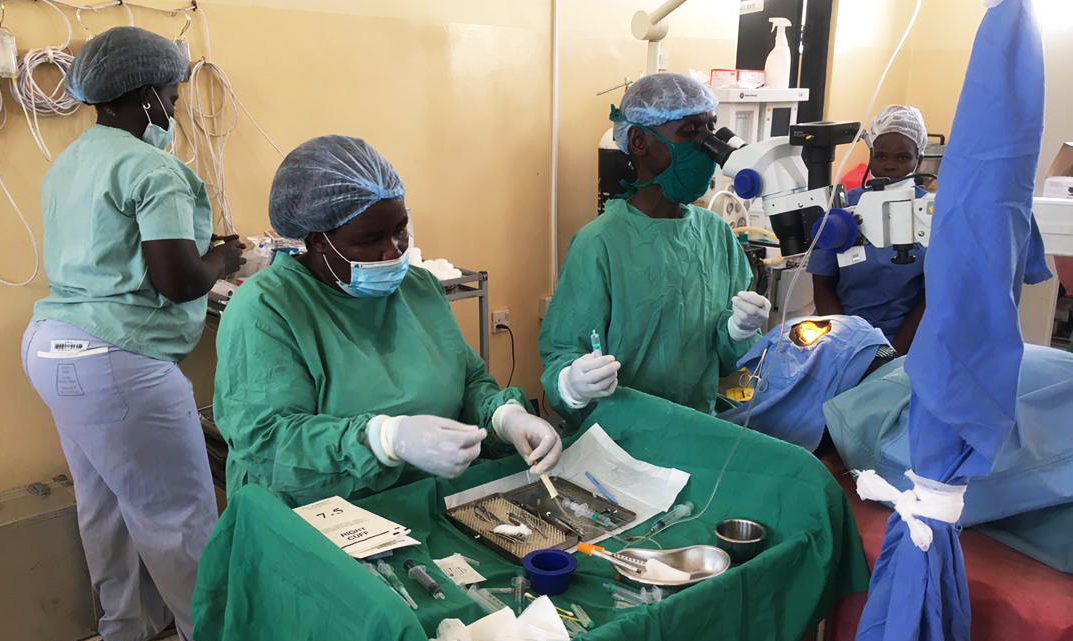
In Uganda, in the northern regions of Acholi and West Nile, the situation as regards visual health is worrying: there is a shortage of qualified specialist doctors, and health centres do not provide appropriate eye care services due to the lack of instruments and equipment necessary to tackle visual diseases.

Doctors with Africa Cuamm with CBM Italia (Christian Blind Mission) intervenes in these regions through the project “Foreseeing Inclusion” that aims to contribute to the reduction of avoidable blindness and that also invests on the training of health workers: 1,012 those trained in 2020 in order to sensitize communities on visual diseases, organize the fields of ophthalmic surgery and take care of the periodic monitoring of patients.

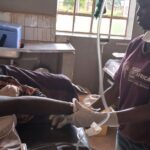
The beneficiaries of the project are many and with various diseases, from those suffering from simple cataracts that over time caused blindness, to those who became blind as a result of trauma. The stories of the people we meet every day in the field underline how simple surgery like the cataract removal can change life and their families.

Abdala, a 60-year-old refugee from the Imvepi camp in the Terengo district, suffered cataracts for at least 5 years before surgery: “It was like living constantly in the dark. First, I lost sight in 2018 and after two years, I became very blind. Little by little, I found myself needing help to do anything, even the simplest. My wife had to take care of me 24 hours a day and I am very grateful for this – she says – as well as thank the staff of Medici with Africa Cuamm and CBM for convincing me to do the surgery that gave me the opportunity to see“.

Thanks to artificial intraocular lenses, the day after the operation, Abdala has normally recovered the sight to the right eye. “I am now autonomous again and have a normal life without having to constantly ask my wife for help”.

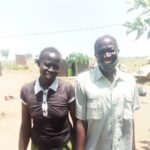
The story of Isaya, a 47-year-old refugee from the Rhino camp, was blind for 27 years after stepping on a mine. “A lot of people like me lost their sight after stepping on a land mine. Living without being able to see and be autonomous is a great suffering, I could not move alone, work to support my family, I felt useless and often mocked for my fragility. I tried to go to many hospitals but no one could solve my problem. – Says Isaya -. Fortunately, a Cuamm health worker from the Village Health Team advised me to go to the Ofua health center and I asked my brother to accompany me because I did not want to give up. I was able to operate and thanks to the surgery, I saw the face of my wife, of my children. Now I can finally see what I haven’t seen in 27 years“.

The stories of Abdala and Isaya are just some of the many happy ending stories made possible thanks to the project “Foreseeing Inclusion”, which aims to improve the quality of life not only of people who undergo visits and interventions, but also of their families.
A timely referral that opens the door to the future

Behind the maternal and child health intervention that CUAMM carries out in the field, there are thousands of stories of women facing obstetric complications and risking their lives due to the limits of the local health systems in offering first aid in emergencies.

Nevertheless, thanks to the trained staff working in the facilities, we can tell many though stories but with an happy ending.

Among them, there’s the story of Atim Kevin, a young girl coming from Ajaka C village, in Oyam district. She got pregnant when she was 18 years old, while she was still attending primary five. For this reason, she dropped out of school before completing.

Atim seemed to have no choice and the situation got even worse when her 16-year-old unemployed boyfriend left her because he wasn’t able to assume his responsibilities and taking care of Atim and their baby coming. Therefore, Atim decided to go live with her father-in-law who turned out to be a drunkard and careless of her health, leading her to perform an illegal abortion.

Unfortunately, she developed bleeding and abdominal pain due to a retained placenta which is a complication related to abortion. She went to Acut Health Center II, along with her neighbor, looking for post abortion care. Since that facility couldn’t offer appropriate related services, the midwife referred Atim and her neighbor to the next level of care system, the Anyeke Health Center IV. However, Atim decided to return home without notice because she couldn’t afford to stay in a health unit far away from home.

On the 24th of March 2020, Atim was taken in shock, with her clothes soiled with blood, to Ngai HCIII by motorcycle. Fortunately, during her arrival, a competent midwife was on service. She had just under gone an on-job mentorship on obstetric complications, particularly on the management of bleeding after birth, a training carried out by Annet, a maternal and neonatal health officer and a midwife mentor within the CUAMM programme “Mothers and Children First. 1,000 Days”. Together with the facility midwife, a quick assessment was performed which revealed that Atim had a septic retained placenta and she was severely anemic. Her blood pressure was very low, her heart beat very fast, and so she was confused and sweating profusely.

The team intervened quickly, taking care of her using all the necessary to tackle the situation. An ambulance supported by CUAMM was quickly activated and within an hour Atim was referred to Aber hospital where she was transfused.

Atim was discharged from the hospital 3 days later and then she was followed up at facility and community level with support of the CUAMM’s social worker, Village Health Team (VHT) and facility midwife.

“I am so grateful to CUAMM for saving me. The midwives saved my life.  Thank you! The transport by ambulance gave me the chance to survive. I was scared that I would die but I am alive today. With you I feel I have someone by my side” Atim narrates.

Maternal mortality and access to reproductive health services and obstetric emergencies are among the main proxies of the level of social inequality between developed and less developed countries and, within each country, between rich and poor. This is why it is essential to ensure high-quality and 24-hour obstetric services, including the constant availability of skilled human resources, medicines and equipment, transport and communications linking families and communities with the peripheral health network and the hospital, according to “the continuum of care” approach.

A REINFORCED COMMITMENT IN KARAMOJA

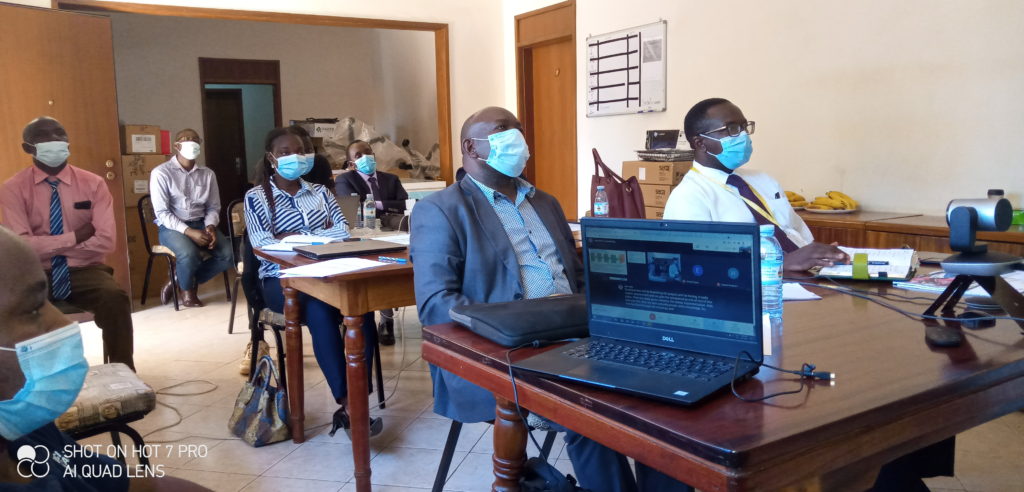
“Yesterday at CUAMM office in Kampala, we had an important meeting with the presidents of the health professional associations of Uganda to share the mentorship activity plan of the“Reproductive, Maternal, and Child Health Services Improvement Project” (URMCHIP), financed by the World Bank and implemented by the Ministry of Health – tells Dr. Peter Lochoro, CUAMM Country Manager in Uganda -. We had the chance to discuss together the memorandum of understanding”.

The meeting held in Kampala aimed to introduce the URMCHIP mentorship activity that will be carried out in Karamoja in addition to the eight project CUAMM is already implementing in the region. The meeting took place in the presence of the executive director of the Association of Obstetricians and Gynecologists, the president of the Association of Surgeons, the secretary general of the Association of Anesthesiologists, the president of the Anesthetic Officers Association, and the president of Uganda Paediatric Association.

“Everyone welcomed the engagement and pledged to work together – adds Peter Lochoro -. Next week we are starting with the training needs assessment and hopefully an entry meeting with the district departments of health”.

A new and great opportunity to reinforce the commitment of Doctors with Africa CUAMM in Karamoja.

Ethiopia Supporting the call of HINGOs

As Doctors with Africa CUAMM, we strongly support the call by HINGOs for the protection of aid workers and civilians in Ethiopia, to ensure assistance to the people in need in the country. Publishing the statement by HINGOs, we condemn any action against humanitarian aid workers.

In light of two recent attacks on humanitarians in Ethiopia, the Humanitarian INGOs (HINGOs) call for the protection of all humanitarian aid workers and civilians to enable assistance to reach all people in need.

On 24 March in West Wellega, a GOAL vehicle was attacked, and the driver killed by unknown armed actors. On 23 March in Tigray, a driver with the independent medical agency Doctors Without Borders was beaten and their team witnessed extrajudicial killings of civilians by armed forces.

In both cases, the vehicles were clearly marked as belonging to humanitarian, non-governmental agencies. Both agencies provide life-saving nutrition and health care to crisis-affected men, women, and children across Ethiopia.

In the last year, seven humanitarian aid workers in Ethiopia have been killed by armed actors.

The HINGOs are principled humanitarian actors and work with the consent of the Ethiopian government and abide by the laws of the country. Our 54 members serve people in need regardless of ethnicity, politics, or religion.

In 2019, the HINGOs reached over 28 million people in need with life-saving assistance and essential services across the country. The HINGOs employ over 13,000 Ethiopian staff and fewer than 1% of HINGO staff are internationals.

The HINGOs strongly condemn the attacks and killings of humanitarian staff and civilians. We call on all armed actors to uphold Ethiopian and international humanitarian law. These attacks and killings must be fully investigated and those responsible should be held accountable in accordance with Ethiopian law.

TB: A CHALLENGE TO FACE TOGETHER

Maria Menya Nakeny is 34 years old mother of 6 children. She had to fight against tuberculosis, in three different stages: drug-susceptible tuberculosis, multi-resistant tuberculosis (MDR) and finally extensively drug-resistant tuberculosis (XDR). In 2016 Maria began to feel sick and she immediately turned to a traditional healer hoping to find a solution for her symptoms, but unfortunately the herbal treatment prescribed did not improve her health. Therefore, she chose to go to the health center in Lopeei where she was tested positive for tuberculosis.

In September 2016 Maria started a six-month treatment, but she stopped taking medication once she began to notice an improvement in her health, just three months after starting the treatment. The treatment for tuberculosis requires a long time, great consistency and continuity, and, although the improvements in health can be noticed quickly, it is essential to complete the whole treatment to avoid relapses. A few months after giving birth to her 5th child Maria started getting worse again.

“I went to the St. Kizito hospital in Matany and I was diagnosed with tuberculosis again. I was hospitalised for 3 weeks and then transferred to the nearest facility to continue the therapy – says Maria -. After a few days I was called again and admitted once more to Matany hospital for 3 months since I tested positive for MDR tuberculosis”.

Maria had to walk for more than 4 km every day to get her medicines at the Lopeei health center regardless the scorching sun or the heavy rains. This is precisely why she stopped the treatment again for over a week. The CUAMM team in charge of Maria’s case immediately went to her house to convince her to start again the treatment. Shortly after, Maria became pregnant again: “I was worried about how I would continue the treatment and the potential effects on my baby – Maria explains -. However, the health workers reassured and encouraged me to continue my treatment path”.

After further tests, Maria tested positive for extensively drug-resistant tuberculosis (XDR) and her treatment needed to be changed to respond to the variation in her disease.

“I realized that life is very important and I regret the moment when I had stubbornly decided to drop out the treatment. The CUAMM team and the health professionals have been committed to saving my life in every way, much more than I did for myself. I am grateful to them. I also managed to buy some goats and sheep that I take care of and now I live happily with my family”, concluded Maria.

After 4 years, in November 2020, Maria finally completed her treatment and won her battle against TB. Now she goes to the hospital once a month for check-ups. She survived thanks to the help of passionate and dedicated health workers and thanks to the support of Doctors with Africa CUAMM. She therefore suggests to all those who do not feel well in her community to go to the health center even just for a check-up and to receive the assistance they need. She also encourages people who have tested positive for TB to be steady with the treatment to avoid facing what she’s been through.

This is one of the many happy ending stories made possible thanks to the intervention in Karamoja to improve the quality of  services for diagnosis and treatment of Tb and multi-drug resistant Tb, particularly within the projects: “It’s Good Tb free! Project to contribute to a TB Free Uganda by 2020“, financed by the Italian Agency for Development Cooperation, as part of the expenditure for technical assistance to the Global Fund for the fight against aids, tuberculosis and malaria and implemented by Doctors with Africa CUAMM in partnership with the University of Milan and the University of Makerere, and the project ” Support to St. Kizito Hospital of Matany and to the Napak Distrcit in Karamoja”, financed by Fondation Assistance Internationale (FAI).

CBM and CUAMM together in the fight against eye defects in Northern Uganda

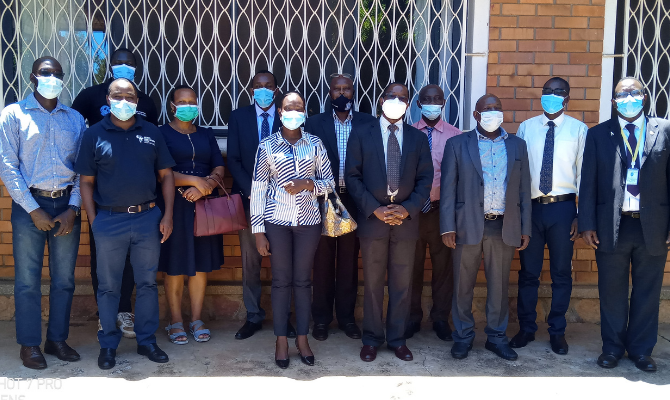
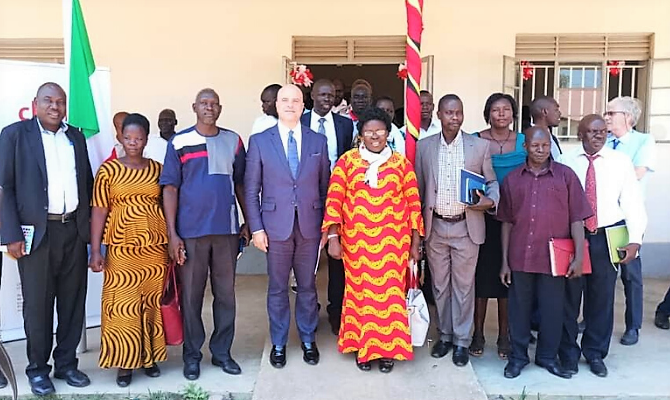
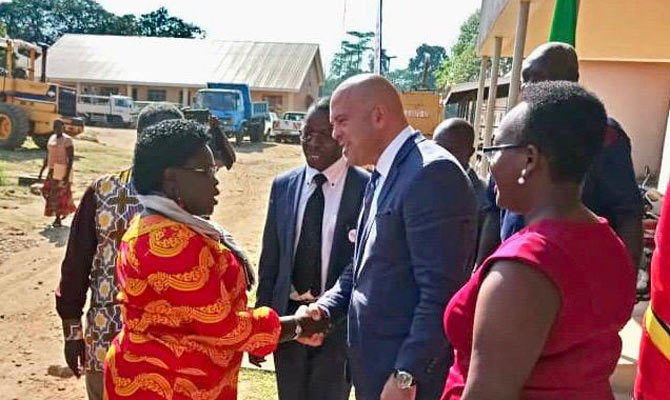
Christian Blind Mission (CBM) Uganda in partnership with Doctors with Africa CUAMM have launched a new project for eye care in Northern Uganda: “Foreseeing Inclusion: Eye Health and Disability Inclusion in Northern Uganda”. This three years’ project, funded by the Italian Agency for Development Cooperation, will be implemented in three districts of Arua, Kitgum and Lamwo. The launch was officiated by Dr. Joyce Moriku Kaducu, the State Minister of Health-Primary Health Care, and the Italian Ambassador H.E Massimiliano Mazzanti, along with other local government and districts officials.

According to the Uganda national census 2014, Northern Uganda accounted for 32% of all individuals with visual impairment with 75% avoidable blindness. Poor coverage of basic and secondary level eye care services largely contributed to this. The situation worsened even more in 2017, due to the increase of South-Sudanese refugees and the consequent overcrowding of the existing eye health facilities. The project, in collaboration with the Ministry of Health, arose from the need of the communities in the 3 districts and aims at contributing to the reduction in the prevalence of avoidable blindness by 2021, in line with the 4th Eye Health Action Plan 2016-2020.

«Awareness raising activities and primary prevention on eye defects are essential and they should be the key pillars of the project – the Minister Hon. Joyce Moriku Kaducu emphasized –. I support the decision to implement the project into those districts where the burden is really high among the locals and the refugees from South Sudan».

Dr. Peter Lochoro, CUAMM’s Country Representative in Uganda, gave a highlight of the work of CUAMM in Uganda especially in West Nile for over 50years: «I am grateful to the Ministry of Health for giving CUAMM the platform for implementing our projects and the local governments for integrating our work for better service delivery». «West Nile region remains a priority for the Italian government and I hope this project is just the beginning of many other bigger projects supported by the Italian government» concludes the Italian Ambassador Massimiliano Mazzanti, highlighting CUAMM’s long-lasting intervention thanks also to the welcoming nature of the locals.


A voucher scheme to reduce maternal and child mortality

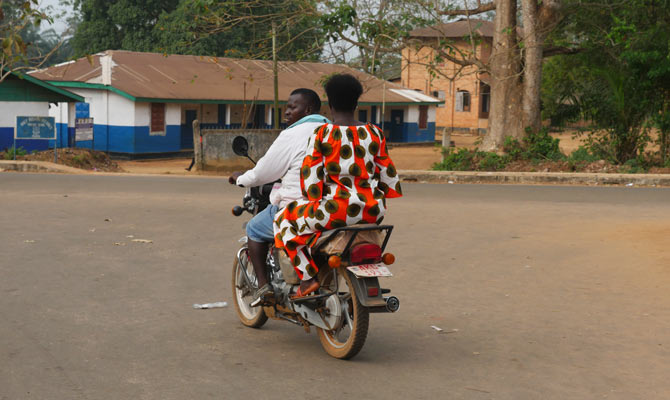
«I was 16 years old when I had my first child. Now, I am 22 and I have been pregnant three times. Two of my children died of malnutrition, before they reached the age of one. I gave birth to my first two children at home only receiving one antenatal care visit and not receiving assistance after my delivery. Things finally changed when I was pregnant with my third child, because I received a free transport voucher that enabled me to deliver my baby at the nearest health facility, Ariba HC II. As soon as I went into labour, I called boda boda (motorbike) that took me to the health centre and I gave birth to my baby that night. The health personnel took care of us and ensured due vaccinations for my baby. A health worker gave me advice on family planning and how to take care of my child at best».

Jiuliet Tino lives in Oyam district, Uganda and is one of the women who over the last year has benefited from the free transport voucher scheme promoted by Doctors with Africa CUAMM within the project “Mothers and Children First. 1,000 Days” and thanks to the support of the Symphasis Foundation. As many other in the region, her family lives with very little money: that is why her children have suffered of malnutrition but she could never afford health care.

In Uganda, many women face the same challenges as Juliet. In particular, Oyam District, located in a rural post-conflict region in the northern part of Uganda, has one of the highest maternal mortality rate. More than a half of the population live below the poverty line and still the high majority of pregnant women receive only one over the four antenatal care visits (ANCs) recommended by WHO, as well as less than a half of them use institutional delivery services. Affordable transport and long distances to the nearest health facility are key obstacles in accessing maternal and new-born services for poor women in Oyam district. Motorized vehicles (boda bodas, cars) serve most communities but the cost of transport challenges care access and assistance.

For this reason, the purpose of CUAMM’s project in Oyam “Mothers and Children First. 1,000 Days”, thanks also to the support of Symphasis Foundation, working with the district Health Management Team (DHMT), is to improve both access to the health system and quality of maternal and newborn health services. CUAMM successfully contributed to promote incentives mechanisms in the community, such as a free transport voucher system and motorbike ambulances.  «Voucher scheme is a really fundamental tool – Susan Achan, a midwife in Ariba HC II, adds –. It leads to increase the number of safe deliveries, providing village health teams with the opportunity to share health messages and additional services to mothers and babies».

Just like Juliet, Brenda Akot is another one of the many women who benefited from this effective service, and today she is happy with her child.

«CUAMM saved me and my baby’s life. Do not stop your work here. Look out for more mothers like me and help them. We know that when a mother dies, her children are less likely to survive We want a Uganda where no mother dies because she cannot afford the transport to reach the health facility. We want a Uganda where every woman has the right to a safe and assisted delivery».

All these women’s words demonstrate how transport voucher scheme has played a critical role in accessing safe and quality maternal and child healthcare.