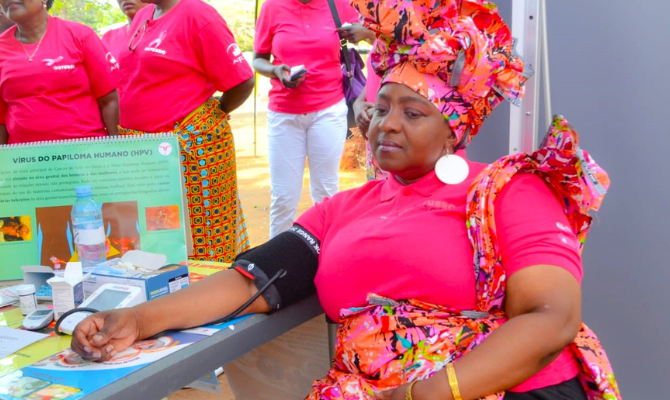
Responding to the Challenge of Non-communicable Diseases

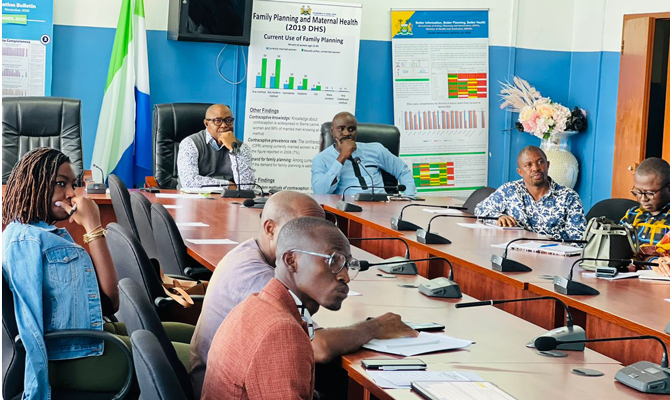
On September, Monday 19th in Freetown, Doctors with Africa CUAMM, in partnership with Partners In Health and MOHS, has presented to the Ministry of Health, PEN-Plus NCD Implementation, an integrated care delivery strategy of a group of severe NCDs (Non-Communicable Diseases) as type 1 diabetes, hypertension, rheumatic heart disease (RHD) and sickle cell at secondary levels.

«In Sierra Leone, at the national level, the PEN-PLUS project creates an opportunity to support the Ministry of Health and Sanitation in adopting appropriate tools to guide implementation of the NCD response in the country, strengthen the capacity of health care workers in quality service provision and generate evidence for decision making and advocacy.  – states Pauline Kibe, CUAMM Project Manager in Sierra Leone– This success of this project will be pivotal in defining the future of the NCD response in the country».

 NCDs are increasingly becoming a profound health concern for Sierra Leoneans and priority for MoHS then. Patients with diabetes living in rural parts of Sierra Leone, one of the world’s poorest countries, with a population of 7.5 million, with over 60% of its residents living below the poverty line often, struggle to get life-saving drugs as programmes addressing non-communicable diseases (NCDs) tend to be urban-based. But an initiative to address life-threatening NCDs affecting patients has been extended to rural parts.

A study on the burden of NCDs in Sierra Leone highlights alarming trends in mortality rates and Disability-Adjusted Life Years (DALYs) resulting from NCDs over the past decade.  In 2017, 39.5% of all deaths and 33.9% of all DALYs were attributable to NCDs and other injuries as compared with 18% and 23%, respectively, from the prior 10 years.

It is noteworthy that, in 2013, MOHS began developing and implementing strategies aimed at addressing the increasing burden of NCDs.  For instance, the country’s first National NCD policy to facilitate integration of NCD care services into the public health agenda was launched in 2013. Even prior to that, Sierra Leone had also been implementing the WHO Package of Essential Non-Communicable Diseases Intervention (WHO-PEN) for primary health care. While these interventions saw appreciable achievements along some metrics, certain significant challenges still remain. Some of these challenges include low skill levels among health workers, poverty and difficulty maintaining wellbeing, lack of access to quality health services, inconsistent funding, and poor data monitoring and evaluation feedback mechanisms, to name a few.

In an effort to address these ongoing challenges, and to build upon the successes of the country’s WHO PEN programs, Partners in Health, CUAMM and the MOHS are undertaking joint efforts to implement a 3-year PEN-Plus Program (2022-2024). PEN-Plus complements WHO PEN, which addresses less severe NCDs such as uncomplicated hypertension and type 2 diabetes at the health center level. PEN-Plus focuses on service provision in rural settings and aims to provide integrated chronic care services for a group of severe NCDs, including diagnosis, symptom management, psychosocial support, palliative care, and referral for surgical and other specialty care when necessary.  PEN-Plus also bridges major gaps in training, mentorship, and referral pathways for NCD services and the program will be training mid-level providers such as nurses and clinical officers.
Given the positive outcomes PIH has had with implementing a NCD clinic in rural areas, noting CUAMMs extensive work on diabetes, and through the strengthened partnership between the two successful organizations, the PEN-Plus program will pursue to establish a “model rural PEN Plus site“ for NCD care in Sierra Leone at KGH (a district hospital), by improving availability and quality of NCD clinical services, conduct a needs assessment in Pujehun District to enable implementation of a second NCD Pen-Plus clinic, establish KGH as a PEN Plus training center and rural rotation site for NCD management, strengthen the decentralized WHO PEN approach for management of less complex cases at primary health facilities in Kono District and collaborate with MOHS to develop a national strategic and operational plan for PEN Plus implementation.

A small step forward to meet the challenges of NCDs.

RESPONDING TO THE CHALLENGE OF NON-COMMUNICABLE DISEASES

On September, Monday 19th in Freetown, Doctors with Africa CUAMM, in partnership with Partners In Health and MOHS, has presented to the Ministry of Health, PEN-Plus NCD Implementation, an integrated care delivery strategy of a group of severe NCDs (Non-Communicable Diseases) as type 1 diabetes, hypertension, rheumatic heart disease (RHD) and sickle cell at secondary levels.

«In Sierra Leone, at the national level, the PEN-PLUS project creates an opportunity to support the Ministry of Health and Sanitation in adopting appropriate tools to guide implementation of the NCD response in the country, strengthen the capacity of health care workers in quality service provision and generate evidence for decision making and advocacy.  – states Pauline Kibe, CUAMM Project Manager in Sierra Leone– This success of this project will be pivotal in defining the future of the NCD response in the country».

 NCDs are increasingly becoming a profound health concern for Sierra Leoneans and priority for MoHS then. Patients with diabetes living in rural parts of Sierra Leone, one of the world’s poorest countries, with a population of 7.5 million, with over 60% of its residents living below the poverty line often, struggle to get life-saving drugs as programmes addressing non-communicable diseases (NCDs) tend to be urban-based. But an initiative to address life-threatening NCDs affecting patients has been extended to rural parts.

A study on the burden of NCDs in Sierra Leone highlights alarming trends in mortality rates and Disability-Adjusted Life Years (DALYs) resulting from NCDs over the past decade.  In 2017, 39.5% of all deaths and 33.9% of all DALYs were attributable to NCDs and other injuries as compared with 18% and 23%, respectively, from the prior 10 years.

It is noteworthy that, in 2013, MOHS began developing and implementing strategies aimed at addressing the increasing burden of NCDs.  For instance, the country’s first National NCD policy to facilitate integration of NCD care services into the public health agenda was launched in 2013. Even prior to that, Sierra Leone had also been implementing the WHO Package of Essential Non-Communicable Diseases Intervention (WHO-PEN) for primary health care. While these interventions saw appreciable achievements along some metrics, certain significant challenges still remain. Some of these challenges include low skill levels among health workers, poverty and difficulty maintaining wellbeing, lack of access to quality health services, inconsistent funding, and poor data monitoring and evaluation feedback mechanisms, to name a few.

In an effort to address these ongoing challenges, and to build upon the successes of the country’s WHO PEN programs, Partners in Health, CUAMM and the MOHS are undertaking joint efforts to implement a 3-year PEN-Plus Program (2022-2024). PEN-Plus complements WHO PEN, which addresses less severe NCDs such as uncomplicated hypertension and type 2 diabetes at the health center level. PEN-Plus focuses on service provision in rural settings and aims to provide integrated chronic care services for a group of severe NCDs, including diagnosis, symptom management, psychosocial support, palliative care, and referral for surgical and other specialty care when necessary.  PEN-Plus also bridges major gaps in training, mentorship, and referral pathways for NCD services and the program will be training mid-level providers such as nurses and clinical officers.
Given the positive outcomes PIH has had with implementing a NCD clinic in rural areas, noting CUAMMs extensive work on diabetes, and through the strengthened partnership between the two successful organizations, the PEN-Plus program will pursue to establish a “model rural PEN Plus site“ for NCD care in Sierra Leone at KGH (a district hospital), by improving availability and quality of NCD clinical services, conduct a needs assessment in Pujehun District to enable implementation of a second NCD Pen-Plus clinic, establish KGH as a PEN Plus training center and rural rotation site for NCD management, strengthen the decentralized WHO PEN approach for management of less complex cases at primary health facilities in Kono District and collaborate with MOHS to develop a national strategic and operational plan for PEN Plus implementation.

A small step forward to meet the challenges of NCDs.

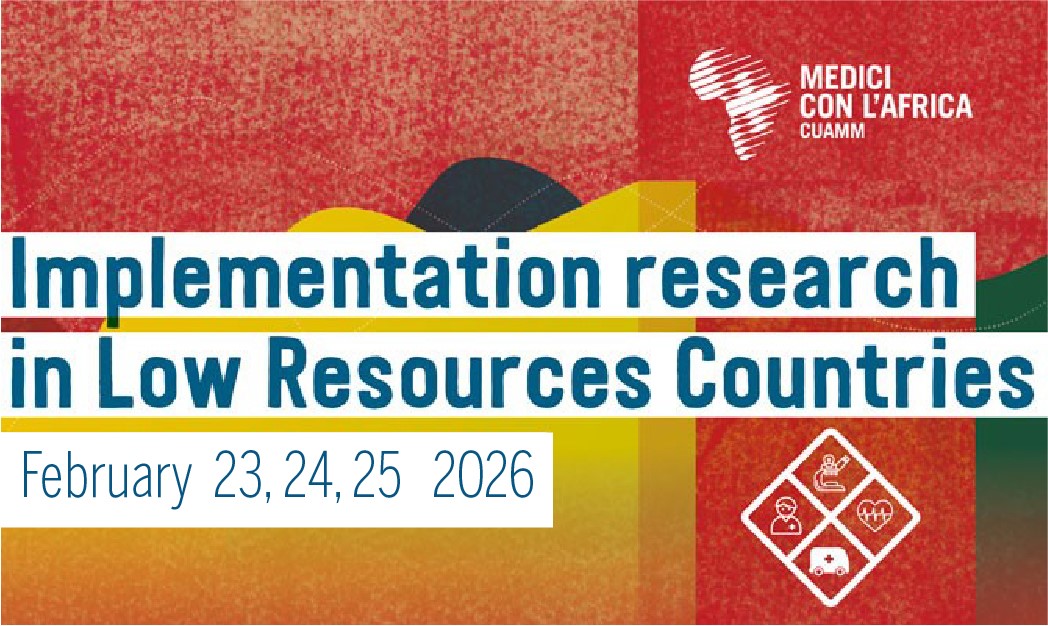
Implementation research in low and middle income countries 2026 edition

A training course on implementation research in low and middle-income countries: theoretical training will be accompanied by practical exercises and group works.

An in-presence course lasting three days, from Monday 23 to Wednesday 25 February, at the headquarters of Doctors with Africa Cuamm, in Padua, Italy.

The 2026 edition of the course will be entirely in English, to allow international researchers to participate as well.

The course is addressed to young graduates, postgraduates, PhD students with a healthcare or related background and/or professionals interested in learning more about operational research in the field.

A course organized by


In partnership with
With the patronage of

Enrolment: The course has a limited number of participants. To enrol, please complete the registration fields below. Only after receiving a confirmation email, it is possible to pay the contribution. In the event of too many applications, a selection of participants will be made.

Payment: After receiving confirmation of admission to the course, it is possible to make a transfer of Euro 200 at bank MPS, IBAN IT95 W010 3012 1500 0000 0295 337 in favour of Doctors with Africa CUAMM with the reason for payment “IR course contribution SURNAME NAME”.

DOWNLOAD THE PROGRAMME

Registration is closed because we have reached the maximum number of participants. If you still wish to fill out the registration form below, please note that you will be placed on a waiting list and contacted to participate in the course ONLY IF SOMEONE WHO IS ALREADY REGISTERED WITHDRAWS. We will offer this course again in February 2027.


No Fields Found.

ANNUAL MEETING WITH POPE FRANCIS

Pope Francis special audience to Doctors with Africa CUAMM, during the twelfth edition of the Annual meeting. We are waiting for you on November 19th in Rome!

ANNUAL MEETING WITH POPE FRANCIS 

NOVEMBER 19th, 2022 

9 a.m. 

Consult the program 

No Fields Found.

CULTURE WEEK IN KARAMOJA: AN OPPORTUNITY TO DONATE BLOOD

Karamoja Culture Week, an event that celebrates, every year in September, Ugandan traditions, particularly Karamajong ones, just ended. Involving hundreds of participants, the event becomes an opportunity to raise awareness about healthcare. In the village of Abim, Doctors with Africa CUAMM has promoted the “blood bank”, trying to raise awareness about the importance of donating.

In two days alone, 130 units of blood were collected from generous donors in the food markets of Orwamuget and Nyakwae. The activity is part of a large project, implemented with the support of the Embassy of Ireland, in collaboration with the Ugandan Ministry of Health, the country’s Blood Transfusion Services, the University of Mbarara, health professional associations and the 9 local district governments of Karamoja (Moroto, Kotido, Napak, Abim, Nabilatuk, Nakapiripirit, Amudat, Kaabong and Karenga).

The primary objective is to strengthen district health systems in Karamoja to improve access to health for mothers, children, adolescents (RMNCAH) and HIV patients. At the same time, the program aims to encourage capacity for the safe collection, storage, distribution and use of blood and plasma.

«When my son was sick at the age of three – says Adero Pauline, who sells manioc at the Nyakwea market – we reached the hospital. The kid needed blood, but there were no units available at that time. So, we were forced to travel more than 30 kilometres to reach Amolatar district. During those hours of travelling, I thought my baby was not going to make it. Thank goodness, we found the blood and my son survived. Now he is 11 years old, he is doing well and that is why I am here today to donate, in the hope of saving the lives of other children who might need it».

Prophecy Official, a gospel singer from Abim, also participated in the Culture Week in Karamoja: «Many mothers die from post-partum haemorrhages. I donate blood whenever the opportunity is given, so that I can save as many women as possible».

«When I was 16 years old – remembers Ernest Ayen, Abim district youth chairman – on my way back from school, I found out that my mother had just been admitted to the hospital and needed an immediate blood transfusion, which, fortunately, arrived».

«I have a cousin who was recently rushed to the hospital, right when I was at her house. She needed blood, but there was none at the hospital in Abim. My uncle had to rush to Lacor Hospital in Gulu, 300 kilometres away. Thanks to the transfusion, she is now healthy.

I am grateful to the donors, this is why I give myself. CUAMM explained to me that the blood collected during the event will remain in our region to save mothers and children. I am happy about this!».

Blood donation represents, in concrete terms, a public health intervention: we donate not only to do good to the recipient, but also to ourselves.

OBSTETRICIANS WITH AFRICA THANKS TO MEGA SCHOLARSHIP

Lucia and Elisabetta, ages 22 and 25, both had the strong desire to get to know Africa. There was no doubt in Lucia’s mind when she attended the Michele Mega Scholarship Project presentation at the University, she wanted to apply for the 2022 edition: «Listening to the testimonies and the stories, seeing the faces of the female students who left before me was the motivational drive. Today I realize that the time spent in the field was much more than an experience, it was an opportunity for professional and personal growth».

For Elisabetta, Africa has always been her calling: «I decided to enrol in the Obstetric degree program because my dream is to work in developing countries. Winning the Mega scholarship and learning the profession in a hospital with limited resources was a profound moment of living with Africa. I will be working hard so that it can be repeated in the future!».

Being very young, this was the first trip to Africa for Lucia and Elisabetta: a window to understand how to practice health cooperation with, the true mission of Doctors with Africa CUAMM. Ethiopian obstetricians followed the students in their internship journey, gifting satisfaction and precious memories. «The greatest gratification – for Lucia – was when, at the end of a long day, the head nurse told me: ‘You will be a very good obstetrician!’. These words filled my heart, because I did not expect them».

Elisabetta, on the other hand, cannot forget the relationships she formed with patients, «I felt gratified in so many small moments when I was able to be ‘home’ for a mother to-be. Sometimes, all it takes to reassure a woman in labour is a look. Eyes speak and welcome ‘I am here with you now’ mine whispered. With one patient in particular it was exciting to build trust during a difficult birth, then, to find her after a long time by chance, with her healthy baby. She stopped to say goodbye and thanked me. It was proof that even if you meet for just a short time, the experience you share is intense and you cherish it forever».

The biggest obstacle for Lucia and Elisabetta was working in a setting with limited resources, where helplessness is often experienced. «Even though I was aware of what I was getting into – explains Lucia – being in a hospital where children are dying at any moment really tested me».

Grief is also processed through the support of colleagues, with whom friendships can be formed. With healthcare professionals, opinions are exchanged, skills are refined, cultures are compared. «I met an Ethiopian nurse, who invited me to her home. Her mom cooked lunch and, like all mums in the world, she was worried I was not eating enough. In Ethiopian families, when you have a guest, you offer kid, a delicacy. Because I am vegetarian, my colleague’s mom had to reinvent herself and she was great at cooking veggie dishes! On another occasion this friend of mine lent me a traditional dress to go visit an Orthodox church together, it was especially meaningful to me».

«We lived in a guest house – says Elisabetta – together with the medical residents, the Junior Project Officers, with whom we teamed up. Many interesting people came through here, like a computer scientist without borders, designers, doctors. A really constructive melting pot!».

What about the future? Lucia and Elisabetta are now busy writing their thesis, dedicated precicesly to their experience in Wolisso. «After graduation, I would like to do Universal Civil Service with CUAMM, before finding a job», Lucia concludes. «Before going back to Africa – Elisabetta expresses – I would like to deepen my training, practicing in Italian hospitals, and then live in the field and offer a complete clinical background!».

TENDER ANNOUNCEMENT TENDER FOR THE PROVISION OF PRINTING PRESS MATERIAL AND OFFICE STATIONARY

Doctors with Africa CUAMM Ethiopia is launching the present Local Open Procedure to select eligible suppliers for Printing Press Material and Office Stationary.


00 Printing and Stationery_Tender announcement

01 Printing and Stationery_Contract Notice

02 Printing and Stationery_Instruction to participants

03 Administrative Compliance Grid

04 Evaluation GridAnnex

Annex I_Tender Submission Form

Annex Ia _Declaration of Hounor

Annex II and III_Specifications and Technical Offer

Annex IV_Financial offer

Annex V_Legal Entity

Annex VI_Financial Identitfication form

Annex VII_Contract Form


IN SCHOOL WITH TEENS TO FIGHT HIV

«Since last April, – reports project leader Chiara Didonè from the field – we have been implementing a program, financed by AICS, led by the University of Florence, in the Shinyanga area, with the aim of treating young people effected by HIV, but in particular to raise awareness on the value of prevention. Prejudices related to this virus hinder early diagnosis, as well as geographical distances and poor transportation to reach hospitals and specialized centers discourage people from taking the test.

For this reason, CUAMM goes to schools, setting up stands entrances of institutes. After awareness raising activities, we offer testing. We are also present in the Shinyanga Regional Hospital and in the health centers of Ngokolo and Bugisi, where we support health workers and where we offer real “adolescent clinics” every Saturday, so that young people with HIV can take advantage of routine checkups, receive treatment and meet more of their peers.

During the first phase of the project, in collaboration with local authorities, 15 schools, 10 secondary and 5 primaries, were selected to reach the 10-24 age group. In June alone, the program reached 444 students. Fundamental was the role of CUAMM’s Tanzanian doctor, who also works in sex and reproductive education: together, we overcome language issues – I am learning, slowly, Swahili – but above all else, we try to make the students comfortable.

I remember a significant episode about how words and knowledge can help change perspectives. Before going to a school, I met with one of the teachers to explain how the awareness and screening day would take place and to find out how many young people would participate: out of hundreds initially, only 16 agreed to be tested for HIV. All the others were fearful. Based on this number, we reached the institution with just a stand and one nurse, but after conducting the awareness activity, the screening involved as many as 117 people and we stayed at the school until 7 p.m.!

After that day, I engaged some students in a chat to understand what had contributed to overcome their fear and take the test. The most obvious aspect was to offer that service in school, in a context where almost every one of them felt understood. We professionals are a young team, we put music on, I talked while some students touched my hair, the driver made jokes. With little, we got them involved, as if we were among friends! The emotional bond that develops between CUAMM cooperators, especially during these outreach initiatives, is very strong and it works.

The testing part is always psychologically difficult. I remember when 17-year-old Elisa found out she was positive: the young girl did not know that her mother had HIV. Thanks to CUAMM Elisa was diagnosed, now she receives proper treatment, and has been informed of HIV-positive support project.

There is still much work to be done to combat prejudice and properly support patients, but Elisa’s story is proof that what CUAMM is doing is helping.

We have not stopped in summer either, as we have organized community-wide meetings with “over 20s”. Soon we are going back to school, between colleges and high schools, to be with Tanzanian girls and boys. To accompany the hope of a future in wich awareness decreases the risk of contracting the HIV virus, a future that as such, from young people cannot disregard!».

TRAINING: A NECESSITY

To provide better health services is possible, including in the Karamoja and Lango regions, by strengthening human resource training.  Since last June Doctors with Africa CUAMM, in collaboration with Elma Foundation, has been supporting a three-year project on maternal and child health to strengthen the skills of health personnel and offer support to the Ugandan Ministry of Health.

There are 37 professionals included in the training, among them anesthesiologists, radiologists, pediatric nurses, laboratory technicians and midwives.

The project was presented during a conference organized in the city of Soroti, which was attended by key stakeholders from the 9 districts of Karamoja and the 4 districts of Lango. This was a key moment for the involvement of local authorities, managers and health facility workers.

Karamoja and Lango regions, with a population of 3,756,500 people, suffer from a shortage of human resources in the health sector. In 2021, there were 1,164 vacancies in Karamoja, accounting for 41% of positions, while Lango had 936 vacancies, accounting for 27% of positions. There was a wide disparity of vacancies among districts and some key positions, such as anesthesiologists and radiologists.

During the meeting in Soroti, Peter Lochoro, CUAMM’s country representative in Uganda, emphasized that this program is timely to increase the number of anesthesiologists and to encourage learning about the use of equipment, such as x-ray machines, and in newborn care. “I am asking the districts to support us as partners in absorbing qualified staff – Lochoro said – starting with placement in private non-profit hospitals or neighbouring districts where there are shortages, so that professionals do not go out of work or change cities after specializing”.

On behalf of Elma Foundation, Rita Akankwasa thanked Doctors with Africa CUAMM for the fruitful collaboration, in support of Karamojacand now Lango to provide quality health services: “Recently CUAMM and Elma  successfully concluded a 4-year program in Karamoja, during which they worked in synergy with the districts to identify local nurses and midwives to be offered specialization. We are working hard, so that these health workers will be absorbed into the country’s workforce”.

In conclusion, the gratitude expressed by Patrick Barughare, representing the Ugandan Ministry of Health: “When we talk about human resources for health, we focus not only on health workers, but on all those people who are engaged in actions that make a difference in the health service. In Uganda, human resources for health is guided by a 10-year strategic plan (2020-2030), which includes three steps: planning, development and management. The major issues are limited salaries, the need for thorough training, and lack of equipment. This project is helping us address all these difficulties, for better health care!”.