International Women’s Day Two portraits of determination

Women are central to Doctors with Africa CUAMM’s commitment to health, and they are also on the front lines of acting for change. Women are 55% of the expatriate human resources of Doctors with Africa CUAMM; European and African professional women are working at the forefront in the fight against maternal mortality, as well as against malnutrition, HIV, and non-communicable diseases. They manage projects, mediate with local authorities, decide how to use funds, and often are balancing work and raising children as well.

For Women’s Day, Doctors with Africa CUAMM is spotlighting two stories from the field: Inocencia Fumo, a Mozambican doctor, and Martha Nyabel, a South Sudanese project manager.


“If we study, we can be what we want”

Inocencia Fumo is 36 years old, comes from Nampula, in the north of Mozambique, but has lived in Beira for sixteen years, where she was able to study medicine thanks to a scholarship. She says that being a woman helped her get the scholarship, but then as a young doctor she had to deal with the distrust of some patients, especially older men, who were not used to being treated by a young woman doctor. Years and experience solved this problem. Now she has three daughters and works with Doctors with Africa CUAMM managing a project to fight diabetes and hypertension. She sees education as the key:

I always tell my three daughters that the important thing is that they go to school: everything starts from there. If we are educated, we women can go where we want, do and be what we want. When they don’t feel like going to school, I show them that I go to work even when I don’t feel like it, because now I’m doing what I studied for, what I’ve always wanted to do. I’d like them to become strong women, with positive attitudes, who are not afraid to follow their dreams and not afraid to fall down. Because by falling down we can get up again and keep going. It was my father who first encouraged me to study. There weren’t many fathers who thought like him, but I was the first in the family to graduate, and then he graduated too and now he’s a lawyer, and my mother, who studied mathematics, also graduated.”


“My personal success”

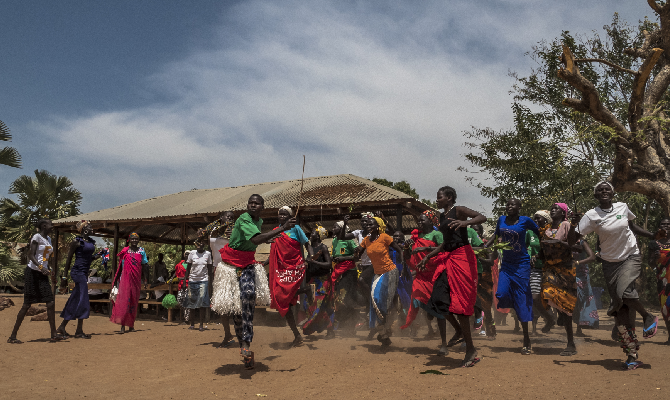
Martha Nyabel, a South Sudanese woman from the state of Jonglei, worked for three years in Nyal, an extremely rural area of South Sudan, where Doctors with Africa CUAMM implemented an emergency project for refugees fleeing conflict and hunger. She has dedicated herself to bringing health services to the furthest outposts, succeeding in building an emergency operating room and coordinating several mobile clinics. Patience and perseverance are her key qualities, as she says:

This project has improved the lives of many people. It is a true joy for the community and for me too. I experience it as a personal success. These were three intense years: the first year was really extreme. Sometimes I found myself thinking, “What the hell am I doing here?” and also “Be patient, wait.” Now I can see all these smiles on people’s faces because of our efforts. I worked hard to complete this project, so now I’m happy!”
Making a difference with migrant people

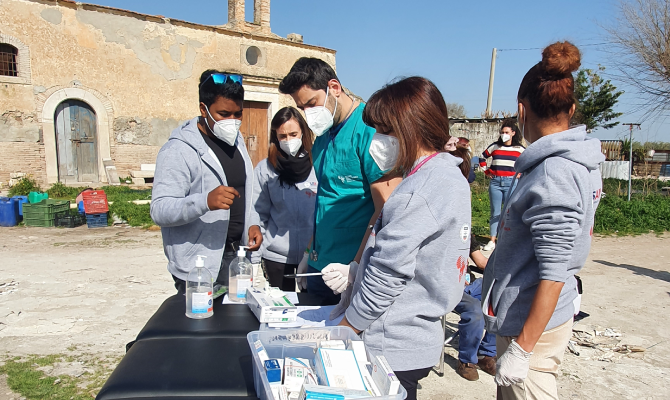
Aaditya Sharma Dalooa is 29 years old, speaks 6 languages, and comes from Mauritius. He is a cultural mediator for the Municipality of Bari, in Puglia, and for the Casa Cultura Association. He meets with immigrants in Puglia, laborers who live in the informal settlements, and he helps them get oriented in the labyrinth of Italian bureaucracy. He translates documents for them, gives advice on how to apply for a residence permit or how to keep in order all the papers needed for all the different procedures.

“I came to Italy with my family in 2009. My mom, my dad, and my brother,” says Aaditya. We chose Italy to build a future, to give us a chance at a dignified life. And we found it. I already had a science diploma, but it wasn’t recognized here in Italy as a course of study, so I had to go to high school for three years. Then I enrolled in university and I still have two exams to do plus a thesis to graduate in Literature and European Union Law. In the meantime, I took courses to become a cultural mediator, which let me find a part-time job, thanks to CUAMM as well.”

The informal settlements in Foggia are one of the saddest parts of the situation in Italy. Immigrants, mostly men from Africa, live in very precarious, often degrading conditions. They work under the table in the fields, picking tomatoes, asparagus, olives, and grapes. From 4:00 in the morning to 5:00 in the evening for €2.50 per hour. They have no rights, no recognition because if you have no fixed residence, you can’t ask for an ID, which takes 9–10 months anyhow. With an expired residence permit, the only chance to make money is working under the table.

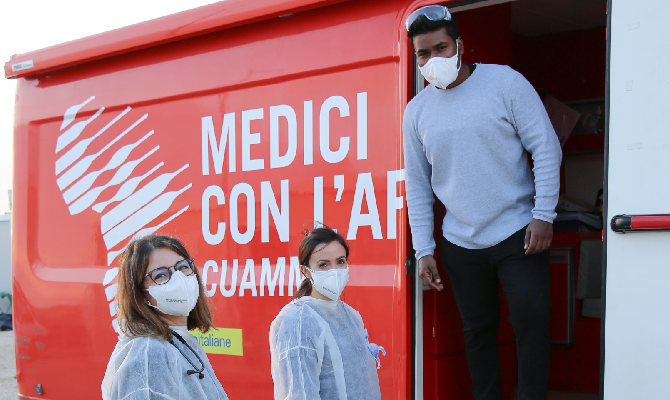
Aaditya goes with the Doctors with Africa CUAMM Bari camper-clinic every time it visits the eight settlements of Casa Sankara and Arena in the Province of San Severo, where about 650 people live, as well as to the farmhouses of Borgo Cicerone (San Marco in Lamis) and Pozzo Terraneo (Cerignola). These are very isolated properties, where around a hundred immigrants find shelter, mostly men from Africa, from Senegal, Gambia, Burkina Faso, and Nigeria.

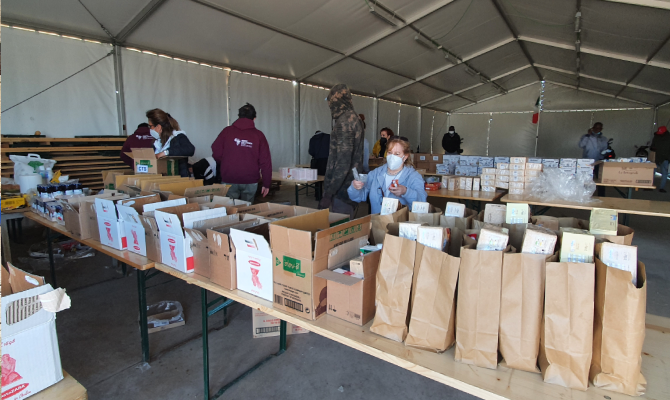
Aaditya explains, “These are buildings far from everything, without water, electricity, or windows. Nobody comes here, no services, no ambulances if someone is sick. There is not even a way to get to a supermarket. Thanks to CUAMM and to the IRC-19 project, food kits adequate for 1 month are distributed. Every time we bring the kits, I am moved to see how these people can hardly wait to get the package in their hands to open it and be able to eat. And so when they hear that the camper with the doctors is coming for the visits, they greet them as ‘saviors.'”

This is all made possible through the indispensable role of the cultural mediator who helps doctors communicate with immigrants and helps them overcome their natural fear and mistrust to let themselves be checked and helped.

“I like this work very much. Thanks to the CUAMM team that works so hard to help these people who no one thinks about, and thanks to the support of USAID, we are really making a difference for these people.”

From the start of the project through January, 2,200 food kits, or 33,300 meals, were distributed.

This story is made possible by the generous support of the American people through the United States Agency for International Development (USAID). The contents are the responsibility of Doctors with Africa CUAMM, recipient of the Fixed Amount Award (FAA) No. 7200AA20FA00013 and do not necessarily reflect the views of USAID or the United States Government.

Maria Stella “I never expected to be treated so kindly”

Maria Stella Fernandez comes from humble origins, but she never needed help from anyone. Since 2008, when she arrived in La Spezia from the Dominican Republic, she has always worked, not stopping for a second. She even managed to bring her children to Italy. Maria Stella supports her daughter and grandchildren: two years ago, she decided to move into a new apartment, closer to her grandchildren’s school.

“We used to pay less rent” she explains “but it was too far from the kids’ school. There were few buses connecting the hold place and the school, and they were so little: I couldn’t stand to see them going out still very sleepy every single morning. I decided to look for a new apartment. I was working as a caregiver at the time, for an elderly couple here in La Spezia. It was enough to make a living, pay for a better apartment and give my grandchildren what they needed. Then Covid-19 came.”

The family Maria Stella was working for suddenly decided to let her go. The couple’s daughter thought it might be too dangerous to have someone in their home who might give them the virus. Maria Stella understood their fears but had to come to terms with the lack of a salary in the middle of a pandemic, with an expensive new home and three people to take care of.  Her former employer suggested her to go to the Don Bosco Church, just to see if they could help her somehow.

It was the beginning of the summer, when Maria Stella met Daniela and Moreno, who volunteered for the group “Colazioni col Sorriso” (Breakfast with a smile) and gave her the help she needed.

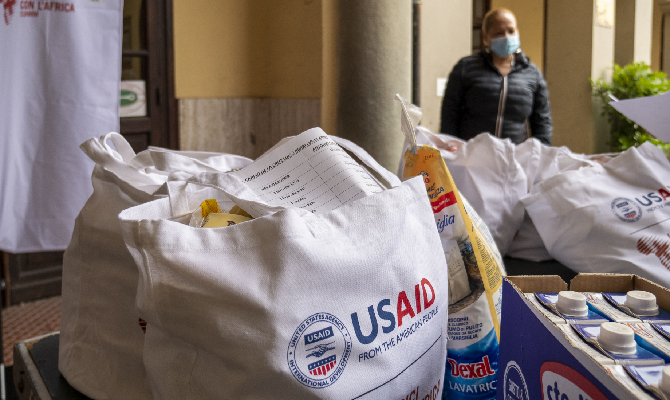
“Let me tell you something, she says, I never expected to be treated so kindly! Until the middle of January, every two weeks they gave me all I needed to eat: pasta, rice, tomato sauce, vegetables, olive oil, jam and biscuits, even some sweets for the kids. It was such a joy to receive all this good food in this situation. In January I found a new job: they give me 800 € per month, but it is enough to pay for the apartment and to buy my own groceries. So I decided to quit the programme. There is plenty of people in need, I advised lot of my friends to go the same volunteers for help. I simply think that now they deserve this help more than me. But I don’t regret anything: the first time I received my pack I cried for joy and I would do the same thing again if I needed to. I would never starve, or let my kids suffer! These volunteers have been so good to me, I can’t pay them back financially, but I told them: I am ready to do my part. I will always be grateful to them; they have been wonderful!”.

As Maria Stella get back on her feet, many people still need food assistance in La Spezia. Doctors with Africa CUAMM has provided support to the volunteers of “Colazioni col Sorriso” in La Spezia thanks to the U.S. Government, which through USAID is supporting a number of projects in Italy, aiming at reducing the impact of the COVID-19 epidemic. From August 2020 to December 2020, 30,000 kg of food have been distributed in La Spezia.

This story is made possible by the generous support of the American people through the United States Agency for International Development (USAID). The contents are the responsibility of Doctors with Africa CUAMM, recipient of the Fixed Amount Award (FAA) No. 7200AA20FA00013 and do not necessarily reflect the views of USAID or the United States Government.

TELEMEDICINE, DISTANCE LEARNING AND FAMILY VISITS DURING COVID-19

Being a community during Covid-19 has been easier for San Patrignano, thanks to Doctors with Africa CUAMM. Last November, the NGO supported San Patrignano Community installing a new Wi-Fi network in the medical centre and four video stations. The technologies have already been used to put in contact the hosts of the community with therapists, doctors and families, ensuring the continuity of care during the pandemic. This new IT system is funded by the U.S. Government through the United States Agency for International Development (USAID) and will improve the work and quality of life of people in the community, paying particular attention to HIV+ patients admitted in the medical centre.

San Patrignano Community hosts a thousand people for rehab and has also a medical centre where patients with HIV and AIDS are treated. During the first lockdown, between March and May 2020, the community has been spared by Covid-19, sacrificing much of the services offered and limiting contacts with the outside. New admissions were postponed, as well as family visits, and psychotherapies which involved professionals coming from the outside were reduced. With the new video stations, these activities have been developed online, while the medical centre can now guarantee consultations and check-ups for the patients via telemedicine experimentation. Students who live in San Patrignano have been using the video stations to access distance learning classes, with a big improvement in terms of comfort.

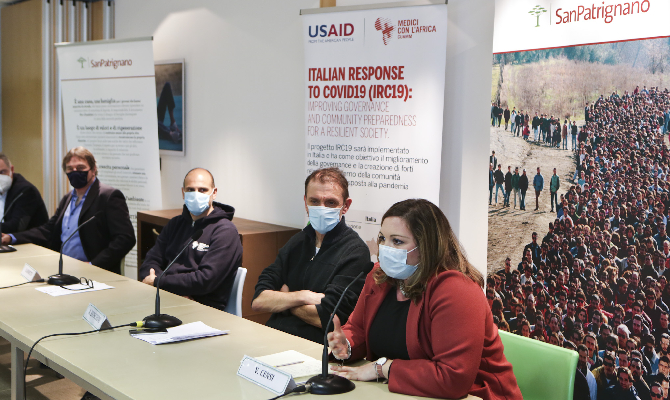
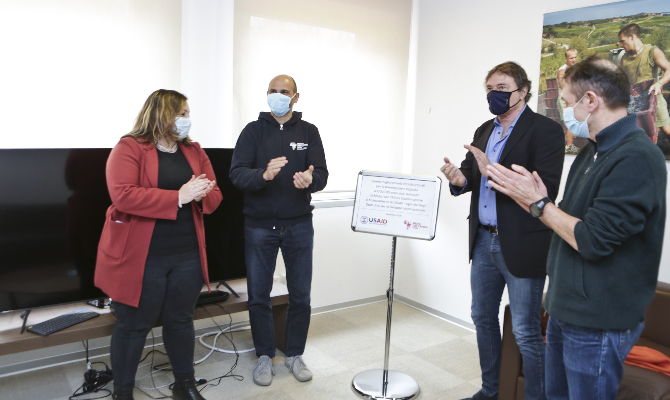
Alessandro Rodino dal Pozzo and Antonio Boschini, respectively president and medical director of San Patrignano’s Community, hosted at the handover ceremony, together with Mimma Spinelli, mayor of Coriano, and Veronica Censi and Andrea Iannetti from Doctors with Africa CUAMM.

Alessandro Rodino Dal Pozzo, president of San Patrignano, stated,

“This project is really important to us. Covid-19 forced us to reorganize our work and the lack of contacts with the world outside our community might have been an unbearable burden for our guys. In the beginning, we tried to replace physical meetings with phone calls, both to reach out to family and doctors. Then we understood that seeing their beloved and talking via video calls with therapists and doctors was much more efficient for our hosts. To achieve this goal, the support of Doctors with Africa CUAMM has been fundamental. Over the last two months, from December 2020 to January 2021, we have made possible 230 calls between our guys and their families, 148 telemedicine consultations, 99 interviews for admission, and 73 interviews for psychological support”.

Veronica Censi, project manager of Doctors with Africa CUAMM, explained,

“We are supporting San Patrignano’s Community in the framework of our larger project “Italian Response to Covid-19” (IRC19), that aims to create more resilient healthcare facilities and communities and to provide training for healthcare professionals broadly in Italy. This year we have seen how the knowledge gathered in many years of work in epidemics in Africa can be helpful in Italy as well. We are to sustain the community of San Patrignano, thanks to the U.S. Government, which is supporting a number of initiatives in Italy, aiming at reducing the impact of the COVID-19 epidemic.”

USAID, which funds IRC19, is the U.S. Government’s premiere development organization operating in more than 100 countries worldwide.


This press release is made possible by the generous support of the American people through the United States Agency for International Development (USAID). The contents are the responsibility of Doctors with Africa CUAMM, recipient of the Fixed Amount Award (FAA) No. 7200AA20FA00013 and do not necessarily reflect the views of USAID or the United States Government.

Learning about baby care side by side

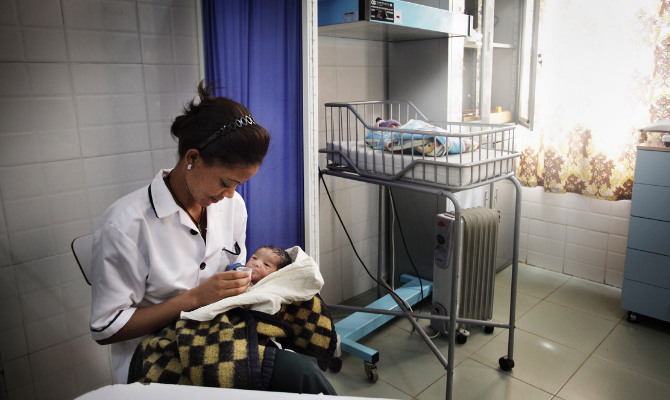
When Eleonora Balestri, neonatologist, arrived at Wolisso hospital she was involved in a project dedicated to neonatal intensive care, a difficult and delicate context but that gave her great satisfaction: “The opening of the Neonatal Intensive Care Unit was welcomed with great joy and enthusiasm by the local staff who also saw it as an opportunity to deepen their knowledge and competencies. In fact, 10 out of 13 nurses spent a month in Addis Ababa for a training course. This meant that the 3 remaining nurses took shifts to cover their colleagues. It’s about an intense and dedicated teamwork that could also be felt in the everyday life within the ward. We faced a very difficult case of a little girl, born in a very poor family context, with a severe facial malformation” – continues Eleonora -. “The unexpected pathology of the child forced her mother to stay in the hospital for 3 weeks, causing her further concern because in the meantime she had left her other 6-year-old son with her neighbour and she did not know how to tell them she was still in the hospital. Incredibly it was her neighbour who showed up at Wolisso Hospital to ask after her. The nurses of the ward were so impressed by this case that they decided to collect some money to allow the neighbour to take care of the child while the mother had to look after the little newborn. ”

Covid-19 has upset our daily life, has limited our movements, forcing us to re-evaluate everything around us. Eleonora had already begun to study Portuguese and the projects in Beira to prepare for her scheduled departure for Mozambique, but due to the very strict closure of the borders she had to change program and destination and she arrived in Wolisso, in Ethiopia.

The first impact with Ethiopia was particular, despite having already worked in Africa and more precisely in Uganda, I realized how different this new context was from both a cultural and professional point of view. From my previous experiences, I’ve learned that the ‘best’ way to settle down is to be humble, to listen, without ever losing yourself, keeping the awareness that you are in a different context, respecting it and trying to create positive relationships” says Eleonora.

By working in various countries in Africa, we get closer to the great plurality of this continent and the immense cultural diversity within it. This is also experienced in the health and medical fields: “In Uganda I had the impression there was a greater “resignation” towards the newborn with a pathology – Eleonora says -. The name, for example, is not given immediately at birth but after some time because the perception of the risk of losing the baby is very high. In Ethiopia, however, the attachment to the newborn seems much stronger from the very first moment even though resources are still very limited “.

Being “with” Africa is also this, understanding it in all its facets and working alongside operators and the local population to take care of everyone even in the last mile.

The daily commitment and dedicated work of Eleonora and the team of the NICU of the Wolisso Hospital is part of the “Newborn Survival Project: quality and innovation for greater access to neonatal care”, supported by the Agency Italian for Development Cooperation.


Photo credits: Andrea Frazzetta