DISSEMINATING KNOWLEDGE

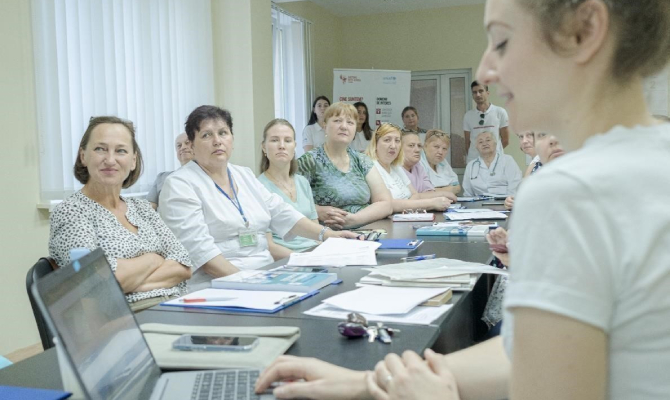
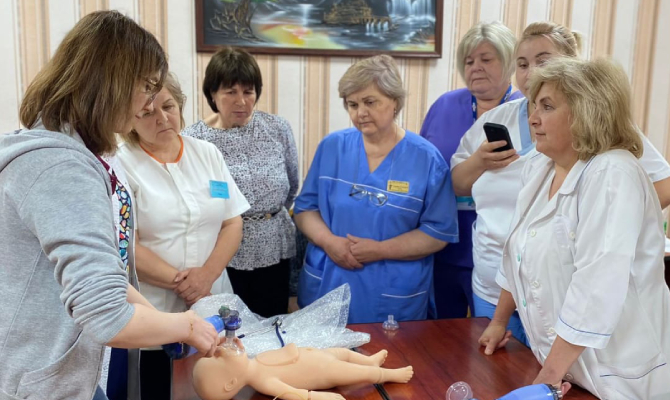
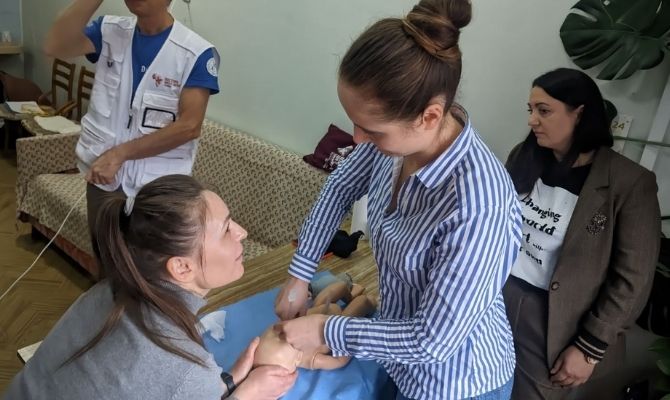
2 two-day training courses were held in Soroca and Orhei Hospital, Moldova between Monday 20 and Friday 24 to foster capabilities on neonatal emergencies and stabilization among health workers deployed in secondary health facilities. The activity was conducted on-site with low-fidelity techniques by local professionals trained during “Training of Trainers –ToT” with the support of an international certified trainer in neonatal emergency and neonatal stabilization. Two interdisciplinary team, 11 people at Soroca and 16 at Orhei Hospital counting a total of 27 people composed of nurses, obstetricians and paediatricians got involved in the training in Soroca and Orhei Hospital respectively 94 and 31 miles away from the capital Chişinau. The training was designed to address a multidisciplinary team to simulate daily work activities and improve the responsiveness of local teams at peripheral facilities.

«Currently, the second phase of the project is underway. We are strengthening skills among health professionals working in the outskirts of Moldova by teaching them how to improve neonatal resuscitation – said Anastasia Tean, Trainers from the task force. I am happy to be part of this team. Now we are visiting the areas where we worked a year ago and we see firsthand the impact of our trainings. Doctors and nurses feel way more confident. The practical part develops in a much more interesting way, as all the medical staff act confidently in their practical knowledge. They follow the resuscitation algorithm precisely without ignoring details. As a practicing doctor in a level 3 hospital in Chisinau, I can observe the conditions in which children are transferred from the outskirts. And I can say with certainty that the stabilization of these children has greatly improved, which significantly increases the chances of successful treatment and survival of the children».

The activity paves the way to the second phase of R.I.S.E. project, led by Doctors with Africa CUAMM Uk and funded by The Italian Agency for Cooperation and Development (AICS) aiming at ensuring health service coverage at multiple level of the health system. Moldovan hospitals have reported an out-of-scale postnatal transport index (3.6% in 2022). Due to the long distance from the secondary facilities to the main hospital, it is essential that staff at peripheral levels are capable of performing stabilisation before the referral. In order to achieve the goal and offer quality care to mothers and children, an overall number of 84 health workers from 7 second-level hospitals located in 7 different regions will be engaged in the trainings.

Maternal mortality rate has significantly decreased in Moldova over the past 10 years, dropping from 44 per 100,000 live births in 2010 to 19 in 2017, the infant mortality rate per 1,000 live births has declined from 26 in 2010 to 12 in 2019 thanks to the proactive commitment of the Ministry of health and health workers. However, this rate still remains above the WHO index for European regions. Although maternal and infant mortality rates have reduced over the years, there is a margin to improve the mortality index and the output of emergency procedures by working on the remaining gaps regarding referral and post-natal healthcare in peripheral hospitals.

«These courses are much needed for strengthening our skills therefore deliver a better service to the population. Medecine is constantly evolving, being up to date is key especially in neonatal management but we have limited learning opportunities. Through these courses we acquire knowledge and confidence essential to promptely operate in case of emergency» said Silvia Ciugava – neonatologist from Soroca Hospital.

In Moldova, there are 32 hospitals handling a total of 27,000 births annually. However, many of these facilities have a low number of deliveries per year, below 500, resulting in limited exposure to maternal and newborn emergencies from health workers. Additionally, hospital data reports a high rate of post-birth transfers from peripheral facilities, that are not equipped with intensive care units, to third-level facilities located in the capital. Quality and timely newborns care after the delivery is hence highly needed in order to stabilize the newborn. For this reason, training activities on neonatal stabilization are key in peripheral facilities in order to avoid leaving these services uncovered.

Since the conflict broke out on 24th February, 2022, approximately over one million refugees crossed the border seeking refuge in Moldova, one of Europe’s most fragile countries. To prevent the collapse of the national healthcare system and address the healthcare needs of both the refugee and local populations, targeted interventions have been deemed necessary. CUAMM’s commitment in the country started in April 2022 in the capital Chişinau. Since then and in close collaboration with the Ministry of Health and the WHO, the intervention has been guided by the twofold objective of providing basic medical assistance within RACs and offering specific training for local medical personnel on neonatal emergency. To date, CUAMM is still committed to the such activities thanks to the support offered by the Italian Agency for Development Cooperation (AICS). The commitment also extends to Ukraine, focusing on the delivery of medicines, medical equipment, and consumables to healthcare facilities; distribution of food items, essential goods, and equipment to combat the cold; as well as providing psychological support to the most vulnerable.


MEASLES OUTBREAK IN MOLDOVA

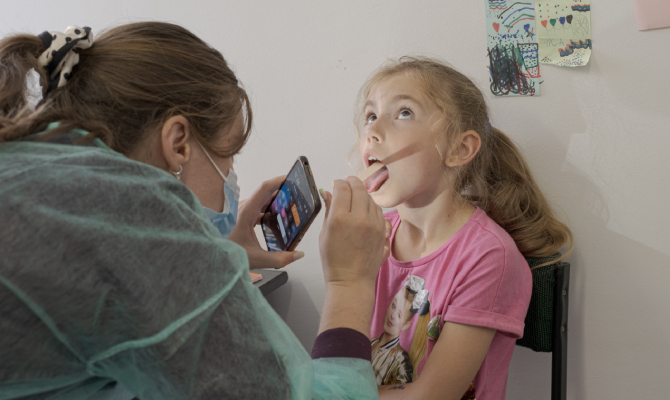
On March 18 the Department of Medical and Social Assistance in the capital, Volodymyr Bolocan announced an outbreak of measles in Testemitanu 6 Refugees Accomodation Centre (RAC). The Agency for Public Health has timely adopted response measures to limit the infection by calling a 21 days of quarantine. At the same time, the Chisinau Hospital “AMT Centru Policinica nr.1 Chisinau” and CUAMM UK decided to respond to the epidemic by implementing health promotion activities, which therefore enable access to immunization within the centre.

The first confirmed cases were registered among children and adults aged 2 to 41 y.o. As of April 4th, 16 cases were confirmed and a outbreak of hepatitis was also detected within the centre. Starting from April 2nd, a nurse from the Center Territorial Medical Association and the National Agency for Public Health task force have been collaborating with three CUAMM UK national doctors to assist all the people accomodated in Testemitanu where immunizations are being somministarted from Monday to Friday.

Measles has a devastating effect on children’s health, with sometimes fatal consequences. It causes long-lasting weakening of children’s immune systems, making them more vulnerable to other infectious diseases including pneumonia, ear infection, permanent deafness, encephalitis.

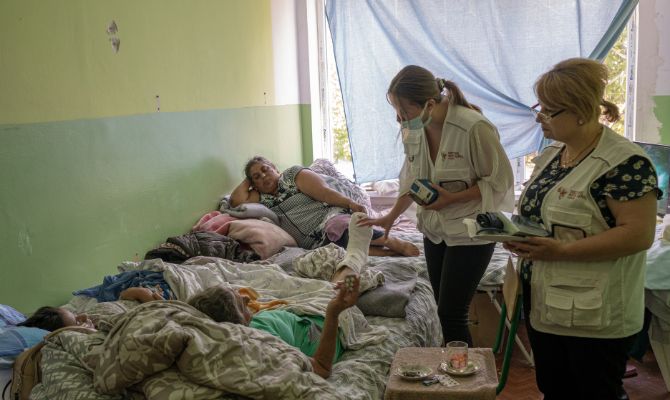
Since the beginning of the war, with the support from the Italian Agency for Cooperation and Development – AICS, CUAMM UK has been working in Testemitanu 6 to guarantee basic health care to around 150 refugees sheltered at the centre. Among the services provided: paediatric screening, specialised referrals, distribution of essential medicines and hygiene kits, as well as health promotion activities and community engagement. Over the past 2 years Moldova have sheltered the largest number of refugees: as of now, 109,000 Ukranian refugees have been registered in the country. The assistance offered by CUAMM UK aims not only at ensuring continuity of treatment and follow-up to Ukrainian refugees, as well as preventing the deterioration of minor illnesses; but also preventing the already fragile Moldovan health structures from being overwhelmed by the influx of refugees.

Training of trainers

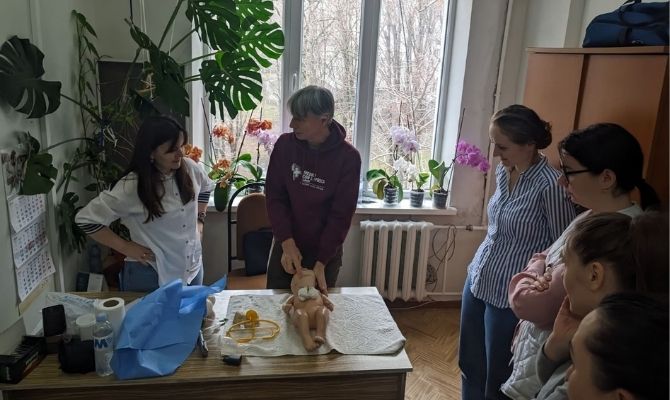
In Chişinau, Moldova, Doctors with Africa CUAMM UK organized a 5-days training to strengthen capacities in neonatal emergencies and stabilization hence create a task force of skilled instructors. The training acitivity implemented by CUAMM UK is part of R.I.S.E. project, led by Doctors with Africa CUAMM and funded by The Italian Agency for Cooperation and Development (AICS).

A group of 7 participants, 5 from IMAC Hospital and 2 from the Ministry of Health (MoH), entirely composed by women, took part in the Training of Trainers (ToT) activity held in the capital of Moldova by Daniele Trevisanuto – Neonatologist and CUAMM doctor. The training developed in collaboration with the Moldavan Paediatric Association, aims to empower capabilities among a group of skilled instructors, thereby establishing a task force focused on neonatal emergencies and stabilization. This robust task force will then be equipped to educate others and disseminate the acquired knowledge for a sustainable impact. After completing the training, the 7 participants have received a certificate of 20 credits accredited by the Ministry of Health (MoH).


Once the course is completed, the task force will lead further training activities with the ultimate goal of fostering capabilities on emergency neonatal resuscitation and stabilization among local medical staff across the country. The second phase of the training will be held in the following months, will address 84 health workers from 7 second-level hospitals located in 7 different regions from north to south. This approach avoids the transfer of qualified personnel and ensures service coverage. Finally, a final workshop is planned with participants from the training courses, international experts, and key stakeholders for monitoring and evaluating the acquired skills and discussing future perspectives.

Maternal-infant mortality rate has significantly decreased in Moldova over the past 10 years, dropping from 26 per 1,000 live births in 2010 to 14.2 per 1,000 live births in 2022. However, this rate still remains above the WHO index for European regions. In Moldova, there are 32 hospitals handling a total of 27,000 births annually. However, many of these facilities have a low number of deliveries per year, below 500, which exposes healthcare personnel to limited opportunity of fostering capabilities on neonatal care. Additionally, hospital data reports a high rate of post-birth transfers from peripheral facilities, which lack neonatal intensive care units, to third-level facilities, only present in the capital. Quality and timely newborns care after the delivery is hence highly needed in order to stabilize the newborn. For this reason, training activities on neonatal stabilization are key in peripheral facilities in order to avoid leaving these services uncovered.

Since the conflict broke out on 24th February, 2022, approximately over one million refugees crossed the border seeking refuge in Moldova, one of Europe’s most fragile countries. To prevent the collapse of the national healthcare system and address the healthcare needs of both the refugee and local populations, targeted interventions have been deemed necessary. CUAMM’s commitment in the country started in April 2022 in the capital Chişinau. Since then and in close collaboration with the Ministry of Health and the WHO, the intervention has been guided by the twofold objective of providing basic medical assistance within RACs and offering specific training for local medical personnel on neonatal emergency. To date, CUAMM is still committed to the such activities thanks to the support offered by the Italian Agency for Development Cooperation (AICS). The commitment also extends to Ukraine, focusing on the delivery of medicines, medical equipment, and consumables to healthcare facilities; distribution of food items, essential goods, and equipment to combat the cold; as well as providing psychological support to the most vulnerable.
DEDICATION CAN HEAL THE MOST VULNERABLE

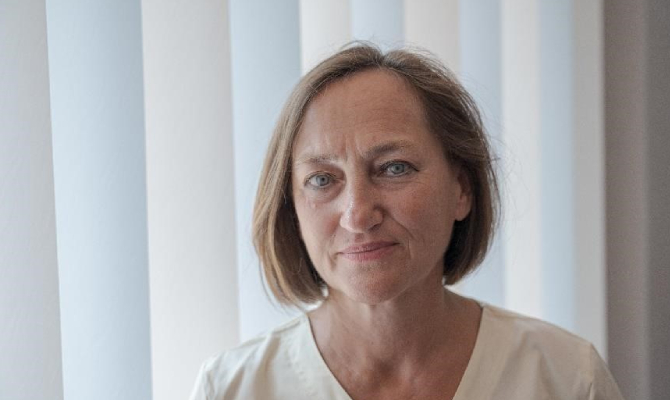
«Being a regional facility we refer between 15 and 20 cases of preterm birth to third level facilities per year. Handling those cases is always challenging and needs specific knowledge, skills and equipment. Now, thanks to the practical sessions, we have acquired the skills and strengthen the health staff competencies on neonatal care due to training provided with the support of CUAMM and UNICEF» says Dr. Angela Țurcan – Head of the neonatal ward at Orhei hospital who attended the training on neonatal emergency and resuscitation.

Orhei Hospital is one of the 7 peripheral facilities where CUAMM, in partnership with UNICEF, has delivered a training program on neonatal emergency and resuscitation to local medical staff. Every year, approximately 1,200 deliveries are recorded in this facility, which represents over 4% of total deliveries across the country. The infant mortality rate in Moldova has declined from 26 in 2010 to 14.2 in 2022 (per 1000 live births). Nevertheless, national infant and maternal mortality indicators are still above the WHO European Region averages.

The training program was designed and planned in close collaboration with the Moldovan Ministry of Health with the ultimate goal of improving medical teams’ emergency response capabilities and fostering knowledge dissemination among colleagues for sustainable impact. While the national referral system is in charge of transferring neonatal emergencies from peripheral facilities to the central hospital in Chisinau for better health care, it is necessary that quality and timely newborns care is performed right after the delivery in order to stabilize the newborn. Nevertheless, insufficient human resources and specialized professionals in peripheral facilities can undermine the response capacity putting mothers and newborns at risk.

«There are only a few neonatologists in regional facilities, if every health professional was capable of performing neonatal resuscitation, the system would be more efficient and this is the reason why we are delivering this training, to enable everyone to provide neonatal emergency care to newborns, including intubation» says Dr. Anastasia Tean – Neonatologist and trainer.

The intervention was structured into three phases: phase 1 comprised seven 16-hours training sessions on neonatal emergency and neonatal resuscitation. Each session was facilitated by a team consisting of four local trainers from the IMAC hospital of Chisinau, along with 1 international expert trainer from Italy, for a total of 6 expert trainers from Italy. The participants of these trainings were a multidisciplinary team ranging from 12 to 20 individuals, for a total of almost 100 local doctors trained. Phase 2 focused on capacity building, with 14 local doctors selected during phase 1 participating in a Train the Trainers (ToT) program. The aim was to develop skills in transmission, leadership, and mentoring for the hospital teams. Additionally, low-fidelity manikins and neonatal resuscitation equipment were provided to all maternity units of the 7 hospitals. In Phase 3, the 14 mentors engaged in an exchange experience, working in the Neonatal Intensive Care Unit (NICU) and maternity units of the Level 3 Institute of Mother and Child. CUAMM facilitated this process, offering on-the-job training and hands-on experiences to enhance their skills.

Furthermore, the initiative equipped 8 local hospitals with warmers, training mannequins, medical kits, and essential products, ensuring they are better prepared to handle neonatal emergencies. This comprehensive training program seeks to achieve a multiplier effect, leading to a significant and sustained impact on neonatal care in the Moldovan health system.

«We do believe that if we had received these competencies earlier, we could have done better in the past. We thought we knew how to do things, but this training has shown us the gaps instead and suggested to work on them highlighting the importance of continuous learning» said Dr. Țurcan.


Since the conflict broke out on 24th February, 2022, over 869.000 people crossed the border seeking refuge in Moldova. 59% of which are women, 46% children and 20% elderly. As reported by UNHCR in the latest release more than 106.000 refugees remained in Moldova. Thanks to the partnership with UNICEF, CUAMM has been working in close collaboration with the Moldovan Ministry of Health to respond to the refugee crisis in the country, with the twofold objective of providing primary healthcare to Ukrainian refugees in 5 RACs in the city of Chisinau and offering specialized training on neonatal care to Moldovan health professionals.


TAKE A LOOK AT THE PHOTOGALLERY


A SAFE SPACE AWAY FROM HOME

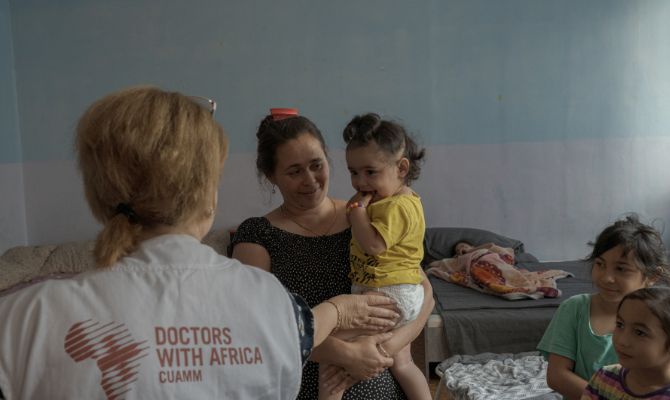
«We needed assistance after the war broke out. When we arrived in this Accommodation Centre, we received health assistance, medicines, hygiene kits and food supplies» says 33- year-old Oxana, a mother of three. Her story is unique, yet similar to that of many refugees forced to flee their homeland in Ukraine to seek safety in Moldova.

«I am truly grateful to be here. We have been living in fear for so long, hearing the sound of sirens day and night» says Oxana housed at Refugee Accommodation Center on Testemitanu street.

From August 2022, CUAMM has been working in partnership with UNICEF and national authorities to guarantee access to healthcare services to around 1000 people sheltered in 5 Refugee Accommodation Center (RACs) in Chisinau, Moldova. They are mainly children, adolescents and their families. The centers offer to vulnerable groups access to basic health services such as routine immunization, medical checkups for children, distribution of essential medicines and hygiene kits, as well as health promotion activities and community engagement. In particular, more than 250 residents of the RACs, among which around 100 children took part in an immunization campaign against communicable diseases including screening sessions and awareness raising activities. Moreover, the project also allowed around 1500 women and children to access essential medicines.

«This is a safe space, where kids feel good and calm. As a mother, this is the most important thing for me. The health staff is very supportive and we know we can reach out to them any time. At the moment, for example, the youngest of my kids is suffering from pharyngitis, has fever and I see now and then she has difficulties breathing, fortunately in this place she can receive timely and quality care. We are in good hands and I am grateful for that» says Oxana.

Mothers, fathers, family members, and/or caregivers are provided daily with informative materials and counseling on health-related topics, including immunization and nutrition, aiming at sensitizing around 1100 people while children are engaged in child-friendly activities organized within a safe environment.

Since the conflict broke out on 24th February, 2022, over 869.000 people crossed the border seeking refuge in Moldova. 59% of which are women, 46% children and 20% elderly. As reported by UNHCR in the latest release more than 106.000 refugees remained in Moldova. Thanks to the partnership with UNICEF, CUAMM has been working in close collaboration with the Moldovan Ministry of Health to respond to the refugee crisis in the country, with the twofold objective of providing primary healthcare to Ukrainian refugees and offering specialized training on neonatal care to Moldovan health professionals.


TAKE A LOOK AT THE PHOTOGALLERY