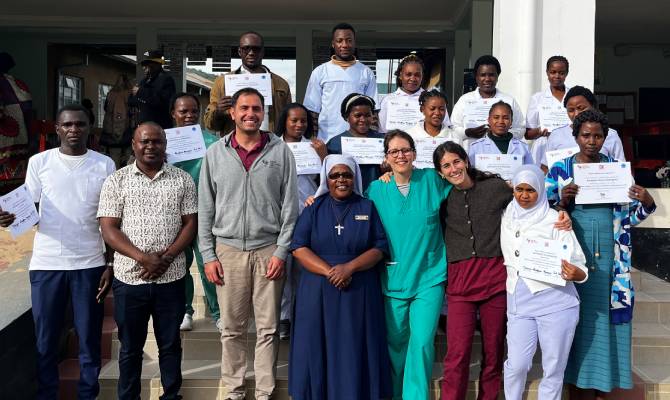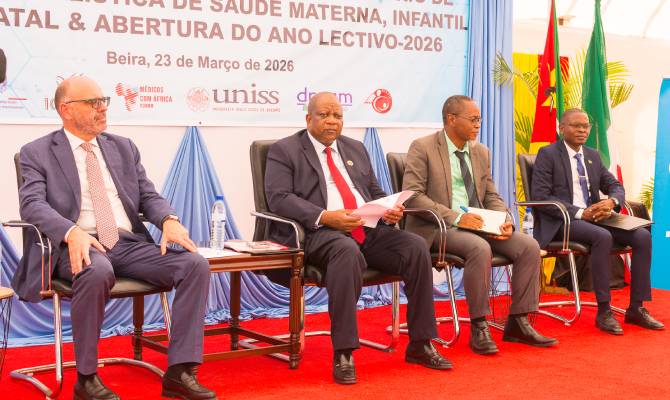
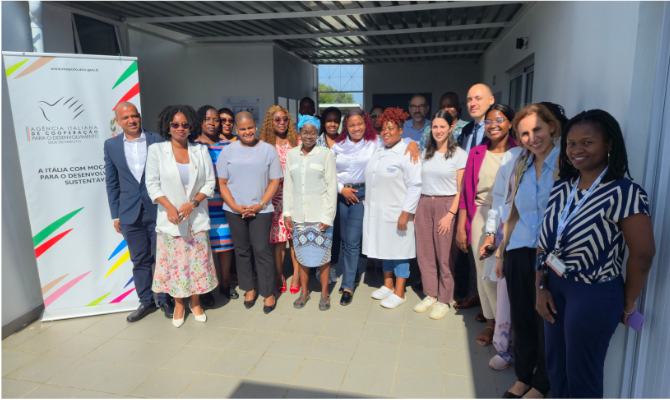
Improving the quality and accessibility of maternal-newborn and child health services: this was the core objective of the three-year “PROTECT” project in Mozambique, funded by the Italian Cooperation, which is nearing completion. A dual event in Maputo and Beira served to showcase the results and best practices of an intervention that reached 3 health centers (Zimpeto Center, Maputo Children’s Center, and Machava Center) and the Mavalane General Hospital in Maputo Province; 6 health centers (Munhava, Ponta Gêa, Chingussura, Nhaconjo, Macurungo, and the Multipurpose Center) and the Beira Central Hospital (HCB), specifically targeting the Pediatric Emergency Department (SUP), Neonatology, and the Delivery Room, in Sofala Province.
The project was implemented by Doctors with Africa CUAMM alongside Comunità Sant’Egidio and Auci, in collaboration with the University of Padua, the Beira District Services for Health, Women, and Social Action, the Directorate of the Beira Central Hospital, the Directorate of the Mavalane General Hospital, and the Provincial Health Directorate of Maputo.
While infant and neonatal mortality rates in Mozambique remain high and not alligned with the 2030 Sustainable Development Goals, notable progress has been recorded over the last decade.
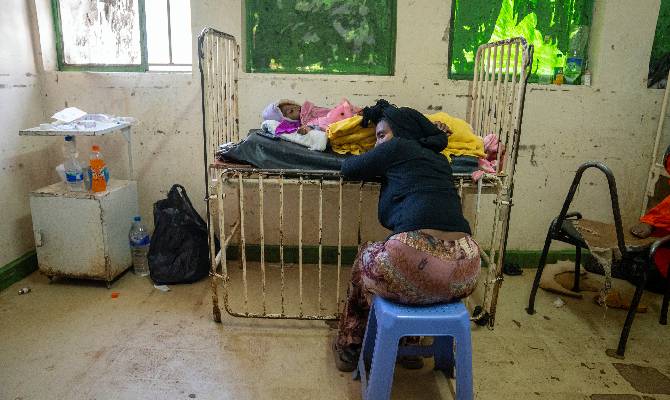
Thanks in part to PROTECT, the Beira Central Hospital—the reference facility for the entire Sofala Province—has seen a decrease in pediatric and neonatal mortality. The quality of care provided to newborns with pathologies has improved, leading to a reduction in the early neonatal mortality rate. Furthermore, the quality of the pediatric emergency service has advanced with the introduction of the triage system, and access to both services has increased, supported by the dedicated ambulance system managed by CUAMM.
The numbers bear witness to this dedication:
- At the Beira Central Hospital, pediatric mortality is now 4% (well below the project target of 10%).
- Neonatal mortality stands at 7%, and mortality in the first seven days of life is 4.7%.
- In the health centers, neonatal mortality within the first 24 hours has dropped to under 1%, a success bolstered by the efficient transfer service provided by the Cuamm-managed ambulances.
“I dream of reducing neonatal mortality in our neonatology unit so that mothers and caregivers have total faith in us and that we can be proud of the public service we offer,” shared Dr. Geronimo, a physician in the Beira Neonatology unit.
Focused Support: The Neonatology Unit
The HCB Neonatology service is the main provincial referral center for sick newborns. The primary causes for admission are perinatal asphyxia, prematurity, infections, and malformations, with approximately 150 to 170 newborns admitted each month—around 2,000 annually.
Since 2023, the project has supported the Neonatology unit to enhance the quality of care for sick newborns admitted to the Neonatal Intensive Care Unit, the Joint Admission Unit, and the area dedicated to the Kangaroo Mother Care (KMC) method.
Continuous clinical and technical support was provided, including: 36 “on-the-job” training sessions involving 353 participants, the stable presence of a pediatrician, the addition of 4 maternal-child health nurses and 1 pediatric nurse for a total of 9 months over 3 missions; the development of 8 diagnostic-therapeutic protocols for managing the most common clinical conditions.
“Working with the project team allowed us to exchange ideas and discuss approaches to newborn care. Even with the few resources we have, by changing our behavior, it is possible to achieve better results. This was the most important lesson, and our commitment must continue because the neonatology unit is our home,” added Dr. Geronimo.
A powerful synergy was forged with the project “Strengthening the system of healthcare personnel training institutions and supporting the development of telemedicine” at the Beira Health Sciences Institute, also financed by the Italian Cooperation. A professional course in Neonatal Nursing for 20 nurses already working at HCB, Beira General Hospital, and Nhamatanda Rural Hospital, who will return to their posts in 2026 after a year of training, ensuring the continuity of quality care for newborns. “We learned so much through the training. My dream is to have a team of nurses all trained in neonatology,” added Nurse Angela, head nurse at the Beira Neonatology unit.

Saving Lives in the Emergency Department
The HCB Pediatric Emergency Department (SUP) receives approximately 28,000 children annually, aged one month to 14 years. Over 12,000 children under five access emergency services, with 2,000 annual transfers by ambulance.
As part of the intervention, a triage system was developed to streamline patient management, reduce waiting times, and improve care. Emergency personnel (doctors, nurses, and health technicians) were trained on the correct use of the color-code tool and the management of major pediatric emergencies. This included 3 theoretical training courses with practical components and 36 “on-the-job” training courses, involving a total of 422 healthcare professionals from HCB, Beira General Hospital, health centers, and ambulance services.
Regarding the emergency transfer of sick newborns and children from health centers to the Hospital, 1,909 health workers were trained over three years on stabilization and transfer techniques. This was complemented by strengthening the data collection and review system, along with supervision to monitor improvements.
The Power of Community Activism
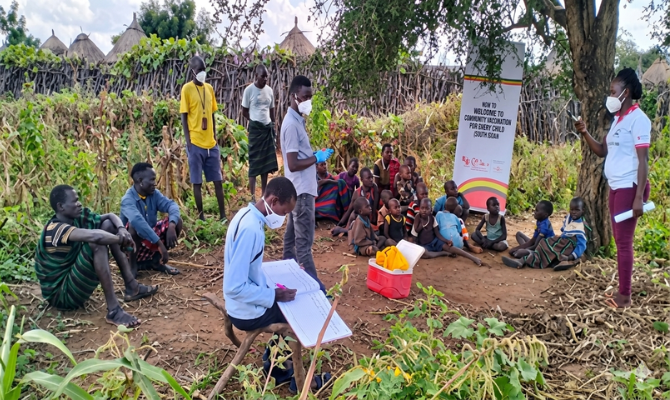
A fundamental role was played by the 20 community activists who, after a training period, were assigned to various health centers and the Beira Central Hospital. Their mission was to raise awareness among women about danger signs during pregnancy, the importance of prenatal visits, and adequate nutrition.
In the Maternity and Postpartum wards, the activists supported mothers by reinforcing their knowledge on newborn care, including hygiene and exclusive breastfeeding, as well as the importance of the first-month check-up and adherence to the vaccination schedule. Crucially, the activists promoted the Kangaroo Mother Care method for low-weight newborns and fostered family involvement, particularly that of the father or husband, in the care of mother and child.
During the project, approximately 6,800 awareness sessions were conducted, reaching over 240,000 mothers and caregivers.
“I was proud to be part of the project team. I learned many things about caring for the mother and newborn and passed it on to all the women I supported. It was my responsibility to explain to the mother how to care for her newborn and to convince her, for instance, to adopt the Kangaroo Mother Care method. The doctor did not speak the local language and could not follow the woman through her difficulties with her family and managing other children at home. So, I had to mediate and convince the whole family that the newborn, even if premature and underweight, could recover with that method,” concluded one of the project activists.
The Commitment Continues
The “PROTECT” project concludes as a vital pillar in the fight against maternal and neonatal mortality, a success born from teamwork. “We would like the intervention to expand to all 19 health units in the district and for the training package to be shared across all 13 health units with Maternity services,” stated Dr. Sónia Ana Mudengue, Director of the District Services for Health, Women, and Social Action in Beira City.
CUAMM’s technical support to improve the quality of neonatal and pediatric services in Sofala province will continue, with different modalities and levels of intervention, to be planned, as always, together!