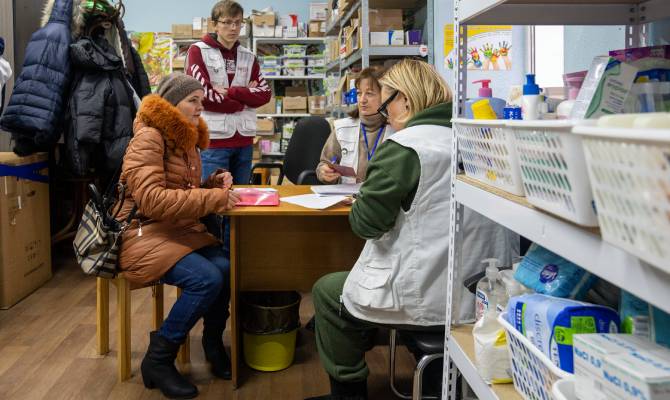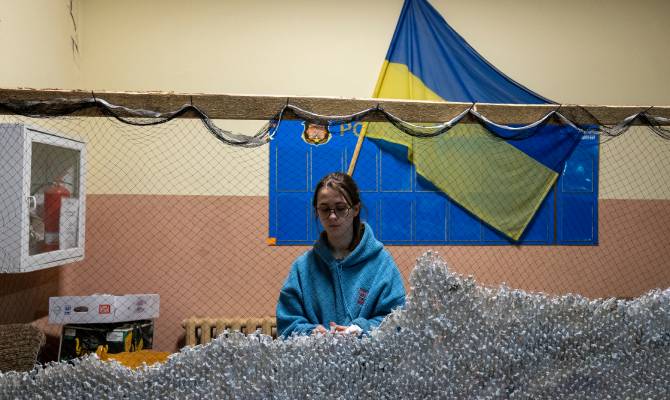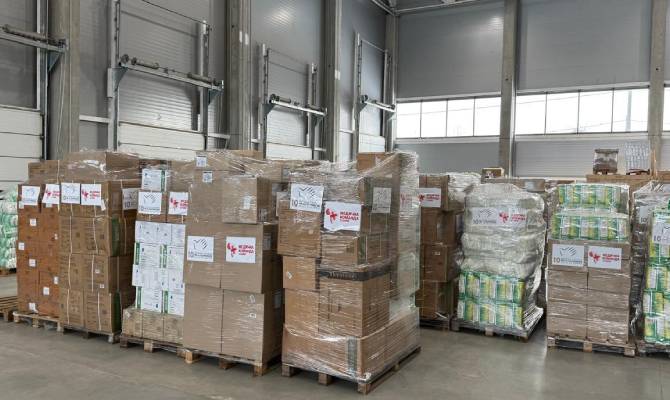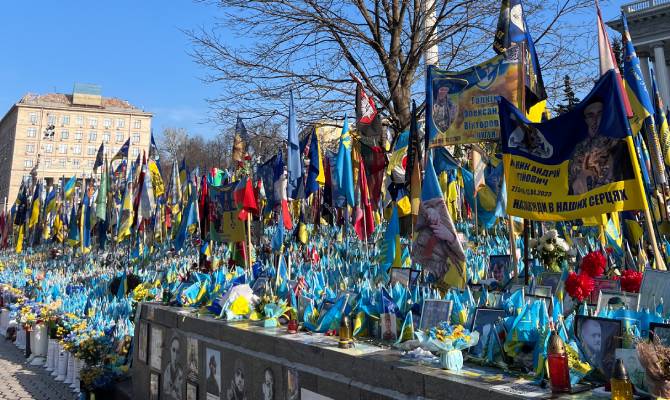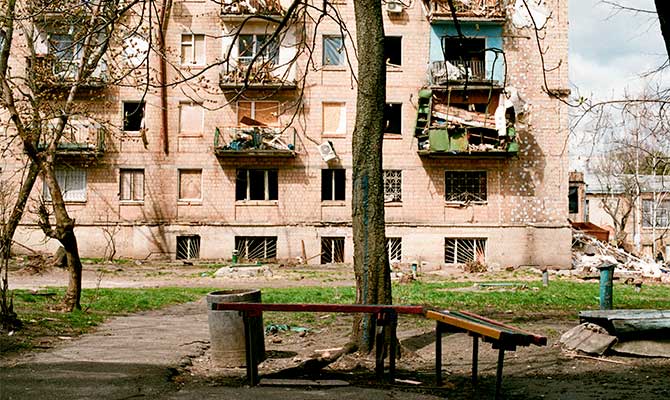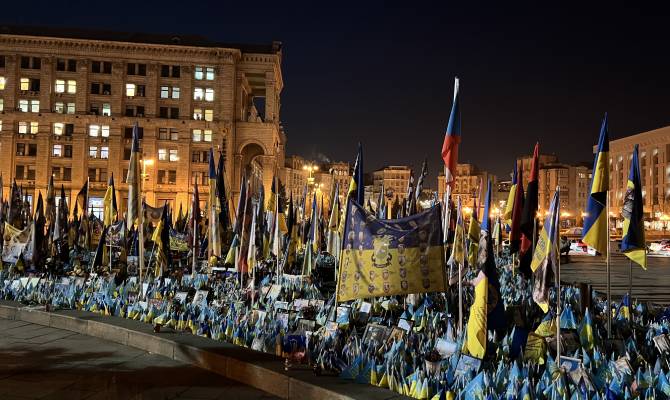
Four years ago, Russia launched a large-scale invasion of Ukraine. Soon after, the country would experience the horrors of war and all its consequences. Life for civilians would never be the same. As Doctors with Africa CUAMM, called to close solidarity, we decided to launch an intervention to support the Ukrainian people, aiming to provide healthcare in a moment of critical need, while also hoping to support a health system compromised by the conflict. At the core of this commitment: the supply of medicines and life-saving kits, as well as psychosocial support and training for local healthcare personnel.
In the early phase of the war, the rapid collapse of supply chains and the disruption of access to medicines and essential materials made healthcare access a central part of our humanitarian response, proving essential to maintaining service continuity.
What began as an emergency intervention has, unfortunately, continued into its fourth consecutive year. A period that cannot be measured in months, days, attacks, or downed drones, but must instead be reflected in human lives—those lost and those upended. Like Natalia, a 68-year-old woman we met in the summer of 2024. The Russian invasion forced her to leave Kherson, taking with her very little of what she had built in a lifetime. In an instant, Natalia became one of the 3.7 million internally displaced persons in Ukraine, accommodated in a reception center. The experiences of conflict and displacement can cause enormous trauma, and for people like Natalia who are alone, the psychological consequences are often invisible.
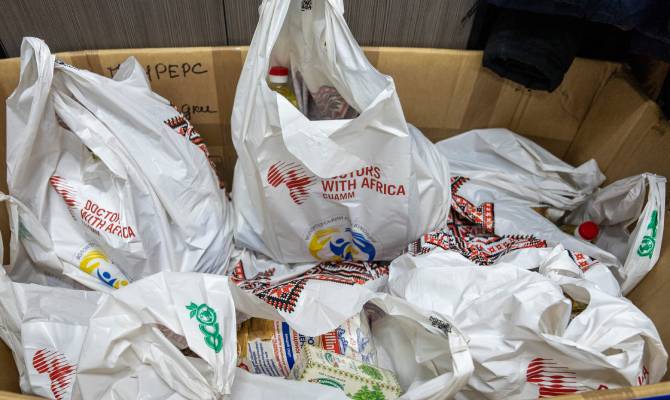
Or Maria, just 30 years old, who left Zaporizhzhia with her nine-year-old son after her brother was killed. Her city, close to the front line, witnessed heavy fighting in the early months of the conflict over control of the nuclear plant. Maria restarted her life in a reception center a few kilometers from Kyiv, and like many who lost everything, she received humanitarian assistance: food, hygiene supplies, and other essential goods.
Since 24 February 2022, the conflict in Ukraine has escalated continuously, creating an unprecedented humanitarian crisis. According to the Humanitarian Needs and Response Plan (HNRP 2025), approximately 12.7 million people in Ukraine require humanitarian assistance, of whom 3.7 million remain internally displaced. Over these years, we have met thousands of people with stories like those of Natalia and Maria.
Today, as the conflict continues with no sign of a ceasefire and winter worsens the conditions for thousands of Ukrainian citizens, we continue to operate in the country with an intervention that integrates health and protection, pursuing the same goal as always: providing healthcare to civilians and supporting the national health system.
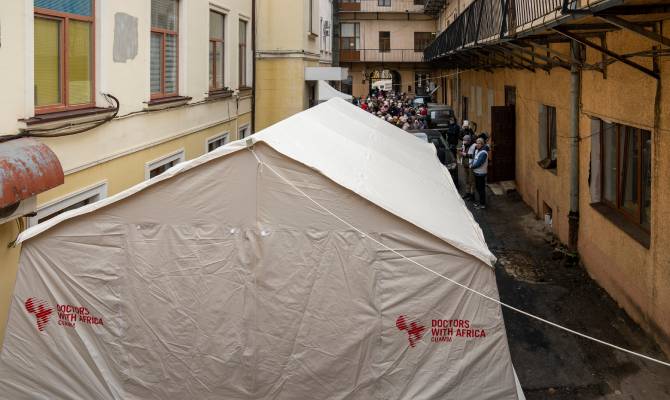
With the support of the Italian Cooperation, we are working in the Sumy and Kharkiv regions—areas with high-intensity hostilities, proximity to the front line, and severe pressure on essential services. In Kharkiv alone, around 478,000 internally displaced persons are estimated to be present (April 2025), while the Sumy area has been consistently affected by bombardments related to border operations initiated in August 2024. Both regions report severe infrastructure damage, disruptions to essential health services, and a significant increase in mental health and protection needs.
Together with partners such as CESVI and Action Against Hunger (ACF), and with the support of local partners, we are implementing two interventions with activities including:
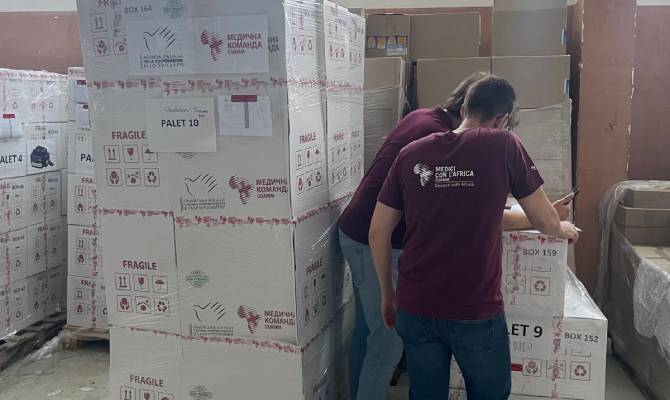
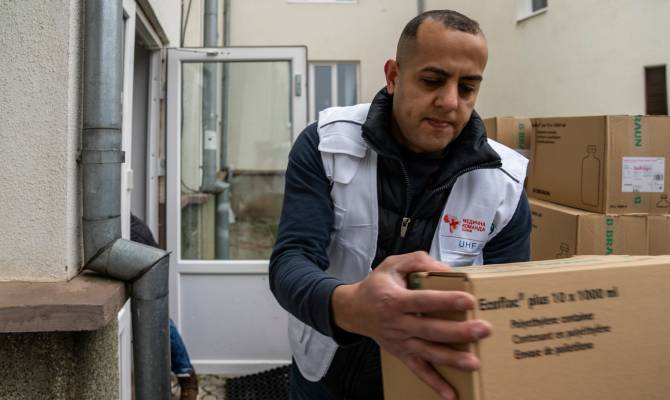
procurement and distribution of essential medicines, medical supplies, and consumables
structural rehabilitation interventions
delivery of emergency kits
capacity-building activities for healthcare personnel, in collaboration with UNFPA
Since 2022, Doctors with Africa CUAMM has been active in Ukraine responding to the health and humanitarian needs of civilians and health facilities affected by the war. Since then, we have:
reached over 120,000 people
supported 35 health facilities with essential medicines, emergency health kits, and medical equipment
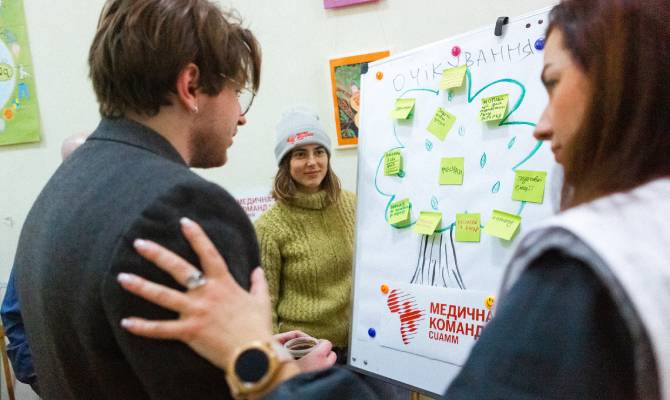
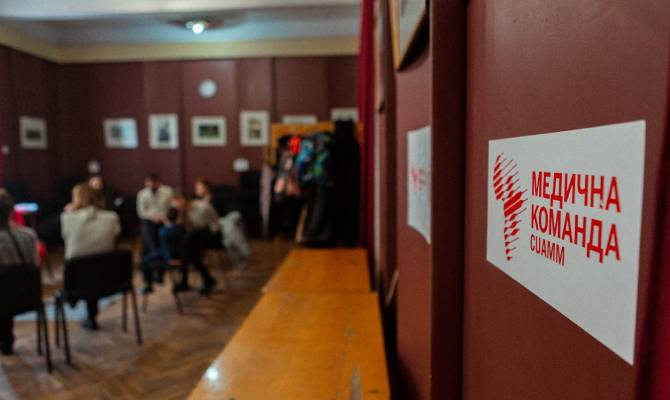
organized 60 MHPSS events to address health, protection, and basic needs of displaced persons and host communities
conducted 10 training sessions on emergency psychology
completed 11 emergency deliveries within 72 hours through the Rapid Response Mechanism, in line with WHO Health Cluster standards.
Learn more about our work in Ukraine.