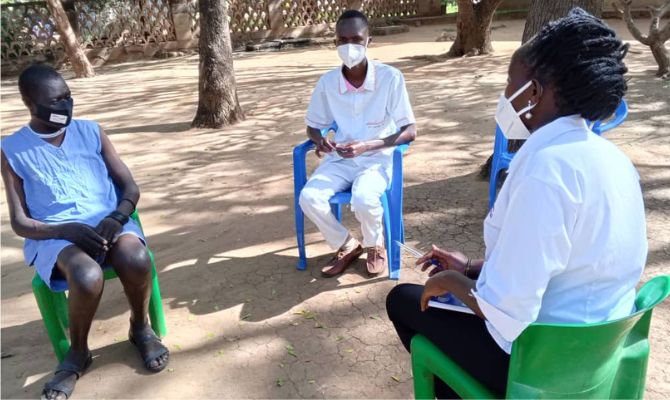
“I did not feel well at all; I was coughing constantly, often vomiting, and I had no appetite. I even thought I would die, and my greatest fear was leaving my husband and my five children, especially the youngest whom I was still breastfeeding,” says Anna Faith Nayolo, a 29-year-old woman from the Nakapiripirit district in the Karamoja region of Uganda.
“My husband was always by my side, reassuring me. At first, the medications I was given at the peripheral health facilities and those purchased at the pharmacy were not effective. One morning, a fellow villager advised me to go to a health center supported by CUAMM. There, through testing, I was found positive for multi-drug resistant tuberculosis. I was immediately taken into care by the center’s team and the CUAMM team to begin treatment at Matany Hospital,” Anna Faith continues. “During the treatment, I was provided with medicine and food, and now that I am back home, I continue to take my medicine every day and go for periodic check-ups until I am completely cured. ‘Ikilakara Nooi,’ I am very grateful for everything, and my hope is that community awareness efforts continue and grow stronger, so that there is more awareness regarding tuberculosis and the existing services supported by CUAMM and the Government.”
Anna Faith’s story is the story of many TB patients who have been identified and treated thanks to the dedication of health workers in the field, particularly within the framework of the project “PRO-TB: Strengthening the Organised Tuberculosis Network in Karamoja”. This initiative is supported by the “Fondo di Beneficenza ed opere di carattere sociale e culturale di Intesa Sanpaolo” and implemented by CUAMM together with local health authorities in the districts of Napak and Moroto, in the Karamoja region of Uganda.
Tuberculosis (TB) remains the leading infectious cause of death, ahead of HIV and malaria. According to the WHO Global Tuberculosis Report 2025, in 2024 alone, 10.7 million people fell ill and 1.23 million died from TB. Despite more effective treatments and faster diagnoses, this disease continues to claim victims worldwide, especially in impoverished countries. Today, there is a significant risk that funding cuts will slow down the battle to eliminate it.
Although global incidence and deaths have decreased, progress remains well below the targets set by the WHO. From 2015 to 2024, the reduction in cases was only 12%—far from the 50% reduction planned for 2025—and the reduction in deaths was 29%, compared to the 75% target. However, some areas show encouraging signs: Africa has reduced incidence by 28% and deaths by 46%. The management of drug-resistant tuberculosis remains critical as it is the most complex form to treat, even though the therapeutic success rate has significantly improved according to the WHO.
CUAMM continues its commitment to fighting TB by strengthening and expanding prevention, diagnosis, treatment, and follow-up services to reduce incidence and improve case management in the Karamoja region. 11 first- and second-level health facilities are involved through various activities, ranging from healthcare staff training to supporting and consolidating the capacity of local health authorities in planning and managing screening and treatment services, as well as case monitoring. Furthermore, the diagnostic sample transport network to laboratories equipped with GeneXpert technology is being strengthened, allowing for faster and more accurate diagnoses. Particular attention is given to multi-drug resistant forms (MDR-TB) through DOT (Directly Observed Therapy) at health facilities and contact tracing to track and screen the household members of patients affected by resistant forms.
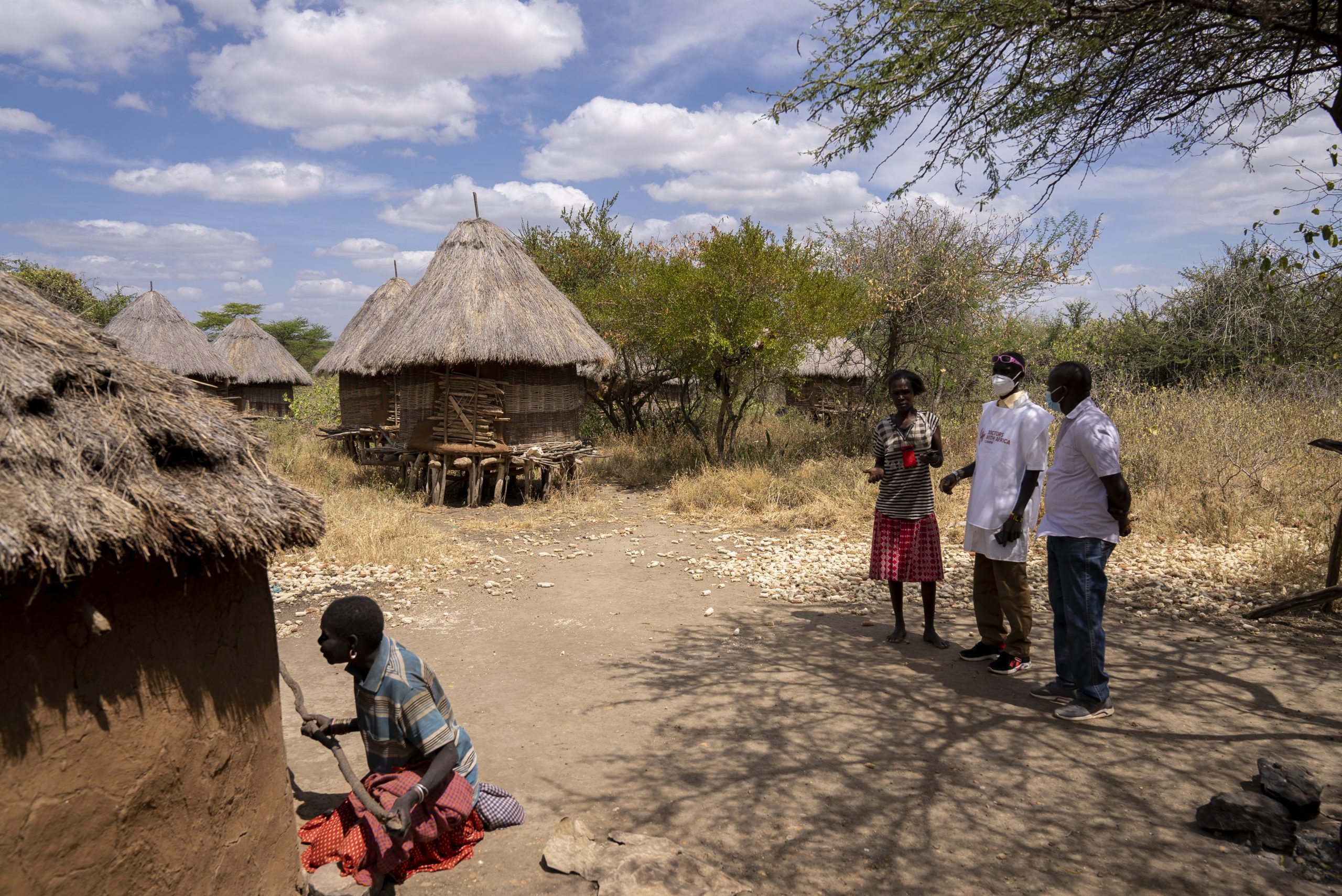
“We have achieved great results as an MDR-TB center. Patients who had discontinued treatment have returned to care, and contact tracing has been carried out,” says Josephine Ikiror, clinical head of the ward at Matany Hospital. “The management of our patients has improved significantly, with a good therapeutic success rate, also thanks to the outpatient model. We have been able to coordinate with peripheral health facilities in different districts to effectively follow patients during and after the treatment cycle to ensure maximum success. The PRO-TB project, therefore, arrived at just the right time.”
From April 2025 to the present, 285 TB patients have been under treatment at Matany Hospital, 57 of whom have multi-drug resistant TB. Additionally, 568 health workers have been trained through an on-the-job mentorship program, and 2,708 contacts have been screened. At the level of peripheral health units, 62 monitoring and supervision visits were conducted, while at the community level, 3,440 people were involved in awareness events.
Several challenges remain, including the stigma associated with the disease, as explained by Amoding Jeniffer, a nurse in the TB ward at Matany Hospital: “some patients continue to refuse treatment or do not show up regularly for visits. Even though health education is promoted, the fear of stigma sometimes prevails. Patients who must wear masks often do not want to be identified as carriers of the disease and therefore tend not to use them, which can lead to an increased spread of tuberculosis within communities”.
To effectively combat the spread of TB, a multi-level commitment from hospitals to communities remains essential, as does addressing inequalities in access to care and the costs associated with diagnosis and treatment.