Caring for the little ones

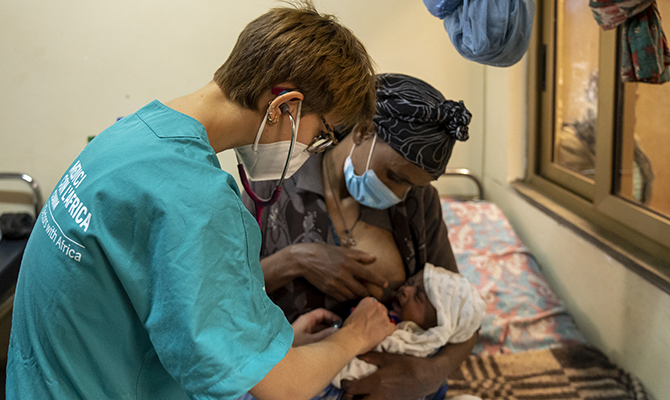
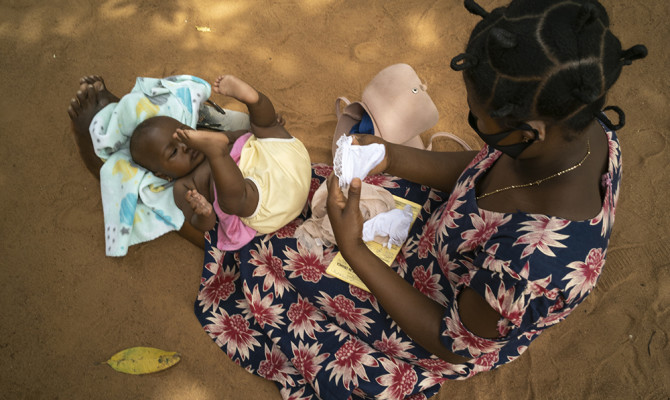
Three hospitals involved, in Addis Ababa, Tulu Bolo and Wolisso, and a two-day event in each of the respective cities. All this to say firmly that it is possible to improve accessibility and innovate care services for newborn and children in the Oromia region of Ethiopia. This was the aim of the Newborn Survival Project, supported by the Italian Agency for Development Cooperation, which is coming to an end after three years of activities dedicated to building, improving, equipping and supplying drugs to neonatal intensive care units: all fundamental actions to help strengthen neonatal, maternal and child health in Ethiopia. The intervention, which extended to five Woredas and fifteen Kebeles, also aimed to train and strengthen the skills and competencies of local staff, raise awareness in the communities on good neonatal care practices and ensure a referral system for problematic cases.

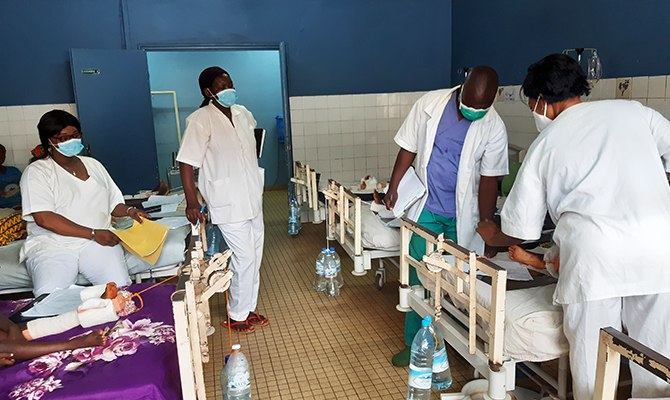
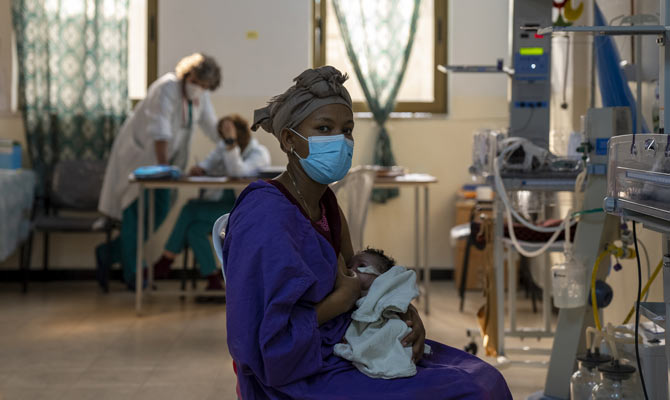
St. Luke’s Hospital in Wolisso records more than 4,200 deliveries per year and around 100 babies are admitted every month, half of whom are transferred from other parts of the country. These numbers clearly show the importance of St. Luke’s as a reference centre and the need for an adequate neonatal unit” says Eleonora Balestri, a CUAMM neonatologist. The positive impact of the project is clear and has led to a state-of-the-art neonatal unit: it is the only hospital in the country equipped with wall-mounted machines for the supply of medical gases, both oxygen and air”.

And the results of the project indicate a decrease in neonatal mortality of 2.8% at St. Paul’s Hospital in Addis Ababa, 6.6% at St. Luke’s in Wolisso and 2.2% at Tulu Bolo Hospital. A total of 14,691 newborns were admitted to the three NICUs (Neonatal intensive care units), and 53 nurses and 56 biomedical engineers were trained.

“Having a neonatal unit is crucial for reducing mortality. Newborn babies need special care, in a dedicated environment and with specialised staff,” confirms Turegn Asefa Kebeta, paediatrician at Tulu Bolo Hospital.

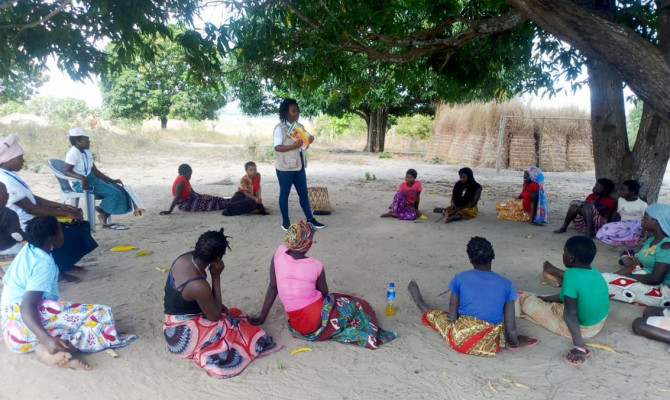
Regarding awareness-rising activities at the community level, 26 health workers and 575 women community activists were trained. “I sensitise the community on maternal and child health, good hygiene practices, and on recognising the warning signs,” explains Birhane, leader of the women community activists. We visit pregnant women in their homes to promote the importance of antenatal visits, vaccinations, and breastfeeding”.

The focus of the intervention was on caring for mothers and children, because the health of the whole community depends on their health. “Being ‘with’ means sharing the daily difficulties and rejoicing together in the achievements,” continues Eleonora. Africa means struggling alongside them every day, trying to identify needs together, to find solutions, always together, learning also to accept that changes and improvements need time, required by the context and circumstances, sometimes different from “ours”.
A life free from violence

“At first, it was hard to reach women who have survived violence, but during the meetings I feel that, little by little, they started to approach and participate, that communication works and a dialogue is created. It takes a lot of patience, perseverance, and courage but, in the end, I manage to create that connection needed for them to open up. In this way, I meet women who have suffered violence at night, while sleeping in huts, those with small children and who were the most vulnerable; those who are abused by their partners without being able to do anything, without even counting on the support of the elders who used to live with them and would watch over them; those who were girls raped while they ran away….”

Filomena Ndudo puts the full passion and determination of a 26-year-old woman into her work. She comes from the Pemba area, in the province of Cabo Delgado and is part of the CUAMM project which, with the support of UNHCR, tries to combat gender-based violence and support displaced people in Cabo Delgado, in the north of Mozambique. The situation here is truly dire. What was once a paradise has become hellish due to terrorist attacks by Islamic extremists. They use machetes and guns to attack and destroy whatever they find, forcing the people to flee. There have been 700,000 displaced people in a few months.

Filomena works as a “community officer” and with 76 local activists, coordinated by Andrea, the intervention’s program manager, she goes to six refugee camps, bringing help and psychological support to the displaced people, especially women and young people.

“We meet them, we talk to them and try to get them to tell us what they have experienced, the violence they have suffered. We make it clear that we are there for them, to assist them, and that they can still hope to live a life free from violence. We try to help them by providing them with doors and locks to make the huts safer and by putting them in touch with other women, so that they protect each other. Everything has been made worse by the situation of extreme precariousness and by the scarcity of food.”

Filomena is about to defend her dissertation in Public Administration at the Catholic University of Mozambique in Beira, and she really likes her job. “When CUAMM hired me was one of the happiest moments of my life. I lost my parents as a child and that, of course, traumatized me, but thank God, I am able to adapt. Lending a hand to others makes me happy and helps me deal with my personal problems as well. Talking to women, convincing them that there are other possibilities, that they are strong, that they can be heard, that they have to have the courage to be helped, that they can overcome sadness and shame, is the best part of my job! This is the most important part of CUAMM’s work in Cabo Delgado: taking care of women, making them want a better life for themselves, for their children, for their community, and their country.”

Mozambique An International Symposium on HIV

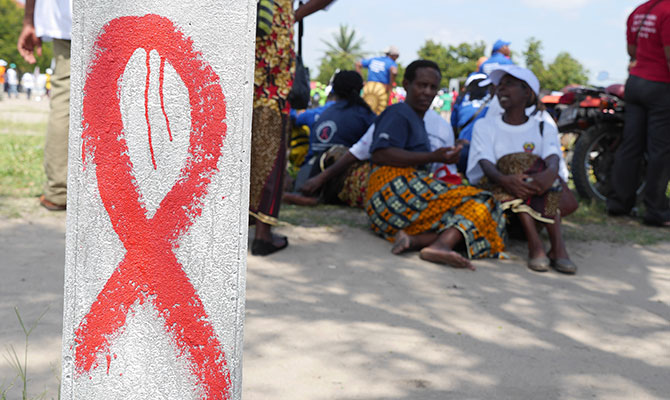
A two-day conference to discuss the fight against HIV in emergency settings: “Science, community engagement and youth for an integrated HIV response in Mozambique” is being held on September 21st-22nd streamed from Mozambique, with contributions in English and Portuguese.

This is the first international symposium organized by Doctors with Africa Cuamm, which has been working in Africa since 1978, in partnership with IAS Educational Fund to focus on good practices in the treatment of HIV patients in emergency settings such as Mozambique, on engagement with young people and adolescents and on field research.

Delegates of the Ministry of Health, international and local NGO, community activists, donors and researchers will gather to discuss the key role of communities and young people in the fight against HIV. Insights will be provided as well as opportunities for discussion through a Q&A session with the audience.


The Programme

Register now


Training to fight malnutrition in Angola

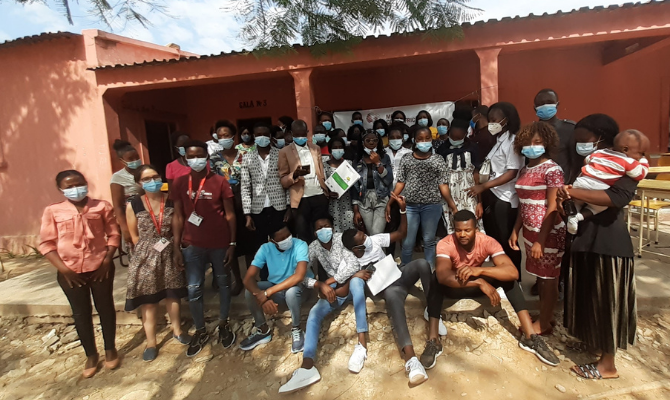
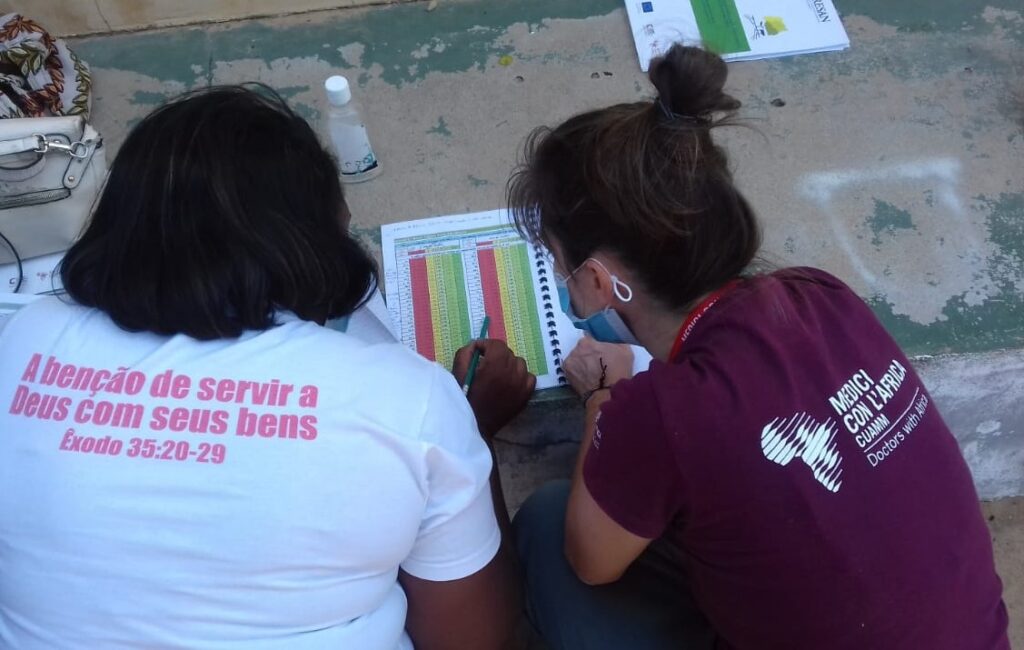
“Gratitude is one of the most important feelings that a human being can share”, claims António Lutenda, a nurse at Posto de Saúde da Chica, at the end of the training that CUAMM carried out for 41 health workers from all health facilities with CMAM services in Ombadja, and for nutrition supervisors at municipal and provincial level. This training, in partnership with Cunene Provincial Health Directorate and Ombadja Municipal Health Services, was a key activity of the project since less than 25% of health workers working on CMAM services had specific training on nutrition, and so important gaps were found on nutrition case management.

Cunene is one of the angolan provinces more affected by extreme drought that has worsened over the last few years. Despite the efforts of the local government and civil society organizations, the food insecurity and consequent increase of acute and chronic malnutrition are a reality that affect especially young children and women. CUAMM is supporting Ombadja Health Services on the prevention and management of acute malnutrition, implementing a project integrated in FRESAN program “Strengthening Resilience and Food and Nutrition Security in Angola”, managed by Camões, I. P. and financed by European Union.


https://ec.europa.eu/

This news was produced with the financial support of the European Union. The contents are the sole responsibility of Doctors with Africa CUAMM and do not necessarily reflect the vision of the European Union.

A necessary security

“During my experience as a pediatrician in Bangui, in the Central African Republic, everything was very intense: now I almost feel as if I have lived for a while in a parallel reality, when I talk about it, I almost feel as if I am illustrating a movie, telling stories. Because everything is different here, the routine, the landscape, the people, in some ways, it’s as if here I am what I have always been and there I am another person. I lived this experience in the middle of the Covid-19 pandemic. I was the only one who was vaccinated and that gave me security, the others were more worried than me. Although, when the cases started coming in, I started to get a bit scared too. I found myself thinking: ‘oh my God, here is the African variant that is not covered by the vaccine’.

Unfortunately, we had colleagues who were very sick, a colleague from another NGO was transferred to Ghana because of respiratory stress. But this happened in April. For the rest of the year, I have to admit that I was more worried about malaria or tuberculosis than Covid, but precisely because the vaccination gave me security.

Vittoria Montecchiani tells us about her experience in the Central African Republic as a JPO during Covid-19 as the only one vaccinated.

“The impact of the pandemic wave on the population was strong, perhaps also seeing how hard the pandemic hit the West, she feared that the impact on a state like CAR could be devastating. The reaction became, at times, irrational, such as the absurd use of medicines at the first symptoms: frightened, many took drugs for malaria or HIV, risking hepatitis.

The terror increased especially in the acute period, when one heard of various relatives, friends, who had taken it and were hospitalized. Unfortunately, the resources available are minimal, not even masks were available at the beginning, and Cuamm helped to procure them,” Vittoria says. The beginning of the vaccinations was well organized and functional, but unfortunately the problem of inequality in the population persists. The more educated part of the population, which includes nurses and doctors, is getting vaccinated, while there is a part of the population that does not perceive the importance of the vaccine. For many single mothers with many children, for example, the main concern is running from one village to another because of the war, with their children malnourished, so vaccination is understandably the last thing on their minds.”

In CAR, as in the other countries where we intervene, we continue our efforts to support local health systems in making vaccinations a reality: but there is still much to be done.

We also continue to raise awareness of the importance of the vaccine as the most effective means of protection and prevention.

Furthermore, Doctors with Africa Cuamm’s intervention supports all the other causes of morbidity and mortality, which have already been made acute by the pandemic.


Protecting breastfeeding a responsibility to be shared

Once again this year, Doctors with Africa CUAMM takes part in the World Breastfeeding Week, an initiative launched by the World Alliance for Breastfeeding Action (WABA), a global network of individuals and organisations (including Unicef, WHO, FAO) that protect, support and promote breastfeeding as a universal right, in line with the Sustainable Development Goals. Doctors with Africa CUAMM adopts the motto “Protecting breastfeeding: a responsibility to be shared“, words that find concrete expression in the promotion and support of a series of initiatives to raise awareness and educate on the importance of exclusive breastfeeding, particularly during the first six months of a child’s life, which is crucial for the health, wellbeing and development of women and children and therefore of society as a whole. The promotion and support of breastfeeding must be considered a public health issue, a collective responsibility that requires investment at all levels. This week represents a further opportunity for CUAMM to strengthen the work done in the various countries where it has been working for years, also in the framework of the project “Mothers and children first. 1,000 days”.

From Tanzania to South Sudan and Sierra Leone, there are many activities organised by local authorities and institutions and supported by Doctors with Africa CUAMM in compliance with anti-Covid measures: radio awareness-raising talk shows on the theme of breast-feeding, food demonstrations for the preparation of nutritious and healthy food, and gardening sessions for the cultivation of local foods.

“Breastfeeding counselling can help mothers to be more confident in facing motherhood, always with a focus on their condition and personal choices. With support from trained professionals, both in health centres and through home visits, we try to prevent feeding and care practices that can interfere with breastfeeding, such as giving unnecessary liquids, foods and breastmilk substitutes to infants and young children” says Felicia, project manager of the Saving Lives programme in Sierra Leone. During the COVID-19 pandemic, it is even more important that we find innovative solutions to ensure that access to these essential services is not interrupted and that families continue to receive the breastfeeding counselling they need.

“The situation in Bonthe and Pujehun district needs specific intervention as the rate of early initiation of breastfeeding within one hour of birth and exclusive breastfeeding are 47.5% and 45.7% in Bonthe, and 52.7% and 61.3% in Pujehun, while the figure at the national level is at 56.8% and 61.6% respectively (SLNNS 2017) – continues Felicia -. Hence the need to generate greater awareness among people about the proactive role of breastfeeding.”

According to an article published in ‘The Lancet’, the spread and promotion of breastfeeding can prevent 20,000 maternal deaths and 823,000 child deaths per year, as well as reduce economic losses and the burden on countries’ health systems. Therefore, protecting and promoting breastfeeding is a major challenge, a shared responsibility that calls on each of us to do our part for the well-being of society as a whole.

With the poorest also in Italy

«I have never questioned myself why. I just do it. There were times in my life when it really helped me. Getting to know other people’s problems, you think less about yours. I feel useful and this makes me feel good». Rosalba Martone is from Sant’Antonio Abate but she has lived in La Spezia for 21 years and over the past 20 years she has been volunteering every Saturday afternoon with Missione 2000, an association dedicated to food distribution to homeless people.

«I started when my two sons were going to catechism classes, I wanted to play my part in helping people and I never quit. I did my best to best organise my work as a beautician and all the daily life apppointments.

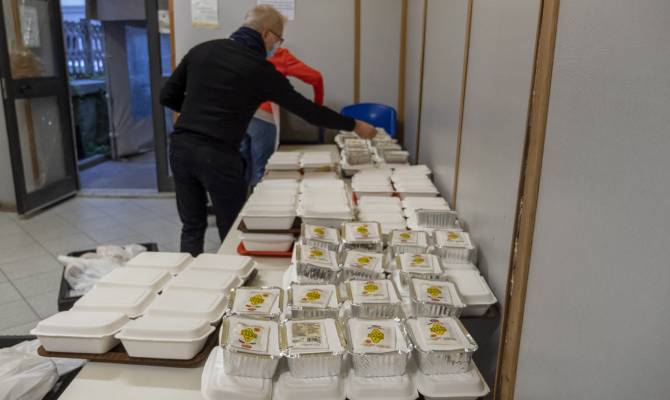
Before the pandemic we had around 30 seats available around the table. Because of the Covid we started distributing food in take away packages and numbers have raised, we distributed up to 50/70 packs. It’s not only homeless people who benefits from our service, but also unemployed struggling to have food to eat. Some of them come with their children to whom we give candies and cookies».

Through her commitment she got to know many people whose stories are extremely touching and hard to forget, such as that of Andrej*. Back in 2007, on a Saturday, he came to collect his meal. «I remember he was young, younger than 30 and toothless. He was from Eatern Europe, a carpenter. He had argued with his father and cut ties with his whole family. He had nothing. One day he asked me if I could wash his clothes so on Saturday, together with his meal, I gave him the laundry. He drunk a lot. I managed to persuade him to get help and to go sleeping at the Caritas’ dorm. He went to rehab and later he moved to a different place where he got a job».

«People do not always accept to change. Sometimes they are afraid. I have met a girl, many years ago, she had a 6 month-old baby. She lived on the street with her boyfriend. She was afraid of standing up. That winter night it was raining heavily, her baby was sick, he had cough and she asked me to have him over for the night. I could not turn her down. She gave me nappies, milk and his food. She would have came back to collect him in the morning. She never did. Helped by the social services and the Local Health Authority, we managed to have him vaccinated and we brought him to a foster home where he was adopted. She did not even tried to change her life, not even for her son. She stayed on the street».  «I truly believe that the aim in life is to leave a mark, to leave something good to others and to show them the best part of you. This is the reason why I keep giving my time to Missione 2000 and I have recently started volunteering in prison. I would do more if I could».

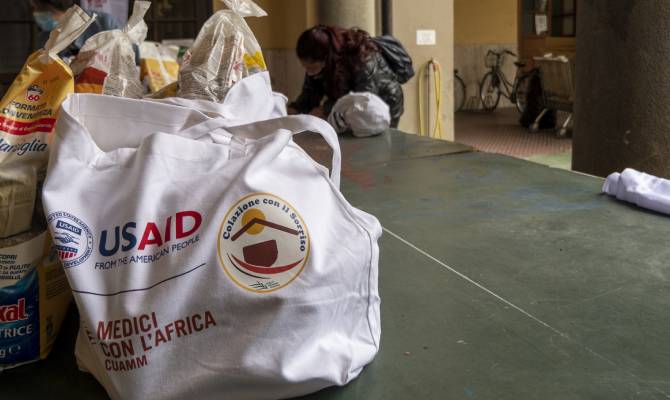
Rosalba Martone is one of the volunteers engaged in Missione 2000 an association that, along with Colazione con il sorriso, was supported by Doctors with Africa Cuamm through the IRC19 project, “Italian Response to Covid19: Improving governance and community preparedness for a resilient society (IRC19)”, funded by USAID (US Agency for International Development).

27.240 meals have been distributed in La Spezia thanks to this contribution between 2020 and 2021.

Cuamm and Missione 2000 Together for the poorest

«Missione 2000 was launched in 1993 in La Spezia. At that time I was a member of the diocesan centre, I was already taking part in a social project in Perù when I met Don Bruno Vincenzi. Together we decided to start a food distribution in La Spezia, at the central station – said Sabrina Tommasi, vice president of Missione 2000 -. We cooked vegetable soup and we went distributing it to people in need at night. The project developed gradually over the years and at some point it was necessary to find a location to host those we were helping. That is when we opened Via Torino 114. Here we set a real canteen with 32 seats, a meeting point where people can have their hot meal sitting together. We distribute dinner every day and we do our best to support people seeking help».

How did pandemic change your work?

Before the pandemic, we hosted around 80 people in our canteen. They could sit there and have their meal every night. Pandemic and social distancing forced us to close the canteen but we kept distributing food. We started packing food to take away so that people can come here and collect their meal. We are using the courtyard where we had plexiglass panels placed to guarantee social distancing, in this way we can still help people in need even though numbers have changed: meals distributed average around 50 per day now. Also our beneficiaries changed. At the beginning it was mainly addicts, homeless people and people with mental health disorders. Today there are many immigrants, homeless people and families, people who are lucky enough to have a roof over their head but who cannot make ends meet.

This emergency forced us to reinvent ourselves, to find brand new ways to help people and we have gladly noticed that the measures adopted work well, we might continue along this path».

Missione 2000 is an association that, along with Colazione con il sorriso, was supported by Doctors with Africa Cuamm through the IRC19 project, “Italian Response to Covid19: Improving governance and community preparedness for a resilient society (IRC19)”, funded by USAID (US Agency for International Development).27.240 meals have been distributed in La Spezia thanks to this contribution between 2020 and 2021.

IRC19 a commitment year in Italy

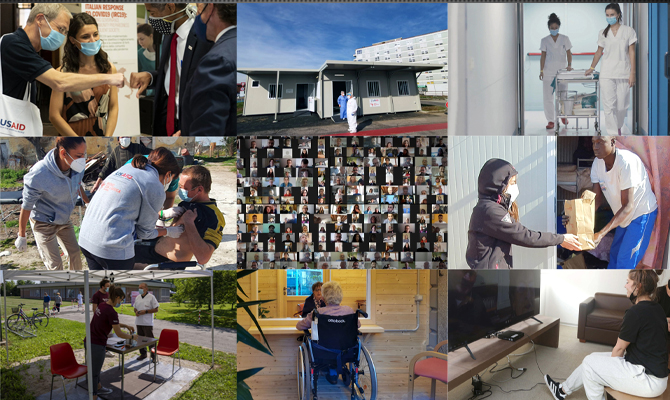
Eighty coloured spots, yellow, blue, green, red, spread throughout the map of Italy from north to south. As a “Risiko of good deeds done” in a year. This is the map depicting IRC19 project “Italian Response to COVID-19” funded by the US government on behalf of the United States Agency for International Development (USAID). From training session on Covid-19 and global health, to food distribution to people in informal settlements in Apulia and to homeless people in La Spezia, to health facilities and nursing homes equipment, up to awareness raising projects on Covid-19. The activities offered and accomplished were numerous. Behind every single one: people, stories and deep motivations. Hence, you can run into Cristina, a nurse working in a health facility in the Marche region who states “I realized Africa is not that far away and we are all together under the same sky”, or Rosalba from Liguria who volunteers cooking and distributing food to those in needs every Saturday, she told us “I never questioned myself why. I do it, that is all. When you get to know people’s problems, you think less about yours. I feel useful and this makes me feel good”.

In Apulia we work alongside Aaditya, a cultural mediator who claims: “I really like this job. Together with Cuamm and thanks to its dedication to help the most vulnerable and invisible ones, we are making the difference to these people in the framework of “Italian Response to Covid-19”. While Mario, a long time doctor with Cuamm reaffirms: “Since my return to Italy, I have always been suffering from Africa bug. I am now trying to give back what I received from Africa. Basically I guess Africa taught me to pay more attention to the relationship with the patient and the desease”.

Starting from the real needs identified locally, meeting the needs of the population seeking the best solutions, adapting goals and modifying interventions in order to achieve tangible results; always acting with flexibility and adaptability to ensure that, once the emergency is over, the style and the way of working remains so that the lessons learned begin to bear lasting fruits. This is the style that has been characterizing Cuamm for over 70 years, in its dedication to vulnerable people and their right to health and, since last year, also in Italy where Cuamm is implementing this extraordinary project that is expected to be completed in January 2022.
Results achieved in a year are numerous: 207.645 meals distributed to people in ghettos of Apulia and to homeless people in La Spezia, Liguria; 9.504 people sensitized on Covid-19 thanks to the commitment of 27 volunteering groups supporting Cuamm in 11 regions; 5.421 students of health professions and interns trained on global health and 691 health workers taking part in the target-tailored courses on physical and mental wellbeing “Justin Time” and “Fit4Care”; 1.507 basic medical examinations to vulnerable people; 19 health facilities among which hospitals and nursing homes equipped for the management of Covid-19 from Trentino to Marche, through Lombardy, Veneto, Emilia Romagna and 10 agreements signed with ten Italian regions to launch new collaborations on these themes and needs. Moreover: support to women in need to make use of services provided in Fivizzano, Tuscany; support to the immigrant community of Pinerolo (Piedmont) to enhance their knowledge of risks linked to Covid-19; one vaccination centre inaugurated in Rubano, in the province of Padua.

The way awaiting us in the coming months is long and demanding, we will go through Italy from Naples to Milan passing through Parma, Brescia and wherever in between driven by a deep need written in Cuamm’s DNA: “Doing good deeds in a difficult way” in Africa and, in times of pandemic, in Italy too.

Doctors with Africa CUAMM Presented the 2020 Social Belance sheet

The story of a year of dedicated work in Africa and Italy, in data, graphics, maps, photos, and balance sheet certification that bear witness to real, tangible commitment to help; this is the goal of the 2020 Social Balance Sheet that Doctors with Africa CUAMM presented today at its head offices in Padua. In this year CUAMM workers have had to face increasingly hard challenges, including because of Covid-19.

CUAMM’S Annual Report has evolved into a “social balance sheet” to bolster accountability and commitment to our stakeholders, including institutional, private, external, and internal stakeholders. This new approach is joined by the digital transposition of significant data as an additional step toward direct, transparent communication that is easy to access.

Andrea Borgato, Vice Director, presented the balance sheet in detail, saying, “The social balance sheet is a natural evolution of our annual report, in keeping with the obligations set by the reform of the Third Sector. It is a tool to tangibly measure and give a transparent account of the work we do in Africa and Italy. We went through this hard year of the pandemic, and we never stopped, never suspended our work. The balance sheet speaks to important numbers, with growing resources and activities, for a total commitment of €46,390,908, of which only 7% is for operating and communication costs.”

“Among the most important numbers about our work in Africa,” said Fabio Manenti, Head of Projects, I would emphasize this one: 1,512,112 children under 5 years of age were checked, 212,095 births attended, 18,657 patients given antiretroviral therapy, 8,211 health workers trained, 5,413 malnourished children treated, and 7,521 emergency transports provided.All this was done while withstanding the pressure from Covid-19 and the impact of indirect effects on health systems in terms of the decrease in access to services, which in some hospitals has been as much as 20%.”

A direct report from the field was given by Giorgia Gelfi, the current country representativein Mozambique, who was also long our representative in South Sudan: “2020 started with a big celebration in South Sudan for the opening of Rumbek Pediatrics. Right after that Covid came to Africa too with lockdowns and airport closures. We never stopped our work to care for and support the population, and we have taken all measures needed to cope as well as we could with Covid-19 which added to the already intense instability and fragility here. The situation in Mozambique is also very difficult with the ongoing emergency of displaced persons in Cabo Delgado in the north of the country. There were 600,000 internally displaced persons in 2020 out of a population of 1.2 million. CUAMM organized a humanitarian response including continuing its support of maternal and child health and fighting chronic diseases while trying to combat several cholera outbreaks.”

Andrea Atzori, Head of International Relations, talked about the new fronts of activity: “For 2020, we had an already intense working plan that we had to adapt to meet the huge challenge of Covid. We did this by organizing our response based on four key points: protecting healthcare workers; keeping facilities open and making them safe; raising awareness among communities; and forging partnerships at an international level to send materials by airlift, totaling approximately 14,000 kg of protective equipment for the first emergency response. And at a time that was so difficult for Italy as well, we also put into effect an extraordinary project here including supporting 14 Italian health structures in 11 different regions; supporting vulnerable groups in Puglia and La Spezia; and training Italian health workers on emergency management. This was all possible because of the “IRC19 / Italian Response to Covid-19” project, supported by USAID, the Cooperation Agency of the American Government.”

“We believe that trust is based on transparency and has to be earned by being accountable about what we have done and how, reporting clearly and openly the results we have achieved, our successes as well as limitations and failures. We believe deeply that international cooperation can be a truly important instrument of change and this social balance sheet is evidence of that. Looking at 2020, we have seen that solidarity happens everywhere, near and far; solidarity is global like health, and solidarity generates solidarity in a virtuous circle,” concluded Don Dante Carraro, director of Doctors with Africa CUAMM.