MOZAMBIQUE: THE DESIRE TO BE VACCINATED IS STRONG

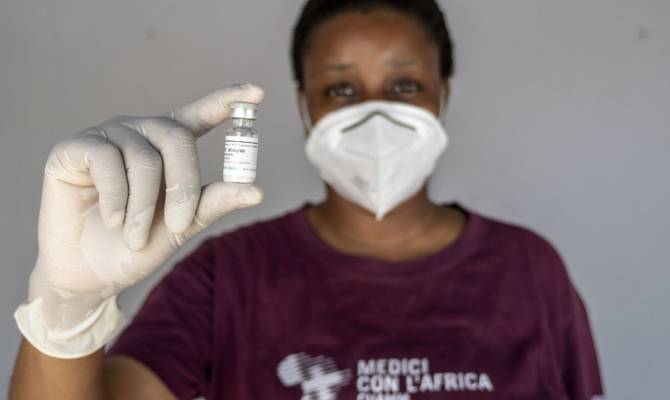
In the middle of the last wave of Covid-19, Mozambique, neighboring South Africa where the Omicron variant was first detected, is ready to enhance and implement the vaccination campaign with the doses finally received. Doctors with Africa Cuamm, in partnership with the Mozambican Minsitry of Health, is supporting the campaign in the provinces of Sofala and Tete supported by many institutional and private donors.

Cuamm works in the field alongside the national system, distributing the vaccines, supporting the logistics, training local personnel and raising awareness among civil society. Besides, Cuamm’s committment also involves an analysis of the context of implementation. With this goal in mind, a research on population’s attitude towards vaccination was carried out and it is going to be presented today in an on-line meeting attended by respresentatives of the European Union, local authorities, Cuamm and other NGOs working in the country.

A survey conducted in the communities of Tete and Sofala by Cuamm and supported by the European Union, showed the hesitancy rate among the population and the reasons behind it, helping build the most effective intervention through an awareness-raising campaign. The survey was conducted on a sample of 450 adults from the provinces of Tete and Sofala, 52% of which were women, 48% men.

The research showed that 73% of the sample is willing to receive the vaccine as soon as the doses become available while 25% is opposed and 2% hesitant. Men were shown to be more favorable to vaccination than women. The reasons behind the hesitancy are many: more than 50% is suspicious and does not consider herd immunity necessary, they believe economic and geopolitical factors as well as global conspiracy are the driven forces behind the vaccination campaign; 34% is afraid of the side effects of the vaccine; 14% claims autonomy and personal freedom in making choices about their health; 10% has not decided yet while 7% refuses the vaccine based on religious beliefs


«This survey is extremely important for us to understand how to communicate with people in order to inform them on the crucial role of vaccination in fighting this pandemic”- states Giorgia Gelfi, Cuamm Country Manger in Mozambique-. “27% of the population showed to refuse the vaccine because of caution, because of conformity to common opinions and because they want to decide autonomously.


The study demonstrated that to face the concerns of those who are hesitant, it would be efficient to intervene on these three arguments.  The fully-convinced no-vax profile is that of a young woman living in the city. A possible way to make a change is a “peer-to-peer” intervention that involves religious and family leaders who are called to set a good example. Media can also be helpful in the distribution of scientific information. As Cuamm we keep working with the activists whose role is crucial in building a bridge with local communities and spreading good habits in their daily life».

The vaccination campaign in Mozambique was officially launched on March 8th and did not run smoothly due to the lack of supply. Today, only 13,73% of the population out of 31 million people is fully vaccinated and the Ministry of Health has set the goal of vaccinating 50% of the population in the next vaccination campaign.


«The good news is that more than 70% of mozambican population is wiling to receive the vaccine. To achieve this, Cuamm is working in the vaccination campaign”- claims Don Dante Carraro, Chief of Doctors with Africa Cuamm.- Numerous doses arrived in the country in the beginning of December: 470.427 doses in Sofala and 412.619 in Tete, the two provinces where Cuamm works and we are waiting for many others to arrive. Together with local authorities, Doctors with Africa Cuamm is providing support to the organization, distribution and setting of the campaign furnishing material to 12 vaccination points in the provinces of Tete and Sofala. Among the activities planned, Doctors with Africa is setting up vaccination points, it is distributing medical supplies and priority medical devices, and is working on raising community awareness on Covid-19. At the same time, Cuamm is training health workers responsible for the vaccination and for the management of local activists: in the two provinces, 78 health workers and 90 activists are being trained. The support of the European Union made all this possible and we are grateful to them and to all the private donors who chose to support us».


This project is part of the EU’s humanitarian initiative of allocating €100 million in support of the rollout of COVID-19 vaccination in Africa, announced earlier in the year by the President of the European Commission, Ursula von der Leyen, in cooperation with the Africa Centres for Disease Control (AfCDC).

TELEMEDICINE CONSULTATION TO MONITOR PREGNANT WOMEN WHO TESTED POSITIVE TO COVID-19

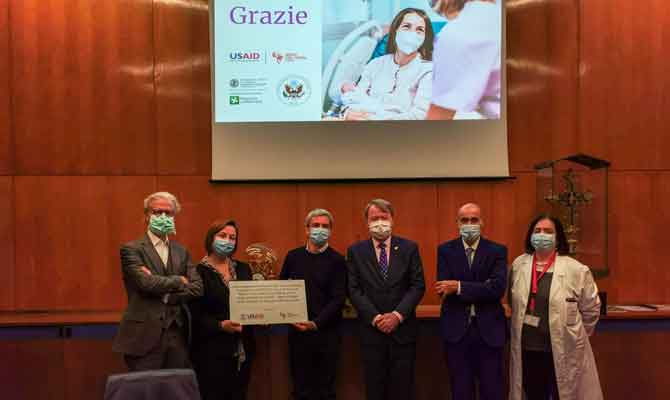
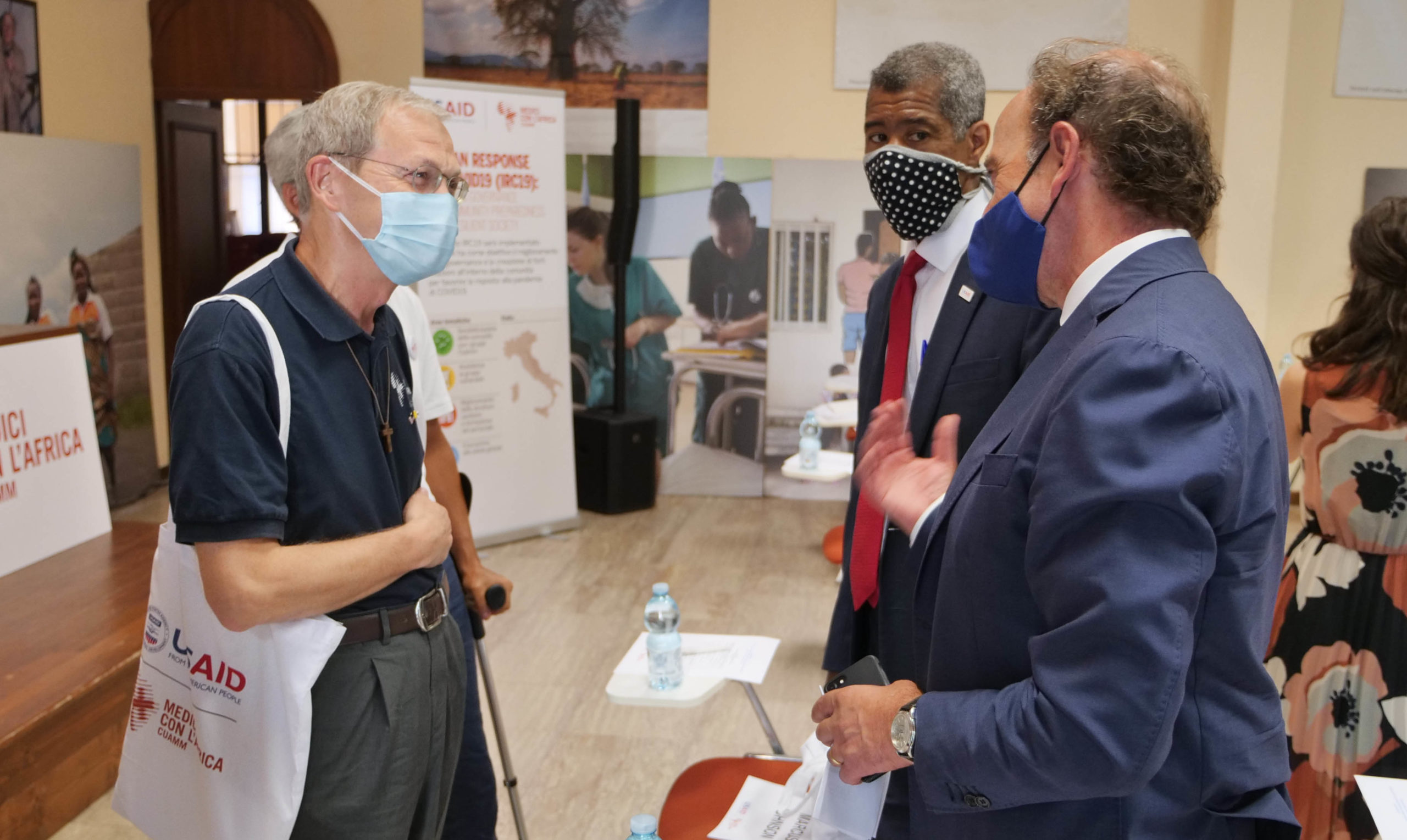
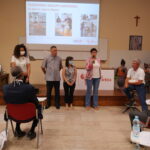
A new service to support pregnant women who tested positive to Covid was activated in April and officially launched today in Milan. It is a remote monitoring service to provide maternal and newborn care during the pandemic while reducing the risks for healthcare providers. The service, included in the “Italian Response to Covid19: Improving governance and community preparedness for a resilient society (IRC19)” project, implemented by Doctors with Africa CUAMM and supported by USAID, was offered to the patients of Mangiagalli Clinics at the Policlinico of Milan who could benefit from those cutting-edge instrumentations.

When the pandemic peaked in March 2020, Mangiagalli Clinic was identified by Regione Lombardia as Hub Center for Covid-19 among all the regional maternity hospitals. A new area was set at Mangiagalli Clinic to offer healthcare to pregnant women positive to Covid-19: it was provided with 18 beds, eventually expandable to 32, of which 12 set for the subintensive care unit.Smart cameras with face tracking to be activated by vocal command were installed in those 6 rooms of subintensive care with 2 beds each. In addition, directional microphone were also installed to guarantee, through a Wi-Fi connection, a 24/7 video monitoring service and the possibility to listen to and speak to midwives and doctors reducing the necessity to enter the red zone.The cameras installed are also useful to monitor women in the breastfeeding stage. When in their room, patients can connect to the rooming-in and to the intensive care with tablet and smartphone provided to monitor their babies affected by neonatal pathology or born premature.

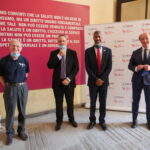
Dr. Ezio Belleri, General Director at Fondazione IRCCS Ca’ Granda, Ospedale Maggiore Policlinico di Milano, said: «This hospital was at the forfront in providing healtcare during the Covid-19 pandemic and we chose to dedicate particular attention to maternal care. The support received during the pandemic by national, international as well as city insitutions and organizations from the third sector was paramount. Hence, the contribution offered to the hospital by Doctors with Africa CUAMM and by the American government».

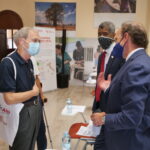
Robert Needham, American Consul, US Consulate General Milan, pointed out: «Today I am pleased of having joined the Mangiagalli and Policlinico Hospital teams and Doctors with Africa CUAMM in the presentation of a system to provide remote assistant to pregnant women with Covid-19. The system was made possible through the U.S. Government/USAID donation to Doctors with Africa CUAMM of 30,000 euro. This donation is part of the Italian Response to COVID-19 (IRC19) launched by CUAMM in June 2021 and funded through USAID’s $50 million commitment to Italy, pledged in Spring 2020, during the height of Italy’s first wave. USAID’s partnership with Italy saved lives while building Italy’s resilience and capacity to respond to future public health emergencies. Many of these efforts are still on-going. To date USAID has provided more than $9 billion to intensify the fight against COVID-19 around the globe, supporting more than 120 countries. We believe in this global fight, nobody is safe until everyone is safe».

A very important moment for Doctors with Africa Cuamm as well, as pointed out by Andrea Atzori, Chief of IRC19 project and Head of International Relations at Doctors with Africa CUAMM stated: «We are launching today at Mangiagalli Clinic at Policlinico of Milan the remote monitoring system for maternity care. It is a remarkable service that helps us guarantee protection to health workers and patients in a time of common concerns due to Covid-19 pandemic. This is a very important achievement for Doctors with Africa CUAMM. Since the beginning of this pandemic, it was our intention to effectively support the local community renovating in Italy the commitment that has been leading our work in Africa for over 70 years: to provide maternal and newborn care and to ensure safe matherhood up to the last mile».

Prof Enrico Ferrazzi, Doctor of Obstetrics and Gynecology at IRCCS Foundation Ca’ Granda, Ospedale Maggiore Policlinico Milano added: «I thank CUAMM and USAID for choosing Mangiagalli Clinic as Italian center of excellence in obstetrics and gynecology and as regional Hub Center for Covid-19. The remote monitoring service activated has helped us provide 400 patients tested positive to Covid-19 with a better and more secure healthcare service. Such system is not only useful during the pandemic but also in the future, to support mothers and children with medical complexity».


USAID (United States Agency for International Development), financing IRC19, is the main development agency of the American government and it works in more than one hundred countries

 This press released was written with the precious contribution of the United States Agency for International Development (USAID) in behalf of the American citizens. Doctors with Africa CUAMM, awarded with the Fixed Amount Award (FAA) No. 7200AA20FA00013 is responsible for the opinions expressed in this press released. Neither USAID nor the American government can be held responsible for what herein stated.

REMEMBERING PIERA FOGLIATI

“All of us who knew her, someone in particular who worked with her, and many other friends and volunteers of CUAMM, have always seen in Piera an example: discreet, humble, hidden, but tenacious and dedicated. Her example of reliability, professionalism, dedication and generosity in the service to the poorest, especially in Africa, is the real ‘legacy’ that she leaves us”. With these words, director Don Dante Carraro remembers Piera Fogliati, who worked for many years with Doctors with Africa CUAMM in various countries, including Mozambique and Tanzania. One year after her death, a small book is being published today: “The ongoing search for the common good. Remembering Piera Fogliati”, which friends and colleagues wanted to dedicate to her. “We wanted to write about her, talk about her, remember her,” is stated in the introduction. “Talking (or writing) about a person who has left us and who has left something inside us, gives us the feeling that she is somewhere close to us. Impalpable, imperceptible, but present. Somehow. Something had to be left that would last a little longer. It was necessary to make her known, albeit in an incomplete and fragmented way, even to those who did not know her. Many contributions, from Italy to Africa, outline a memory that honours a debt of affection and esteem towards Piera, but at the same time recalls intuitions and choices that remain relevant for Doctors with Africa CUAMM.
 If you would like to request the publication, please write to cuamm@cuamm.org or call 049/8751279.

70 YEARS WITH AFRICA AND AT THE SERVICE OF ITALY

Today, at Doctors with Africa CUAMM’s headquarters in Padua, saw the presentation of our “Italian Response to COVID-19” intervention plan, part of CUAMM’s broader program for Italy that leverages our organization’s network of volunteers and partnerships with health professionals and trainers to continue to tackle the Covid-19 emergency. Centered around prevention, the plan focuses in particular on the weakest and most marginalized groups of society, and – thanks to the year-long support of the United States Agency for International Development (USAID) – involves partnerships with health facilities, universities, umbrella associations and volunteer groups throughout Italy.

Speakers at the presentation included representatives from USAID and the United States Embassy in Italy, as well as from CUAMM support groups around Italy and several other partners involved in the plan.

As Don Dante Carraro, director of Doctors with Africa CUAMM, explained: “Covid-19 underscores how crucial it is to think about health increasingly in global terms. In recent years CUAMM’s commitment in this area has involved a focus on our work with university-based health trainers and our support groups in Italy. Now we are eager to expand the sharing of this experience and know-how with our own communities, putting it even more at their service during this health crisis. As we at CUAMM ponder the recent words of the President of the Republic, who called for ‘a commitment to help rebuild the fabric of our society, strengthening our ability to handle upcoming crises and reviving our confidence in the future’, we feel compelled to do our own part, and want to thank our many partners for supporting us in this effort – especially USAID, for standing side by side with us in this huge challenge.”

Awareness-raising, training, and – last but not least – support to health facilities and the most vulnerable: these are the keywords of CUAMM’s emergency response plan.

THE NUMBERS: 27 volunteer groups | 3,800 volunteers | 11 Italian regions  | 39 universities  |  12,000 junior doctors 25,000 food kits distributed

This study/report/audio/visual/other information/media product (specify) is made possible by the generous support of the American people through the United States Agency for International Development (USAID). The contents are the responsibility of Doctors with Africa CUAMM, recipient of the Fixed Amount Award (FAA) No. 7200AA20FA00013 and do not necessarily reflect the views of USAID or the United States Government.

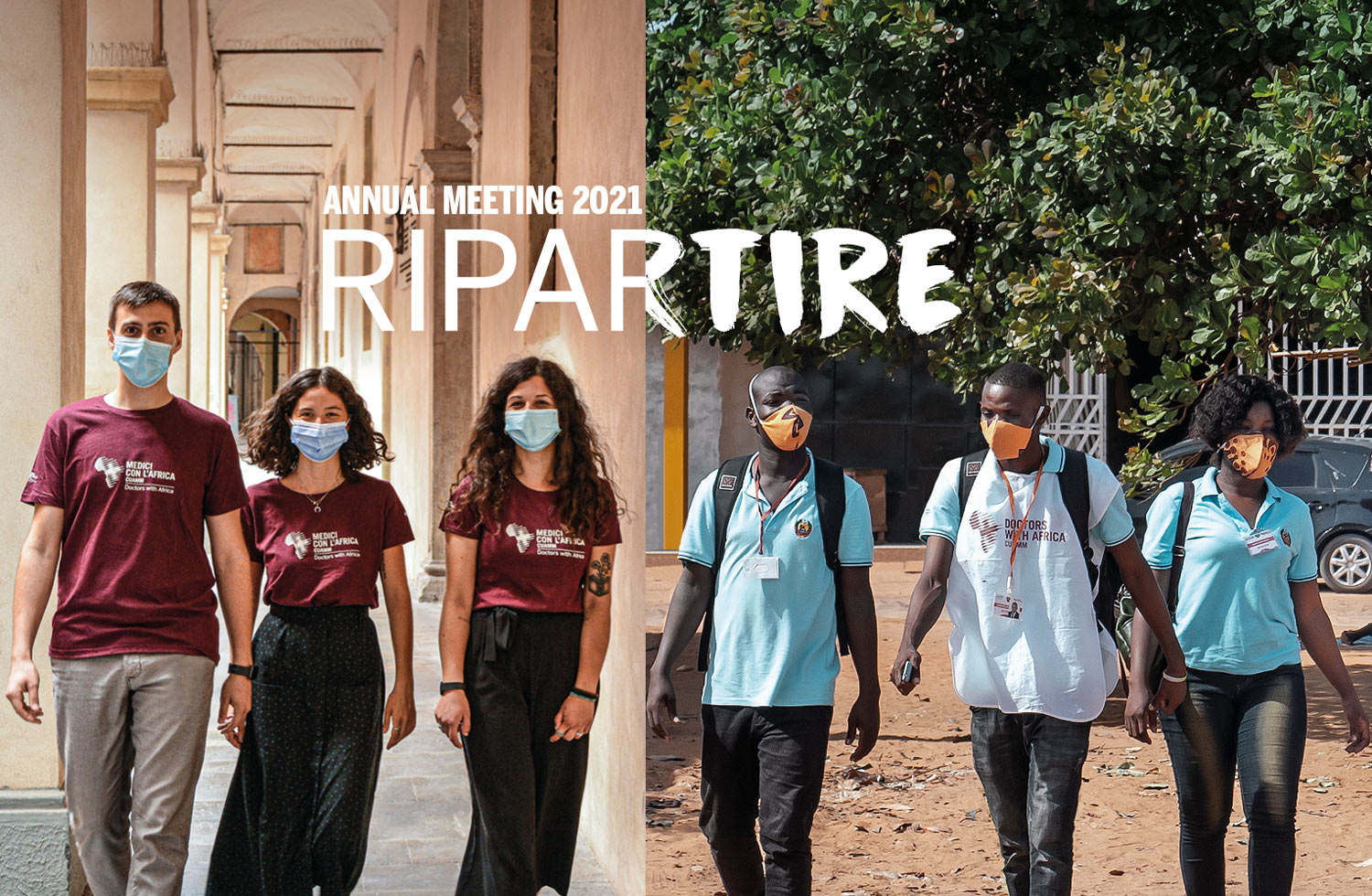
ANNUAL MEETING 2021


We want to recount our commitment alongside the poorest, “with” them: hardships and joys, good results and limitations. The presence of each of us is fundamental!
We want to reaffirm our tenacious determination to start again. But we must do it all together. In Italy and in Africa, called to build a better future that leaves no one behind.
“No one can say they are out of the pandemic until we are all out of it. And this is particularly true for two continents as close and connected as Africa and Europe, so close as to constitute a single region, united rather than separated by the Mediterranean”.

Sergio Mattarella, President of the Italian Republic Ministerial Conference Meetings with Africa 2021.

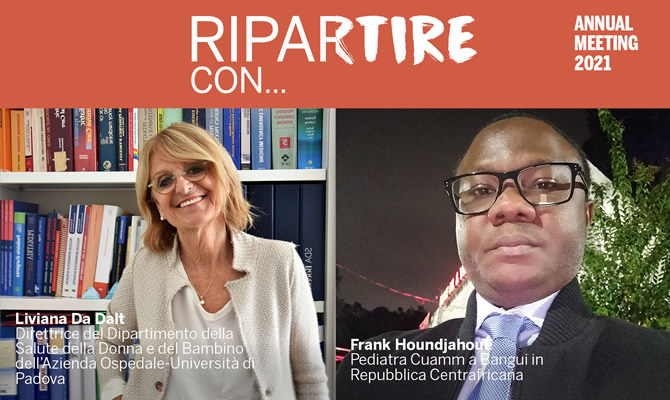
START AGAIN WITH Liviana Da Dalt and Frank Houndjahoue
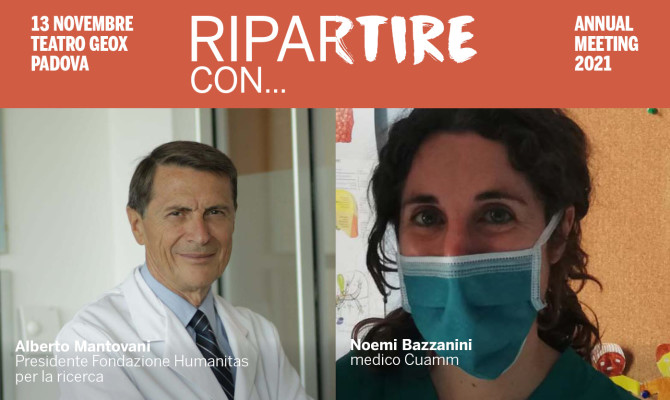
START AGAIN WITH Alberto Mantovani e Noemi Bazzanini
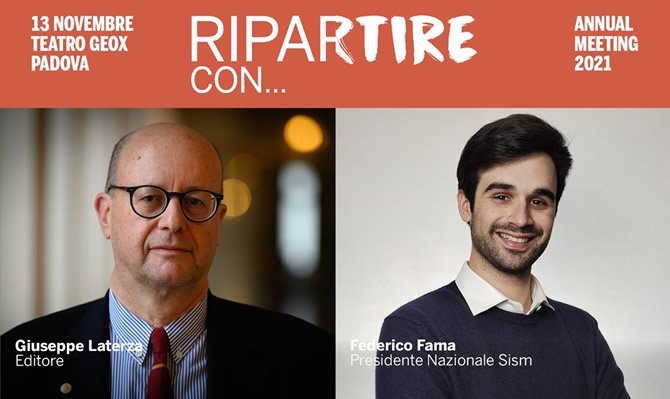
START AGAIN WITH Giuseppe Laterza e Federico Fama

Download the full program

TESTIMONIES FROM THE FIELD, FRIENDS, AND INTERVENING INSTITUTIONS

With the special participation of:

MARIO DRAGHI*
Italian Prime Minister

H.E. MONS. CLAUDIO CIPOLLA
Bishop of Padua

SERGIO GIORDANI
Mayor of Padua

LUCA ZAIA
President of the Veneto Region

ON. LUIGI DI MAIO
Minister for Foreign Affairs and International Cooperation

HON. PAOLO GENTILONI SILVERI
Commissioner for the Economy of the European Union

ROMANO PRODI
President of the Foundation for the collaboration between peoples

H.E. MONS. ROCCO PENNACCHIO
Bishop of Fermo and President of 8 per mille CEI committee

ALBERTO MANTOVANI
President of Humanitas Foundation for research

MARIELLA ENOC
President Bambino Gesù Paediatric Hospital of Rome

GILBERTO MURARO
Chairman Cariparo Foundation

MOGOL*
Italian lyricist, record producer
and Italian writer

FATHER CHRISTIAN CARLASSARE
Bishop-elect of Rumbek, South Sudan

FRANK HOUNDJAHOUE
Cuamm paediatrician
in Bangui, Central African Republic

AMIR SENI
Director of Paediatrics of Beira, Mozambique

CHIARA BERTONCELLO
Professor of Public Health, University of Padua

TERESA DALLA ZUANNA
Medical Hygienist with experience of Jpo in Ethiopia

Video message by ANTHONY S. FAUCI
Director of the U.S. National Institute of Allergy and Infectious Diseases

Conducted by:
PIERO BADALONI
Journalist

GUESTS WHO WILL BE WITH US

FABRIZIO BRANCOLI
Director of Il Mattino di Padova, La Tribuna di Treviso, la Nuova Venezia, il Corriere delle Alpi

LIVIANA DA DALT
Director of the Department of Women’s Health and Child Health Department and Paediatric Emergency Room

GIOVANNI FOSTI
President Cariplo Foundation

PATRICK CONNELL
Chargé d’Affaires, ad interim, at the U:S:Embassy to the Holy See

ANDREA GUZZETTA
Professor of Child Neuropsychiatry at the IRCS Stella Maris in Pisa

GIUSEPPE LATERZA
Publisher

DANIELA MAPELLI
Magnificent Rector University of Padua

SABINA NUTI
Rector of the Sant’Anna School of Advanced Studies – Pisa

VINCENZO MORGANTE
Director of Tv2000 and Radio Inblu

GIAN LUCA QUAGLIO
Health Policy Analyst in the Research Service of the European Parliament

PAOLO RUFFINI
Prefect of the Dicastery for Communication of the Holy See

ALESSANDRO RUSSELLO
Director of Il Corriere of Veneto

SIMONA SALA
Director of IL Corriere del Veneto

MARCO TARQUINIO
Director of Avvenire

*waiting for confirmation

Registrations
Confirmation of participation is required:
– by filling out the form on our site mediciconlafrica.org;
– by contacting Chiara Menegazzo at 049 8751279 or at eventi@cuamm.org
Free admission subject to availability.

Access
Access to the theatre will be possible from 9.00. To enter the Gran Teatro Geox is mandatory to show the Green Pass for those over 12 years. At the entrance will be measured the temperature to all participants and it is mandatory to always wear the mask. These provisions will not be applied to children under 12 years of age and to those exempt on the basis of appropriate medical certification.

Transports
By car: the Gran Teatro Geox offers ample parking, for information you can consult our website.
By train/ bus: CUAMM has organized bus transport from various Italian cities and an agreement for a 50% discount on train tickets. For information, consult our website or call the contact person in your area.

Contacts
Veneto/ Trentino Alto Adige/Friuli Venezia Giulia: Enrico Azzalin e.azzalin@cuamm.org cell. 3404611650
Emilia Romagna/ Tuscany: Maria Periti m.periti@cuamm.org cell. 3483962569
Lombardy: Michele Veronesi m.veronesi@cuamm.org cell. 3454173524
Piedmont/ Liguria/ Aosta Valley: Stefano Durando s.durando@cuamm.org cell. 3450525221
Central-Southern Italy: Nicole Laforgia n.laforgia@cuamm.org cell. 3473973467

START AGAIN WITH…|LIVIANA DA DALT AND FRANK HOUNDJAHOUE

It was a particularly complicated day. Professor Liviana Da Dalt, director of the Department of Women’s and Children’s Health of the Azienda Ospedale-Università di Padova, explains: “Guaranteeing all the numerous children a bed for hospitalization required a great effort today, but we succeeded. We are facing a very important respiratory virus epidemic. We also have Covid, but it affects little except for organization. This year, the winter season infections are very early; as a result, some young infants who are usually prophylactic in early fall, such as those born prematurely, have not received it yet this year, so they are very affected.” I confess that just today I thought of Africa, where, in crowded conditions, I have repeatedly seen two small infants placed in the same crib! Liviana does not shy away from questions, she argues with firm calmness, trying to find the right words.

Why is it important to participate in the Cuamm Annual Meeting?

“The Annual Meeting is an opportunity for enrichment. You leave with new energy, with a charge, with a determination to do better, certainly with Africa and for Africa, but also in your daily commitment here at home. At the Annual Meeting, there is a very special atmosphere, from a certain point of view, also an air of celebration. It is a moment of encounter, a meeting of friends, people who, even if they do not know each others, share the pride of working alongside Doctors with Africa Cuamm in its projects and commitment in Africa.

It is a moment to stop and listen to testimonials of true stories, of concrete commitment, courage and passion. From many points of view: some of them experienced, more mature people with longer experience, but also young people whom it is wonderful to meet after their first experience in Africa and feel that their vocation and dreams have been fulfilled. All are models of enthusiasm, sharing and generosity. This reinforces us and gives us energy.

But it is also a moment of knowledge and updating on the activities of Cuamm, which gives a serious account of its projects and the results of the “Mothers and children first” program in which we have been deeply involved too as doctors dedicated to children. A moment of overview that also makes us see the greatness of Cuamm and reinforces the determination and pride of being close to it. Sometimes you work so hard and lose the big picture. Then it’s time to stop and immerse oneself in the marvelous reality of Doctors with Africa Cuamm, which, despite all the hard work, conveys a commitment, enthusiasm and contagious passion that everyone takes home with them after those two hours spent together.


What does it mean to start again after, and in some ways within, this pandemic?

“I’m responding with a pediatric perspective, as someone who represents other people who care for children and moms. It is important to start again because with this pandemic, the children in Africa need us even more, but also we, in a certain way, need Africa. We know this: the pandemic has increased inequalities, delayed access to treatment, reduced the efficiency of already fragile services in Africa and had a negative impact on the health status of children and mothers. This is a reality that we are aware of and that requires a renewed commitment to stay close, to make a small contribution even with our young JPOs. I always teach my medical students, when they begin courses in pediatrics, that the majority of the world’s children are in the hemisphere below us, and that it is there that the most disadvantaged, most neglected children are. That’s why going to work in Africa as JPO is even more important.

But it’s also important for us: we feel better, we feel part of a much larger project, in line with the UN’s third objective of sustainable development “to ensure health and well-being”, a key objective of a truly global vision. In fact, for us, the pandemic has strongly interrupted the JPO project that we have embraced for over 15 years, during which time there has not been a day when there was not one of our residents in Africa; only the pandemic has managed to stop us! Starting again now is extremely important: it is a project of great value for the support we offer to children in Africa and also for our training schools. This is the added value of an experience in Africa: from learning about different diseases, to learning a new way of approaching them, to understanding the health needs of children in developing countries, to understanding what international cooperation is all about. This helps doctors to be more aware, both for those who leave and those who stay, because those who return talk about Africa and make others aware of these issues. We need this too!

Restarting now means having new awareness: the management of a pandemic has certainly changed our organizations, has required creativity and flexibility in finding new models of care. The Covid-19 pandemic was a model of how to have a global vision of diseases. It certainly taught us a lot, it showed us how infectious diseases can actually be a threat to the health of the world, and how a new mentality is needed, a new way of approaching such wide-ranging issues”.


Starting over with what dimension, with that value?

“The determination, the enthusiasm, the courage, we give them already consolidated. But now we have a greater awareness of how we need to be able to adapt to new realities that change, even very rapidly, to be flexible and creative in finding solutions. Africa test you in this regard and stimulates these attitudes, which are so important in our countries as well.


Frank Houndjahoue, Cuamm pediatrician from Bangui, in the Central African Republic, will also be coming to Padua to experience the Annual Meeting together.

Why is it important to participate in the Cuamm Annual Meeting?

The Annual Meeting is an opportunity to take stock of a year’s work in the field, to present the results achieved and the prospects for intervention in the various countries in which Cuamm operates. It allows us to compare the different realities, including that of the Central African Republic, each with its own difficulties, and to demonstrate the impact of Cuamm’s intervention in the last mile. I’ve never been to Italy before, so for me coming to the Annual Meeting will also be an opportunity to visit Cuamm’s headquarters and discuss things in person with colleagues, but also to meet the teams working in other countries in order to have fruitful exchanges of opinions and experiences.

What does it mean to restart after, and in some ways within, this pandemic?

Restarting, as the word implies, is a “starting again”, it indicates continuity but also announces a new phase. It implies a “new beginning”, but also “a new impetus”. A new departure must certainly remember the past, internalize the sense of a mission for an organization, but also for each individual person, and apply it to the changed context in order to be able to project into the future. In short, it is made up of fidelity, it is like going back to the origins, back home, so to speak, and at the same time of innovation, of adaptation to change.

Start again with what dimension, with that value?

My wish is to start again with determination!
START AGAIN WITH…|ALBERTO MANTOVANI E NOEMI BAZZANINI

Alberto Mantovani, President of the Humanitas Foundation for Research, has from the outset supported Doctors with Africa Cuamm for the vaccination campaign in Africa, promoting this great challenge.

Why is it important to participate in the Annual Meeting?

I participate to share, contribute and thank. For example, to share the vision of “with” and the goal of transforming a vaccine into a vaccination. To contribute what little I know. To thank the people of Cuamm for what they do and represent, even in my place.

What does restarting mean to you?

For me, leaving means taking up the challenge of research, of teaching in presence, and of knowledge. Of crossing the not knowing in the service of science and health, and of shared health.

Starting over “with”…?

I have many “with”: with members of my family, with members of my laboratory who are my teachers, with civil society organizations who live “with”, from the organizations in my neighborhood to Cuamm.


Noemi Bazzanini, took part to the mission in Tanzania as part of a project on chronic diseases. An infectiologist, on the front line in the Covid-19 emergency at Parma Hospital, in 2018 she had served with Doctors with Africa Cuamm as a Jpo and then as a doctor in infectious diseases in Shinyanga and Songambele, Tanzania.

Why is it important to attend the Annual Meeting?

It is an important moment to do advocacy: being many people, selling out in person, means expressing a greater commitment and awareness, to move something at the level of public opinion and institutions.

What does it mean for you to start again?

I’m returning to a country where I’ve already been, even if in a different place, after about two years, the time of Covid. Every time you go, it’s always starting something new, it requires all the commitment of new things, uti t also gives you the hope of doing well. It’s a great opportunity, it gives a strong charge!

Starting over “with”…?

I’ll be working a little bit on the ward, a little bit in the outpatient department, but the newest part will be working with the Jpo’s, I’ll have to measure up. I would say with the ability to get back on top of everything and rediscover.


Translation: Giulia Mascia
Communication and Media Relations Officer

START AGAIN WITH…|GIUSEPPE LATERZA AND FEDERICO FAMA

Giuseppe Laterza, editor, will be with us at the Annual Meeting to give voice to Africa. He tells us about his idea of restarting, during this global pandemic that we are all still going through and how important it is to restart with others, starting with those less fortunate than us, such as our African brothers, so as not to leave anyone behind.

Why is it important to attend the Annual Meeting?

After such a long period of separation, which for many has unfortunately been a period of loneliness and even suffering, being in Padua again with the Cuamm community is not only a joy for the spirit but also a propellant/incentive/stimulus of that solidarity-based imagination that we need and will need in the coming years.

What does starting again mean to you?

Restart is a word that evokes many images and feelings. This global pandemic has opened our eyes to what Cuamm has known and practiced for many years in the work of many volunteers every day: our health is global and does not depend only on medicine or health conditions, but on many complex factors: demographics, economic conditions and many others. I think that starting from this teaching, we need to rethink ourselves as part of a global network, with which we need to constantly dialogue.

Starting again “with”…?

I would say with others, with all the others, no one excluded.

One of our authors, a great philosopher, Zygmunt Bauman wrote in his books that today there are in the world – but also at home – ‘discards of humanity’: those people cut off from civil and social life only because they are not useful to production and are not valued by the market, as Pope Francis also often says. I think we need to dialogue with them first! As Cuamm does and as it has done in many years of work.

Dante Carraro explains this very well in his book with Paolo Di Paolo: taking care of others, starting with those less fortunate than us, especially our African brothers and sisters, enriches us. This is not a rhetorical phrase: it makes us better because we will have cultivated the essence of our humanity. It seems like a simple concept, but in reality it is not easy. This testimony has to be showed, shared, with the right words, popularized and extended to a wider audience. The alliance between the world of culture with Cuamm and the other associations that work in the field is fundamental from this point of view. The world of culture cannot only rework something that is perhaps produced in the university, in research or by imaginative writers. It must embrace the totality of activities and share them so that they can reach many, many, if not all.

The pandemic has taught us that our health is global and Federico Fama, National President of Seism, knows it well. He testifies to the commitment of medical students who take up every day the great challenge of stimulating a cultural change, especially among young people, to become active players in promoting the right to health for all.

Why is it important to participate in the Annual Meeting?

Participating in the Annual Meeting is a ritual moment to give a face to the enormous work carried out by Cuamm year after year. Doing Global Health also means having opportunities to compare all the different realities and figures that deal with health, and the Annual Meeting is almost a holiday in this sense: it allows us to meet, to share together, and to grow.

This is also our opportunity to reaffirm our commitment as medical students to a great cause such as the one carried out by Cuamm: unfortunately we won’t be able to be physically present, but we will still give our contribution and bring our voice as future health professionals interested in a global approach to health: a great challenge, which we are proud to be able to say we face together with Cuamm.

What does starting again mean to you?

Personally, I take the word restart to mean: the last two years have been a great challenge and a huge pain for health systems around the world, unprepared for a global challenge such as a pandemic. For me, restarting means rebuilding: it is necessary to take stock of what is not working, and to change the approach with which it is faced. Health starts with education, and not just from medical students: a wide range of disciplines and skills are needed to enable us to address and defeat future health challenges, and it is crucial that change starts at all levels, including that of medical students, making them discover the inherently political role they play as health promoters in society.

Starting again with?

Starting again with determination, so that we can meet the challenges of the future with the awareness of the present and the lessons of the past, but above all, starting over with enthusiasm, which is one of the strongest drivers of change.

Sharing to feel less alone

“It was a Friday of last year, and like every Friday, the staff met to discuss and evaluate the data collected during the week: HIV tests carried out, number of people who tested positive, the number of patients undergoing treatment, and the dropout rate. A moment for sharing the story of the home visits carried out,” says Luciano Nigro, Cuamm infectiologist.

We are in Angola, in Luanda, within the framework of PIPSA project (Integral protection of HIV-positive people), focused on HIV prevention and on providing continuous and integrated assistance to people living with HIV infection. “When community activists share the stories of the people they meet during the home visits, it often emerges the great loneliness, discrimination and marginalization that people living with HIV have to face”, continues Luciano.

The lack of information and awareness regarding HIV and AIDS, and especially the stigma attached to the infection, are still very widespread and often they are cause of exclusion from the community. “We started to ask ourselves how it was possible to make these people feel less alone in their condition – adds Luciano-. So we thought, ‘What if the stories we hear every day became a book of multiple voices, each one telling their own story?’ It could be a way to make people understand how HIV-positive patients feel, what their daily difficulties are and how together we can face stigma and marginalization in a different way”.

This is how “Experiences and ways to hope” was born, a book which tells how a HIV-positive woman feels and faces the disease, with two children to raise and without the support of a husband,  or how a girl lives the stigma within her own family and how it is possible to overcome it through raising awareness within the entire family, or the discouragement and desolation that can be felt at the time of diagnosis, but also the hope for a better and normal life if the treatment is properly followed. And again, the story highlights the essential role of community activists.

“I don’t think we can truly know what the other person is feeling or experiencing, each of us has its own way, but I am convinced that really listening carefully to the stories of others helps us to imagine what they are experiencing and this is the first step in trying to understand each other and be more supportive”, emphasizes Giulia Natali, general coordinator of the PIPSA project.

The projects that Cuamm carries out in 8 countries in Sub-Saharan Africa are made up of data, but above all of the life stories of the people we meet everyday. A collection of voices can be a very powerful tool, creating deep connections, and bringing together those whom we may think are distant.


The gaze of Berhanu

In the field there are many figures, sometimes not very visible, who work hard every day to implement and make the various projects concrete. Doctors with Africa CUAMM has always worked ‘with’ Africa, a preposition that is the measure of its intervention: it works side by side with the local population. In addition to the many operators who leave Italy and spend their personal and professional lives in the field, there are just as many local operators, who also play fundamental roles in ensuring that the ‘great machine of good’ continues to function.

Among them is Berhanu Gulo, Project Officer in Ethiopia, who tells us about his background and the activities he deals with on a daily basis: “Since I joined CUAMM, I have been working on a project on the prevention and treatment of cervical cancer in the Wolisso area, which has received excellent feedback from both the beneficiaries and the local authorities. I also worked on the recently completed NICU project to improve access and quality of neonatal care, which received great appreciation by the Ministry of Health”.

Berhanu works at the CUAMM coordination office in Addis Ababa, supporting the project leader in planning, monitoring and implementing project activities.

“My day is made up of many meetings, which are essential for building relationships of trust and collaboration with partners and communities, enabling projects to be implemented in line with the real needs of the beneficiaries. I frequently meet with representatives of the Ministry of Health and the Department of Health of the Oromia region to ask them to actively collaborate in the implementation of project activities. I also meet with those involved in the projects, from health directors to community activists, to support them in their activities and to incorporate needs to continue improving the services offered. These many meetings have taught me that relationships are the strategic key to project development”.

These meetings are also fundamental in shortening the great physical distances that often exist between the various places of intervention and that make it difficult for operators to communicate information to the beneficiaries and the context in which the project is developed.

“What excites me about my job is the opportunity to be in contact with expatriate and local colleagues, and to continuously learn from this cultural and professional exchange. What motivates me on a daily basis is working ‘for’ and ‘with’ communities, and the idea that projects like the ones I have worked on can contribute to improving health services for people in my country.”