TENDER | FOR FUEL IN SOUTH SUDAN

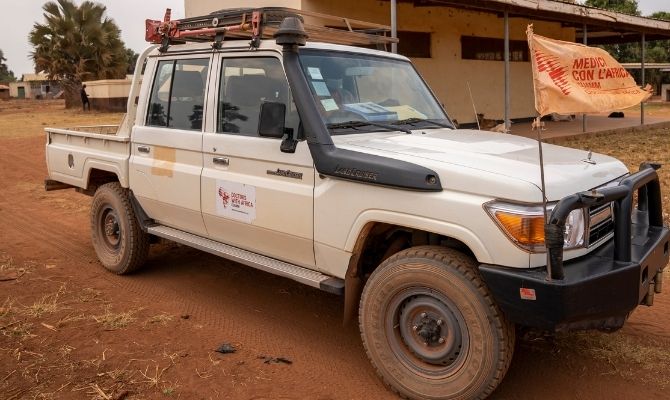
A Local Open Procedure to select a company for the SUPPLY of fuel in the sites where Cuamm is operating.
00 TENDER ANNOUNCEMENT
01 VOLUME 1_1.1 INSTRUCTION TO TENDERERS
02 VOLUME 1_1.2 TENDER FORM
03 VOLUME 1_1.3 FORMS regarding the SELECTION CRITERIA
04 VOLUME 1_1.4 FORMS regarding the TECHNICAL OFFER
05 VOLUME 1_1.5 ADMINISTRATIVE COMPLIANCE GRID AND EVALUATION GRID
06 VOLUME 2_CONTRACT FORM PROPOSED
07 VOLUME 3_TECHNICAL ITEMS SPECIFICATIONS REQUESTED
08 VOLUME 4_FINANCIAL OFFER

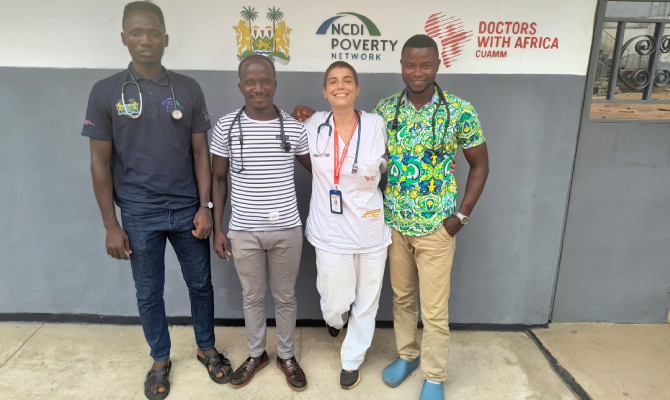
Ibrahim, Fullah and Saidu chasing a dream

Ibrahim, Fullah and Saidu have a dream. When you are young, passions and desires light you up leading the way ahead. Yet, dreams require perseverance, dedication and commitment. In Pujehun district, Sierra Leone, a dream come true can be life-changing.

Ibrahim, Fullah and Saidu are now working together at the PEN-Plus clinic for NCDs. The facility was opened last March with CUAMM support and it is dedicated to provide healthcare to people living with diabetes, hypertension and other non communicable diseases.

Silvia Professione also works at the clinic. She is a 30 years-old Italian resident in internal medicine who left her Univesity and hospital in September to live an experience of cooperation with CUAMM. Ibrahim, Fullah and Saidu are also the same age as Silvia, they are the Community Health Officer at the clinic.

«It is them who see the patients. By working shoulder to shoulder every singe day, we have built a deep and genuine relationship both professionally and personally» said Silvia.

Ibrahim is from the northern region of Makeni, he moved to Pujehun after graduating in Health Science in 2022. «I started as a volunteer at the general hospital. When the PEN-Plus clinic was inaugurated, I started coming here to see how it worked: I used to follow Dott. Giacomo Marro, the head of the clinic. I wanted to learn as much as I could. To be honest, back then my dream was to become a surgeon. Everything changed when I entered the clinic. Working on NCDs I figured out internal medicine was way more interesting for me, even more than surgery».

As a new vacancy for Community Health Officer at the clinic was published, Ibrahim applied. «I really enjoyed the first months of my work. I had the opportunity to work with numerous CUAMM doctors who held different training sessions as the one on the use of the electrocardiograph. Thanks to that training we are now able to diagnose a heart failure and intervene timely». Today Ibrahim dreams of becoming a doctor to then pursue a specialization in internal medicine. Working on NCDs which incidence is on the rise in Sierra Leone, is his goal in life.

As Bryma did, also Fullah arrived at Pujehun hospital as a volunteer at the paediatric ward. Although he dreams of becoming a cardiologist.

«A large number of patients at Pujheun hospital suffer from either heart diseases or hypertension and I would like to be able to help them, to help my own community».

Training local resources is key not only for Ibrahim and Fullah to accomplish their dream but also for the community to have access to quality health services. «Working with CUAMM I have the chance to pursue my dreams. We have learnt a lot since the beginning of the project and we are now qualified to intervene timely when needed». A year after the clinic was opened, health staff keep learning:

«We learn something new every day and we do hope we can be qualified doctor one day. This is our strongest desire» said Saidu who volunteered two years at the district hospital before becoming a member of CUAMM team.

The three of them, they all started their professional experience by volunteering at the hospital two years ago. They are CUAMM staff today: they see and treat over 170 patients suffering from either diabetes or hypertension who seek medical care at the clinic, every month.

«They are eager to learn. They do know very well that being qualified is key. To support them in the training activities, for them to become themselves trainers one day, is no doubt the best part of this experience that I am living» stated Silvia.

Doctors with Africa CUAMM is committed to promote education both in Italy and on field, within both health facilities and hospitals where Italian and local staff work side by side sharing ideas and experiences and learning by doing, together. This is the way we believe Ibrahim, Fullah and Saidu can make their dream come true and inspire other young Africans, every day.


MALARIA VACCINE ROLLOUT BEGINS IN CAMEROON MARKING A HISTORIC MILESTONE FOR THE CONTINENT

Monday Jan 22, the first malaria immunization campaign started in Soa, a village 20 km away from the capital Yoaundé under the supervision of WHO, GAVI and UNICEF. Cameroon is the first country to roll out the immunization campaign following successful trials in Ghana, Kenya and Malawi. The RTS,S vaccine also known as Mosquirix, will be administered in 42 districts and 10 counties across the country both in health centres and private clinics. The rollout started after the delivery of about 331.120 jabs in November 2023.

PILOT PROGRAM
Since 2019, Ghana, Kenya, and Malawi have been administering the vaccine in a schedule of 4 doses from around 5 months of age in selected districts as part of the pilot program, known as the Malaria Vaccine Implementation Programme (MVIP). 2 million children received the immunization. According to WHO, the first malaria vaccine has contributed to reduce child deaths by 13% in 4 years. The results also demonstrated that severe malaria was reduced by 22% in children who received 3 doses, reduction was also recored in hospitalization. Other African countries have already planned to introduce the vaccine this year, with hopes that 6.6 million children could be reached. Deliveries are due for Burkina Faso, Liberia, Niger and Sierra Leone.

«There are numerous challenges ahead – says Giovanni Putoto, Head of Planning and Operational Research at CUAMM, since, as we all know, Africa does not only struggle to access vaccines. Once again, the major challenges is to transform vaccine into immunization, that is what we have experienced in the past years during the Covid-19 pandemic. In order to do so, cross efforts from both governments and international partners are essential. The major challenges we will be call to address? Of course vaccine shipment and storage but also vaccine skepticism and false information, insufficient knowledge of the malaria vaccine among health workers and last but not least, inadequate funding and resource allocation needed to ensure the administration of the 4 doses. These are all aspects concerning the functioning of the health system».


About a week after the campaign’s kick-off concerns about low participation in the immunization campaign have already risen showing the consequences of little knowledge of the vaccine’s benefits among both communities and health workers. At the same time, while WHO together with the scientific community warn the public to integrate preventive tools such as bed nets and chemoprophylaxis with vaccine administration, research continues on a second vaccine: R21. The WHO has recommended R21 for the prevention of malaria in children in October 2023. Although both vaccines are shown to be safe and effective in preventing malaria in children, available supply of RTS,S is limited. The addition of R21 is therefore expected to result in sufficient vaccine supply to benefit all children living in areas where malaria is a public health risk. Moreover, the cost-effectiveness of the R21 vaccine would be higher than RTS,S which cost per dose administered is now estimated around US$10 against US$ 2 – 4 due for R21. Results from the clinical trials have demonstrated the latter’s high efficacy especially when administered before the rainy season.

MALARIA IN AFRICA
Malaria remains a major cause of disease and mortality worldwide. Plasmodium falciparum, which is the cause, is a parasite that is transmitted to humans by infected female mosquitoes belonging to the genus Anopheles.


«The vaccine that was studied, recommended and that is now being administered is revolutionary because it fights a pathogen as complex as the malaria parasite, which is constantly changing and able to escape our immune system», stated Giovanni Putoto.


In 2022 alone, 186,318,000 malaria cases have been recorded across 12 major African markets namely: Burkina Faso, Cameroon, DRC, Ghana, Kenya, Mali, Mozambique, Niger, Nigeria, South Africa, Tanzania and Uganda. According to scientists, this datais expected to rise to 211,098,000 by 2027.
According to WHO, in 2021 alone 619,000 death accurred worldwide due to malaria and 247,000 cases were diagnosed globally with Africa carrying the burden of 95% of cases. Africa also counts for 80% of malaria deaths in children under 5 years of age.

Doctors with Africa CUAMM works in 8 African countries where it keeps up its committment to scale up malaria prevention, diagnosis and treatment starting from the hardest-to-rich villages to communities, to health centres, up to the main hospitals. In 2022 alone, CUAMM registered 1,666,785 cases of malaria treated, including 744,182 children under the age of 5 in 6 of the 8 countries in which it operates namely: Ethiopia, Central Africa, Mozambique, Sierra Leone, South Sudan, Tanzania and Uganda.

THE FORTUNE TO CALL AN AMBULANCE

This is a good news. Although it seems to be of little value taking into account the endless needs of South Sudan, it does make a difference for many, especially mothers and children. We are talking about the new emergency referral system launched in Lakes State, South Sudan. It serves 8 counties with 8 ambulances, on duty 24/7, free of charge. Every single health centre can now refer to the three hospitals in Rumbek, Yirol and Cueibet. By calling the emergency number, they receive information from qualified health personnel who send them the ambulance in case of emergency. Such system allows to handle emergencies in the most efficient way ensuring the right assistance  from qualified personnel in well equipped facilities. The service is provided by the Health Ministry of the State in collaboration with both Doctors with Africa CUAMM and local authorities.  

Lakes State borders Unity and Jonglei States. It counts 675,047 inhabitants and 208,277 IDPs. Over 80% of the population live in poverty, 59% are in need of humanitarian assistance and 25% live in a state of disaster. While the percentage of malnourished women was of 18,5% as in 2016, today it increased to 36%. Women and girls represent half the percentage of people living in need of humanitarian aid.

«The importance and the meaning of CUAMM intervention lies behind the data because data are people, they are women and children. I have met many. Joyce, Amina, Grace, Martha, Suzan. They look brave yet you can see they are fragile. What they are going through is something far away from our imagination – says Chiara Scanagatta, CUAMM Programme Manager. In South Sudan 50% of the girls are forced into marriage before the age of 18; only 19% of the women are literate and only a few are economically independent. It is estimated that in Lakes State over 80% of the women do not have free access to maternal healthcare either to safe delivery. Why? Because of the distance from the health facilities but also because of the ignorance about the risks of home birth and poverty. Gender based violence is also another issue in South Sudan where 97% of gbv cases reported concerns women and girls. What is alarming is the high tolerance toward gender-based violence that is not only accepted but considered normal in some circumstances, such as the decision to go to the hospital, made by the woman without her husband’s permission».


Such information do nothing but testify the level of criticality in South Sudan where the maternal mortality rate is of 789 per 100,000 women while neonatal mortality rate is of 30 per 1,000 live births. Those data drove the commitment to improve the access to health care for the most vulnerable groups (women, children and people living with disabilities) among both IDPs and host communities with the aim to offer them quality medical and nutritional services also during emergencies. The emergency referral system, launched by Doctors with Africa CUAMM in collaboration with Ovci La Nostra Famiglia and funded by The Italian Agency for Development Cooperation is one of the initiatives implemented to respond to the chronic emergency South Sudan lives in.

«As CUAMM, we decided to promote this intervention with the aim to strenghtening the health facilities, respond to obstetric emergencies and educate both the women and the whole community. We believe that if a woman has access to healthcare, she can not only give birth safely but also acquire information and mature awareness with respect to her own well-being as to that of those who live around her, such as children» said Chiara.

TENDER | for Supply of Printing Press and Stationaries Material

01 Invitation

02 Contract Notice

03 Instructions to Tenderes

Annex I – Tender Form

Annex Ia – Declaration of Honour

Annex II and III-Specifications-and-Technical-Offer

Annex IV – Offer Form

Annex V – Legal Identity form

Annex VI – Financial Identitification form

ANNEX VII – Administrative Compliance Grid

ANNEX VIII – Evaluation Grid

Annex IX – Contract Form

Annex X – Special Conditions

Annex XI – General Conditions for Service Contracts

Annex XII – Check List

TENDER| For Car Rental Service Provision Contract

01 Invitation form

02 Contract Notice

03 Instructions to Tenderes

ANNEX I – Tender Form

ANNEX Ia – Declaration of honour on exclusion criteria

ANNEX II and III – Specifications and Technical Offer

ANNEX IV – Financial offer

Annex V – Legal Identity form

Annex VI – Financial Identitification form

ANNEX VII – Administrative Compliance Grid

ANNEX VIII – Evaluation Grid

Annex IX – Contract Form

Annex X – Special Conditions

Annex XI – General Conditions for Service Contracts

Annex XII – Check List