World Breastfeeding Week: Giving Every Child the Best Possible Start in Life

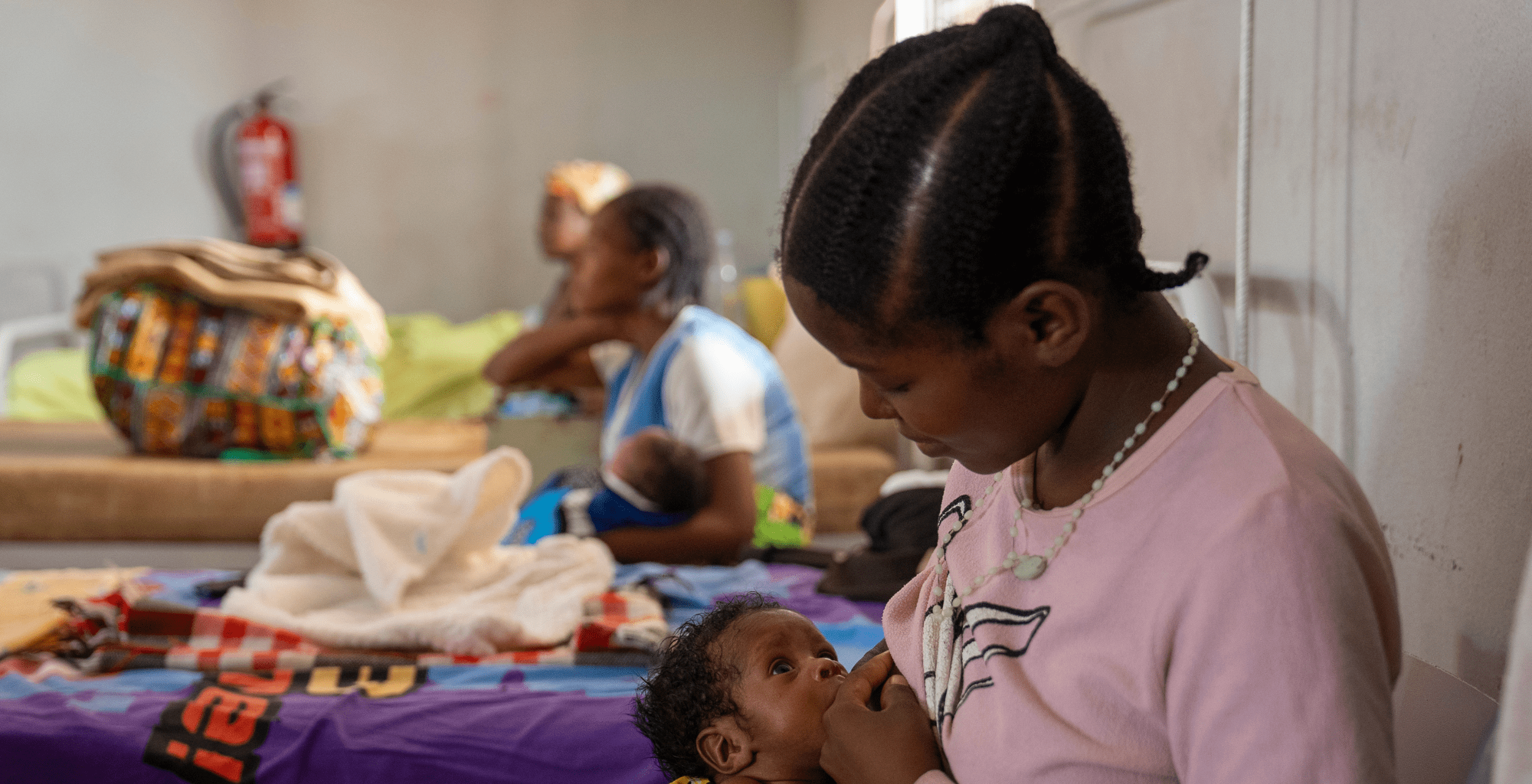
Breastfeeding is much more than an act of care: it is one of the first and most powerful ways to ensure health, growth, and a better future.

During the first six months of life, breast milk provides everything a baby needs and remains a vital source of nutrition beyond that, alongside appropriate complementary feeding. It protects against infections, supports healthy growth and cognitive development, and strengthens the bond between mother and child. At the same time, breastfeeding also contributes to mothers’ health and well-being.

But breastfeeding is not simply an individual choice. Every woman should be able to rely on trained health workers, accessible health services, and supportive communities throughout her breastfeeding journey. That is why protecting, promoting, and supporting breastfeeding is a public health priority—a shared responsibility that requires investment at every level.

This is the vision that guides us. In every country where we work, we stand alongside mothers and their children during one of the most important and delicate moments of their lives together, strengthening maternal and child health services, training health workers, and working with institutions and communities to create an environment where breastfeeding can thrive.

This is also the message behind World Breastfeeding Week 2026, celebrated under the theme “Breastfeeding for a Sustainable Start in Life: Strengthen What Works”, which calls for greater investment in the policies, services, and support systems that enable every child to have the best possible start in life.

Tanzania: A New Space to Support Mothers and Early Childhood Development

To mark the closing of World Breastfeeding Week, together with the Ministry of Health of Tanzania, we inaugurated the new Breastfeeding & Early Childhood Development (ECD) Room at the Ministry’s headquarters in Dodoma. Established by CUAMM with the support of Zanetti funds, the facility provides mothers with a safe, private and welcoming space to breastfeed or express milk while promoting nurturing care and early childhood development. It represents a concrete step towards creating more breastfeeding-friendly environments.

Angola: Strengthening Skills and Collaboration

In Angola, we supported the Provincial Department of Public Health in organising the World Breastfeeding Week celebrations, contributing to awareness activities and a technical round table where health professionals shared experiences and developed recommendations on exclusive breastfeeding, complementary feeding, maternal support, breastfeeding for mothers living with HIV or hepatitis B, Kangaroo Mother Care, and the future development of Baby-Friendly Hospitals and a human milk bank.

Mozambique: Supporting Mothers Every Day

In Beira, through the Protect Project, we highlighted the work of the Kuplumussana Association activists, who work every day in the Central Hospital and four health centres to support women through awareness and education activities on breastfeeding, Kangaroo Mother Care, and the care of premature newborns.

From national institutions to hospitals and the most remote communities, our commitment remains the same: strengthening what works so that every mother receives the support she needs and every child has the best possible start in life.

Open local tender 008-2026/CUAMM/SS/FUEL

Doctors with Africa CUAMM South Sudan is launching the present Local Open Procedure open to all vendors in South Sudan with two goals: the pre-qualification process of the bidders and the finalisation of a framework agreement for the supply of «Fuel (Diesel and Petrol)» with CUAMM in South Sudan.


00_Tender announcement_008-2026

01_VOL 01_1.1 Instructions to tenderers_008-2026 

02_VOL 01_1.2 Tender Form_008-2026 

02_VOL 01_1.2 Tender Form_008-2026 

03_VOL 01_1.3 Form regarding Selection Criteria_008-2026 

03_VOL 01_1.3 Form regarding Selection Criteria_008-2026 

04_VOL 01_1.4 Form regarding Technical Offer_008-2026 

04_VOL 01_1.4 Form regarding Technical Offer_008-2026 

05_VOL 01_1.5 Administrative Compliance Grid and Evaluation Grid_008-2026 

05_VOL 01_1.5 Administrative Compliance Grid and Evaluation Grid_008-2026

06_VOL 02_Contract Form proposed_008-2026

07_VOL 03_Technical items specifications required_008-2026 

08_VOL 04_Financial Offer_008-2026

08_VOL 04_Financial Offer_008-2026

09_VOL 05_Check List_008-2026   

Karamoja: drought pushes thousands into hunger

In Karamoja, northeastern Uganda, months of drought have severely affected crops. The situation, already marked by poverty and malnutrition, has now become critical.

According to the latest analysis by the Integrated Food Security Phase Classification (IPC), 473,000 people, representing 32% of Karamoja’s population, are currently experiencing acute food insecurity (IPC Phase 3 or above). Of these, 41,000 people are facing Emergency levels of food insecurity (IPC Phase 4) and require immediate assistance. At the same time, an estimated 122,100 children under the age of five will suffer from acute malnutrition in 2026, including more than 30,000 who will experience severe acute malnutrition. In addition, approximately 8,000 pregnant and breastfeeding women are in urgent need of nutritional care.

We have been working in Karamoja for more than twenty years. Today, in the face of this new emergency, we feel more strongly than ever our responsibility to stand alongside the most vulnerable communities. Our team are strengthening efforts to provide nutritional care for children suffering from severe acute malnutrition, support mothers through antenatal care services, help families identify and address the most serious cases as early as possible and link families to food assistance programmes supported by the Ugandan Government, the World Food Programme and the United Nations.

Once again, this crisis reminds us that hunger is not a fate, but the result of conditions that can be changed when we work together – from the effects of the climate crisis to poverty and the fragility of agricultural systems. We continue our work in close coordination with local authorities, the Ministry of Health, United Nations agencies and other partners on the ground, with the aim of saving lives today while strengthening the resilience of communities in the medium and long term. However, additional resources remain essential to ensure that no child or mother is left without the care and support they need during this critical time.

Open local tender for drugs, medical supplies and equipment

Doctors with Africa CUAMM South Sudan is launching the present Local Open Procedure open to all vendors in South Sudan with two goals: the pre-qualification process of the bidders and the finalisation of a framework agreement for «Drugs, Medical supplies and Equipment» with CUAMM in South Sudan.

00_Tender announcement_007-2026

01_VOL 01_1.1 Instructions to tenderers_007-2026

02_VOL 01_1.2 Tender Form_007-2026 

02_VOL 01_1.2 Tender Form_007-2026

03_VOL 01_1.3 Form regarding Selection Criteria_007-2026

03_VOL 01_1.3 Form regarding Selection Criteria_007-2026 

04_VOL 01_1.4 Form regarding Technical Offer_007-2026

04_VOL 01_1.4 Form regarding Technical Offer_007-2026 – Copia

05_VOL 01_1.5 Administrative Compliance Grid and Evaluation Grid_007-2026

05_VOL 01_1.5 Administrative Compliance Grid and Evaluation Grid_007-2026

06_VOL 02_Contract Form proposed_007-2026

07_VOL 03_Technical items specifications required_007-2026

08_VOL 04_Financial Offer_007-2026

08_VOL 04_Financial Offer_007-2026

09_VOL 05_Check List_007-2026 

From Mozambique and Angola to Panama: How Community Participation Can Shape Global Health Responses

As outbreaks become more frequent, complex and interconnected, one lesson has become increasingly clear: effective emergency response depends not only on medical expertise, supplies and technical capacity, but also on trust, dialogue and the active participation of communities in protecting their own health.

This was the perspective we brought to the Social and Behaviour Change Communication SBCC Summit 2026 in Panama, one of the world’s leading global gatherings on SBCC. Together with experts and practitioners from around the world, we contributed to the discussion on how social and behavioural approaches can strengthen preparedness for and response to health emergencies.

“It is not rhetoric, and it may sound obvious, but taking social and behavioural determinants into account is an essential prerequisite for designing effective and cost-efficient health interventions, particularly in emergencies and low-resource settings,” said Edoardo Occa, CUAMM Community Health Expert.

The Summit took place at a critical moment for global health. From cholera outbreaks intensified by climate-related shocks to emerging infectious diseases, emergency responses face a common challenge: ensuring that people understand, trust and adopt recommended prevention and control measures.

While investments in outbreak response often prioritize logistics, surveillance systems and clinical care, a growing body of evidence shows that interventions are more effective when communities are actively involved in their design and implementation. Social and Behaviour Change approaches help health actors understand local perceptions, identify barriers to protective behaviours and establish meaningful dialogue with the people most affected by crises.

“Community engagement is often treated as a secondary component of emergency response, but our research shows the opposite. This is how we build trust, foster dialogue and create participation and ownership. It is through this process that we improve adherence to public health measures and make interventions more effective,” added Occa.

The Summit opened with a call for a change in mindset from Panama’s Minister of Health, Dr. Fernando Boyd Galindo. As health emergencies become the “new normal”, he argued, preparedness can no longer rely solely on clinical and logistical capacities. Social and Behaviour Change must be recognized as a core pillar of resilient health systems, improving the acceptability, effectiveness and cost-efficiency of emergency interventions while informing programme design and resource allocation.

The Summit also represented an important advocacy opportunity for CUAMM, bringing field-based experience into a global conversation on health emergency preparedness and response.

“For CUAMM, participating in the SBCC Summit meant bringing to an international audience the lessons we have learned by working alongside communities every day,” said Andrea Atzori, CUAMM Head of International Relations. “Our experience consistently shows that investing in community-based interventions is essential not only to prevent the spread of infectious diseases, but also to strengthen people’s capacity—especially the most vulnerable—to access health services. International platforms like this are crucial for ensuring that these field experiences help shape national and global policies.”

This message strongly echoed the evidence we presented from operational research conducted with UNICEF in Angola and Mozambique. Recent studies carried out in Cabo Delgado, Mozambique, showed that social and behavioural approaches significantly improved community preparedness for climate-sensitive infectious diseases and increased the adoption of preventive behaviours in emergency settings. The research also identified the social and environmental factors associated with cholera and acute watery diarrhoea among climate-vulnerable populations, providing evidence to better target public health interventions. Complementary findings from Angola further highlighted the acceptability and effectiveness of community-based targeted interventions during the cholera outbreak in Luanda. Together, these studies reinforce a growing body of evidence demonstrating that community engagement is not an add-on to emergency response, but a fundamental component of effective, resilient and sustainable public health action.

While these conclusions resonated strongly throughout the Summit in Panama, for us at CUAMM they are not new. They reflect years of working alongside communities in Angola, Mozambique and other countries where we operate, where community engagement is an integral part of everyday public health practice rather than an abstract concept. The evidence presented at the Summit builds on this field experience, showing how operational research and community-based interventions can generate knowledge that informs global policy. By bringing lessons learned from local contexts to international discussions, community voices can help shape more effective, equitable and resilient responses to future health emergencies.

Strengthening healthcare in Karamoja

A four-day field visit to Northern Karamoja marked an important moment to celebrate the progress achieved through long-term collaboration to strengthen health services in one of Uganda’s most underserved regions.

We had the pleasure of welcoming and accompanying the Ambassador of Ireland to Uganda, H.E. Mags McGeown, during her official visit to Karamoja, together with the Irish delegation, district leaders, health workers and local authorities. The visit was an opportunity to see first-hand how sustained partnership and investment can contribute to building stronger health systems and bringing quality care closer to communities.

Accompanied by our Country Representative Dr Peter Lochoro, the delegation visited health facilities across the region and celebrated key milestones in maternal and newborn health, access to essential medicines, and emergency referral services.

The visit culminated in the handover of several key health infrastructures supported by Irish Aid and implemented by our team in collaboration with local health authorities. Premises include the Neonatal Intensive Care Units (NICUs) at Abim and Kaabong hospitals that will help strengthen the capacity to provide specialised care for vulnerable newborns; a renovated drug store in Karenga, to guarantee storage and management of essential medicines and a Mother Waiting Shed and Blood Bank Unit in Moroto, to support safer deliveries, emergency care and referral services.

70% of newborn mortality happens in the first week of life, and this shows how important it is to have a functioning NICU,” highlighted Dr Peter Lochoro during the handover of the neonatal facilities.

During the visit to Karenga Health Centre IV, H.E. Mags McGeown underlined the importance of ensuring that essential medicines are available and properly stored:

One of the most essential elements of healthcare is the availability of medicines, and proper storage is something very important to look at. Thank you for not ignoring it.

The infrastructures handed over are part of the initiative “Strengthening district health systems for improved access to and utilization of quality RMNCAH integrated services in Karamoja”, that we are implementing with the support of Irish Aid. The programme aims to strengthen the health system at all levels and improve access to and quality of maternal, newborn and child health services across the region.

People before patients

“Working with CUAMM taught me that, as a pediatrician, I must care not only for the disease, but for the whole person.”

These are the words of Eleni Hagos, an Ethiopian pediatrician who has been working with CUAMM since 2020 at St. Luke Hospital in Wolisso, in the Oromia region, about 115 kilometres from Addis Ababa. In recent months, Eleni travelled to Italy for an advanced training and professional exchange programme between the Neonatal Intensive Care Unit (NICU) of the Gaslini Hospital in Genoa and the NICU of the Istituto Clinico Poliambulanza in Brescia, as part of a collaboration with the Union of European Neonatal and Perinatal Societies (UENPS).

Her visit concluded in Padua, where she took part in a workshop at Cuamm headquarters aimed at strengthening neonatal care in her home country.

Her first encounter with CUAMM happened almost by chance:

“I hadn’t planned to work here. One day a friend told me they were looking for a pediatrician, so I applied. Six years have passed since then.”

Before arriving in Wolisso, she had already worked in other hospitals. While clinical work is, broadly speaking, not so different, she says something has changed in the way she views her profession.

“It gave me the opportunity to better understand how a hospital connects with the healthcare system as a whole—from working with health offices and local institutions to engaging with the community. It was something I had not been particularly exposed to before.”

An important perspective in a country where access to healthcare continues to be marked by deep geographical inequalities.

“Being a pediatrician is more or less the same everywhere. What changes are the patients and the context in which they live.”

In rural areas, Eleni explains, malnutrition is more widespread and often more severe than in cities. Infectious diseases also vary depending on the region, as does access to medicines and more advanced diagnostic tests. Although Wolisso is only 115 kilometres from the capital—far from being the country’s most remote area—accessing healthcare services is still far from easy for many people.

“Some patients travel for more than six hours to reach the hospital; others walk for days,” Eleni says.

It is also for this reason that, during her years working alongside CUAMM, she has developed a strong conviction: improving access to healthcare requires looking beyond individual diseases. It means shifting the focus from a single case to the wider population and building connections between hospitals, institutions, healthcare workers, and communities.

“One of the most important things I have learned is the value of community engagement. Prevention, screening, follow-up care—everything starts in the community and reaches the hospital. It’s not just about saving a child’s life. We must accompany them over time, helping both the child and their family cope with the consequences of illness. When a life is saved, our job does not end there.”

Among the many patients she has cared for over the years, one remains particularly close to her heart.

It was a young girl suffering from severe malnutrition who arrived at the hospital in critical condition. Weak, emaciated, and unable even to walk, she had completely lost her appetite due to malnutrition and its complications. Her mother stayed by her bedside every day, anxiously watching for any sign of improvement.

For weeks, the team’s work went far beyond medical treatment alone: nutritional rehabilitation, physiotherapy, psychosocial support, and play activities all helped the child regain her strength and confidence.

“It truly warmed my heart to see her transformation day after day. Slowly, she began eating again, interacting with her mother, and gaining weight.”

Eventually, the girl was discharged and able to return home. But her story did not end there.

“She still comes back for follow-up visits. It’s wonderful to see them. It makes me happy to watch the mother and daughter laughing together.”

Clean Cooking, fostering the commitment to improved cooking solutions

Yesterday in Luanda, we attended the inauguration of a new improved cookstove production center, which will enable the large-scale manufacturing of innovative, efficient, and improved cookstoves. This new facility complements the existing center in Benguela and will support the large-scale production of modern and innovative models as part of the Clean Cooking programme.

Promoted by Eni and implemented in partnership with the Salesianos de Dom Bosco, the programme aims to improve access to modern cooking solutions in Sub-Saharan Africa while also integrating interventions to support community health.

In Uíge, northern Angola, we are engaged in promoting hygiene, health, and nutrition activities, strengthening nutrition services, and training healthcare personnel across 15 health facilities in five municipalities. To date, four health centres have been renovated and upgraded to provide enhanced nutrition services; our awareness-raising activities have reached more than 37,000 people, while training programmes have involved 247 community health workers and 89 healthcare professionals.

This work starts within communities and extends to hospitals, while also strengthening peripheral health centres to ensure the effective management of acute malnutrition cases and continuity of care.

As part of the intervention, we adopt an innovative Social and Behaviour Change (SBC) approach, which seeks to encourage the adoption of healthier practices and ensure the long-term impact of the programme.

This is a tangible example of how access to energy, health, and community development can advance together, generating meaningful benefits for both people and the local area.

Building inclusion for children most in need

Yesterday, Tosamaganga Regional Referral Hospital hosted the final event of the INCLUSIVA Project – “Addressing Childhood Neurodevelopmental Disorders in Iringa DC”, launched in July 2024 and funded by the Centre for Global Health of the Tuscany Region.

The project was implemented in Iringa DC in collaboration with CALL Africa NGO, Fondazione Amici di Stella Maris, and Tosamaganga Regional Referral Hospital, with the aim of promoting and strengthening knowledge and awareness of childhood neurodevelopmental disorders and developmental delays.

Over the past two years, the project carried out a Knowledge, Attitudes and Practices (KAP) survey to assess community awareness, beliefs, and behaviours related to neurodevelopmental disorders. In addition, two training programmes were delivered for healthcare workers from health facilities across Iringa DC, alongside technical assessments designed to evaluate their level of knowledge and awareness on the topic. These activities generated valuable data and provided a clearer understanding of local needs, offering an initial picture of the current situation and the challenges that remain.

INCLUSIVA represents an important starting point for the development of future interventions, helping to strengthen existing services and promote greater inclusion for children with neurodevelopmental disorders and their families.

The event provided an important opportunity for dialogue and knowledge sharing, during which participants reviewed the project’s achievements, assessed the current situation, and discussed future opportunities and priorities.

Attendees included local and regional authorities, representatives from the Ministry of Health and the Ministry of Community Development, as well as stakeholders actively engaged in the area. Participants had the opportunity to visit Tosamaganga Hospital and several key services dedicated to child health and development, including the Early Childhood Development (ECD) Corner, the Neurology Clinic, the Malnutrition Unit, and the demonstration kitchen, which is used for educational and practical sessions with mothers of children admitted for malnutrition treatment.

The visit also provided an opportunity to learn more about the work carried out by CALL Africa NGO in support of children with physical and cognitive disabilities. Participants toured the facilities dedicated to rehabilitation and support activities, gaining insight into the services provided and the organization’s ongoing commitment to promoting inclusion and improving the quality of life of children and their families.

The strong participation and engagement of all stakeholders confirmed both the relevance of the topic and the growing interest in addressing neurodevelopmental disorders within the region. The event also opened the door to new opportunities for collaboration and partnership.

The work carried out through INCLUSIVA marks the beginning of a broader journey aimed at improving care pathways, clinical management, awareness, and services for children with neurodevelopmental disorders across Iringa District Council.

Faith-Based Health Systems: Building Trust and Expanding Access to Care in Sub-Saharan Africa

In many countries across Sub-Saharan Africa, faith-based health facilities provide a significant share of essential healthcare services, particularly in rural and underserved communities. Despite their vital contribution, these institutions often remain underrecognized and insufficiently integrated into formal health systems.

These issues were at the center of Faith-Based Health Systems: Building Trust in Sub-Saharan Africa, a webinar hosted by the Georgetown-Lancet Commission on Faith, Trust, and Health. Bringing together experts from academia, healthcare, faith communities, and international organizations, the event explored the role of faith-based health systems through both Christian and Islamic perspectives, while highlighting frontline experiences from across the continent.

We contributed to the discussion by sharing insights and expertise gained through our long-standing commitment to supporting faith-based organizations (FBOs) across the region. Dr. Emanuela Parotto, Clinical Consultant at CUAMM, presented key results, findings, and lessons learned from this work. Other distinguished speakers included Ibrahim Bola Gobir, Assistant Professor at Georgetown University; Nkatha Njeru, CEO of ACHAP; Nate Smith, Executive Pastor at Trinity Anglican Church; and Derek Yach, Global Noncommunicable Disease Advisor at CMMB.

The strong interest generated by the webinar was reflected in a record level of engagement, making it the most attended session of the series to date. The event attracted 146 unique viewers from 26 countries, spanning four continents. Participants joined from countries as diverse as Bangladesh, Denmark, Zambia, and Brazil, underscoring the global resonance of the topics discussed and the growing interest in faith-based approaches to health systems strengthening.

The discussion underscored the critical role that Faith-Based Organizations (FBOs) play in healthcare delivery across Sub-Saharan Africa, while drawing attention to a persistent gap: national health frameworks often fail to fully leverage the reach, trust, and expertise of these institutions.

CUAMM’s Commitment to Strengthening Faith-Based Healthcare

Recognizing the strategic importance of FBOs, CUAMM launched a major initiative in 2019 to support faith-based organizations delivering healthcare services across Africa. The webinar provided an opportunity to showcase the results of this ongoing commitment.

Dr. Emanuela Parotto presented findings from extensive field assessments conducted between November 2021 and February 2024. The study evaluated 63 health facilities belonging to 48 faith-based organizations across 11 countries: Angola, Cameroon, Ethiopia, Ghana, Ivory Coast, Kenya, Madagascar, Malawi, the Central African Republic, Tanzania, and Togo.

Using both quantitative and qualitative methodologies—including Health Facility Assessment Questionnaires (HFAQ) and Disaster Preparedness Assessment Questionnaires (DPAQ)—the research provided a comprehensive overview of the strengths, challenges, and potential of faith-based healthcare providers in the region.

A Cornerstone of Healthcare Delivery

Evidence presented during the webinar showed that faith-based providers deliver between 30% and 70% of healthcare services in many Sub-Saharan African countries.

For decades, these organizations have played a central role in national health systems, often maintaining a continuous presence in communities where public services are limited or absent. Their commitment to serving vulnerable populations, combined with deep local roots, has enabled them to become highly trusted actors within the communities they serve.

This trust is one of their greatest assets. Built through long-standing relationships, shared values, and moral leadership, it encourages positive health-seeking behaviors, improves adherence to treatment, and supports sustained utilization of healthcare services. As highlighted during the webinar, growing evidence shows that trust is not merely a social asset but a critical determinant of health system performance and legitimacy.

Three Pillars of Support

CUAMM’s initiative is built around three complementary pillars designed to strengthen the capacity and sustainability of faith-based healthcare providers:

  • Training: Development and delivery of tailored training programmes for both medical and administrative staff.
  • Technical Assistance: Field missions conducted by CUAMM experts to assess facility performance, identify operational gaps, and support quality improvement processes.
  • Advocacy: Promotion of evidence-based policies and dissemination of research findings to foster greater recognition and integration of faith-based facilities within national healthcare systems.

Strong Foundations, Persistent Challenges

While faith-based organizations demonstrate remarkable commitment, resilience, and community engagement, they continue to face significant structural barriers.

Key challenges identified through the assessments include:

  • Shortages of qualified health personnel;
  • Inadequate infrastructure and equipment;
  • Limited preparedness for emergencies and disasters;
  • Weak health information and data management systems;
  • Financial instability and resource constraints;
  • Insufficient integration and coordination within national health systems.

These obstacles affect the ability of FBOs to fully realize their potential, despite their proven capacity to reach remote and marginalized populations.

The Path Forward: Integration, Recognition, and Partnership

A clear message emerged from the webinar: faith-based organizations should not be viewed as peripheral actors, but as essential components of national healthcare systems.

Their limitations are not primarily the result of organizational weaknesses; rather, they stem from insufficient structural integration, recognition, and support. Strengthening partnerships between governments, faith-based providers, donors, and development organizations would enable countries to better harness one of their most valuable healthcare assets: community trust.

The webinar concluded with a strong call to action for policymakers, donors, and health leaders. Investing in the integration of faith-based health providers is not simply a matter of filling service gaps. It is an opportunity to strengthen healthcare access, improve quality of care, and build more resilient and inclusive health systems for the future.

In case you missed the webinar and are curious to learn more: