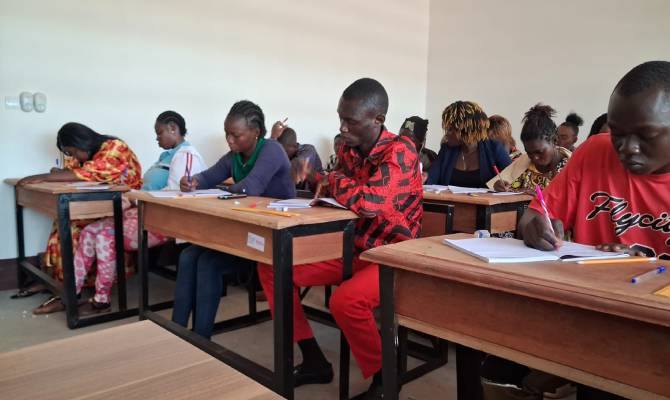
The classroom is crowded at the Bossangoa School of Nursing and Midwifery. In the institute, which we began building just a year ago with the support of many, classes have just started. Thirty students, both male and female, are now entering their educational journey to become healthcare workers: among them, future birth attendants and professional midwives.
It is a unique opportunity and an important achievement in Bossangoa district, an area that until now had no opportunities at all for people eager to study, as explained by Meanendji Gaston, student at the school.
“Until last year there was nothing here. Today, with this institute, we have the chance to study without having to travel to the capital, Bangui. We will be trained here, in our own region, and one day we will be able to help the women in this area.”
At the heart of this major project, carried out in collaboration with the Central African government and the Ministry of Health, lies a clear objective: contributing to the reduction of maternal mortality.
“With the decentralization of training for qualified healthcare personnel, the Ministry of Health together with Cuamm worked to establish this institute, which already welcomes students from the region. It is precisely through the training of new healthcare professionals that we intend to help reduce maternal and child mortality and morbidity in the country,” stated Madame Aline Zaofin, Director of the Bossangoa school of nursing and midwifery.
The lack of adequately trained healthcare workers is indeed one of the most critical challenges faced by the Central African health system—which currently has only 5 professional health workers for every 10,000 inhabitants. This number falls far short of WHO recommendations, which state that a population needs at least 50 health workers per 10,000 inhabitants to ensure adequate care.
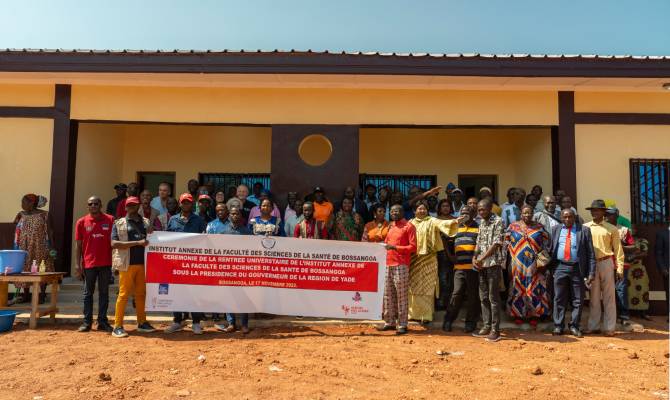
Opening of the academic year at Bossangoa school of nursing and midwifery.
The construction of the school and the launch of a formal education program recognized by the Ministry is part of a broader initiative strongly supported by Cuamm, which has been active at the Bossangoa hospital since 2023 to support maternal and child health services.
“Our presence here has a simple and clear goal,” explains Dr. Enzo Pisani. “We want to reduce maternal mortality. To do so, we must intervene on four levels: community, transport, hospital, and training.”
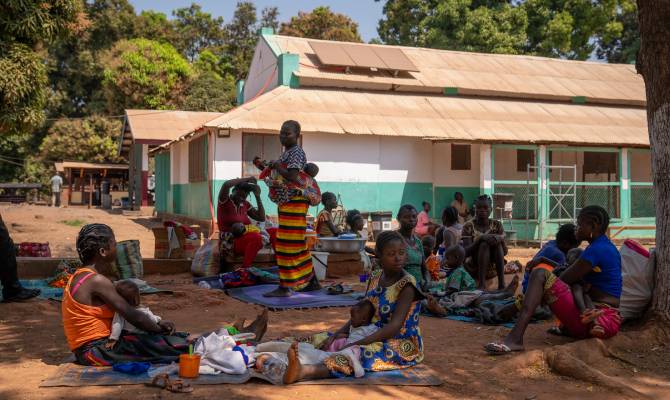
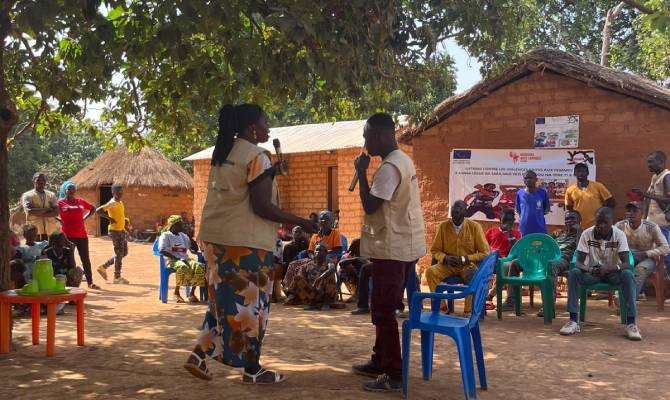
Today, we are working in an integrated and continuous way across all four levels—from the communities to the hospital. We intervene in the villages to recognize delivery complications in advance; we have created an emergency referral system which, thanks to an ambulance and motorcycle taxis, ensures rapid transportation to the hospital; and we are strengthening the hospital’s capacity to manage cases on arrival.
“The whole system relies on the ability of healthcare workers, and this is why training is the fourth level on which immediate action is needed,” Pisani continues. “Strengthening the skills of local staff and training new professionals is essential to achieving our goal.”
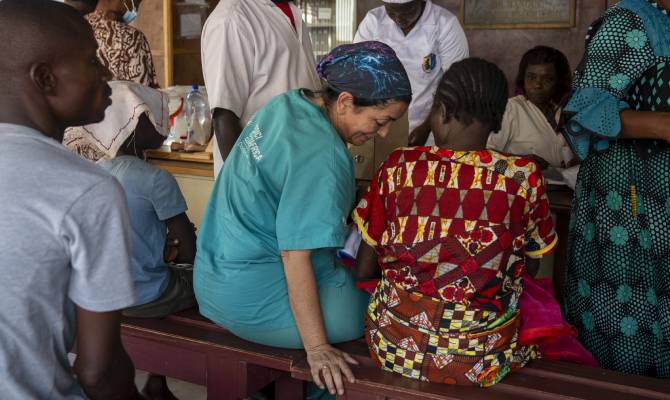
The renovation of the maternity ward at the Bossangoa hospital, recently launched, is also a key step in the project. The renewed space—improved in both structure and equipment—will ensure minimum quality standards for obstetric emergency care and will also serve as a practical training environment for students.
“I am truly happy to begin this course of study,” said Bialle Eloge – student in Bossangoa. “I can’t wait to strengthen my theoretical and practical skills so that I can really help my community.”
“This facility means a lot to us. It allows us to stay in the district and pursue studies that we otherwise could only undertake by moving to the capital. Now we have an alternative. Here we have everything: we can attend classes, live on campus, and access all the necessary services, including dormitories and a cafeteria. This will help us students and our families,” said student Gazaworo José Christian.
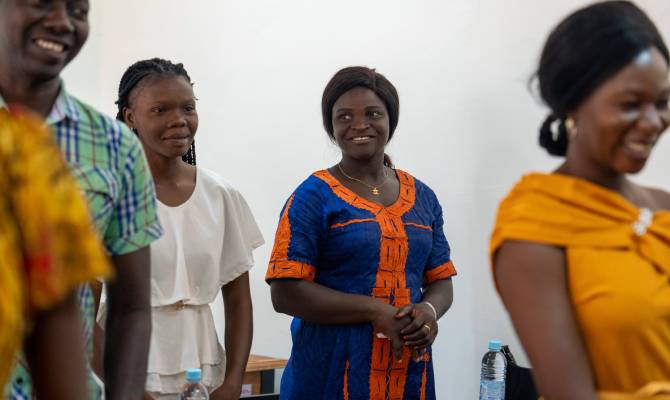
The Bossangoa institute of midwifery and nursing is the first and only education center outside the capital, Bangui. It is located more than 300 kilometers away—distance that, until now, has been a source of exclusion and marginalization for many young people eager to build a better future for themselves and their communities.
“I am truly happy to see this institute operating today. We built it with a strong spirit of collaboration that reflects the government’s commitment to investing in training and decentralization, offering growth opportunities even outside the capital. A few years from now, this will allow us to have well-trained healthcare professionals right here in the Bossangoa district,” said Mgaissona Nestor – Regional Director of Higher Education.
The Central African Republic (CAR) ranks among the five countries with the lowest Human Development Index (HDI) in the world, according to the latest report from the UN Development Programme (UNDP). Life expectancy at birth is 56 years (2024), the neonatal mortality rate is 39 per 1,000 newborns, infant mortality 103 per 1,000 live births, and maternal mortality 835 per 100,000 live births—the second highest in the world.
Today, with the start of courses for these 34 young people, hope is growing for an entire community. We are committed to nurturing this hope by continuing to support their training and ensuring the best possible study conditions, so that tomorrow they can join us in the ambitious and urgent goal of eliminating maternal mortality in the country.