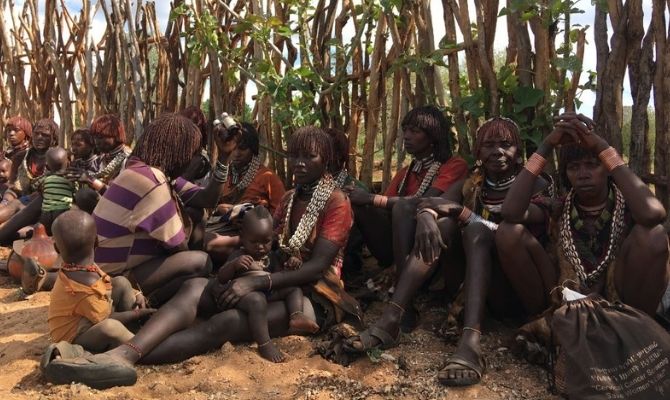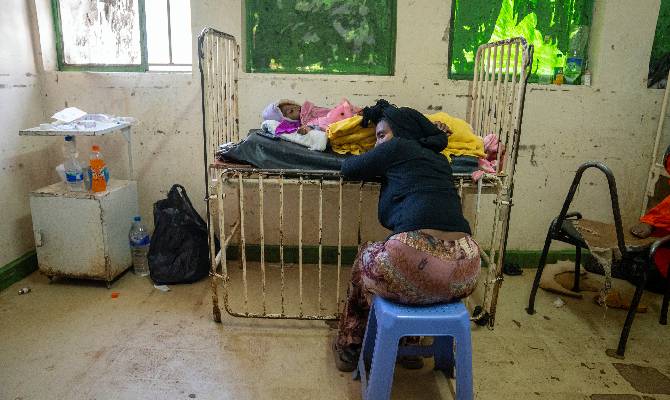
A Marburg outbreak has recently been confirmed by the Ethiopian Ministry of Health in the South Omo region.
The first case dates back to 14 November and was later confirmed by the Ministry on 22 December, when the outbreak was officially declared.
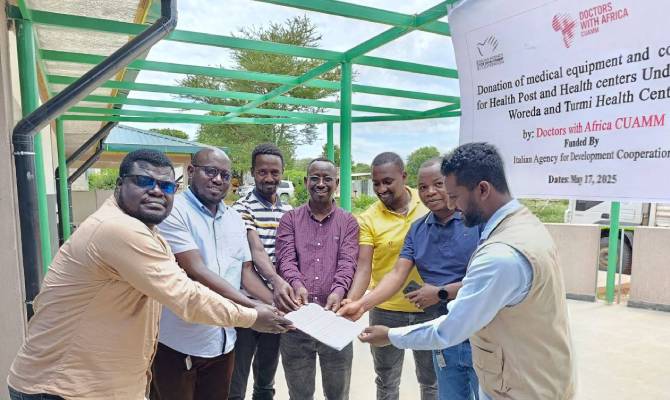
By readjusting project priorities, Doctors with Africa CUAMM intervened from the very beginning to respond to this emergency in a timely and effective manner. In the districts of Hamer— the epicentre of the outbreak— and Dasenech, we provided emergency support to Turmi Primary Hospital and seven affiliated health centres, focusing on five key areas: surveillance; triage and screening; infection prevention and control; staff training; and Risk Communication and Community Engagement (RCCE) activities.
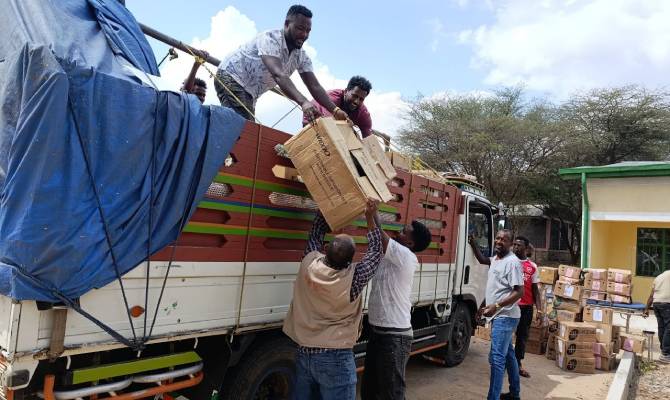
Essential medicines, medical supplies and personal protective equipment were provided to facilities under strain, with the aim of improving preparedness, strengthening emergency response capacity, protecting healthcare workers and ensuring the continuity of essential health services.
Among the donated materials were: antibiotics and antimicrobials for the treatment of infections and the prevention of complications; emergency and life-stabilising medicines for acute cases; analgesics and drugs for symptomatic treatment; as well as significant quantities of intravenous fluids and rehydration supplies.
To reduce the risk of transmission, infection prevention and control materials such as gloves, eye protection, disinfectants and denatured alcohol were distributed. Surgical and consumable supplies supported the safety of clinical procedures, maternal health services and emergency interventions. Diagnostic materials, including pregnancy tests and Hepatitis C tests, ensured the continuity of essential diagnostic services.
Marburg is a severe viral disease caused by the Marburg marburgvirus (MARV), which belongs to the same family as the Ebola virus. With a case fatality rate of around 50%, this haemorrhagic fever can be transmitted through direct contact with the blood or other bodily fluids of an infected person, or through indirect contact with contaminated surfaces or objects. Prevention and control measures are therefore crucial to containing the outbreak.
The Marburg outbreak response in South Omo was made possible thanks to the support of the Italian Cooperation and funding amounting to 2.4 million birr allocated under the IMPACT project.