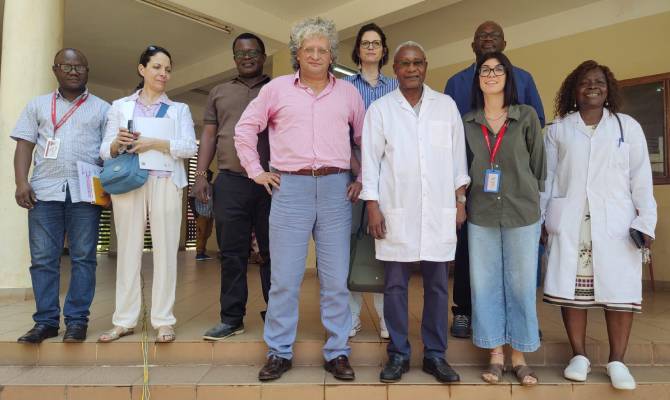
Today in Bangui, at the Pediatric University Hospital – CHUPB, we had the honor of welcoming a high-level ECHO delegation from Brussels for their very first visit, hosted by Medical Director Dr. Gody. The delegation, led by Giuseppe Angelini, Head of Western Africa, had an introductory but highly meaningful meeting: they learned about the hospital’s history, its post-crisis development, and CUAMM’s pivotal role in training health personnel and strengthening operational management. The visit concluded with a tour of the main wards, including the neonatal unit, providing a firsthand look at the tangible impact of our work on the health of the youngest patients.
CUAMM’s intervention at CHUPB began in 2018, supported by the European Union and in partnership with the NGO Action Against Hunger and the Bambino Gesù Paediatric Hospital of the Vatican. The project aimed to strengthen paediatric services in a context marked by structural fragility and recurring crises.
Since then, CUAMM’s work has focused on strengthening hospital governance, training medical and administrative staff, and improving clinical services, ensuring the availability of essential medicines, equipment, hygiene services, and maintenance, to guarantee continuous 24/7 care.
From the start of the intervention until today, CHUPB—the country’s only tertiary-level paediatric referral hospital—has treated over 437,000 children, with more than 118,000 hospital admissions. In the past year alone, data show a recovery rate of 94%, highlighting the quality of care as one of the hospital’s major achievements.
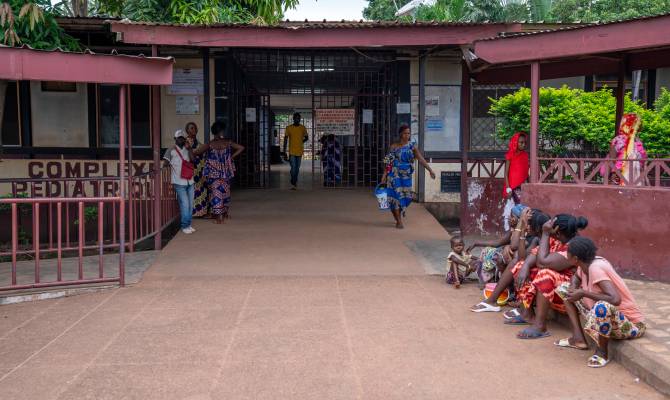
All this takes place in one of the world’s most fragile countries. According to the Human Development Index, the Central African Republic ranks among the lowest globally, alongside countries such as South Sudan and Somalia (Human Development Report, 2023). The index points to significant challenges in life expectancy, average years of schooling, and gross national income per capita, all obstacles to long-term development. Among the most vulnerable sectors are health and education, where the work of CUAMM and international partners remains essential to provide quality services to the most fragile communities.
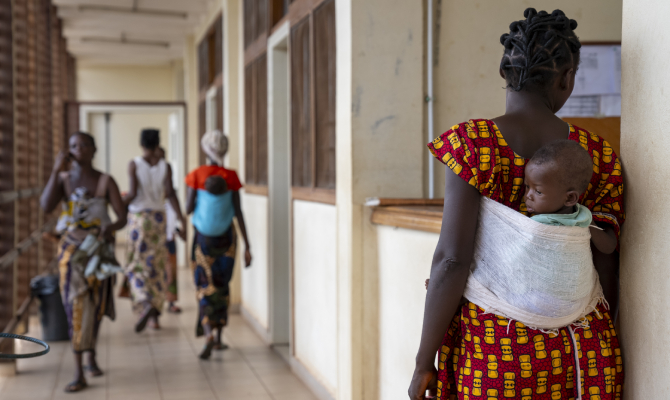
For this very reason, Cuamm has decided to expand its commitment to ensure access to quality care for women and children also outside the capital, reaching more isolated areas. On the one hand, support for CHUPB is being confirmed, accompanying its transition toward greater administrative and financial autonomy and working to strengthen its most delicate services, such as neonatology and intensive care. On the other hand, efforts are directed toward peripheral first- and second-level facilities, supporting them in the provision of basic care and life-saving services.
From Bangui to the very last mile
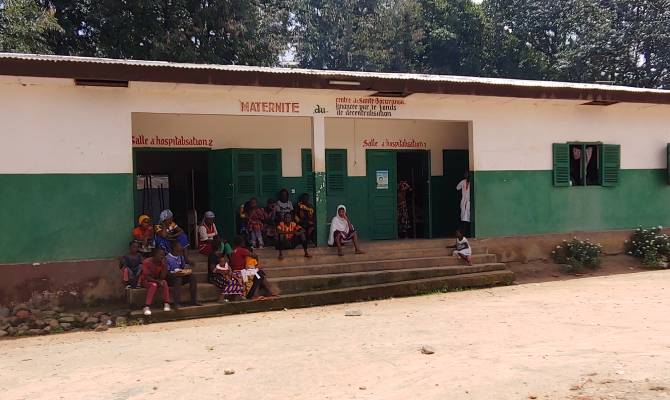
While CHUPB represents the country’s first and only tertiary-level paediatric hospital, the national health system also relies on an extensive network of secondary-level hospitals, health centers with varying levels of equipment, and basic dispensaries. Supporting these facilities means ensuring access to essential health services across the territory, strengthening the system’s response capacity, and preventing delays in care.
This is particularly crucial in isolated areas, which face a degree of socio-political instability and are affected by continuous population movements, as people seek responses to their growing basic needs—demonstrating the persistence of humanitarian crisis zones.
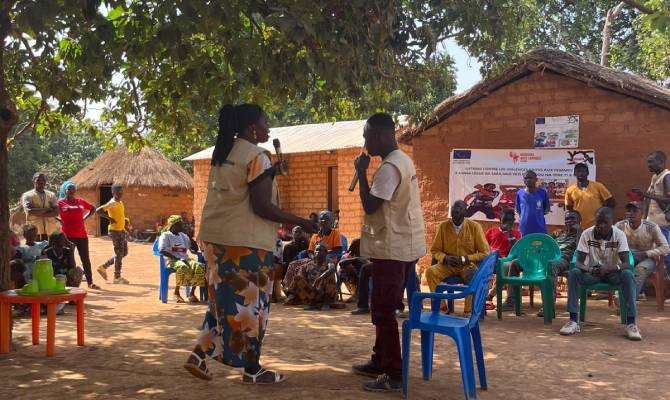
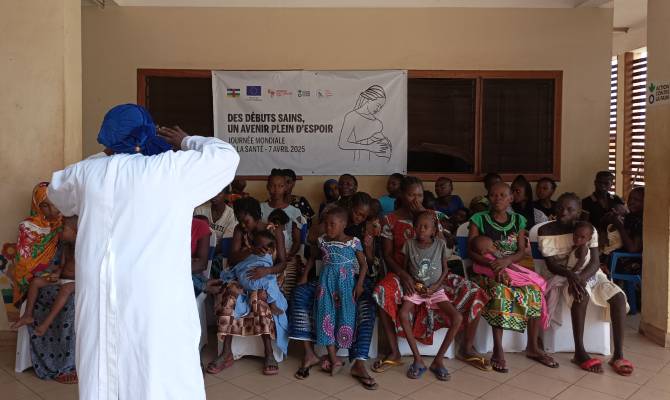
In this context, in the Bocaranga-Kuoi district in the western part of the country, we work at Kuoi Hospital and provide support to five affiliated health centers. With only 20 beds, Kuoi Hospital is located in a hard-to-reach area where instability and insecurity compromise service delivery, including healthcare. Thanks to ECHO funding, we work daily to provide free care to pregnant women and children under five, while also offering medical and psychosocial support to women victims of violence, in close collaboration with the local NGO OFAHRD. Activities also include infrastructure rehabilitation, strengthening the emergency referral system, nutritional screenings, and vaccination campaigns.
This effort aims to strengthen peripheral health services while also improving the management capacity of the Bocaranga referral hospital, currently the only fully operational health facility in the district and under heavy pressure due to high demand for care.
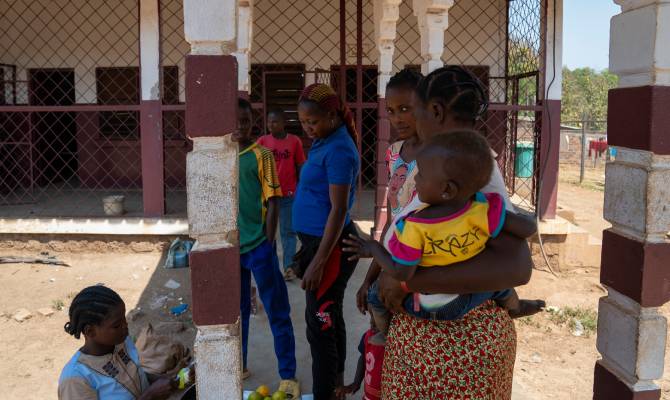
Peripheral hospitals and health centers are a fundamental part of a health system that seeks to reach everyone. It is precisely in the most isolated and hard-to-reach areas, however, that healthcare needs are greatest and resources often insufficient. To meet this challenge, in collaboration with the Central African Ministry of Health, CUAMM is implementing a Performance-Based Financing (PBF) intervention, funded by the European Union, involving 59 health facilities across three districts: Bangassou, Ouango-Gambo, and Bossangoa. The goal is to encourage the use of essential health services, improve quality standards, and reduce costs for the population, while also helping to reduce inequalities and ensure quality care for the most marginalized communities.