COVID-19 in Italy: momentous decisions and many uncertainties
Lazzerini M., Putoto G.
The Lancet Global Health, March 2020
The Lancet Global Health, March 2020

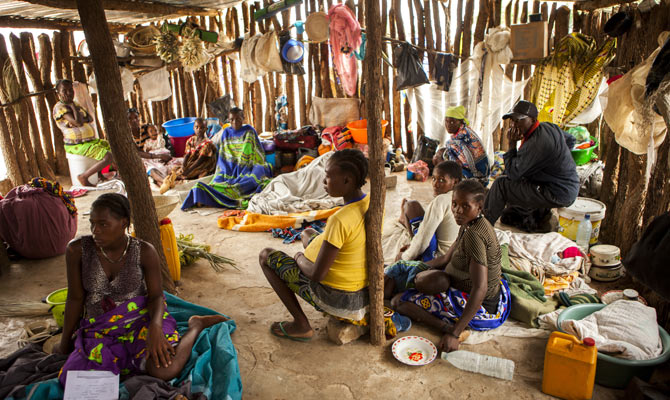
To overcome the global challenges that await us, substantial help comes from anthropology - it assists us in our understanding of the world in which we live and permits a reading of reality that brings us closer to the other.
The changing climate is alarming for CUAMM both as individuals and as an organization, especially given that the hardest hit are already so vulnerable. Africa faces dire risks. This puts CUAMM – committed, as always, to working alongside the neediest communities as effectively as possible – face to face with issues of an ethical and professional nature as well as in terms of our civic responsibility.
Progress is being made on HIV/AIDS, but not for young women. In South Africa there are almost twice as many HIV-affected females as males. The gender gap is even wider in younger population groups, where HIV incidence is four times higher among young women than their male counterparts. It is an unacceptable situation whose causes include poverty, the status of women and, most of all, the violence to which they are subjected.
An interview with Professor Carlo Carraro contextualizes the current state of the climate and the environment and its impact on our health. From Italy to Africa, the consequences affect all of us and only a change of course aimed at curbing greenhouse gas emissions and incentivizing the use of renewable energies will restore some balance. Digital innovation could also play a role.
With over 50 countries across approximately 30 million square kilometers of land, the threat of natural hazards in Africa varies greatly by geography and season. Figure 1 demonstrates the type of disaster that affects the highest number of people in each African country. Regions of southern Africa, the Horn of Africa, and the Sahel have been most affected by drought, while much of central Africa and western Africa has been most affected by floods.