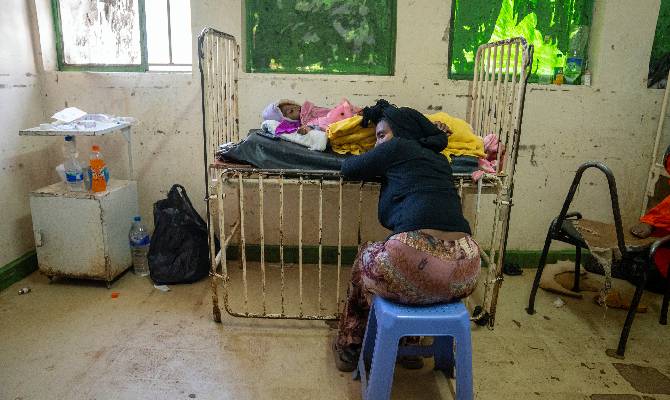
In Addis Ababa, within the wards of the Black Lion Hospital, locally known as Tikur Anbessa Specialized Hospital, healthcare workers strive every day to provide adequate care to the most vulnerable newborns. The challenges are many: limited resources and the condition of the facility make it difficult to respond to the growing number of patients. For this reason we chose to intervene to sustainably improve the quality of maternal, newborn, and child healthcare—an effort that also extends to Suhul Hospital in Shire, in the Tigray region.
The project “Strengthening neonatology in Ethiopia”, funded by the Italian Agency for Development Cooperation and developed in close collaboration with hospital staff and the Ethiopian Paediatric Society, is fully aligned with the country’s main national strategic frameworks. This strong alignment enables the initiative not only to concretely improve the quality of healthcare services, but also to contribute to achieving national and international standards and care protocols.
A rapidly growing demand for neonatal services, combined with outdated infrastructure and persistent technical constraints in the availability of essential resources such as water, electricity, and oxygen, makes the context particularly challenging and limits the delivery of high-quality healthcare services.
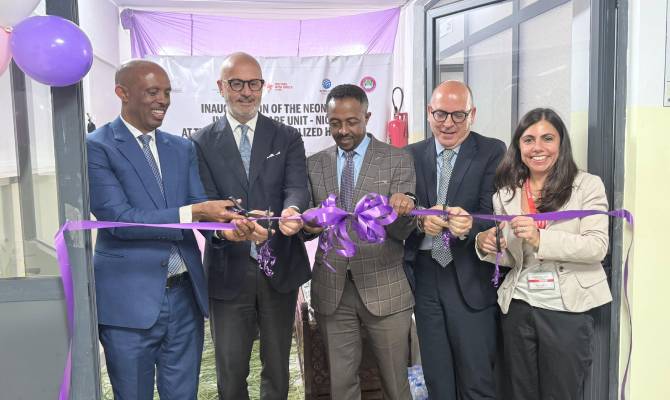
“The expected results of this project are both ambitious and achievable. Today we celebrate the inauguration of this fully renovated and equipped neonatal intensive care unit, but our commitment does not end here. In the coming months, we will continue working to implement further improvements, including training activities,” said Maria Perrella – CUAMM Country Manager who also expressed gratitude to all partners, including the Ministry of Health Ethiopia, the hospital management, the Ethiopian Paediatric Society, the Italian Agency for Development Cooperation, and the Embassy of Italy in Ethiopia.
The Italian Ambassador to Ethiopia, Sem Fabrizi, expressed his appreciation to all those present, emphasizing that this achievement is the result of a long-standing and strong collaboration between the two countries. “Thanks to this intervention,” he noted, “Ethiopia is today taking an important step forward towards achieving international standards of care.” Encouraging remarks were also delivered by Michele Morana, AICS Representative in Ethiopia, who acknowledged the value of this commitment and highlighted the effectiveness of the collaboration between CUAMM, the Italian Agency for Development Cooperation, and the Ethiopian Ministry of Health.
At the heart of the intervention is the neonatal intensive care unit (NICU) of Black Lion Hospital, one of the country’s main referral hospitals. Thanks to a series of infrastructure works launched in 2025, care conditions have significantly improved: the refurbishment of the electrical system, renovation of flooring, and upgrading of the water system—with a dedicated tank for the NICU—are making the environment safer and more functional. In the coming months, the expansion of the medical gas distribution system is also planned, a crucial step to ensure life-saving treatments.
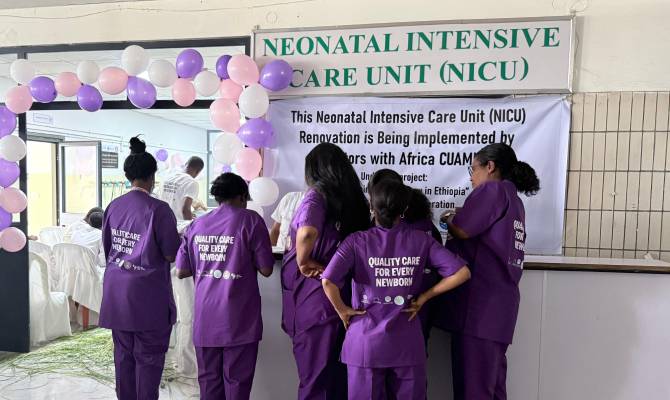
Alongside infrastructure, technology plays a key role. The ward has been equipped with essential devices for the survival of premature and critically ill newborns, including incubators, ventilation devices such as CPAP machines, fetal monitors, infusion pumps, and resuscitation equipment. Tools that, when combined with adequate skills, can make the difference between life and death.
For this reason, significant investment has also been made in training. In December 2024, biomedical engineers from the hospital and other centers took part in an intensive course on installation, calibration, and maintenance of medical equipment. The results were tangible: a roughly 17% improvement in technical skills and the development of internal operational plans to ensure continuity.
The initiative continued with a national workshop on biomedical equipment, bringing together key actors from Ethiopia’s healthcare system. This exchange highlighted ongoing challenges—from shortages of spare parts to inventory management issues—but also a shared commitment to strengthening maintenance systems and ensuring service sustainability.
Particular attention was also given to the Black Lion biomedical laboratory, which, although already well equipped, still requires support in training junior staff and in the consistent application of preventive maintenance.
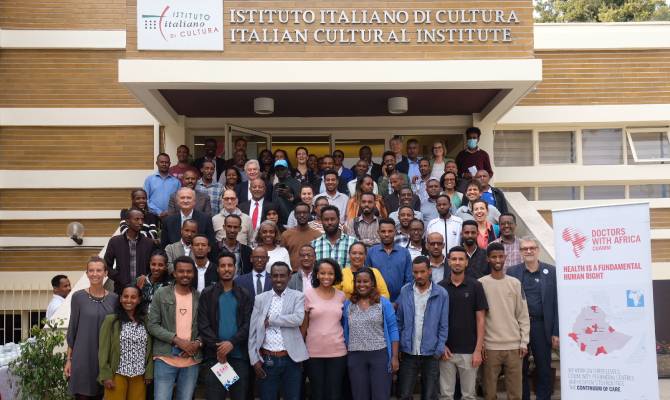
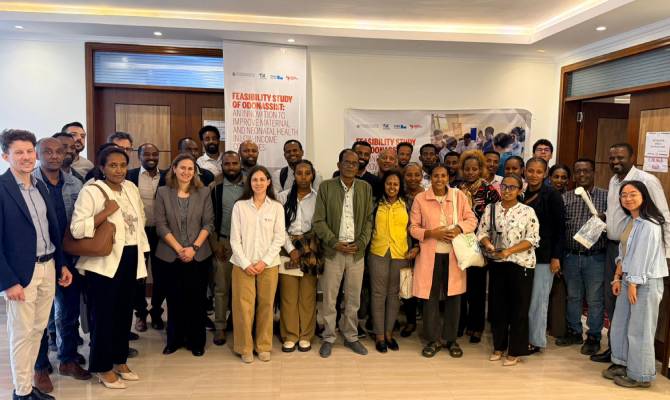
In February 2025, also within the framework of the intervention and in collaboration with the Union of European Neonatal & Perinatal Societies (UENPS), we brought together international experts and Ethiopian healthcare professionals for a neonatal resuscitation training aimed at establishing a pool of trainers with specific national-level expertise, and subsequently launching a cascade of training activities. The initiative was carried out alongside a two-day international workshop that gathered global experts, Ethiopian healthcare staff, representatives of regional health bureaus, the Ethiopian Ministry of Health, and the WHO, with the aim of strengthening clinical and methodological skills to improve neonatal survival in Ethiopia.
Overall, the intervention is contributing to a tangible transformation: improved infrastructure, more qualified personnel, and strengthened local capacity to manage and maintain healthcare technologies. An integrated approach that aims not only to respond to immediate needs, but also to build a more resilient healthcare system over time.