“Yes! We can end tuberculosis!” The slogan for World TB Day 2026 is not just a message of hope—it is a concrete commitment that we carry forward in the 9 Sub-Saharan African countries where we operate. Every day, through their work and dedication our team on the ground shape this message translating it into act of care to ensure that every person has the right to a healthy future.
Although tuberculosis is now a treatable and curable disease, the latest Global TB Report from the World Health Organization confirms that Africa still bears 25% of the global burden of this epidemic. In Uganda in particular, the challenge is a delicate balance between technological progress and social barriers: according to the most recent data from the Ugandan Ministry of Health, incidence remains high at around 200 cases per 100,000 people. TB continues to be the leading cause of death among people living with HIV and one of the main threats in the country’s most vulnerable areas, such as the Karamoja region.
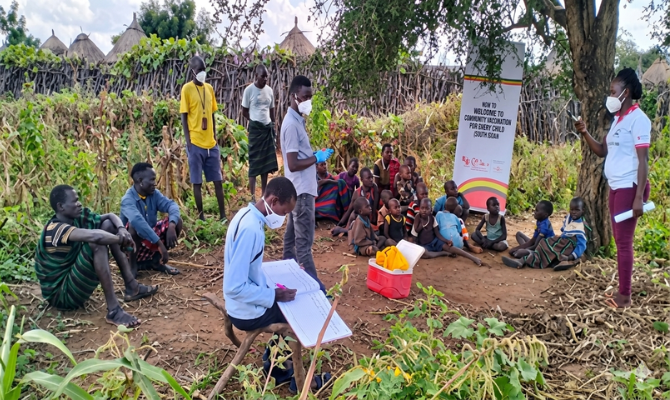
Today, the real challenge in Uganda—as in many other contexts—is not faced only in healthcare facilities but in the most isolated villages. Although the treatment success rate monitored by the National TB and Leprosy Programme has reached a record high of 90%, a dangerous gap remains: 20% of people with Tb remain undiagnosed.
These are the “missing millions”—people living with symptoms without knowing they are contagious, unintentionally fueling transmission. To identify them, CUAMM, in line with the WHO’s “End TB” strategy, has chosen a multi-level approach aiming at intervening at every level of the health system, promoting the strengthening and expansion of prevention, diagnosis, treatment, and follow-up services, with particular attention to drug-resistant TB. Specifically, in the Napak and Moroto districts of the Karamoja region, CUAMM is implementing, together with local health authorities, the “PRO-TB: Strengthening the Organized Network for Tuberculosis in Karamoja” project, supported by the Charitable Fund and social and cultural initiatives of Intesa Sanpaolo.
Today our Tb response efforts in Uganda have the name of Lokoth Joseph Akorikibok, 39 from Kotido district. For months, he suffered from a relentless cough that stole his voice, appetite, and slowly, his hope.
“I coughed for so long that I almost lost my voice,” Joseph recalls. “I was terrified. I kept thinking about death and what would happen to my wife and children if I weren’t there.”
Like many living in remote areas, Joseph initially sought help wherever he could: small pharmacies, taking medicines that had no effect. “No improvement. I knew it was only a matter of days before I would die.”
The turning point came at Losilang HC II health center. When asked for a sputum sample for testing, Joseph was about to give up: “I had lost all hope; I didn’t even want to take the test. But then I found the energy to do it, and it was the decision that changed my life.”
The diagnosis was one of the most difficult: MDR-TB, drug-resistant tuberculosis. With support from CUAMM and Matany Hospital, an ambulance was sent to bring Joseph to Matany, where he began a strict treatment protocol.
“CUAMM and the Matany team saved me. They gave me the right medicines, but not only that. I want to thank them for the food they provided in the hospital: without it, the medicines would have been too strong for my body. The food made the treatment possible.”
Today, Joseph has returned home. His condition has improved, his weight has increased, and above all, he has regained his determination.
“Every day, exactly at 10:00 a.m., I take my medicine. I don’t skip a minute, I don’t skip a day.”
Joseph’s story is a tangible proof that healing is possible.
“Ikilakara aiyiun lojokotau nooi”—a heartfelt thank you to all the good people who supported me. In his language, this gratitude captures the essence of our work. He also offers an “appeal” to his community:
“Stop taking medicines without knowing what you are doing. Go to the hospital, get tested. My life improved because I trusted medicine and the healthcare workers.”