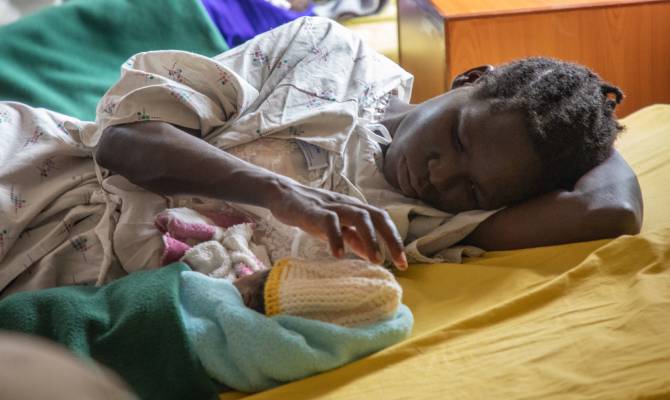
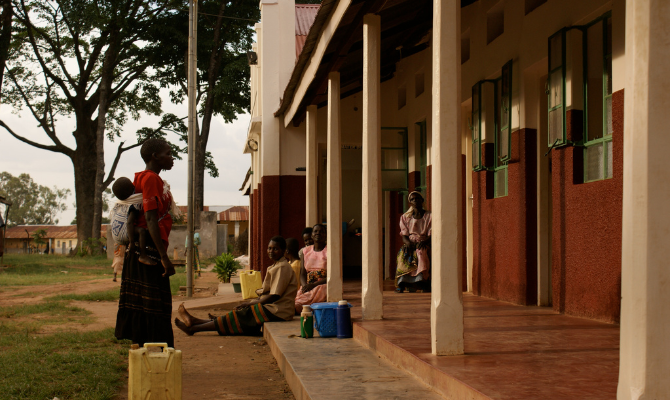
One day, while I was on my way to a health facility for a supervision activity, I was informed that a mother was experiencing severe hemorrhaging. I immediately got into the ambulance with another midwife. When we arrived, the situation was critical: the woman was lying in a pool of blood. We worked together to stabilize her before transferring her to the hospital. I followed the case step by step to make sure she received everything she needed. In the end, it was a success. Knowing that your presence, at that exact moment, saved a person’s life… that is the energy that drives you to keep going.
Barbra, a Ugandan midwife who worked for many years in Aber with CUAMM, carries in her heart countless memories and stories of patients she will never forget. Growing together—amid daily challenges and the dream of making public health care accessible to all—has been the story of her life. Barbra has never stopped learning:
“Today I look back on my journey with deep pride, both as a woman and as a professional. When I joined this family, I had only a diploma in midwifery. Today, thanks to CUAMM’s support, I was able to resume my studies, earn a degree, and I am currently attending a Master’s program in Public Health, which I will complete next May.”
It has been—and still is—a path of professional and personal growth.
“There is an enormous difference between how I worked at the beginning and how I work today. The quality of the service I can offer has grown along with my skills. For this reason, my gratitude toward CUAMM is immense. My daily work is a constant source of inspiration.”
The health system has also grown stronger and is now more solid.
“When I look back, the improvements in health facilities are evident—from internal organization to the ability to manage emergencies. In past years, we faced extremely difficult challenges, especially due to shortages of medicines and medical supplies. However, we invested in training: today the staff is more aware and better prepared. Even when funds for supplies are lacking, facilities know how to respond to emergencies, and that gives me greater peace of mind.”
Present and future of the new generations
The real transformation has taken place above all in people’s mindsets.
“It takes time, but you learn how to interact better with patients and colleagues. I see this change even in those who were more resistant; when a midwife you are supporting looks at you with respect, you realize that people trust your work. Once, a supervisor told me: ‘You are our living dictionary. We are proud of you.’ Hearing those words is what pushes me to always give my best. Of course, challenges never disappear: in Uganda the system is changing, and with it the way training is delivered—we are still catching up. Our challenge is the gap between theoretical training and practice. Many facilities are becoming privatized, and often profit is prioritized over quality,” Barbra explains.
“At this very moment, we are bringing in 20 new midwives, many of whom have not worked for a long time and are not familiar with updated guidelines. Our task as the CUAMM team is to support the district: these new staff members need ‘mentors,’ senior midwives who can guide them step by step. It is a slow process, one step at a time—it feels like starting over—but we know we will succeed. I firmly believe we should invest more and more in continuous training and in motivating staff, offering them new responsibilities so they feel valued.”
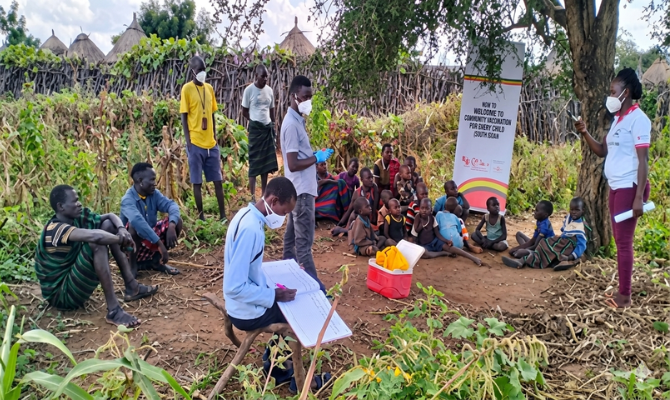
Barbra’s greatest wish for the mothers and children of Oyam is that there be a real investment in public health, because everything begins in the community, with prevention.
“We must reach women in their homes and address problems where they begin: difficulties with transportation, lack of financial means, and the need to involve husbands so they support their wives. I hope we will reach a point where every man and every woman feels responsible for their own health through knowledge.”
Today, being both a midwife and a public health specialist allows her to see reality from multiple perspectives—from the hospital ward to the heart of the village.