“Those who experience displacement, those who are forced to leave everything behind, carry a scar with them. Mine, after all, today allows me to do my job here, among the displaced people of Cabo Delgado, to the best of my ability.”
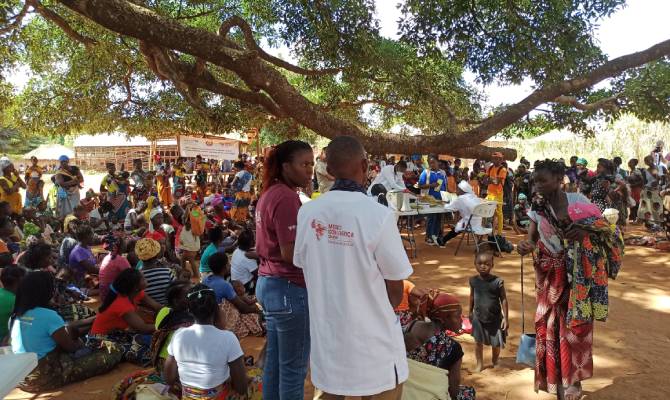
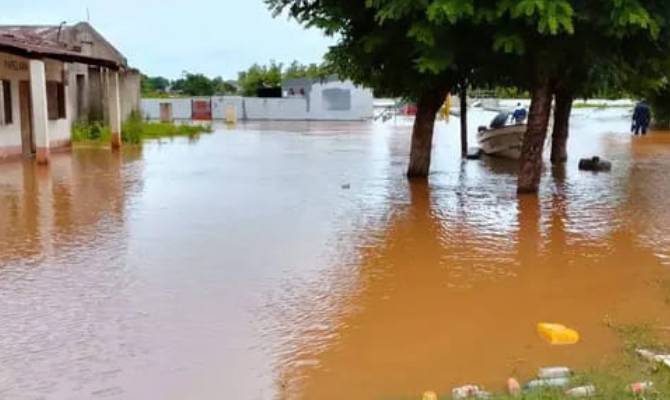
Elisa Tembe, CUAMM psychologist and Project Manager in Cabo Delgado, Mozambique, works every day with people who have lost everything. Women, men, boys and girls who, because of the violence that erupted back in 2017, have been forced to abandon their homes and their land. According to UNHCR data, since the start of the attacks there have been 1.3 million internally displaced people—one third of the total population of Cabo Delgado—while in 2025 alone, the intensification of violence by non-state armed groups has caused the forced displacement of more than 250,000 people. Since 2017, an additional 6,000 people have been killed in this prolonged and forgotten crisis.
“Leaving a place you consider home is a traumatic experience. The emotional and psychological impact is immense. Many people carry on while waiting for the moment they can return to their place of origin; others try again and again,” Elisa told us.
She knows herself the pain of leaving everything behind and the trauma of being forced to shape a new life far from home. Elisa experienced firsthand the trauma of displacement in 2020, when she left the district of Macomia together her two children due to frequent attacks. Once she arrived in Montepuez, hosted by some relatives, Elisa had to start building a new life.
“When I started working with people who had gone through the same experience as me, I realized how fortunate I had been and how life-saving it was, for me, to have friends and family around. Receiving support in a condition of despair is essential; feeling seen and listened to can truly make a difference.”
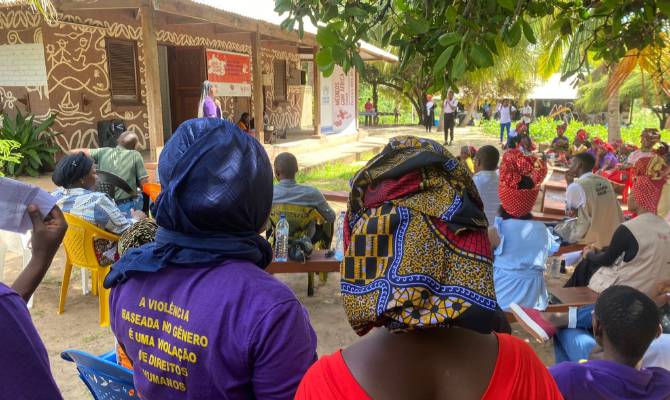
Today Elisa works with the CUAMM team in Cabo Delgado; she lives and works in Pemba, where she manages a gender-based violence project funded by UNHCR, the United Nations Refugee Agency. Her personal experience, her training in psychology, and the family education she received from childhood allow her to carry out her work to the best of her ability, relying on the trust and respect of those who work alongside her every day in the field and of the people she assists, internally displaced persons and others.
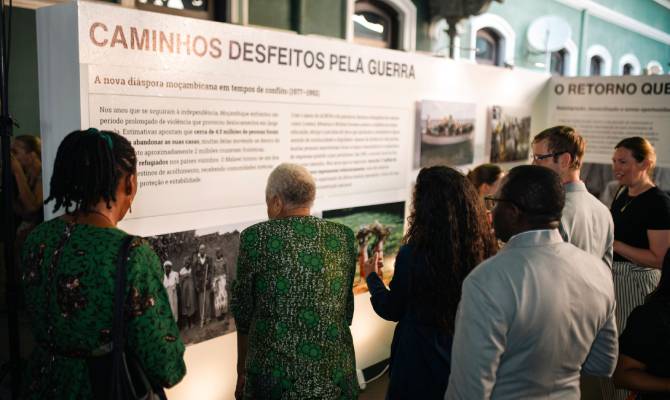
UNHCR photo exhibition in Maputo on the occasion of the UNHCR’s 75th anniversary commemoration
Forced displacement in fact places an often invisible burden on host communities. Pressure on resources and services (water, food, housing, healthcare), economic impacts (the labor market, social costs), social and cultural tensions (conflict, xenophobia), and the deterioration of infrastructure and local livelihoods worsen an already fragile situation and create new vulnerabilities for everyone, making integrated interventions necessary.
“In Cabo Delgado, everyone needs support. Displacement affects the entire community on a large scale, but each person responds differently to trauma. Every individual finds their own resilience and their own way of applying it. Through our intervention, we try to offer support so that the community can support itself.”
Psychological and legal components are the core of the intervention that Elisa manages as Project Manager. A multidisciplinary group composed by psychologists, legal assistants, and community activists is involved in a bunch of activities that spam from psychological and legal support, to awareness-raising and education sessions, to trainings. Through practical activities such as carpentry and cooking, and vocational training courses, the project aims to promote economic independence and small-scale entrepreneurship, therefore empower community members.
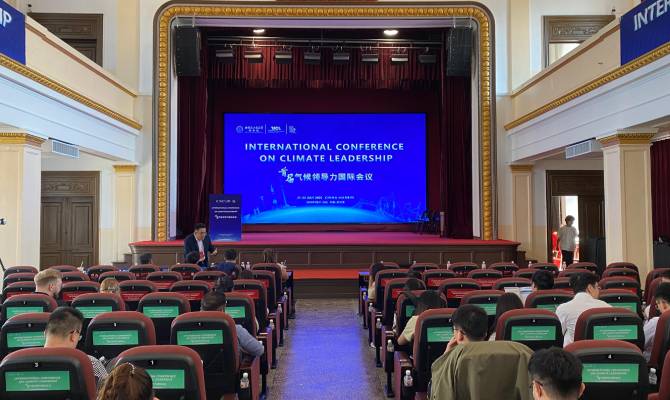
On the occasion of the ceremony organized in Maputo for the 75th anniversary of the United Nations Refugee Agency and the 50th anniversary of Mozambique’s independence, Elisa shared her story, the commitment she carries forward together with the CUAMM team, and the hope she holds for the future: that these communities may grow strong enough to face the challenges ahead on their own, and that every person may be free to live in the place they call home.