Malnutrition when adherence to treatment is lifesaving

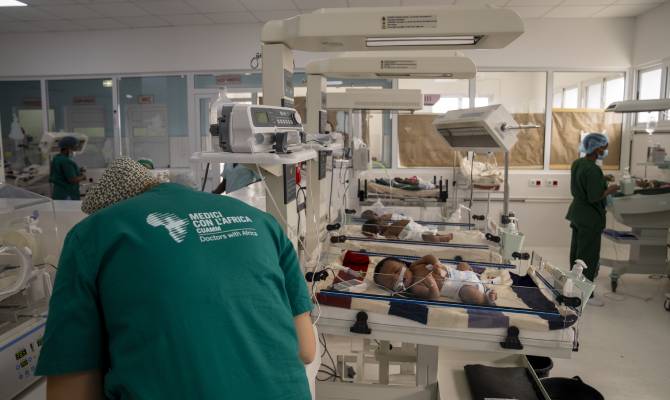
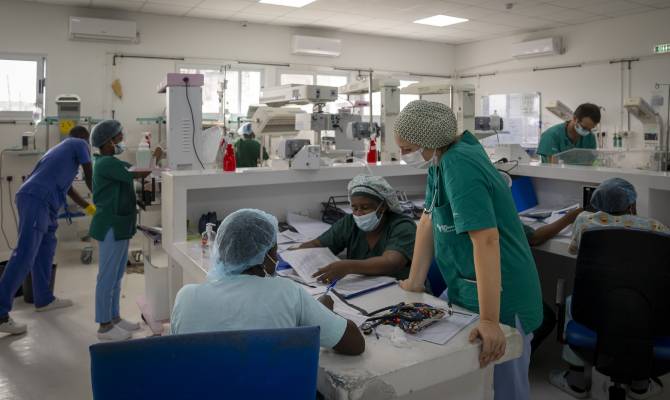
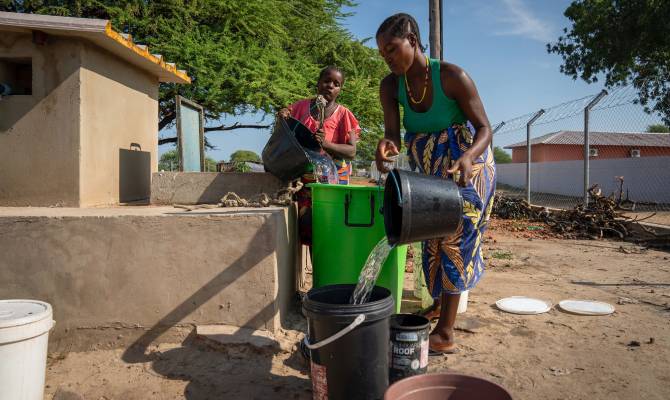
According to the latest data by UNICEF, WHO and World Bank 30% of under-five children in Tanzania suffers from severe malnutrition, 3,3% from acute malnutrition. Patricia is one of them. She was admitted to Dodoma Regional Referral Hospital a few months ago and treated by CUAMM’s team. Dodoma is one of the regions with the highest prevalence of malnutrition in the Country reaching 40%, Doctors with Africa CUAMM has been working here since 2022.

Patricia is two and a half years old and comes from the village of Chiwondo, in the Chamwino district. Her aunt took her to the hospital as her mother stayed home to look after her baby. After a couple of weeks at the malnutrition unit, she was discharged. Once she returned home, she was supposed to take Plumpynut a few times a day for several weeks, to aid in her nutritional rehabilitation. Plumpynut is a vital therapeutic food made of peanut paste enriched with proteins and minerals. Patricia’s family was supposed to collect the necessary Plumpynut to help her recover fully at Dabalo health center, near their village where CUAMM works. However, something went wrong, and Patricia never received it.

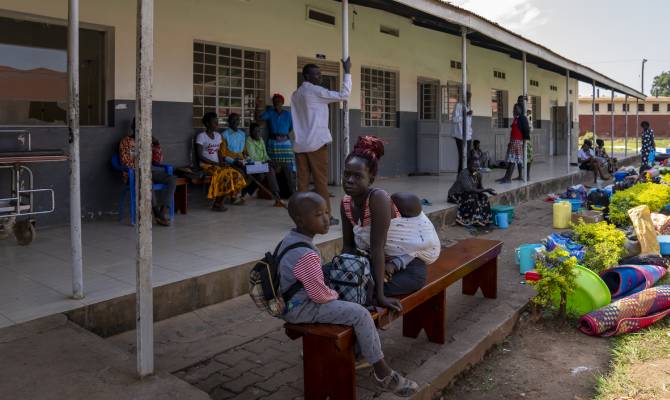
Fortunately, another aunt of Patricia, went to visit the family and immediately noticed that the little girl wasn’t well. She decided to take Patricia to the Dabalo health center, where she was diagnosed with severe acute malnutrition (SAM) and admitted for treatment. Patricia’s aunt quickly realized that medical attention was necessary to save her niece. For some time, Patricia’s aunt has been attending the Village Health and Nutrition Days (VHND), community health and nutrition days that include activities to raise awareness about child malnutrition. On those occasions CUAMM provides community’s members useful information on how to recognize a case of malnutrition, where to seek help, and how to handle the necessary treatments at home.

It is also thanks to these moments that Patricia is now much better. After receiving care at the Dabalo health center, the little girl returned home and completed her treatment with Plumpynut.

Patricia and her mother at home in the village of Chiwondo

Many factors contribute to malnutrition. Therefore, an integrated and multisectoral approach is necessary to address this emergency in a sustainable way. CUAMM is committed to implementing the “Diverse Food Systems: Improving nutrition through support for a diversified and sustainable food system” project in Dodoma, with the support of the Italian Agency for Development Cooperation and the Zanetti Foundation.

The Tanzanian government is supported in implementing national strategic plans for nutrition, with the aim of contributing to improving the quality of services in the Dodoma area, particularly for managing cases of severe acute malnutrition (SAM). Additionally, the integration of early childhood development (ECD) is promoted, with the goal of contributing to the physical and cognitive development of children by encouraging interaction with the community and play, even through the creation of toys made from local materials.


Tender for Supply of Biomedical Equipment.

Doctors with Africa CUAMM, under the project titled “Restoration of Essential Health and Nutrition Services in Shire, Tigray AID 05/12882/ETH” is launching a flexible, simplified procedure to select a supplier for the supply of biomedical equipment.

01 Invitation form

02 Contract Notice 

03 Instructions to Bidders 

Annex I – Tender Form

Annex II & III Technical Specifications – Technical Offer

Annex IV – Financial offer

Annex V – Administrative Compliance Grid 

Annex VI – Evaluation Grid

Annex VII – Special Conditions

Annex IX – Contract Form

Annex IX – General Conditions for Service Contracts 

Annex X – Checklist  


Tender Supply of stationery and Printing Materials

Doctors with Africa CUAMM, under the project titled ”INCLUSIVE–Strengthening prevention, equitable and inclusive care for all AID012590/06/09,” is launching the  present simplified producer to select stationery and printing press materials suppliers in the Gambela Region, Ethiopia.

01 Invitation form 

02 Contract notice 

03 Instructions to bidders 

Annex I – Tender Form

Annex Ia – Declaration of Honour

Annex II & III Spare parts – Technical Specifications technical offer 

Annex IV – Legal Identity form 

Annex V – Financial Identification

Annex VI – Financial offer

Annex VII – Administrative Compliance Grid

Annex VIII – Evaluation Grid   

Annex IX – Contract Form 

Annex X – Special Conditions 

Annex XI – General Conditions for Service Contracts 

Annex XII – Checklist 

Tender Supply of Stationery materials

Doctors with Africa CUAMM, under the project: Multi sectoral intervention to improve access to health of vulnerable community in Hamer district – (Project – IMPACT) – AID12669 ” is launching the present simplified procedure to select an eligible stationery materials supplier in South OMO zone, Hammer Woreda, Dimeka Town.


01 Invitation form

02 Contract notice

03 Instructions to bidders 

Annex I – Tender Form

Annex Ia – Declaration of Honour

Annex II & III -Technical Specifications technical offer

Annex IV – Legal Identity form

Annex V – Financial Identification

Annex VI – Financial offer

Annex VII – Administrative Compliance Grid

Annex VIII – Evaluation Grid

Annex IX – Contract Form

Annex X – Special Conditions

Annex XI – General Conditions for Service Contracts

Annex XII – Checklist 

Tender Invitation to provision of vehicle rental service

Doctors with Africa CUAMM, under the project: Multi sectoral intervention to improve access to health of vulnerable community in Hamer district – (Project – IMPACT) – AID12669 ” is launching the present simplified procedure to select an eligible vehicle rental service provider in South OMO zone, Hammer Woreda, Dimeka Town.


01 Invitation form

02 Contract Notice

03 Instructions to Bidder

Annex I – Tender Form

Annex Ia – Declaration of Honour

Annex II & III -Technical Specifications technical offer

Annex IV – Legal Identity form

Annex V – Financial Identification

Annex VI – Financial offer

Annex VII – Administrative Compliance Grid

Annex VIII – Evaluation Grid

Annex IX – Contract Form

Annex X – Special Conditions

Annex XI – General Conditions for Service Contracts 

Annex XII – Check List

Tender Invitation for the provision of medical insurance cover

The International NGO Doctors with Africa CUAMM, for its implementation work financed by various donors, is launching this local open tender to select eligible insurance service providers for the procurement of medical insurance coverage.


01 Invitation form
02 Contract Notice
ANNEX I – Tender Form
ANNEX Ia – Declaration of Honour
Annex II & III – Technical Specifications technical offer
ANNEX IV – Legal Identity form
ANNEX V – Financial Identification
ANNEX VI Administrative Compliance Grid
ANNEX VI – Financial offer
ANNEX VII Evaluation Grid
Annex IX – Contract Form
Annex X – Special Conditions
Annex XI – General Conditions for Service Contracts
Annex XII – Check List

Improving access to safe water, sanitation and hygiene

Access to clean water is a basic human right, yet it remains a privilege for the few. In 2022, 2.2 billion people still lacked access to safely managed drinking water services, while 3.5 billion people were deprived of access to safely managed sanitation.

Universal access to clean water is closely related to hygiene and sanitation services, known as WASH. Inadequate access to WASH services is responsible for as much as 10% of the global burden of disease, contributing to 1.6 million preventable deaths each year, including 60% of all deaths due to diarrheal diseases. In 2022, 3.5 billion people still lacked safely managed sanitation.

Goal 6 of the UN 2030 Agenda for Sustainable Development aims precisely at ensuring universal access to safe drinking water and sanitation. The accomplishment of this goal is a necessary condition for achieving the other SDGs related to poverty, health, education, gender equality and environment. The most vulnerable regions in terms of water availability and access are often located in areas under severe environmental stress and difficult economic and political conditions, where consequently also access to safely managed WASH services in both households and key community facilities, such as health facilities and schools, is very limited.

Over the years CUAMM has implemented numerous WASH projects across several African countries, particularly in Mozambique, Angola and Uganda among others with the key objective of improving access to clean water, sanitation and promoting adoption of desired hygiene and sanitation practices to curb morbidity and mortality due to preventable environmental factors. Our approach is comprehensive and includes a multi-pronged approach that includes infrastructure
development, community-based behavioral change
and health prevention and promotion interventions, hygiene and sanitation in healthcare facilities and outbreak prevention and response.

CUAMM places a strong emphasis on improving water, sanitation and hygiene practices (WASH) at community, household, and individual levels. We achieve this by integrating WASH messaging and education within our community-based health promotion and mobilization campaigns through the Social and Behaviour Change (SBC) strategy.
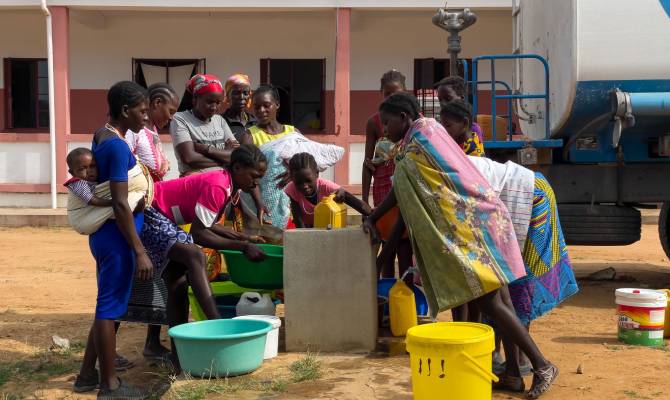
In Cunene province, Angola, thanks to the commitment of the agents from the GAS groups – Grupo de Água e Saneamento (water management groups in English), communities are being sensitized and informed about the correct use of wells to ensure good hygiene and sanitation practices and prevent waste. In addition,  GAS is also responsible for collecting a “symbolic” monthly payment from the households using the water point, to manage maintenance but also to increase ownership.
The intervention has been implemented following a
Community Management Model, actively involving all members throughout the process and making agents of change themselves. The activity is part of the project “Reducing nutritional vulnerability in the municipalities of Cahama and Ombadja through community surveillance and increasing access to safe water sources”, supported by Camões I.P. under the FRESAN Programme in partnership with the Municipal Administrations and the Municipal Directorates of Energy and Water and the Health.

In Mozambique, the “Familia Modelo” program has provided a platform for CUAMM to engage with community members, including parents and caregivers on WASH-related topics. By empowering families to become role models and champions of good WASH practices, CUAMM has created a multiplier effect, where the impact of school-based interventions is amplified through the active participation and support of the broader community.

Similarly, the “Smart Home” program in Uganda focuses on educating families on the importance of proper handwashing, safe water storage, and maintaining a cleaner living environment. By linking community-based WASH interventions with this household-level program, CUAMM ensures that knowledge and skills are applied at home, creating a more comprehensive and sustainable approach.
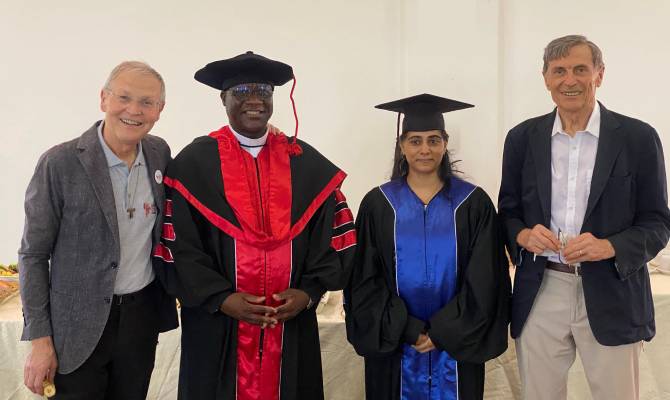
UCM and CUAMM 30 years of cooperation

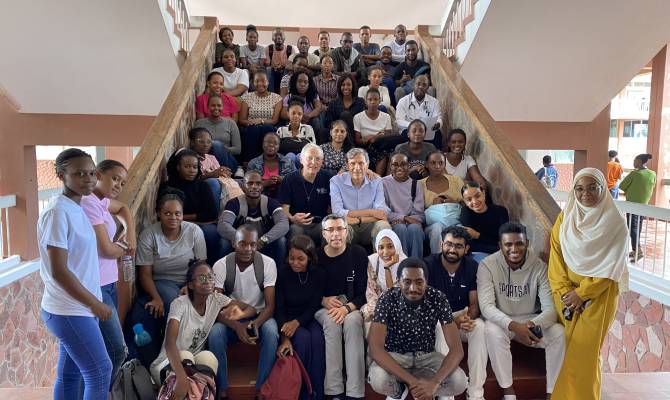
A day of celebration, opened with an official ceremony to inaugurate the new academic year but, above all, to celebrate the thirtieth anniversary of the founding of the Catholic University of Mozambique. A ceremony held today, Friday, March 14, in Beira, in the presence of the rector Father Filipe Sungo, Bishop Dalla Zuanna, the municipal authorities, and the university’s academic community. A CUAMM delegation attended the event including the director Father Dante Carraro, accompanied by Professor Alberto Mantovani, Father Lorenzo Piva, and Father Matteo Fornasiero, priests of the Diocese of Padua; Emilio Agosti, a friend and supporter of Cuamm; Stefano Bassanese, head of the Cuamm college, who joined Cuamm cooperants Francesco Vladimiro Segala and Giorgia Gelfi, already present in the field.

“Today is not the day I want to list the many initiatives in which Cuamm collaborates and supports the Catholic University of Beira,” said Father Dante Carraro – CUAMM Director General in his speech. “Rather, I would like to acknowledge a valuable aspect of this university, which is its strong connection to the community. Individual careers and money are certainly important, but science, research, and expertise must not forget to serve the poorest and most vulnerable.”

Also present at the ceremony, alongside the director Father Dante Carraro, was Professor Alberto Mantovani – Scientific Director at Humanitas. In the framework of the collaboration between CUAMM and UCM, Prof. Mantovani has visited Beira several times in recent years, giving lectures at the Faculty of Medicine.

“It is a privilege to be here for the third time and to celebrate an important anniversary that looks to the future,” said Professor Mantovani. “The future begins right here, where knowledge is built and shared.”

A construction that has lasted thirty years, during which the Catholic University of Mozambique has developed an educational project that today stands out at national level for its scientific rigor, innovation, internationalization, and certainly for its human values.

“Since its founding in 1995, UCM has responded to educational challenges with rigor and innovation, with the firm intention of forming upright citizens. We do not only want well-prepared and highly qualified professionals in their fields, but also leaders committed to the common good,” said the rector, Father Filipe Sungo.

The bishop of Beira, Claudio Dalla Zuanna, also reinforced the importance of the human dimension. Echoing the words of Pope Francis, he said: “The university is certainly a place where science is cultivated with seriousness and rigor, but it is also where hearts and minds bloom not only for academic results but for generously serving humanity. The university cannot be an ivory tower must be able to listen to society, accept challenges, and offer answers.”

Timeline

It was in 1995 that the Catholic University of Mozambique (UCM) was inaugurated in the city of Beira, the second university in the country, about 1,500 km from the capital, Maputo. A few years later, also with the support of Doctors with Africa CUAMM and thanks to over a decade of collaboration with the city’s health authorities, the Faculty of Medicine of the Catholic University of Mozambique was established.

Starting by designing and teaching the Anatomy, Surgery and Internal Medicine course in 2004, CUAMM’s commitment alongside the Faculty of Medicine of UCM has never ceased; on the contrary, it has grown over time.

On August 25, 2007 we participated in the very first graduation ceremony for the first class of aspiring doctors in Beira. “A historic date for the entire country,” as defined by the university’s rector, Father Alberto Ferreira. Indeed, these were the first students trained outside the capital, Maputo, in the central-northern region of the country, where at the time there was only one doctor for every 100,000 inhabitants.

It was not an endpoint but a crucial milestone on which we continued to build a solid and lasting collaboration that over the years has involved numerous partners. From the Municipality of Padua to the city’s Hospital Authority, from the Veneto Region to the Savings Bank of Padua and Rovigo, and the Cariparo Foundation, with everyone’s support, we have ensured teaching support and intensified our commitment. We have ensured maintenance on facilities (classrooms, laboratories), provided educational materials (books, computers, etc.), offered internship opportunities at the Central Hospital (HCB), awarded scholarships to deserving students, supported research projects, and consolidated our collaboration on the faculty’s syllabus.

«For years, Cuamm has collaborated, in synergy with the pedagogical direction, on the curriculum of the Faculty of Medicine,» explains Francesco Segala, a Cuamm doctor and head of relations with UCM. «Through this collaboration, we continue to ensure the delivery of some of the teaching modules included in the students’ curriculum through the dispatch of international experts on short missions, in collaboration with the Universities of Padua and, more recently, Bari. This year, for the first time, the entire infectious diseases module was taught by a Cuamm doctor, and it was a very profound experience for me, both professionally and personally.»

From 2007 to date, over 500 students have graduated at the Faculty of Medicine at UCM thanks to the financial support of CUAMM. Professionals and human resources for a country historically lacking qualified health personnel.

Among the latest results of this historic collaboration is a new training proposal: the first and only advanced training program in Mozambique aimed at healthcare professionals, including doctors and nurses, who now have the opportunity to specialize in pediatric and neonatal emergencies with international experts. Supported by the Italian Ministry of Education (MIUR), the program is the result of then collaboration between CUAMM, the University of Padua, the Catholic University of Mozambique, and the Eduardo Mondlane University of Maputo.


Local Open Tender for Supply of a generator, spare parts, and UPS

Doctors with Africa CUAMM, under the project “Restoration of Essential Health and Nutrition Services in Shire, Tigray AID 05/12882/ETH,” is launching a local open tender procedure to select eligible suppliers for the supply of a generator, spare parts, and UPS for our project in Tigray Region, Ethiopia.


01 Invitation form

02 Contract Notice

03 Instructions to Bidder

ANNEX I – Tender Form

Annex Ia – Declaration of Honour

Annex II & III – Generator and UPS _Technical Specifications technical offer_Generator revised

ANNEX IV – Legal Identity form

ANNEX V – Financial Identification  

ANNEX VI – Financial offer

ANNEX VII – Administrative Compliance Grid

ANNEX VIII – Evaluation Grid

Annex IX – Contract Form

Annex X – Special Conditions  

Annex XI – General Conditions for Service Contracts

Annex XII – Check List 

Women supporting other women every day

On March 8 the world celebrates International Women’s Day, an occasion dedicated to recognizing women’s social, economic, and political achievements, as well as a time to reflect on the ongoing challenges related to gender equality and rights. On this occasion, we want to celebrate the incredible women we work with across sub-Saharan Africa and honor their unwavering commitment to supporting and serving women in need.

Meet a few of the inspiring women we’re spotlighting on International Women’s Day.

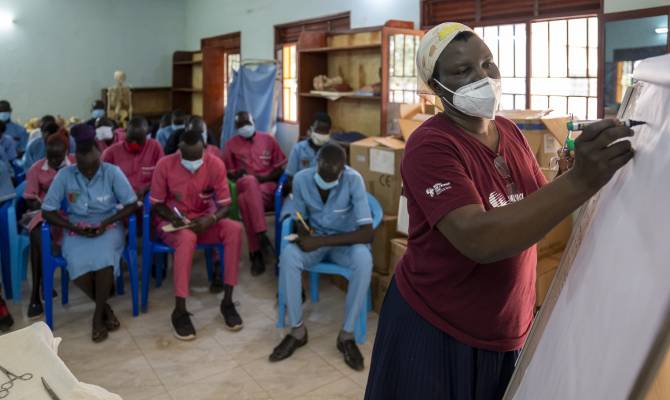
Magdalen Awor CUAMM Midwife and tutor at Rumbek Health Science Institute, South Sudan

Born in Uganda, Magdalen became a midwife in 2008. She has been living in South Sudan for more than 10 years where she serves as midwife and tutor at Rumbek Health Institute.

South Sudan is not only one of the leading country in terms of maternal mortality but also one with the lowest literacy rate among girls. Magdalen is a highly motivated and passionate professionist who spends her life and competencies where it is needed most. Deeply committed to her work, she in on the frontline of maternal and newborn care.

«When I enter the class, when I support these girls in their clinical practice, I see a future for this country. By educating and training girls we empower them while also contributing to assist women in the delicate and way too often life-threatening moment of delivery».

The Rumbek Health Science Institute in Lake State trains both midwives and nurses for a total of some 320 students enrolled in the first year. CUAMM supports the institute since 2020, some xxx students have graduated at the insitute ever since.


Loide Cambisano – CUAMM Project Manager in Shinyanga, Tanzania

Born and raised in Italy, in 2023 Loide started working with CUAMM in Iringa region, Tanzania. Today she leads a project focused on HIV, youth and adolescents in Shinyanga District.

«Stigma, prejudice and discrimination related to HIV do have a huge impact on the life of young people and adolescents resulting in behaviors such as withholding help, avoidance and coercive treatment. Women and young girls living with HIV are no doubt those most likely to experience HIV-related stigma».

The rate of child-marriage, early pregnancy and gbv cases in Shinyanga District is above the national average. Consensus, sexual and reproductive health and rights, gender-based violence and stigma are the topics often discussed in sensitization sessions promoted by CUAMM and held both within communities and schools. In addition, screening activities and psyco-social support is being provided to young people living with HIV in Shinyanga district.


Germana Tuitileni CUAMM Assistant at Casa de espera in Chiulo, Angola

Germana Tuitileni is a pillar at casa de espera, the maternal waiting home at Chiulo Hospital, Angola. Everyone knows her.

She has been working here since the opening of this space, back in 2012. Although she is not a professional midwife, she supports and assists women in the days that preceed the delivery engaging them in sensitization acitivities on sexual and reproductive health, nutrition and most importantly on the importance of seeking care during pregnancy and delivery.

«Every day I am here to support these women. I talk to them about the importance of being at casa de espera and give birth safely because I know that they will spread the word to other community members and more women will do the same».

The Maternal Waiting home (MWH)casa de espera in portuguese, is a low-cost yet effective introduction to care for pregnant women in the late stages of their pregnancy therefore ensure assisted and safe delivery. Pregnant women with at-risk pregnancy come to this safe space when their due date is approaching. Here, they can be monitored by health professionals and easily access the hospital in case of emergency.

In 2023 more than 2,000 deliveries were assisted at Chiulo Hospital including 167 C-section. The work Germana does for pregnant women in Angola is key to promote their well-being and reduce pregnancy-related complications. By educating these women, Germana is empowering their whole communities while also contributing to reducing the maternal mortality rate which is 222 out of 1000,000 deliveries in Angola.