Annual Meeting 2024 Health First

PHOTOGALLERY

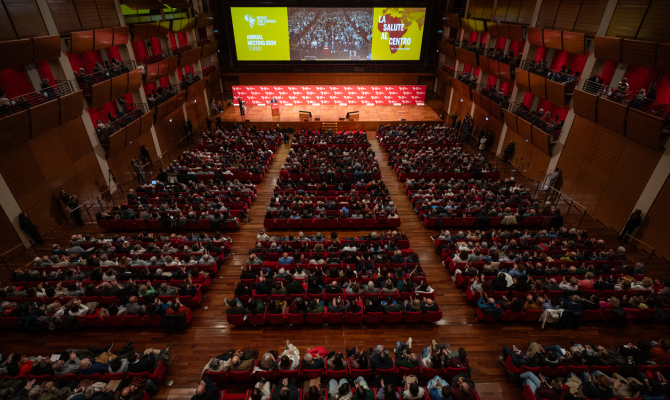
Over 1,800 people from across Italy gathered in the Giovanni Agnelli Auditorium at Lingotto in Turin for the Annual Meeting of Doctors with Africa CUAMM. “Health First. For Everyone’s Future” was the theme of this event, now in its 14th edition.

Neri MarcorĂš, Author and actor

After an intense monologue by Neri MarcorĂš, who performed Giorgio Gaber’s “La Paura” (Fear), the audience was guided by the graceful hosting of Paola Saluzzi on a captivating journey. This journey featured video testimonies from Africa and live voices on stage, creating an emotional crescendo of stories from the field.
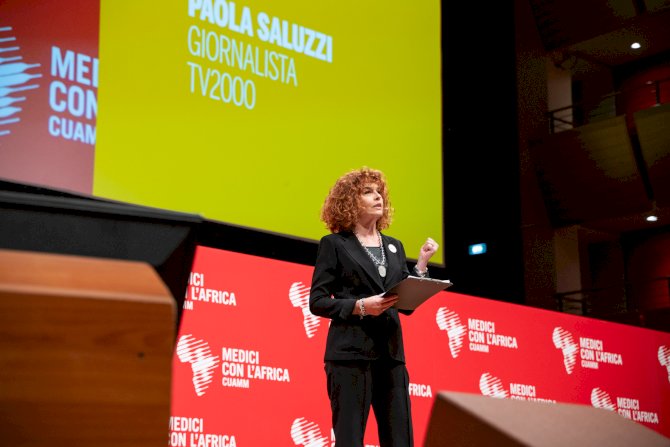
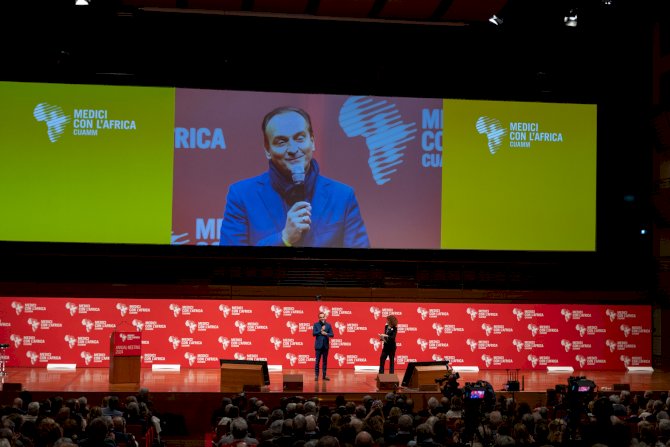
Paola Saluzzi, Annual Meeting Host and Journalist at TV2000


Alberto Cirio, President of the Piedmont Region

Alberto Cirio, President of the Piedmont Region: «The first word I want to say is ‘Thank you.’ To Don Dante Carraro and everyone, for choosing Turin and Piedmont, a land of culture and values rooted in solidarity. Your presence here is meaningful».
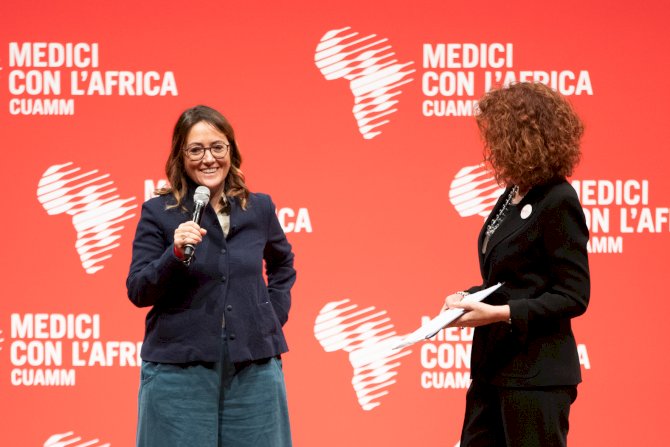
Michela Favaro, Deputy Mayor of Turin

Michela Favaro, Deputy Mayor of Turin: «I am glad to greet you all, on behalf of the city and the mayor. Turin has a long tradition of solidarity and continues with a strong international vocation. We are happy that so many doctors and health workers dedicate themselves to this bridge of hope for the world».

Alberto Mantovani, Scientific Director of Humanitas (on the right) and Guido Forni, Immunologist, Accademia dei Lincei

Alberto Mantovani, Scientific Director of Humanitas referring to the award presented to CUAMM by the Accademia dei Lincei in late June, said: «Serving this cause means working ‘with.’ The participation and enthusiasm for this award highlight CUAMM’s virtuous triangle of medicine: assistance, particularly for children and at-risk mothers, training young professionals, and operational research. This triangle brings extraordinary hope. We give something and return home with even more hope».

Guido Forni, Immunologist, Accademia dei Lincei: «Spurred by Alberto Mantovani, a group of immunologists wrote a book to demonstrate the importance of vaccines. The proceeds will go to CUAMM, and I am proud to be part of this beautiful initiative».
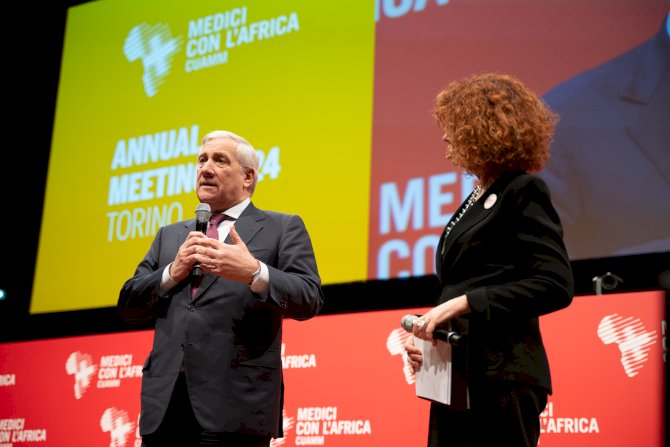
Antonio Tajani, Deputy Prime Minister and Minister of Foreign Affairs and International Cooperation

Antonio Tajani, Deputy Prime Minister and Minister of Foreign Affairs and International Cooperation: «We must look at Africa through African lenses, valuing its richness without neocolonizing, providing meaningful responses. Thank you for being an operational reference point for Italian Cooperation. We must do more to prevent children from dying before age two or mothers losing their lives during childbirth. This is the foundation of the Mattei Plan, a ‘win-win’ strategy to foster friendship and investment in the continent».

Alberto Anfossi, Secretary General of the Compagnia di San Paolo Foundation (on the right) and Don Gabriele Pipinato, CEI

Alberto Anfossi, Secretary General of the Compagnia di San Paolo Foundation: «Italian banking foundations work locally, but we all feel the need to act on a national level as well. Cooperation leads us to select projects and partners that can truly make a difference».

Don Gabriele Pipinato, CEI: «Last Saturday, I celebrated a 25-year project started with CUAMM, which continues to this day. I recently visited Wolisso, where CUAMM is doing exceptional work as a driving force generating new energy».

Fabio Manenti, Head of Project Department and Chiara Maretti, midwife and Country Representative in South Sudan

The Meeting, as every year, was an opportunity to present data from the extensive program “Mothers and Children First”, explained by Fabio Manenti, Head of Project Department at CUAMM. In its third year, the program supported 101,132 assisted births across eight sub-Saharan African countries where CUAMM operates; 817,916 prenatal visits were conducted; 3,804 malnourished children were treated, and 340 local health managers were trained.
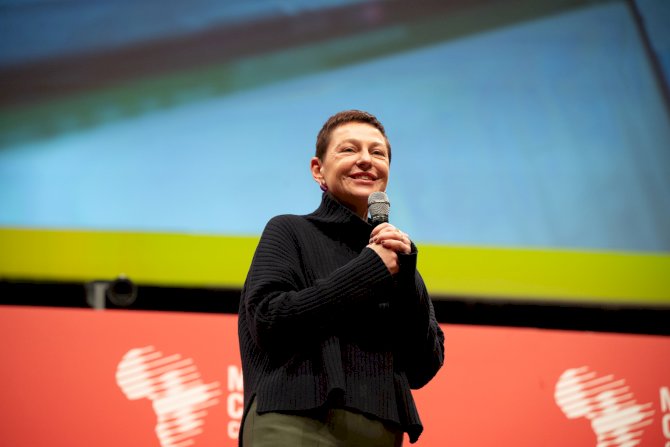
Chiara Maretti, midwife and Country Representative in South Sudan

Chiara Maretti, midwife and Country Representative in South Sudan, shared her field experience: «South Sudan is one of the poorest countries, yet it demonstrates incredible resilience. It’s an overused term, but if any population deserves it, it’s South Sudan. Since gaining independence in 2011, the country has faced unrelenting challenges, with extraordinarily high maternal mortality rates. At CUAMM, we support midwifery schools, and witnessing these young, future colleagues attending classes and preparing to help their country gives me joy amid the daily struggles».

Daguma Dereje, Ethiopia’s Deputy Minister of Health, highlighted: «The Ethiopian government has been collaborating with CUAMM for many years in a true partnership. Our healthcare system faces three main challenges: maternal and child mortality exacerbated by poverty, lack of equipment and medicine, communicable and other diseases such as cancer, and a third set of challenges posed by malaria, cholera, and similar disases».
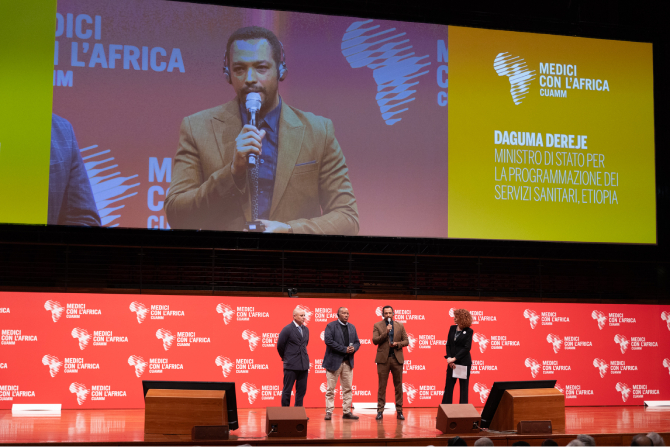
Daguma Dereje, Ethiopia’s Deputy Minister of Health (on the right); Getachew Reda, President of the Tigray region in Ethiopia (in the middle) and Agostino Palese, Italian Ambassador in Ethiopia (on the left)

Getachew Reda, President of the Tigray region in Ethiopia, remarked: «The past three years of war have devastated infrastructure and more. We don’t just need to rehabilitate hospitals, on the contrary we need to rebuild the entire system. Guns have gone silent, but thousands live in extreme vulnerability without any services. CUAMM supports us in this. Above all, what matters now is peace».
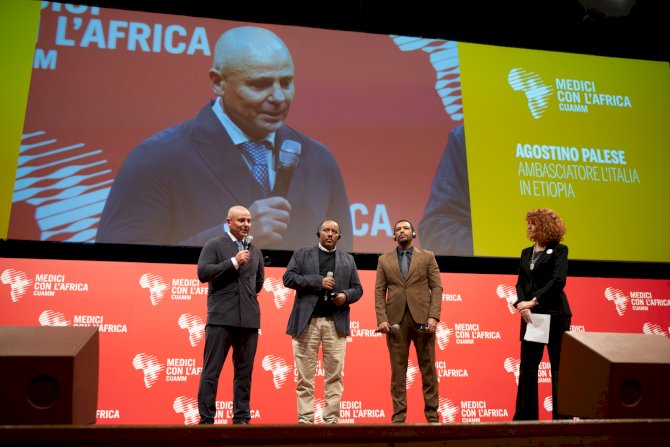
Agostino Palese, Italian Ambassador to Ethiopia

Agostino Palese, Italian Ambassador to Ethiopia, emphasized: «In the past year, we have invested in what seemed impossible. Our priorities are threefold: healthcare, education, and employment. It’s not about optimism or pessimism, but about working with commitment every day and believing in what we do. We are fostering a paradigm shift, moving from aid to development as a right».

Franca Fagioli, Director of the Pediatrics Specialty School, University of Turin, said: «I believe the JPO program for residents is strategic even for our national territory. It is crucial for developing doctors capable of operating in global, multidisciplinary contexts. These doctors treat patients without or with minimal technology, adapt to diverse cultural settings, and become assets for both host country, themselves, and our national healthcare system».
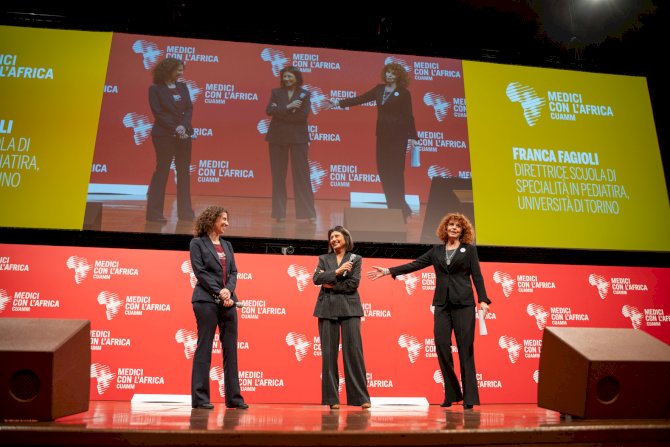
Franca Fagioli, Director of the Pediatrics Specialty School, University of Turin (in the middle) and Elena Altieri, CUAMM Doctor (on the left)

Elena Altieri, CUAMM pediatrician shared: «Every day in my work in Italy, I draw from my experience as a resident in Tanzania and as a specialist in Mozambique. In Africa, I learned clinical practice by talking to patients, using my heart and hands. There, we learn to use our hands, minds, and a frugal approach to medicine effectively».

Journalist Diamante D’Alessio commented: «Thanks to Massimo Carraro of Morellato, I stumbled upon CUAMM, and from there, my commitment grew to give voice to the remarkable work of doctors on the ground».
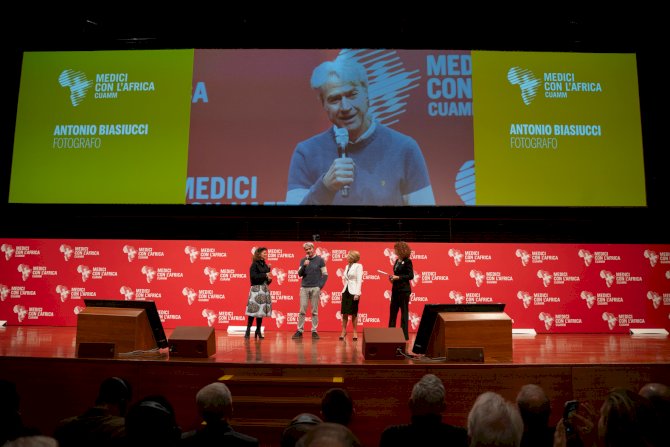
Antonio Biasiucci, photographer; Diamante D’Alessio, journalist (on the left) and Patrizia Sandretto Re Rebaudengo, President of the Sandretto Re Rebaudengo Foundation

Photographer Antonio Biasiucci reflected: «CUAMM’s mission is truly contagious. I often work with metaphors; I could have done this project without going to Uganda, but I felt involved and chose to visit a delivery room in Matany with CUAMM. It was incredibly challenging. Pointing a camera at a woman in labor, possibly delivering a stillborn child, is not easy. It’s an experience I’ll always remember».

Patrizia Sandretto Re Rebaudengo, President of the Sandretto Re Rebaudengo Foundation, shared: «Art and culture play a role in raising awareness and attention on critical causes like CUAMM’s. Art serves aesthetic, political, and social functions. It can align with significant causes to support and help raise funds. We’re launching a new project with CUAMM to send artists to Africa, who will sell their work to support CUAMM».
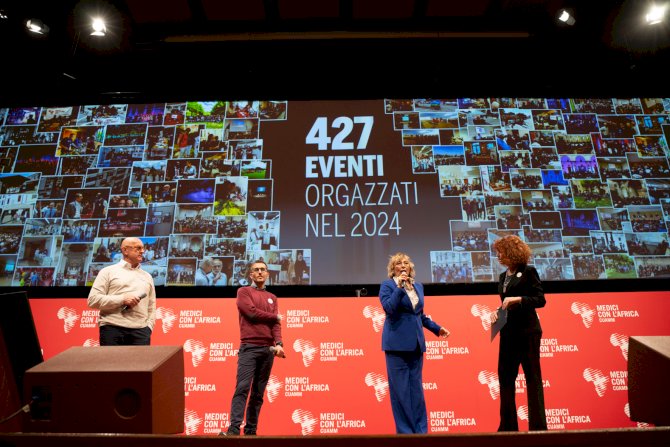
Giuseppe Ferro, President of CUAMM volunteering groups; Nicola Penzo, CUAMM Fundraising Department; Simona Sala, Director of Radio Rai 2

Simona Sala, Director of Radio Rai 2, proposed: «Good deeds rarely make the news. Talking about the positive is challenging. Today’s conflicts risk further overshadowing Africa. That’s why I’d like to propose an idea for us all to work on next year: 2025 marks the 40th anniversary of Bob Geldof’s Live Aid. Organizing a major concert to raise awareness on Africa would be magnificent».

Serge Boni, Professor of Gynecology and Obstetrics and Advisor to the Minister of Health, Ivory Coast, noted: «Ivory Coast is fortunate to have a good neonatal and maternal health system, but significant challenges remain in many regions. The maternal mortality rate is far from Europe’s. Our country aspires to reduce this rate because the greatest injustice is a woman dying while giving life. We are grateful for CUAMM’s support».
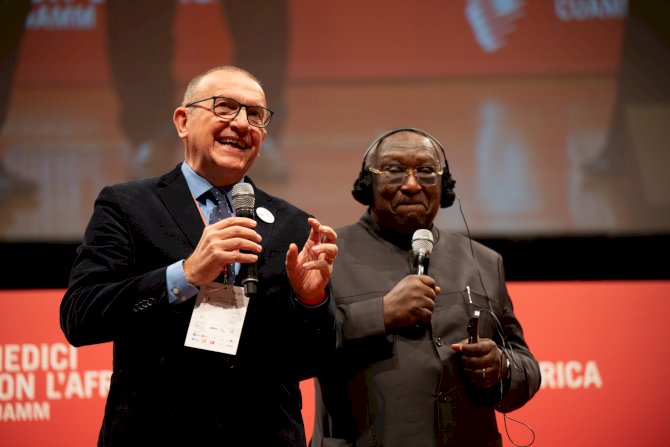
Ehouman Serge Boni, Professor of Gynecology and Obstetrics and Advisor to the Minister of Health, Ivory Coast (on the right) and Giovanni Putoto, CUAMM Head of program and operational research 

Giovanni Putoto, CUAMM Head of program and operational research revealed:  «CUAMM is launching a new project at the Abobo hospital in Abidjan. Together with the University of Padua, we will double maternity support, establish a neonatal unit, and ensure essential services like a blood bank. This critical endeavor will focus on research and study».

Andrea Malaguti, Editor-in-Chief of La Stampa, interviewed Romano Prodi about Africa and the Mattei Plan, asking if this intervention is enough and where Europe falls short. Romano Prodi, President of the Foundation for Worldwide Cooperation, responded: «The Mattei Plan won’t be sufficient. Africa is immeasurably larger than Italy and Europe. While Europe is the continent’s largest donor, it wields no influence, which is a major issue. In contrast, China has diplomatic ties with 54 of Africa’s 55 countries and operates systemically. Europe provides fragmented, short-term aid. CUAMM’s distinguishing strength is its decades-long, continuous presence».
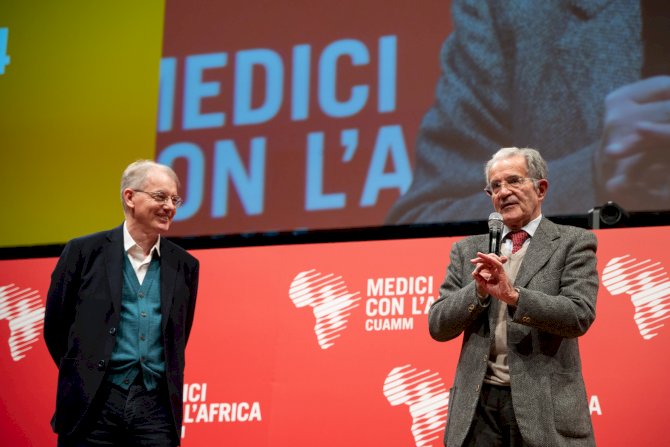
Andrea Malaguti, Editor-in-Chief of La Stampa and Romano Prodi, President of the Foundation for Worldwide Cooperation

Don Dante Carraro, CUAMM Director, closed the event with a call to support a new training center in Bossangoa, Central African Republic: «At the request of the local Ministry of Health, we aim to establish this center in one of the poorest areas, building on our successful maternity project there. The cost is 1 million, but we are confident we can achieve this with everyone’s help».
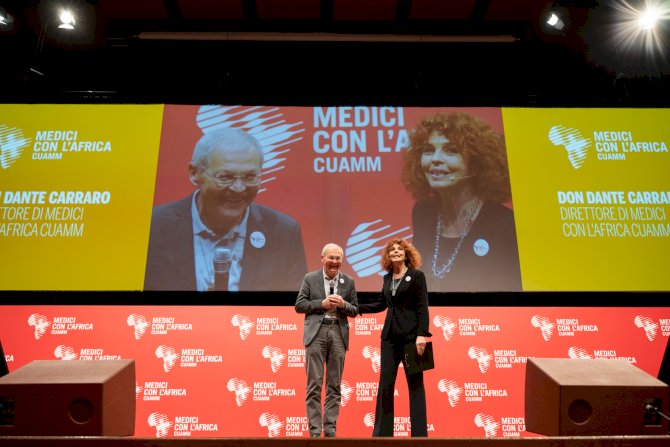
Don Dante Carraro, CUAMM Director General


The Annual Meeting will be aired on TV2000, Channel 28, on Saturday, November 23, at 4:00 PM. 


The ANNUAL MEETING is under the patronage of: Regione Piemonte, Municipality of Turin, University of Turin, the National Federation of the Orders of Physicians and Dentists, and the National Federation of Midwifery Orders.

In collaboration with: Intesa Sanpaolo, Gilead.

Technical sponsors: Lavazza, Fondazione Sandretto Re Rebaudengo, Coldiretti Piemonte. Cuamm is a member of Link 2007.

Media partners: Rai Radio 1, Rai Radio 2, Gruppo 24 Ore, Tv2000, Radio InBlu, Avvenire, La Stampa, Radio Vaticana, Vatican News, L’Osservatore Romano, Africa Rivista.

PRIMA LE MAMME E I BAMBINI is a program in collaboration with Fondazione Cariparo, Fondazione Cariverona, Fondazione Cariplo, Compagnia di San Paolo, Fondazione Cassa di Risparmio di Lucca.

Thanks to: Fondazione Cassa di Risparmio di Bologna, Fondazione del Monte di Bologna e Ravenna, Fondazione CR Firenze, Fondazione Cassa dei Risparmi di ForlĂŹ, Fondazione Friuli, Fondazione di Sardegna, Fondazione con il Sud, Fondazione CRT.

Photo credits: Margherita Borsano
 

CONNECTING, STRENGTHENING AND EMPOWERING FBOs

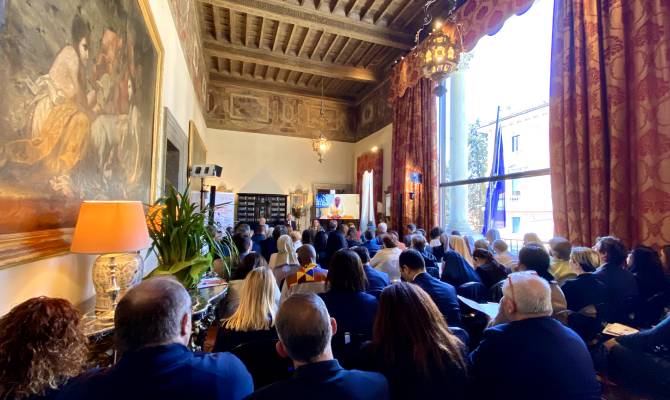
The event “Supporting faith-based organizations on the frontline of healthcare service delivery” organized by Doctors with Africa CUAMM and Embassy of Italy to the Holy See was held today in Rome. The meeting was a valuable occasion for highlighting both the key role FBOs play in the delivery of healthcare services in low and middle income countries (LMIC) and the importance of building strong partnerships. Governments representatives, institutions, partners, private foundations and companies attended the event to prove the value of having a common commitment.

For over a decade, FBOs have been serving the most vulnerable populations in Africa to ensure the access to healthcare services for all. Often located in the last mile, FBOs are frequently on the front lines of service delivery; they are in close contact with local communities and can recognize and address the real needs of the poorest, delivering up to 70% of health services in low and middle income countries. However, FBOs are often neglected in terms of supplies, human resources and funding and are not integrated into the healthcare system.

Doctors with Africa CUAMM believes that FBOs need to be supported and included in local health system strengthening interventions. For that reason, in 2019 CUAMM launched the program “Supporting FBOs on the frontline of healthcare service delivery in Africa” aiming at strengthening the capacity and resilience of staff working in faith-based health facilities through training, technical assistance and advocacy activities.

Since its launch in 2019, 133 faith-based organizations in 26 countries in sub-Saharan Africa have been involved in “Supporting FBOs on the frontline of healthcare service delivery in Africa” program  . Up to 164 health facilities have been targeted in numerous on-field visits conducted by CUAMM personnel highly qualified both in health care and health service management. The facilities benefited from CUAMM’s support in terms of training in the field of management and administration, technical assistance through online activities and meeting on the ground; and advocacy to help FBOs share lessons learned and strengthen their representative capacity before local institutions and international community. The event was also a opportunity for presenting a deep analysis on the work FBOs are doing in 11 countries in sub-Saharan Africa.


The meeting started with the opening remarks delivered by the Italian Ambassador to the Holy See, Doctors with Africa CUAMM Director General and Uganda Ministry of Health Representative.

Francesco Di Nitto, Italian Ambassador to the Holy See: «I am honoured for hosting this event here at Palazzo Borromeo. Africa has become a priority for Italy and in particular for this government. Italy is absolutely aware of how interconnected the destinies of Europe and Africa are and that is why it has been working to write a new page in the histyory of cooperation through the launch of Piano Mattei whose main idea is to develop partnership with African countries on equal footing also through FBOs, some of which have been asked to participate actively in the steering committee of Piano Mattei».

Father Dante Carraro, Director General Doctors with Africa CUAMM: «CUAMM, which I am speaking for, is itself a faith based organization. That is why we truly believe in the role FBOs play on the ground, in Africa. They are on the frontline of healthcare service delivery in low and middle income countries (LMIC), they keep up a widely underestimated work, barely recognized that we want to support and amplify».

Tom Aliti, Commissioner Health Services, Health Sector Partners & Multisectoral Coordination, Ministry of Health Uganda: «Ugandan health system is wonderful and strong. We aim at reaching the universal health coverage and in doing that, we are aware of the importance of working with partners such as CUAMM and FBOs which is something we started doing. Both the Government and the Ministry of Health have set a technical working group to jointly identify needs and priorities therefore design responses especially to address the urgent crisis in Sudan which has so far caused 1.5 million refugees, and also the crisis in Central African Republic without forgetting the urgency to plan a response strategy to the rising threat of climate change».

A first panel was dedicated to the role international cooperation agencies have in supporting and promoting healthcare in Africa. In conversation with Gary Cohen – CEO & Co-founder Maternal Newborn Health Innovation, Peter Natiello – USAID and Juliette Prodhan – FCDO highlighted the importance of driving locally targeted interventions for more sustainable and long-lasting results remarking lessons learned over their career in the humanitarian sector.

Peter Natiello, Senior Humanitarian and Development Advisor, USAID’s Bureau of Humanitarian Assistance: «Faith Based Organization have really strong and healthy christian values and those intangible assets are critical to success in development project. And it’s precisely those things and those intangible assets that make faith-based organizations such an important partner to USAID. And just very quickly, I would like to mention the work that USAID is doing in Africa, Uganda, hand-in-hand with CUAMM: that has been critical to strengthen local health systems in those isolated places where precisely the refugees crisis have put additional stress on health systems».

Juliette Prodhan, Deputy Director, Development Policy, UK Foreign Commonwealth and Development Office – FCDO: «The ability of FBOs to link with communities, to influence communities, to influence behaviours is something we have witnessed during Covid epidemic they were on the frontline of vaccination campaign, they role in influencing is very important for us. And also their presence in the last mile, is really important.  We need to work with people who understand communities’ dynamics and who serve in the most poor countries where the most fragile are and where we want to develop our projects even further. That is where FBOs are. The ideal would be for States to be accountable to their citizens and for State-citizenship’s relation to be really strong so that in the long run we know we have sustainable interventions».

Not only international cooperation agencies, private foundations also play a crucial role being them capable of delivering financial support to FBOs on the frontline of healthcare service delivery. The second panel  “The commitment of private foundations on FBOs work in healthcare” was an enriching opportunity for us all to share objectives, identify common values and set the way further.

Sister Jane Wakahiu, Associate Vice President of Program Operations and Head of Catholic Sisters Initiative at Conrad N. Hilton Foundation: «Today I am delighted about the partnership with Doctors with Africa CUAMM in improving the capacity of our 100 catholic sisters involved in healthcare in Ethiopia and Central African Republic. Strengthening and supporting health facilities run by sisters is crucial for improving health service delivery and fostering striving community».

Filippo Uberti, Head of Health Unit ENI Foundation: «As an international company working in the energy sector we are called to respond to many urgent challenges. Firstly, the challenge of ensuring the health of our workers, their families and communities, secondly the challenge to invest in new model of energy such as renewable energies. The latter is probably the most challenging for us. Yet, we have to address it not only because the connection between environment and human health is something a growing number of governments are sheding a light on but also, because it is our mission to guarantee the well-being of our workers, families and communities across the 72 countries where we work».

Eva Kooijman, Philantropy Officer, Caritas Pro Vitae Gradu Charitable Trust: «FBOs are key actor in reaching their own community. What makes CUAMM a brilliant partner is the capacity to have reached itself 133 FBOs showing us a commitment that was beyond our expectations».

We could not fail to dedicate time to results collected from the assessment visits on the ground. Research is indeed an essential compenent of CUAMM’s work and one much needed to be accountable to partners and communities. That’s why the meeting was also the occasion to present the assessment from the visits conducted over the past 2 years in 64 health facilities across 11 countries in sub-Sahaaran Africa, managed by 48 FBOs. 

Emanuela Parotto, Clinical Advisor: «The assessment report we are presenting today provides a critical insight in the challenges faced by FBOs in running health facilities in sub-Sahaaran Africa. The report is meant to underline the need for a long-lasting change in the provision of healthcare services. Through CUAMM visits on the ground, we had the opportunity to see first hand the key role played by FBOs in the provision of healthcare services to the most vulnerable populations despite the numerous challenges such as lack of human resources, weak capacity in disaster management and financial constraints. Collaboration and partnerships can indeed make a difference».

“The role FBOs play in the delivery of quality health services to the most vulnerable” was the latest panel of the meeting, followed by an insightful and thought-provoking Q&A session.

«What we can do together with CUAMM is to amplify the voice of Africa so that its needs become clear to everyone» said Fr. Dumisani Vilakati, Regional Coordinator for Africa, Dicastery for Promoting Integral Human Development.  «I know that many colleagues from the Dicastery who are working in Africa, they have the feeling to be unnoticed.We do not talk enough about Africa. We do know that there are many crisis ongoing: in Ukraine and in the Holy Land. Yet, the tremendous time people are experiencing in Sudan, South Sudan and Ethiopia is equally worth our attention. Because wherever a war is, health needs spike and responses are needed» concluded Fr. Dumisani Vilakati.

Suor Adou Adjua Josephine, Secretary of l’Union des Religieux dans la SantĂ© et le Social en CĂŽte d’Ivoire – U.R.S.S.C.I.: «U.R.S.S.C.I was first funded in 2005 but it was 2020 when the government of Ivory Coast recognized the network. Today, nearly 100 health facilities are part of URSSCI counting both general hospital and first level health facilities located in remote villages. The mission that we all share as member, is to improve the quality of health services provided within the centres and to facilitate access to healthcare services especially to those most in need. In order to achieve our goal, we need first and foremost to be trained. Training is key and we need to improve our capacity in management, administration, law, healthcare service provision, communication and visibility, technical assistance. Just to mention a few. URSSCI is becoming more and more important to represent FBOs health facilities before the Ministry of Health and to have a seat at the table».

To conclude the event, Andrea Atzori, Head of International Relations, Doctors with Africa CUAMM gave the participants an overview of the major current challenges stressing the urgent need to build strong connection because «today Africa, or we’d better say the whole world is experiencing numerous crisis to which none of us alone can provide a response».  Among the main ones underlined: the climate crisis, the economic crisis and the numerous huminatrian crisis ongoing. «“Partnership” is the key word: it is urgent to build connections as these that I see here, right in this room where we have gathered with partner, governments, FBOs, companies and private foundations. We have to debunk the myth that funds and money can drive change. It is a misconception. Financial support is without any doubt needed but it only become effective when it does change people’s lives, also in the hardest to reach areas» concluded Atzori.

The activities implemented in collaboration with Governments and local communities are supported by Hilton Foundation, Caritas Pro Vitae, Vitol Foundation and Eni Foundation.


WATCH THE EVENT

SEE THE GALLERY

CPHIA CUAMM SIDE EVENT

The annual International Conference on Public Health in Africa (CPHIA) is organised by the Africa Centres for Disease Control and Prevention (Africa CDC) and provides a unique African-led platform for leaders across the continent to reflect on lessons learned in health and science, and align on a way forward for creating more resilient health systems.

CPHIA 2023 is the third edition of the conference, which was held virtually in 2021 and in-person in Kigali, Rwanda, in 2022. This year, CPHIA will be hosted by the Zambian Ministry of Health and takes place 27-30 November in Lusaka, Zambia, under the theme “Breaking Barriers: Repositioning Africa in the Global Health Architecture” – a theme that will be explored across nine plenary sessions, several parallel and abstract sessions and dozens of official side events.

CUAMM will host its own virtual side event on November 22nd at 6 pm (CAT) via Zoom Meeting under the theme Operational research and civil society contributions to enhance Universal Health Coverage: the experience of Doctors with Africa CUAMM. Among the panelists: CUAMM experts and University professors from both Italy, Ethiopia and Uganda as well as partners, namely UNICEF Mozambique and collaborators from two African Universities namely Mekerere University, Uganda and Catholic University of Mozambique. The speakers will take the floor to explore the relationship between operational research and civil society engagement in enhancing universal health coverage and navigate the long-term experience of Doctors with Africa CUAMM who has been working for over 70 years for the promotion of the global right to health in Sub-Saharan Africa.

The event aims to reach individuals from academic and government institutions; national, regional, community and faith-based organizations; private sector firms; as well as researchers, front-line health workers and advocates. Anyone, however, is welcome to participate in the conference.

Building on the previous year’s convenings, CPHIA 2023 will showcase how the continent is breaking down barriers, reaffirming Africa as a powerhouse in science and innovation, generator of new knowledge and health products, and exemplar of progress.


REGISTER NOW

DISCOVER THE PROGRAM