POSITIVE RESULTS FROM THE UNICEF SUPPORTED PROJECT

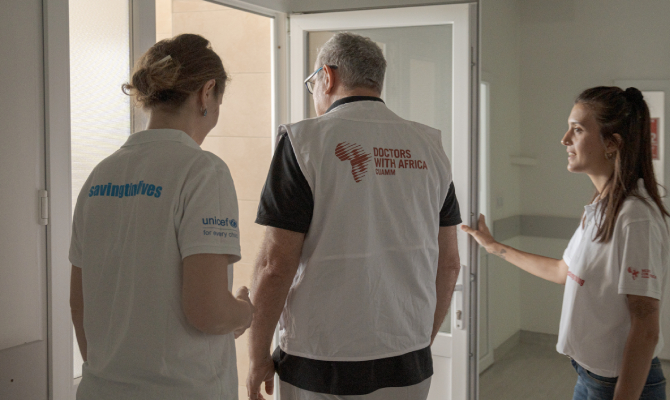
Positive are the results collected at the end of the intervention implemented by CUAMM Doctors with Africa in collaboration with The United Nations Children’s Fund (UNICEF), in Chisinau, Moldova with the twofold objective of providing healthcare to refugees populations and boost emergency preparedness among health workers in Moldova therefore strengthening the national health system.

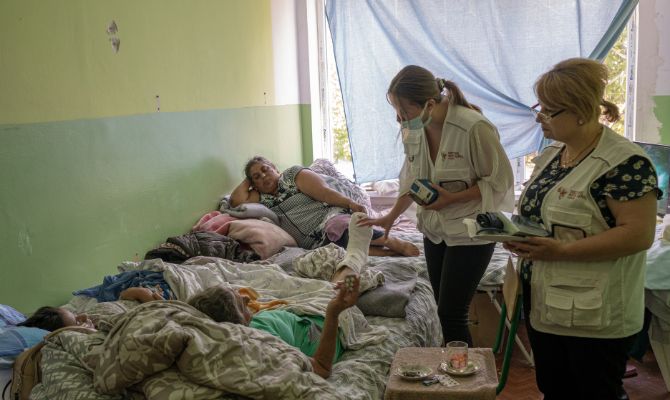
Through the partnership between CUAMM and UNICEF, two health centres in Chisinau have been supported, over 1.000 women and children received medicaments and drugs and more than 1.900 consultations were performed to vulnerable refugee populations fleeing the Ukranian conflict while more than 1.000 people have been reached with informative and awareness raising materials on health and hygiene.

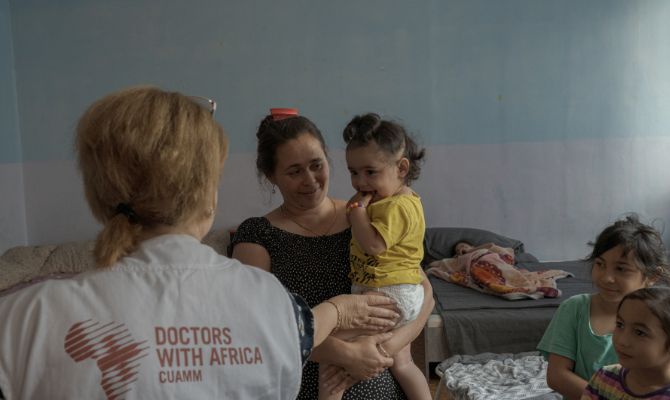
«In the centres we have offered healthcare to a wide range of people of different nationalities, most of them were mothers with children who came here alone, without their husbands, fleeing Odessa because of the war. Among the elderly women we mainly care hypertension and cardiac problems while children suffer from respiratory diseases, stress and trauma. They arrive seeking primary healthcare but also emotional support and that is what we have been able to guaranteed to them» said Irina PavalacheCUAMM doctor.

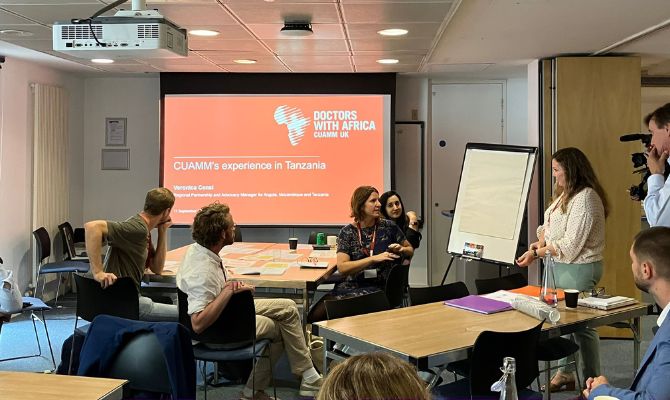
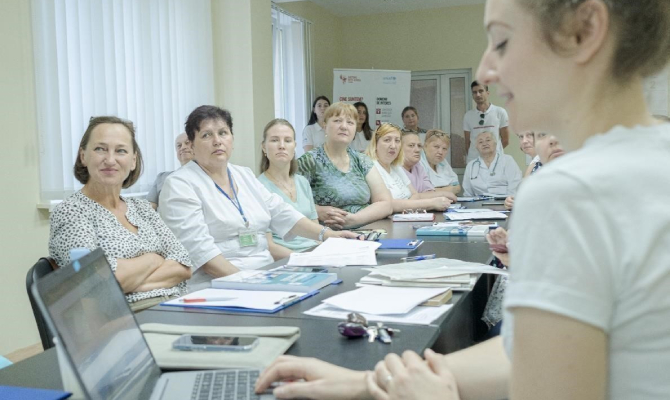
With the aim to offer quality healthcare services in peripheral facilities and strengthen the national system, education was considered a key component of the intervention. Through training activities and provision of quality equipment the intervention aimed to foster the preparedness and efficiency of peripheral facilities. The training program was designed with the ultimate goal of improving medical teams’ emergency response capabilities and fostering knowledge dissemination among colleagues for sustainable impact. A multidisciplinary team of 100 local doctors have been trained in a seven 16-hours training sessions delivered by 4 local trainers from IMAC Hospital of Chisinau and 6 international experts, 2 mentorship sessions were offered to 14 local mentors to ensure the sustainabilty of the activity and 14 local doctors participated in a Train the Trainers (ToT) program. The aim was to develop skills in transmission, leadership, and mentoring for the hospital teams. Additionally, all maternity units of the 7 hospitals were equipped with low-fidelity manikins and neonatal resuscitation equipment.

Since the beginning of the war in Ukraine, Moldova have sheltered the largest number of refugees: 89.000 refugees have been registered in the country. To June, according to data from UNHCR, Moldova hosted 108.889 Ukranian refugees; 51% of them is settled in rural areas and only have access to peripheral health facilities. Boosting the expertise of different health professionals in peripheral facilities was key to ensure adequate response in case of emergency and mitigate the burden on central facilities.

Starting from April 2022, CUAMM has been operating in Chisinau – the capital of Moldova – where the team provided basic medical care to the Ukrainian population through Emergency Medical Teams. The assistance offered aims not only at ensuring continuity of treatment and follow-up to Ukrainian refugees, as well as preventing the deterioration of minor illnesses; but also preventing the already fragile Moldovan health structures from being overwhelmed by the influx of refugees.


A SAFE SPACE AWAY FROM HOME

«We needed assistance after the war broke out. When we arrived in this Accommodation Centre, we received health assistance, medicines, hygiene kits and food supplies» says 33- year-old Oxana, a mother of three. Her story is unique, yet similar to that of many refugees forced to flee their homeland in Ukraine to seek safety in Moldova.

«I am truly grateful to be here. We have been living in fear for so long, hearing the sound of sirens day and night» says Oxana housed at Refugee Accommodation Center on Testemitanu street.

From August 2022, CUAMM has been working in partnership with UNICEF and national authorities to guarantee access to healthcare services to around 1000 people sheltered in 5 Refugee Accommodation Center (RACs) in Chisinau, Moldova. They are mainly children, adolescents and their families. The centers offer to vulnerable groups access to basic health services such as routine immunization, medical checkups for children, distribution of essential medicines and hygiene kits, as well as health promotion activities and community engagement. In particular, more than 250 residents of the RACs, among which around 100 children took part in an immunization campaign against communicable diseases including screening sessions and awareness raising activities. Moreover, the project also allowed around 1500 women and children to access essential medicines.

«This is a safe space, where kids feel good and calm. As a mother, this is the most important thing for me. The health staff is very supportive and we know we can reach out to them any time. At the moment, for example, the youngest of my kids is suffering from pharyngitis, has fever and I see now and then she has difficulties breathing, fortunately in this place she can receive timely and quality care. We are in good hands and I am grateful for that» says Oxana.

Mothers, fathers, family members, and/or caregivers are provided daily with informative materials and counseling on health-related topics, including immunization and nutrition, aiming at sensitizing around 1100 people while children are engaged in child-friendly activities organized within a safe environment.

Since the conflict broke out on 24th February, 2022, over 869.000 people crossed the border seeking refuge in Moldova. 59% of which are women, 46% children and 20% elderly. As reported by UNHCR in the latest release more than 106.000 refugees remained in Moldova. Thanks to the partnership with UNICEF, CUAMM has been working in close collaboration with the Moldovan Ministry of Health to respond to the refugee crisis in the country, with the twofold objective of providing primary healthcare to Ukrainian refugees and offering specialized training on neonatal care to Moldovan health professionals.


TAKE A LOOK AT THE PHOTOGALLERY

20/06 WORLD REFUGEE DAY

According to the latest report published by UNHCR, the UN Refugee Agency, there are 108.4 million refugees worldwide fleeing war, persecution and violence, 27.2 million of whom within the African continent alone.

They are internally displaced persons and refugees forced to leave everything behind to go towards a new horizon of possibilities.
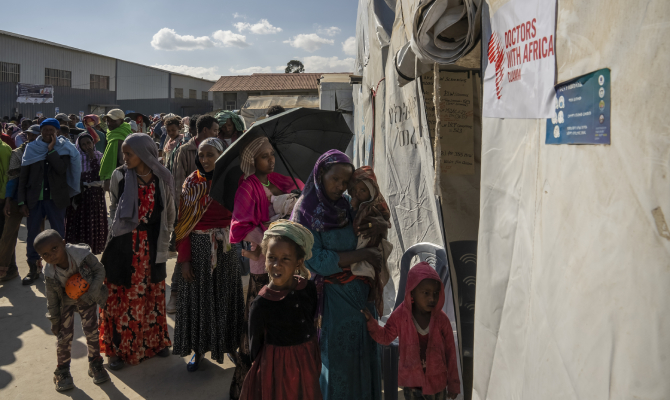
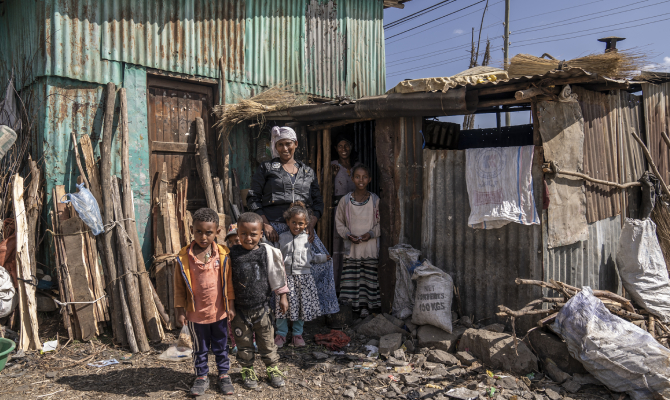
A horizon that can be blue, wide and boundless, like a open sea, the Mediterranean, where according to IOM – UN Migration 26.000 hopes have been dashed forever in the past 10 years. But also the narrow horizon shaped like an overcrowded shed, such as that of China Camp in Debre Berhan, Ethiopia where 200.000 displaced people live in shelters, or that of a moltitude of tents set up in the bush, such as many IDP camps in Cabo Delgado province, Mozambique where the number of internally displaced people is close to one million.

According to UNHCR’s annual report (2022), the number of people forced to flee because of war, persecution, violence and human rights violations saw an unprecedented increase of 19.1 million over the previous year. Complicated by both the war in Ukraine, ongoing conflicts in the rest of the world and climate change, the primary cause of droughts and environmental disasters.

We believe is worth noting that 27.2 million of internally displaced people are within Africa alone, people who moved between African countries or within the same country, what is generally known as internal migration. We see this in South Sudan, a country that counted 2.3 million refugees hosted in neighboring countries, and over 2 million internally displaced persons. Numbers that have changed, since the beginning of the conflict erupted in Sudan, exacerbating the situation in one of the most fragile countries in the world. In fact, according to OCHA (April 2023), South Sudan has taken in 23.000 refugees: among them, Sudanese refugees, refugees from third countries or even South Sudanese who have returned as a result of the conflict. These are emergency situations that strain already unstable systems, weighing on the political, economic and health levels.

Numbers that are expected to grow dramatically due to the effects of climatechange: droughts, famines but also extreme weather events such as cyclones or floods.

In the face of these situations, whether chronic crisis or pure emergency, we renew our commitment to ensure decent living conditions and access to health services for those fleeing war, persecution and violence, everywhere.

FREE HEALTH CARE TO THE LATEST MILE OF CAR

«Fiacre had been suffering drom diharrea and high temperature for days – says Christelle. I had heard from the radio that this health centre was offering children under 5 years of age free care and also acquitances from the villages told me that so I decided to bring him here to see a doctor».

Christelle is 21 years old. She lives with her husdband and two children in Sembre 3 neighborhood, Bossangoa, Central African Republic. She runs a “table” a small business at the market, he is a motorbike driver, this is what gives them support. Yet, selling oil, salt and flour ain’t sufficient to afford healthcare in case of emergency.

According to the Global Burden of Disease 2020 (GBD), the majority of the population of the Central African Republic pays out of pocket (OOP) for health services ($18.39 out of a total of $30, or 61.30%), and OOP payments represent a major economic burden for families in CAR, where mor than 3 million people live in extreme poverty

This is why it is pivotal to support the Ministry of Health and Population (MSP) in implementing national policies and strategies to increase the capacity of the health system to offer quality health services without burdening patients, at least the most vulnerable. One of these strategies is performance-based financing (PBF). The aim of this strategy is to encourage improvements in the efficiency and effectiveness of health systems, while at the same time promoting the autonomous management of health facilities (FOSA).

Thanks to the iniziative funded by the European Union, Doctors with Africa CUAMM is adopting PBF strategy in the districts of Bossangoa, Bangassou and Ouango Gambo therefore offering free care in 41 health facilities (FOSA).

The Integrated Dispensary at Bossangoa Regional University Hospital, where Christelle sought assistance, is one of the facilities supported by the program. On June 16, Fiacre – 1 year and 6 months old was hospitalized due to a malaria. After receiving the diagnosis, the boy was timely treated and a follow-up appointment was scheduled to check on his health status after dismissal hence ensure quality health assistance. Thanks to the PBF, his family had to pay nothing for the service.

The PBF strategy has the potential to catalyse reforms to address certain structural weaknesses in health systems by remunerating providers based on their performance and needs assessed. In this way, health centres have enough resources to guarantee the functioning of the services without charging the patients, especially children under 5 years of age, pregnant womena and vulnerable groups who can now access free healthcare services.

By ensuring that health facilities receive the resources commensurate with their performance, the action aims to: support the provision of the minimum package of activities (PMA) and the complementary package of activities (PCA) defined by the Ministry of Health and Population and relating to sexual and reproductive health, maternal, neonatal, infant and child, adolescent health and nutrition (SRMNIA-N);  bring services closer to the population through the implementation of community health strategies; strengthen the referral and counter-referral system.

ONE MOTHER, FOUR BIRTHS, ONE HEALTH TEAM

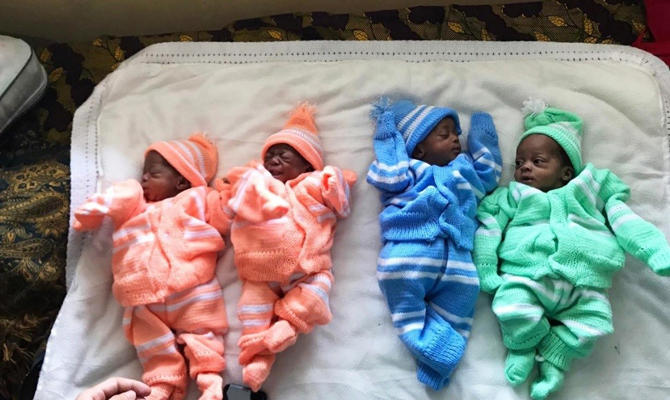
It is a story of success, joy an above all life the one we receive from Tosamaganga hospital, Tanzania. It is the story of a mother, four births and a team of health workers dedicated to ensuring that woman and her newborns a safe delivery.

«Lucy, Luth, Lucas e Luciana were born premature, weighing between 2,2 and 3,3 pounds. Right after the delivery, the four twins were transferred to the neonatal intensive care unit. A 55-days-long adventure begun that Saturday. Low expectations, maximum efforts from all of us. We took care of the twins, we never left them alone, it was a team work in which everyone played their part: doctors, nurses and Pahima, the mother, an extraordinary woman, quiet, confident, caring and above all conscious. Five days after giving birth, Pahima suffered from complications that urged us to operate to avert the worst. Three days after the surgery, Pahima was back on her feet, close to her newborns. This mother’s determination contaminated each of us» tells Luca, CUAMM pediatrician at Tosamaganga hospital.

Mothers and children first. People and skills” is the program designed by Doctors with Africa CUAMM to stand alongside the most vulnerable who are mothers and children. The program was launched in four sub-Saharan African countries with the twofold objective of ensuring mothers and newborns quality health care from early pregnancy to the second year of newborns’ life while also training qualified health workers who are the key drivers in the improvement of health systems.

«The day our patients were discharged, the whole unit was so permeated with joy that we took a picture to save a memory of this little yet great story which is beyond a tale, it is reality. We will keep taking care of them with post-natal visits during their first year of life. As for today, we want anything but celebrate this story».

Doctors with Africa CUAMM is committed to promote the program with the end goal of improving access to quality health care, especially maternal and child services, and ensuring its sustainability and continuity over time in 8 countries and 14 hospitals and surrounding areas.


Discover the program


YOUTH AND RESEARCH: FOR AN HIV-FREE FUTURE

Provide local health authorities with updated information on adolescents and young adults HIV+ in order to strengthen the health system, particularly HIV services. This is the overall objective of the research that the University of Florence is carrying on in partnership with CUAMM in Shinyanga Region, Tanzania, as part of the project “Improving health and well-being of adolescents and young adults HIV+”, financed by the Italian Agency for development cooperation. There are 3 main Care and Treatment Centers (CTCs) involved, namely Bugisi HC, Shinyanga Regional Referral Hospital and Ngokolo HC.

The study will analyse barriers to access to HIV services for adolescents and young adults living with HIV, disaggregated by gender and age group, and explore their psychophysical status. Particular attention will be paid to investigate the impact of COVID-19 on both the access to HIV services and mental health of HIV+ adolescents and young adults.

«Research is essential to guide action and make informed decisions. Adolescents and young adults are at a vulnerable stage of life. As we strive to ensure UNAIDS 95-95-95 goals are met, we are conducting a mixed methods study to investigate barriers to access and utilize HIV services among HIV+ adolescents and young adults in Shinyanga region and to assess their mental health status. In the midst of COVID-19 pandemic, our study also aims to investigate the impact of COVID-19 on their wellbeing and the scars it has left in the public health sector», affirms Constantine Ntanguligwa, CUAMM doctor and principal investigator of the research.

Mixed methods, qualitative and quantitative, will be deployed for data collection. Particularly, a close-ended questionnaire, focus group discussions and in-depth interviews will be conducted. Moreover, data on adherence and access to HIV services from registry of the involved health facilities, will be analyzed to compare the situation before and during the COVID-19 pandemic.

«Working with teenagers, particularly those between 10 and 14 years’ old, requires a lot of care and delicacy. Many of them are not fully aware of what HIV is even if they are in daily treatment. Some of them face stigma at school and within their community for the HIV status. Moreover, mental health challenges are not to be underestimated and should be increasingly considered as key issues to be addressed – claims Chiara Didonè, CUAMM project manager in Shinyanga-. This has to be taken into account when designing interviews and formulating questions. This is why we have selected young doctors to support us in this phase, to put teenagers at ease».

If we want to imagine a future without HIV, we have to definitely start with adolescents and young adults, listening to them and making them feel an active part of this path.

A SPACE TO TAKE CARE OF PEOPLE

From February 2023, all health units in Mozambique will be able to register patient data on chronic non-communicable diseases, particularly diabetes and hypertension, in the SISMA statistical system, developed by the Ministry of Health (MISAU), thanks to the support of Doctors with Africa CUAMM. An important and innovative step for the country, developed as part of the “Prevention and control of non-communicable diseases” project in Maputo and the provinces of Sofala and Zambezia, financed by the Italian Agency for Development Cooperation (AICS) and implemented in partnership with the Community of Sant’Egidio and AIFO. The intervention, recently concluded, has contributed to strengthening the Ministry of Health’s capacity to respond to the increasing incidence of noncommunicable diseases in the country, developing action aimed at improving early diagnosis and treatment.

According to the World Health Organisation (WHO), chronic non-communicable diseases cause 28% of deaths in Mozambique, of which 12% are due to cardiovascular diseases, 3% to cancer and respiratory diseases, 2% to diabetes and 7% to other chronic diseases. 33.1% of the Mozambican population is hypertensive: only 18.4% are aware of their condition and, even among those who are aware, about half do not monitor themselves and do not follow treatment regularly.

«The current digital system already permitted the collection and recording of epidemiological data, e.g. cases of malaria, while for chronic non-communicable diseases the available data were recorded monthly in the paper registers of each health unit and then transmitted first to the district, then to the province, and finally to the Ministry – says Paolo Massaro, who was in charge of the project for CUAMM-. Now in SISMA all screening for diagnosis and follow-up visits of patients are recorded, divided by gender, reporting any associated diseases and complications».

Together with the Ministry, CUAMM organised specific training for IT and statistical experts and focal points for chronic non-communicable diseases in the various provinces. Achieving this result has been a long process, above all constant coordination work with the local authorities and the Ministry’s Planning and Cooperation Department, which made it possible to create the first MISAU technical working group on chronic diseases.

In addition to the digitisation of data, the “cantinhos de rastreio”, spaces within the health units dedicated to screening for chronic non-communicable diseases, were also created. Activists and volunteers, including nurses awaiting employment or already retired, have been trained in chronic disease services. Today they take care of measuring blood pressure with a digital sphygmomanometer and checking the weight and height of all people who come to the health units before they are seen by doctors. «The cantinhos initiative was one of the best strategies adopted by the project – says Artimisia Mainato, nurse in charge of the project in the province of Sofala – because it allowed for a significant increase in screening, easing the workload of the clinical doctors and, as a result, also reducing waiting times for patients». In January 2023, the Ministry of Health approved the introduction and expansion of Cantinhos de Medição de Tensão Arterial on a national scale, as a standard and compulsory countrywide strategy.

The cantinhos are an additional and free service of the health units, which has led to a significant increase in the number of people screened for chronic diseases, which has grown from about 5 to 40-50%. A space to take care of people.

A NEW CLINIC FOR CHRONIC NON-COMMUNICABLE DISEASES

«Help for life and health for all! With this message of hope and commitment, chosen by the health personnel, the PEN-Plus clinic for chronic non-communicable diseases at the government hospital in Pujehun was officially opened in a facility rehabilitated by CUAMM. This is a big step forward, achieved thanks to the PEN-Plus project, in collaboration with the Sierra Leone Ministry of Health and Sanitation, with funds from the Brigham and Women’s Hospital and the NCDI Poverty Network.

Operational since last December, it moved to the new building in February 2023 where, so far, about 170 patients are treated and followed-up, most of them with common chronic diseases, such as hypertension and type 2 diabetes, but also type 1 diabetes mellitus, sickle cell anaemia, asthma, chronic liver disease and epilepsy. The clinic provides medicines and available laboratory tests free of charge for all patients. With the activation of the service in a welcoming environment and the announcement to the entire community, we expect a significant increase in the number of admissions, aimed at bridging the large gap in the current right to care in Pujehun district.

Some results have already been achieved, such as the complex care of insulin-dependent patients with type 1 diabetes in an area where, until a few months ago, there was no insulin and few knew how to use it. Now we have young patients who measure their blood glucose at home with a glucometer, keep a blood glucose diary and are able to self-administer insulin. The aim is to create a place of health for all that will become a reference point for taking care of NCDs (noncommunicable diseases) and related emergencies-urgencies, to develop information campaigns on health determinants (from water to food, to the sewage system) for the population, and to decentralise established services to territorial health units. A long and complex process which, together with my colleagues, I helped to initiate and which I see growing every day amidst unexpected events, difficulties and pleasant surprises!

Witnessing the progress of nurses and clinical health officers in daily medical practice occasionally moves and spurs me on to continue the long process of training to achieve acceptable levels of care. The relationship with patients and their relatives also fills my days, when I am able to dedicate myself to them: they thank you for what you do, always and in any case, and every now and then they give me a pineapple, even if they have nothing. The parallels with the Italian context, where health personnel are more often the object of complaints than gratitude, immediately spring to mind. But the satisfaction, by far the greatest, is the fact that I started the process of setting up a clinic from scratch with all the organisational and bureaucratic problems attached. I have discovered and studied the aspects behind building a place of health and this will be very useful to me professionally.

I had no idea that behind the birth of a project from the very beginning, there were so many elements to be considered, issues to be dealt with: from the choice of the laboratory machine and reagents to the supply of electricity, between solar panels and a generator, from the order of medicines for a quarter to the daily recording of products consumed to ensure stocks. In Italy, working as a doctor in a public hospital, one takes many things for granted, but in truth a thousand processes and professionals are involved in ensuring the functioning of a health facility. Another daily challenge is to intervene on health determinants in a context that lacks resources. Imagine explaining to a diabetic patient in Pujehun that he has to reduce his consumption of the only food available every day, namely rice. He smiles and asks: “Doctor, will you give me some food then? Because, otherwise, I’m starving!”. Therein lies one of our greatest battles».

SEEDS OF FUTURE

«When you go to St. Luke’s hospital in Wolisso, you hear many voices. Visiting the paediatric ward, then, you perceive a “symphony” of crying and laughter. Sitting on the rubber mat, which is never big enough, there are mothers and fathers with their children, playing and chatting. The 2-3-4 year olds are crawling, hiding between their parents’ coats and curiously observing the group around them».

This is how Fede Bagolin, a Universal Civil Servant in Ethiopia, describes entering the Catholic hospital in Wolisso, where there is a space dedicated to early childhood development, next to the paediatrics unit: here babies can play, while adults receive training and support on how to bring their children up in the best possible way.

The children are almost always hospitalised due to acute or severe malnutrition, on referral from local health centres; they receive care from hospital staff and CUAMM, in collaboration with CEFA, thanks to the “Seeds of future” project, supported by the Italian Agency for Development Cooperation (AICS).

Twice a week, Sisay, a nurse, together with Besha, a psychologist, meet mothers and their children for a few hours of play. Yes, because play is also fundamental to growing up! Sisay and Besha observe families, analyse their behaviour, identify relationship gaps and factors that inhibit children from playing freely when mothers are present.

After that, Besha starts interacting with the children, challenging them with new toys and input. Most of the games are made from recycled materials, during sessions held periodically with families, using old bottles, small stones, seeds, caps to increase the time parents spend with their children and to stimulate creativity».

In this way, Sisay and Besha try to generate curiosity, participation, verbal and non-verbal communication, strengthening the bond between adults and children. «This kind of interaction – Sisay emphasises – is very important to invite mothers to improve their approach and to show the great impact of closeness for the cognitive and physical development of children. A pathway to support parents in their care».

The second part of the activity focuses on nutrition, is also led by Sisay and is structured as an educational moment to develop mothers’ knowledge, from breastfeeding to weaning, to the correct diet according to age. «Most of the time, malnutrition is not caused by a shortage of economic resources or food availability, but by a lack of proper care in preparing meals and attention to children’s needs», points out Worku, CUAMM project officer for “Seeds of future” project.

During the training, they are taught how to prepare vegetables, the most common seeds available in the local market, for a balanced diet against malnutrition. After the training by Sisay, the mothers are encouraged to cook at the practice station. Some parents play with their children, others are busy at the cooker and still others receive individual advice from Besha and Sisay.

«Individual consultancy reduces the fear of judgement that some mothers feel when issues are addressed in a group situation, increases understanding and helps provide guidance on how to learn to listen and understand the child’s needs», testimonies Eleni, a paediatrician at CUAMM.

Individual counselling, group sessions on care, play, feeding and sharing knowledge on early child development are activities that not only strengthen the bond between parents and children, but also accelerate the recovery process of malnourished children, encouraging and supporting their physical and cognitive growth.

A DAY IN KANGAROO MOTHER CARE UNIT

«Hands washed, mask and coat: this is what you need to follow Leta, nurse in the Neonatal Intensive Care Unit (NICU) and Silvano, an Italian Junior Project Officer specialized in Paediatrics, for visiting the babies. When entering in the kangaroo mother care unit (KMCU), the space dedicated to skin-to-skin contact between mother and baby, the light is soft and the operators is moving slowly, whispering.

I notice some women, but mostly babies. At the Catholic St. Luke’s Hospital in Wolisso, twin births are also common. The “kangaroo-therapy” unit takes in low-birth-weight and preterm newborns, who do not need to be admitted in the Neonatal Intensive Care Unit, because their general condition is not severe, but can be assisted and supported during the first 1,000 days of life.

Often, mothers suffer from a lack of family support, which has an impact on their health and the condition of their children; in KMCU, young women are supported by the health staff to understand the importance of strengthening care for newborns through education activities and medical follow-ups.

Leta and Silvano conduct the routine visits, monitoring the health conditions of the newborns, usually affected by jaundice, malnutrition, respiratory viruses and infections like bronchiolitis, meningitis and encephalitis.

Despite the language barrier, the health personnel try to establish a channel to communicate functionally and continuously with the mothers, in order to monitor and follow-up frequently with them. Due to the scarcity of some medical equipment, active dialogue is essential to understand the children’s status, reactions during the night and symptoms, to better utilize the resources and request laboratory examination only when needed.

Training sessions are delivered in the KMCU twice a week. Jiksa, a nurse in the Neonatal Intensive Care Unit, explains that kangaroo mother care is a powerful and easy method to adopt, from the earliest stages of life, for a prolonged period of time, through carrying and breastfeeding. This good practice helps to reduce mortality and morbidity in the infant’s first 1000 days, improves breastfeeding technique for healthy infant growth and adult well-being, and strengthens the bond between parent and child.

Thanks to KMC, babies can be discharged prematurely, because care is initiated and internalised in the hospital in an environment where parents learn together in a cooperative way how to improve the health of the babies and how to acquire confidence.

Jiksa, with the support of some graphical materials, explains the KMC method, in particular how to position the baby between and during feedings, how to properly feed a low-weight or preterm infant, how to supplement breastfeeding with additional nutrients, how to control appetite, breathing and body temperature.

The mothers are listening with attention, some previously attended other educational activities, but some are newly admitted. When Jiksa involves them in the discussion, the first honest question is: “Why are we doing this?”. Using many examples, Jiksa answers how both mother and child benefit from this habit. Heart and respiratory rates, oxygenation and blood glucose, as well as sleep patterns, behaviours observed and cognitive development improve significantly. Furthermore, the parent develops a sense of empowerment that is vital when there is no support system to grow the baby, to handle the feeding and the foster the bonding relationship between parent and child.

Postnatal care is essential to reduce mortality and morbidity, and KMC is instrumental to improve the health of mothers and children in environments where the resources are limited.