Women supporting other women every day

On March 8 the world celebrates International Women’s Day, an occasion dedicated to recognizing women’s social, economic, and political achievements, as well as a time to reflect on the ongoing challenges related to gender equality and rights. On this occasion, we want to celebrate the incredible women we work with across sub-Saharan Africa and honor their unwavering commitment to supporting and serving women in need.

Meet a few of the inspiring women we’re spotlighting on International Women’s Day.

Magdalen Awor CUAMM Midwife and tutor at Rumbek Health Science Institute, South Sudan
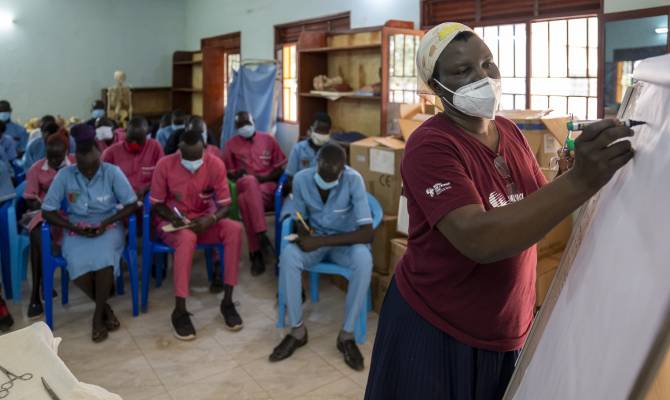
Born in Uganda, Magdalen became a midwife in 2008. She has been living in South Sudan for more than 10 years where she serves as midwife and tutor at Rumbek Health Institute.

South Sudan is not only one of the leading country in terms of maternal mortality but also one with the lowest literacy rate among girls. Magdalen is a highly motivated and passionate professionist who spends her life and competencies where it is needed most. Deeply committed to her work, she in on the frontline of maternal and newborn care.

«When I enter the class, when I support these girls in their clinical practice, I see a future for this country. By educating and training girls we empower them while also contributing to assist women in the delicate and way too often life-threatening moment of delivery».

The Rumbek Health Science Institute in Lake State trains both midwives and nurses for a total of some 320 students enrolled in the first year. CUAMM supports the institute since 2020, some xxx students have graduated at the insitute ever since.


Loide Cambisano – CUAMM Project Manager in Shinyanga, Tanzania
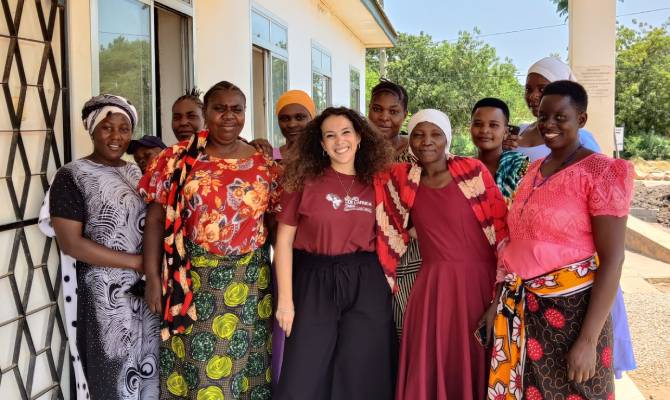
Born and raised in Italy, in 2023 Loide started working with CUAMM in Iringa region, Tanzania. Today she leads a project focused on HIV, youth and adolescents in Shinyanga District.

«Stigma, prejudice and discrimination related to HIV do have a huge impact on the life of young people and adolescents resulting in behaviors such as withholding help, avoidance and coercive treatment. Women and young girls living with HIV are no doubt those most likely to experience HIV-related stigma».

The rate of child-marriage, early pregnancy and gbv cases in Shinyanga District is above the national average. Consensus, sexual and reproductive health and rights, gender-based violence and stigma are the topics often discussed in sensitization sessions promoted by CUAMM and held both within communities and schools. In addition, screening activities and psyco-social support is being provided to young people living with HIV in Shinyanga district.


Germana Tuitileni CUAMM Assistant at Casa de espera in Chiulo, Angola
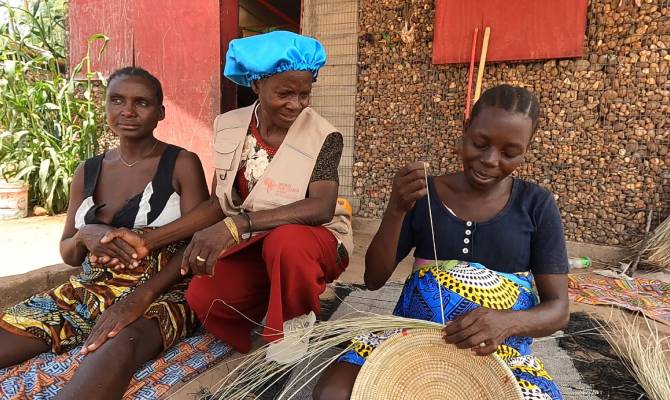
Germana Tuitileni is a pillar at casa de espera, the maternal waiting home at Chiulo Hospital, Angola. Everyone knows her.

She has been working here since the opening of this space, back in 2012. Although she is not a professional midwife, she supports and assists women in the days that preceed the delivery engaging them in sensitization acitivities on sexual and reproductive health, nutrition and most importantly on the importance of seeking care during pregnancy and delivery.

«Every day I am here to support these women. I talk to them about the importance of being at casa de espera and give birth safely because I know that they will spread the word to other community members and more women will do the same».

The Maternal Waiting home (MWH)casa de espera in portuguese, is a low-cost yet effective introduction to care for pregnant women in the late stages of their pregnancy therefore ensure assisted and safe delivery. Pregnant women with at-risk pregnancy come to this safe space when their due date is approaching. Here, they can be monitored by health professionals and easily access the hospital in case of emergency.

In 2023 more than 2,000 deliveries were assisted at Chiulo Hospital including 167 C-section. The work Germana does for pregnant women in Angola is key to promote their well-being and reduce pregnancy-related complications. By educating these women, Germana is empowering their whole communities while also contributing to reducing the maternal mortality rate which is 222 out of 1000,000 deliveries in Angola.
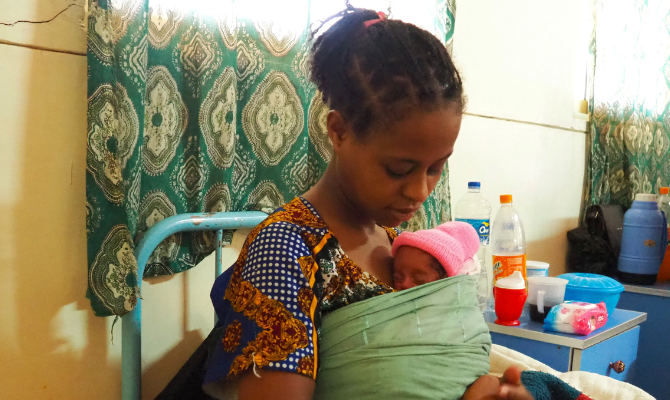
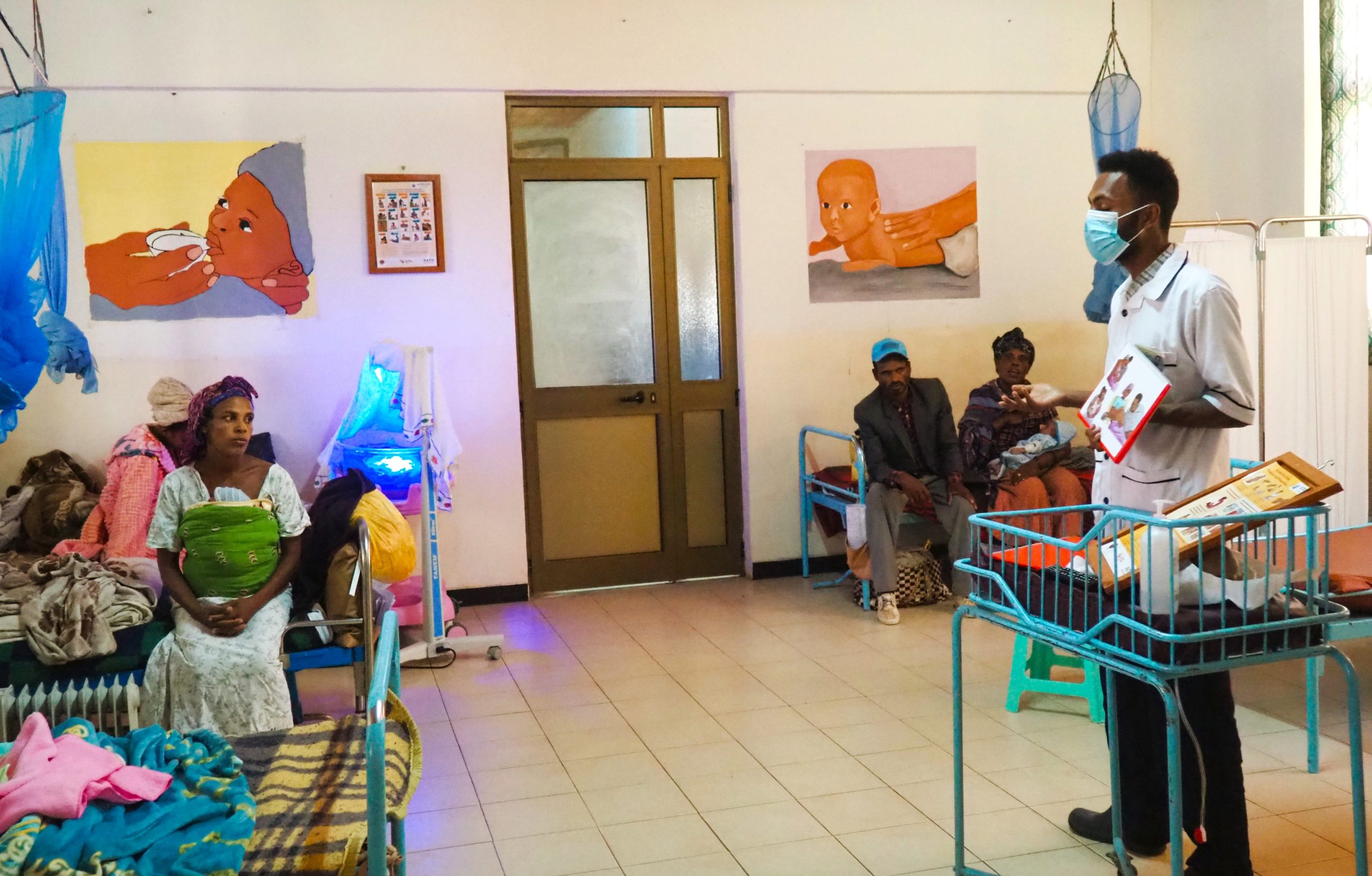
A DAY IN KANGAROO MOTHER CARE UNIT

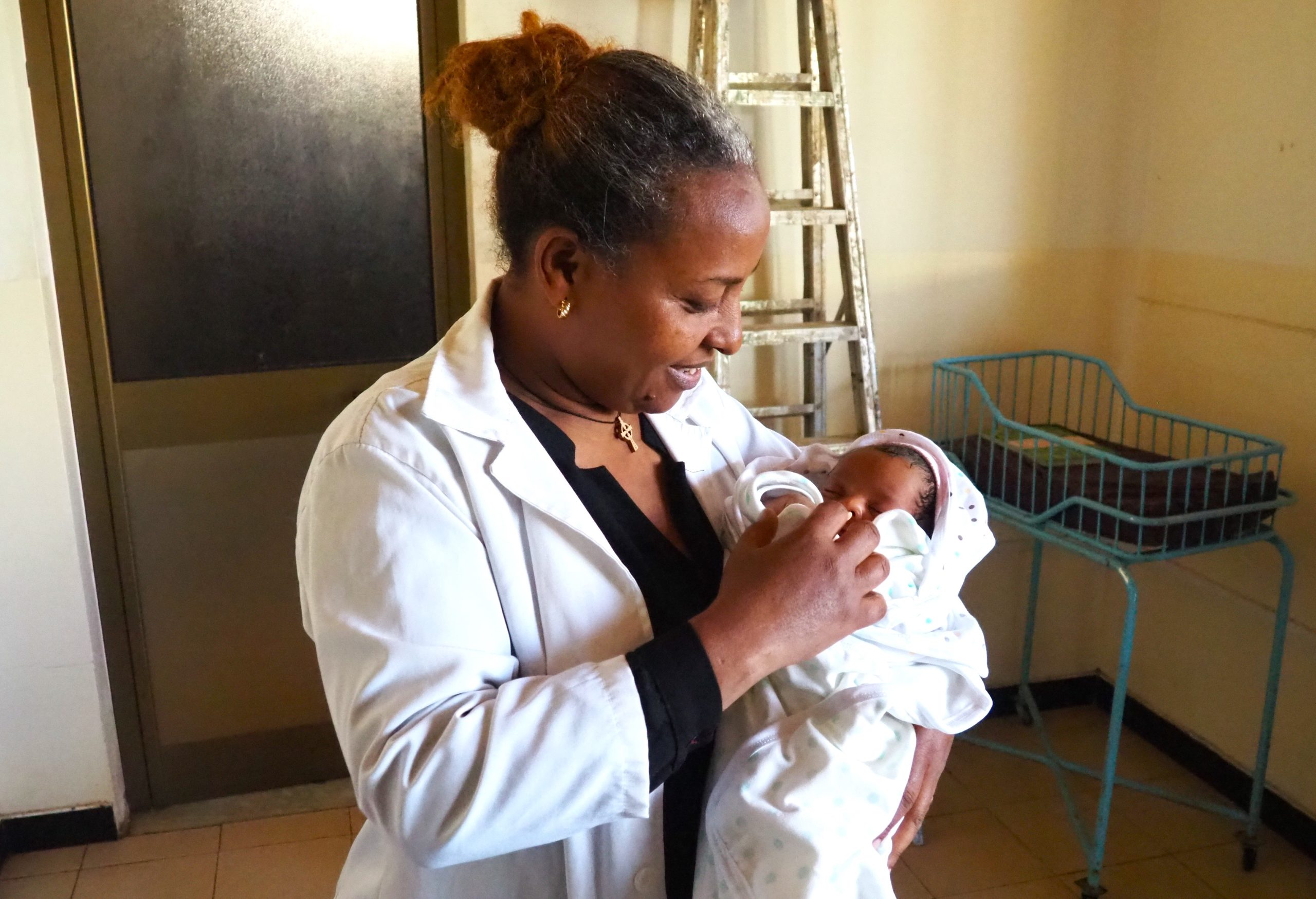
«Hands washed, mask and coat: this is what you need to follow Leta, nurse in the Neonatal Intensive Care Unit (NICU) and Silvano, an Italian Junior Project Officer specialized in Paediatrics, for visiting the babies. When entering in the kangaroo mother care unit (KMCU), the space dedicated to skin-to-skin contact between mother and baby, the light is soft and the operators is moving slowly, whispering.

I notice some women, but mostly babies. At the Catholic St. Luke’s Hospital in Wolisso, twin births are also common. The “kangaroo-therapy” unit takes in low-birth-weight and preterm newborns, who do not need to be admitted in the Neonatal Intensive Care Unit, because their general condition is not severe, but can be assisted and supported during the first 1,000 days of life.

Often, mothers suffer from a lack of family support, which has an impact on their health and the condition of their children; in KMCU, young women are supported by the health staff to understand the importance of strengthening care for newborns through education activities and medical follow-ups.

Leta and Silvano conduct the routine visits, monitoring the health conditions of the newborns, usually affected by jaundice, malnutrition, respiratory viruses and infections like bronchiolitis, meningitis and encephalitis.

Despite the language barrier, the health personnel try to establish a channel to communicate functionally and continuously with the mothers, in order to monitor and follow-up frequently with them. Due to the scarcity of some medical equipment, active dialogue is essential to understand the children’s status, reactions during the night and symptoms, to better utilize the resources and request laboratory examination only when needed.

Training sessions are delivered in the KMCU twice a week. Jiksa, a nurse in the Neonatal Intensive Care Unit, explains that kangaroo mother care is a powerful and easy method to adopt, from the earliest stages of life, for a prolonged period of time, through carrying and breastfeeding. This good practice helps to reduce mortality and morbidity in the infant’s first 1000 days, improves breastfeeding technique for healthy infant growth and adult well-being, and strengthens the bond between parent and child.

Thanks to KMC, babies can be discharged prematurely, because care is initiated and internalised in the hospital in an environment where parents learn together in a cooperative way how to improve the health of the babies and how to acquire confidence.

Jiksa, with the support of some graphical materials, explains the KMC method, in particular how to position the baby between and during feedings, how to properly feed a low-weight or preterm infant, how to supplement breastfeeding with additional nutrients, how to control appetite, breathing and body temperature.

The mothers are listening with attention, some previously attended other educational activities, but some are newly admitted. When Jiksa involves them in the discussion, the first honest question is: “Why are we doing this?”. Using many examples, Jiksa answers how both mother and child benefit from this habit. Heart and respiratory rates, oxygenation and blood glucose, as well as sleep patterns, behaviours observed and cognitive development improve significantly. Furthermore, the parent develops a sense of empowerment that is vital when there is no support system to grow the baby, to handle the feeding and the foster the bonding relationship between parent and child.

Postnatal care is essential to reduce mortality and morbidity, and KMC is instrumental to improve the health of mothers and children in environments where the resources are limited.

SHEDDING LIGHT ON NEGLECTED TROPICAL DISEASES

30 January marks World Neglected Tropical Diseases Day, a group of infectious and parasitic diseases that mainly affect developing countries. More than a billion people in the world are affected, more than half live on the African continent. CUAMM and AMREF are turning the spotlight on this issue, focusing on Nodding syndrome, on which they work together in South Sudan.

The two organisations also make up the Nodding syndrome alliance (NSA), an alliance established with the aim of responding to the needs of people with epilepsy through integrated, multi-sectoral action to strengthen the resilience of patients and that of their communities.

«In a landscape where donors are increasingly reluctant to provide long-term funding – says Chiara Scanagatta, CUAMM’s head of projects in South Sudan – and cooperation between partners is more complex, the NSA is a really positive experience, because it allows us to unite our voices into a stronger one to do advocacy and promote more appropriate policies with local authorities and stakeholders».

Being chronic or long-term diseases, there is a need for continuity in treatment and care, which cannot only be clinical, but integrated with social and economic rehabilitation. From the need for constant resources to the involvement of families to whom dedicated support is guaranteed.

«From April 2020 to December 2022 – Chiara continues – 920 patients are regularly followed at the primary health care centre in Mundri and 300 at Lui. A challenging job, but one that we are determined to carry on, together and with dedication».

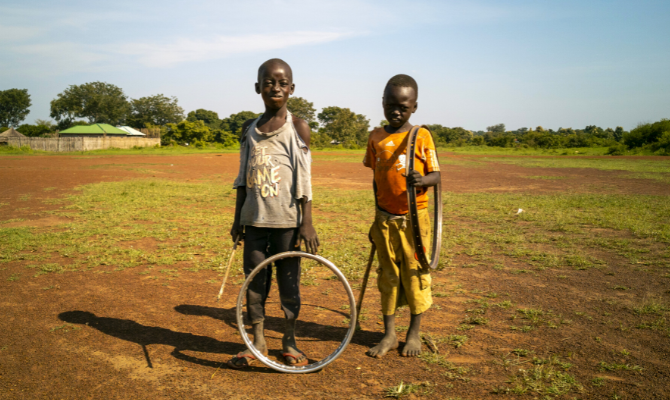
South Sudan, protagonist of one of the worst humanitarian crises of all time, is one of the countries most affected by neglected tropical diseases. Most of the population lives in extreme poverty with limited access to basic health services. The conditions of insecurity and political instability that accompanied the civil war have further compromised the country’s ability to cope with NTDs.

These include NS, a degenerative epileptic syndrome, endemic in South Sudan. It mainly affects children between 5 and 15 years of age and is characterised by episodes of sudden and repeated head jerks (hence the name “nodding syndrome”), with devastating effects on physical and neurological development.

Why they are called neglected diseases

They are called neglected diseases because they do not receive the necessary attention and funding for their prevention and treatment.  These diseases can cause irreversible damage to people’s health and productivity and contribute to endemic poverty in affected countries.  There are twenty NTDs currently recognised by the World Health Organisation, among them dengue, leishmaniasis, rabies and onchocerciasis, known as “river blindness”, associated with the development of Nodding syndrome.

Nurses: close to the patients the backbone of health systems

What would a hospital do while struggling with daily emergencies and the extraordinary one of Covid-19, without nurses? Very little. For this all over the world, nurses have been a symbol of dedication and care and the true backbone of health systems. In Africa, where healthcare is even more brittle and medical staff is often lacking, the role of the nurses is even more crucial.

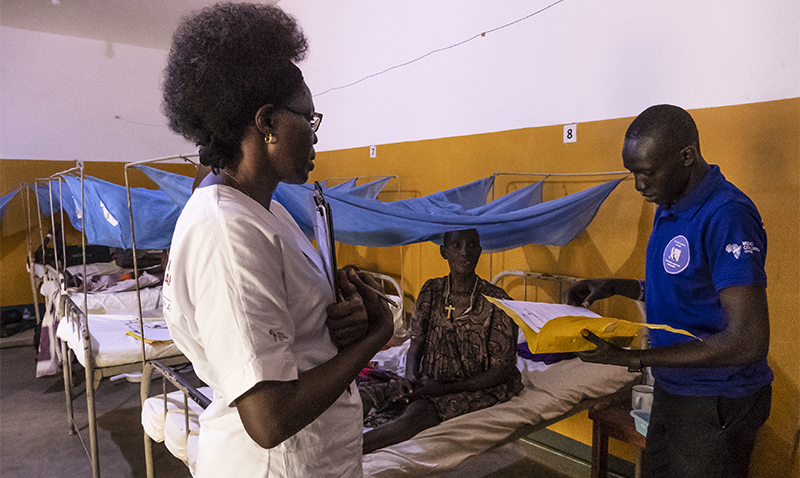
Matilde Adelghi works now as a nurse at the Lui hospital in South Sudan, after her experience on the front line in Lombardy during the first wave Covid-19 of march 2020:” Being on the frontline of Covid has certainly helped me a lot, both for the managing and logistic point of view. My experience was useful for the organization of the isolation tent for suspected cases of Covid-19 and we have also developed a very dense training course of three days, which was particularly appreciated by nurses, where we dealt with the themes of dressing and undressing and the correct use of personal protective equipment (PPE). The experience in Italy allowed me to transmit not only theoretical knowledge but also what I’ve learned in practice”.

Doctors with Africa CUAMM in South Sudan is also involved in staff training, supporting the Nursing and Midwifery School of Lui, a training that does not only mean investing in technical and specialist knowledge, but also convey motivation to students and nurses, working on their professional identity so that they feel proud of playing an important role within the health system.

“I believe it is essential to train nurses so they can be aware of their role – tells Matilde -. The most important aspect remains dialogue and exchange to tackle critical issues together, trying to encourage people to think about the solution to problems. The nurse has a privileged view on care – continues Matilde – because works alongside the patient and is exposed to all their needs that often go far beyond just health. If the nursing is of high quality, it can really make a difference”.

Today, on World Nurses Day, it is more important than ever to recognize the essential role that this professional figure plays in patient care and assistance in Italy as well as in Africa.