As outbreaks become more frequent, complex and interconnected, one lesson has become increasingly clear: effective emergency response depends not only on medical expertise, supplies and technical capacity, but also on trust, dialogue and the active participation of communities in protecting their own health.
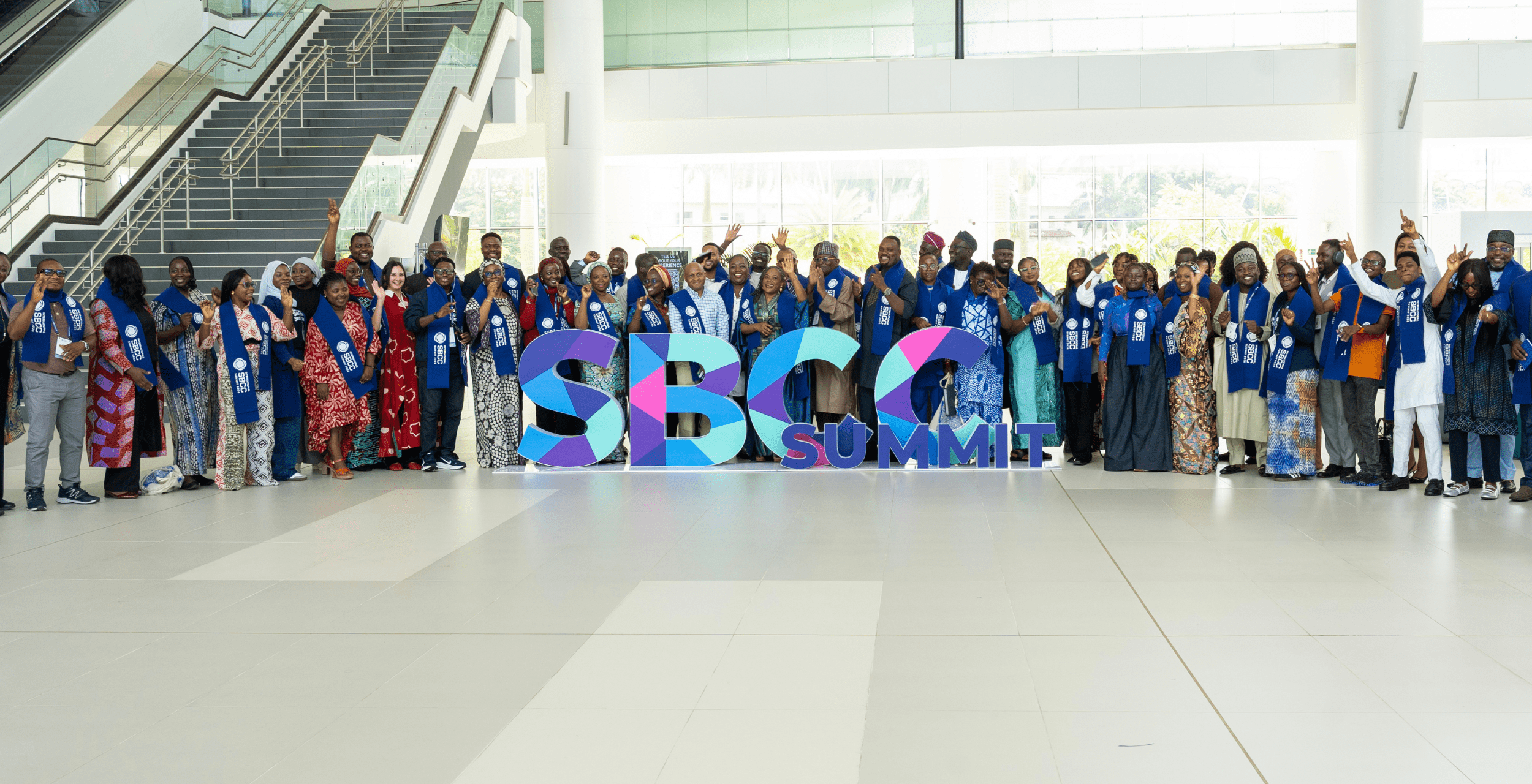
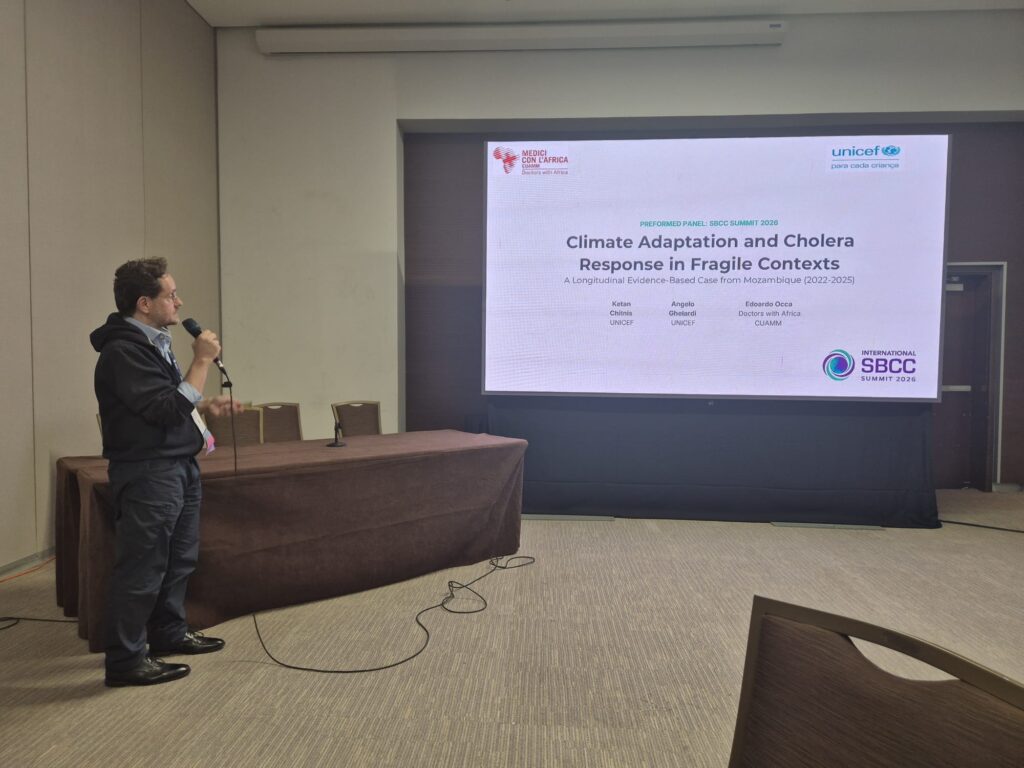
This was the perspective we brought to the Social and Behaviour Change Communication SBCC Summit 2026 in Panama, one of the world’s leading global gatherings on SBCC. Together with experts and practitioners from around the world, we contributed to the discussion on how social and behavioural approaches can strengthen preparedness for and response to health emergencies.
“It is not rhetoric, and it may sound obvious, but taking social and behavioural determinants into account is an essential prerequisite for designing effective and cost-efficient health interventions, particularly in emergencies and low-resource settings,” said Edoardo Occa, CUAMM Community Health Expert.
The Summit took place at a critical moment for global health. From cholera outbreaks intensified by climate-related shocks to emerging infectious diseases, emergency responses face a common challenge: ensuring that people understand, trust and adopt recommended prevention and control measures.
While investments in outbreak response often prioritize logistics, surveillance systems and clinical care, a growing body of evidence shows that interventions are more effective when communities are actively involved in their design and implementation. Social and Behaviour Change approaches help health actors understand local perceptions, identify barriers to protective behaviours and establish meaningful dialogue with the people most affected by crises.
“Community engagement is often treated as a secondary component of emergency response, but our research shows the opposite. This is how we build trust, foster dialogue and create participation and ownership. It is through this process that we improve adherence to public health measures and make interventions more effective,” added Occa.
The Summit opened with a call for a change in mindset from Panama’s Minister of Health, Dr. Fernando Boyd Galindo. As health emergencies become the “new normal”, he argued, preparedness can no longer rely solely on clinical and logistical capacities. Social and Behaviour Change must be recognized as a core pillar of resilient health systems, improving the acceptability, effectiveness and cost-efficiency of emergency interventions while informing programme design and resource allocation.
The Summit also represented an important advocacy opportunity for CUAMM, bringing field-based experience into a global conversation on health emergency preparedness and response.
“For CUAMM, participating in the SBCC Summit meant bringing to an international audience the lessons we have learned by working alongside communities every day,” said Andrea Atzori, CUAMM Head of International Relations. “Our experience consistently shows that investing in community-based interventions is essential not only to prevent the spread of infectious diseases, but also to strengthen people’s capacity—especially the most vulnerable—to access health services. International platforms like this are crucial for ensuring that these field experiences help shape national and global policies.”
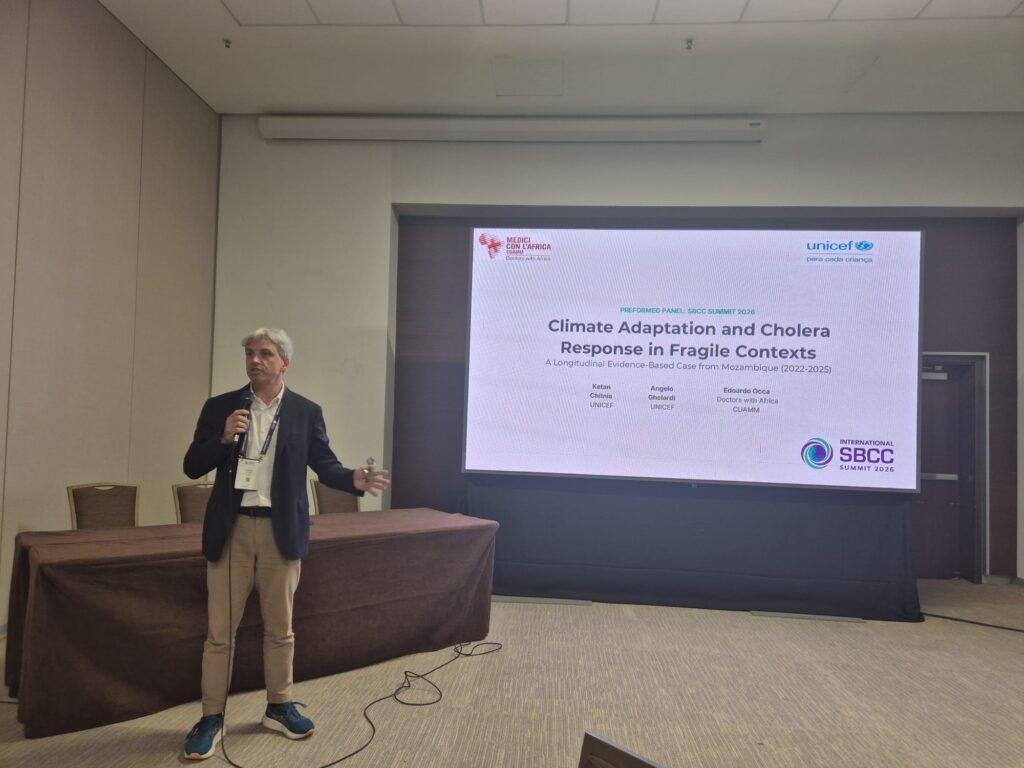
This message strongly echoed the evidence we presented from operational research conducted with UNICEF in Angola and Mozambique. Recent studies carried out in Cabo Delgado, Mozambique, showed that social and behavioural approaches significantly improved community preparedness for climate-sensitive infectious diseases and increased the adoption of preventive behaviours in emergency settings. The research also identified the social and environmental factors associated with cholera and acute watery diarrhoea among climate-vulnerable populations, providing evidence to better target public health interventions. Complementary findings from Angola further highlighted the acceptability and effectiveness of community-based targeted interventions during the cholera outbreak in Luanda. Together, these studies reinforce a growing body of evidence demonstrating that community engagement is not an add-on to emergency response, but a fundamental component of effective, resilient and sustainable public health action.
While these conclusions resonated strongly throughout the Summit in Panama, for us at CUAMM they are not new. They reflect years of working alongside communities in Angola, Mozambique and other countries where we operate, where community engagement is an integral part of everyday public health practice rather than an abstract concept. The evidence presented at the Summit builds on this field experience, showing how operational research and community-based interventions can generate knowledge that informs global policy. By bringing lessons learned from local contexts to international discussions, community voices can help shape more effective, equitable and resilient responses to future health emergencies.