RESEARCH FOR QUALITY HEALTH COOPERATION

Doctors with Africa CUAMM invites you all to “Research for quality health cooperation: an African perspective on lessons and results” which will be held at Palazzo Bo, Main Hall, Via VIII Febbraio n. 2, on Saturday, June 8,2024 from 9:30 to 1:00 pm.
Discussions on health-related issues and health system management will drive the debate during the event meant to bring attention to the pivotal role of scientific research in health cooperation in Africa before rising emergencies.

Research does have the potential to provide a better understanding of contexts therefore drive successful and respectful implementation in collaboration with local institutions and communities. Such approach is key to assess both accessibility and quality of health services, identify social determinants, evaluate technological advances and social innovations through community-driven engagement.

To outline paths and future perspectives for research in Africa, we will engage in dialogue with representatives from International and African research institutions, giving voice to field experiences, youth, the Italian academia, and private foundations.

DOWNLOAD THE AGENDA

SIGN UP TO THE EVENT

MEASLES OUTBREAK IN MOLDOVA

On March 18 the Department of Medical and Social Assistance in the capital, Volodymyr Bolocan announced an outbreak of measles in Testemitanu 6 Refugees Accomodation Centre (RAC). The Agency for Public Health has timely adopted response measures to limit the infection by calling a 21 days of quarantine. At the same time, the Chisinau Hospital “AMT Centru Policinica nr.1 Chisinau” and CUAMM UK decided to respond to the epidemic by implementing health promotion activities, which therefore enable access to immunization within the centre.

The first confirmed cases were registered among children and adults aged 2 to 41 y.o. As of April 4th, 16 cases were confirmed and a outbreak of hepatitis was also detected within the centre. Starting from April 2nd, a nurse from the Center Territorial Medical Association and the National Agency for Public Health task force have been collaborating with three CUAMM UK national doctors to assist all the people accomodated in Testemitanu where immunizations are being somministarted from Monday to Friday.

Measles has a devastating effect on children’s health, with sometimes fatal consequences. It causes long-lasting weakening of children’s immune systems, making them more vulnerable to other infectious diseases including pneumonia, ear infection, permanent deafness, encephalitis.

Since the beginning of the war, with the support from the Italian Agency for Cooperation and Development – AICS, CUAMM UK has been working in Testemitanu 6 to guarantee basic health care to around 150 refugees sheltered at the centre. Among the services provided: paediatric screening, specialised referrals, distribution of essential medicines and hygiene kits, as well as health promotion activities and community engagement. Over the past 2 years Moldova have sheltered the largest number of refugees: as of now, 109,000 Ukranian refugees have been registered in the country. The assistance offered by CUAMM UK aims not only at ensuring continuity of treatment and follow-up to Ukrainian refugees, as well as preventing the deterioration of minor illnesses; but also preventing the already fragile Moldovan health structures from being overwhelmed by the influx of refugees.

Mozambican Women’s Day

The Mozambican Women’s Day is celebrated throughout Mozambique, on April 7th. The day is a way to commemorate the death of Josina Machel (1945-1971), a national heroine and wife of Samora Machel (1933-1986), she was one of the many Mozambican women who fought for the Country independence, thus becoming an example and inspiration for the Mozambican women’s movement. The occasion is a time for us to reflect on and honor Mozambican women for their courage and determination in participating in the construction of a more equal and fair society, inspiring positive change and promoting women’s empowerment.

«Josina Machel was a warrior woman who created various feminist movements to put women at the center of attention, explains Francelina Cebola Manuel – CUAMM nurse in Tete province. Celebrating this day symbolizes the historical struggle of women to have their conditions equated with men».

Today, despite the progress made, the movement for the empowerment of Mozambican women cannot stop. Indeed, although general trends show significant progress in the pursuit of gender equality, they do not reflect the experience of millions of people who continue to be left behind: specifically women in rural areas, as well as those who are in conditions of strong vulnerability due to the consequences of conflict and/or climate disasters.

«The Mozambican woman is a fighter, says Isefa Sufo – CUAMM paralegal in Cabo Delgado province. She wakes up every day and seeks a better life for herself and her family, and after all the struggle in the past, having served as inspiration for women, they have fought for their rights, specifically speaking of the right to equality in terms of job opportunities». Isefa knows many fighters. As a CUAMM paralegal in Pemba, Cabo Delgado, she encounters and supports women victims of gender-based violence to whom she provides legal consultations. «Today there is a prominent place for women but there are still situations that challenge women daily and culminate in rights violations. There is still a huge amount of work to be done» declared Isefa.

CUAMM works in Cabo Delgado province with a specific intervention dedicated to supporting refugees and internally displaced women. A team of psychologists, paralegal and community health workers operates in 2 districts, namely Montepuez and Pemba where they manage gbv cases therefore provide psychological and legal support to the victims and survivors of gbv and engage the community in awareness raising activities.

On occasion of April 7th, CUAMM team in the southern province of Cabo Delgado invited both the community and the local health authorities to the celebrations organized in collaboration with its partner UNHCR and Helpcode. During the morning, community health workers performed two theatre plays on the theme of gender based physical violence and economic violence to sensitize the public on the theme and later engage them in a open discussion with the support of the team. At the end of the day, an artesanal and cooking fair was also set and the commemoration ended with traditional dancing.

«Today was an important day for us, during which we staged through theater what unfortunately still happens, but fortunately, thanks also to the activities of our project, we are able to confront and contain. Every day, CUAMM activists raise awareness in the community about issues related to gender-based violence and mental health, two fundamental pillars of our activities, while the technical team handles the daily management of individual cases requiring support and accompaniment. We carry out psychosocial activities in our protection homes every day, and for the community, we are a reference point: a safe place, for help, reflection, awareness, and teaching, but also for fun and joyful participation, as it was today». Said Laura Bretti –  CUAMM Project Manager in Pemba.


Celebrar este dia significa simbolizar a luta histórica da mulher para ter as suas condições equiparadas aos homens. No país todo, hà cerimónia de várias maneirasː as mulheres têm um veste igual de capulanas, lenços, chapéus, camisetes, com desenhos ou fotografia de Josina Machel. Organizam vários tipos de culturas, danças, cantos, teatro e vai-se ao desfile na praça dos heróis celebrando a cerimónia com presença de toda liderança da província ou distrito.

Francelina Cebola Manuel – CUAMM nurse in Tete


Women celebrate Women’s Day with smiles on their faces: they dress in capulana, each more beautiful than the other, and wear vibrant colors. It’s a day of joy and celebration, it is an opportunity to honor women for their effort and dedication, for their achievements, and for their virtues.

Lorraine Mataure – CUAMM doctor in Quelimane


On April 7th, we celebrate the strength, courage, and battle of a woman who spared no effort and showed us that as women, we are capable of accomplishing tasks that are socially designated for men.

Elisa Fernando Tembe – CUAMM GBV supervisor in Cabo Delgado.


The adjective that better describes Mozambican women is “hardworking,” as they wake up every day and strive for a better life for themselves and their families. After all the struggles in the past, having served as inspiration for women, they have fought for their rights, specifically speaking of the right to equality in terms of job opportunities. There has been a prominent place for women in recent times thanks to all this struggle, but there are still situations that challenge women daily and culminate in rights violations. There is still a huge amount of work to be done because we have managed to win the battle, but not the war. However, together we are stronger.

Isefa Sufo – CUAMM paralegal in the province of Cabo Delgado.


April the 7th is a national holiday, despite being a sad day due to the loss of the great warrior Josina Machel, it is important to celebrate it to honor her and show the community how important she was and continues to be for the whole Mozambican society.

Estrela Omar – Assistente de escritório em Pemba, Cabo Delgado


Mozambican Women’s Day for me means strength, wisdom, love, and solidarity among Mozambican women, in which we support each other. “It is very important for me and I believe for other Mozambican women to celebrate Mozambican Women’s Day because on this day, we not only celebrate the achievements made so far, but we also honor and remember our heroine Josina Machel and all other women who fought for a better Mozambique and equal rights for all. I am aware that the fight is ongoing and we still have a long way to go until all Mozambican children, women, and all other women around the world enjoy the same rights as men.”

Vilma Helena Caetano Joaquim – CUAMM Admin in Beira, Sofala


April 7th symbolizes the strength that women have to fight their battles in society. It represents the empowerment of women.

Isabel Silvestre – CUAMM Log in Pemba, Cabo Delgado


VOICES FOR HOPE AWARD

Voices for Hope award is dedicated to empowering women refugees and women working with NGOs by amplifying their voices and promoting innovative solutions to their challenges. It aims to celebrate and acknowledge the strength, determination, and innovation of women refugees and their advocates, fostering a culture of empowerment, empathy, and understanding. Aligned with COP28’s theme of “Climate Action for a Resilient Future” this award highlights the relationship between climate change, refugee empowerment, and sustainability. Doctors with Africa CUAMM is glad to partner with UNHCR, UniRef, DIHAD and The Amahoro Coalition to promote the award, which is part of the Sheikha Fatima Fund for Women Refugee Support and Empowerment Initiative (SFFWR).

The initiative comprises three main awards:

Category A: Women Refugees

Category B: Women Working with NGOs

Category C: Empowering Through Innovation

Award Objectives:

  • Providing a platform for expression and advocacy for women affected by climate change.
  • Celebrating the roles of women refugees and NGO workers in climate action and humanitarian responses.
  • Encouraging the sharing of experiences to build a supportive community.

The winner of each category will be awarded with both cash prizes, scholarships, and possibilities for mentorship.

All submissions should be made to media@thecoalitionafrica.com.

Deadline for submission: May 4th, 2024.

Download the full program

Training of trainers

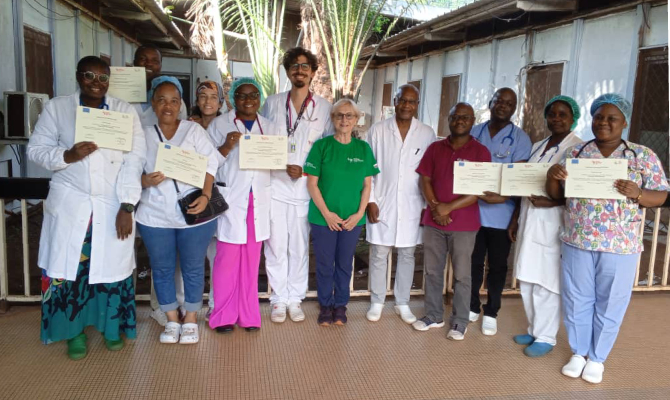
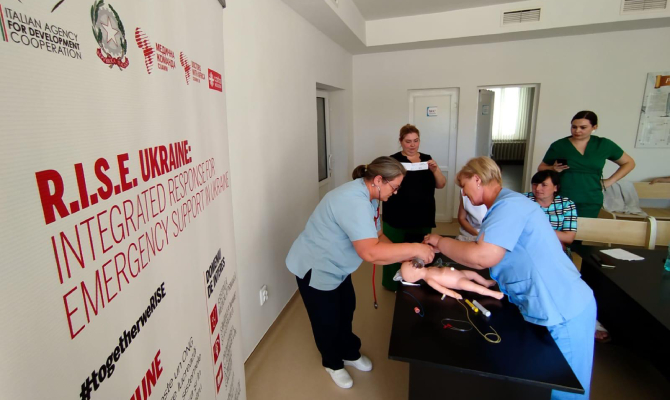
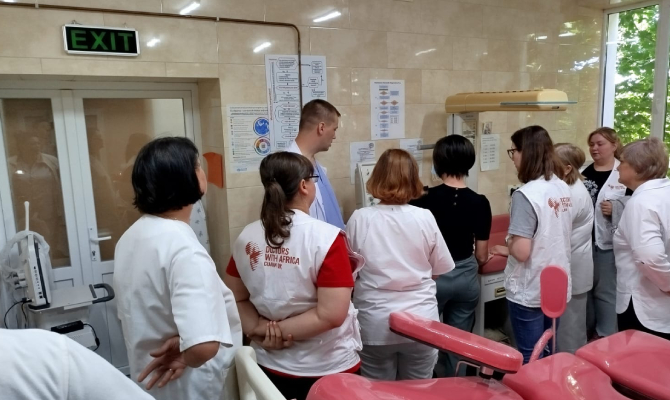
In Chişinau, Moldova, Doctors with Africa CUAMM UK organized a 5-days training to strengthen capacities in neonatal emergencies and stabilization hence create a task force of skilled instructors. The training acitivity implemented by CUAMM UK is part of R.I.S.E. project, led by Doctors with Africa CUAMM and funded by The Italian Agency for Cooperation and Development (AICS).

A group of 7 participants, 5 from IMAC Hospital and 2 from the Ministry of Health (MoH), entirely composed by women, took part in the Training of Trainers (ToT) activity held in the capital of Moldova by Daniele Trevisanuto – Neonatologist and CUAMM doctor. The training developed in collaboration with the Moldavan Paediatric Association, aims to empower capabilities among a group of skilled instructors, thereby establishing a task force focused on neonatal emergencies and stabilization. This robust task force will then be equipped to educate others and disseminate the acquired knowledge for a sustainable impact. After completing the training, the 7 participants have received a certificate of 20 credits accredited by the Ministry of Health (MoH).


Once the course is completed, the task force will lead further training activities with the ultimate goal of fostering capabilities on emergency neonatal resuscitation and stabilization among local medical staff across the country. The second phase of the training will be held in the following months, will address 84 health workers from 7 second-level hospitals located in 7 different regions from north to south. This approach avoids the transfer of qualified personnel and ensures service coverage. Finally, a final workshop is planned with participants from the training courses, international experts, and key stakeholders for monitoring and evaluating the acquired skills and discussing future perspectives.

Maternal-infant mortality rate has significantly decreased in Moldova over the past 10 years, dropping from 26 per 1,000 live births in 2010 to 14.2 per 1,000 live births in 2022. However, this rate still remains above the WHO index for European regions. In Moldova, there are 32 hospitals handling a total of 27,000 births annually. However, many of these facilities have a low number of deliveries per year, below 500, which exposes healthcare personnel to limited opportunity of fostering capabilities on neonatal care. Additionally, hospital data reports a high rate of post-birth transfers from peripheral facilities, which lack neonatal intensive care units, to third-level facilities, only present in the capital. Quality and timely newborns care after the delivery is hence highly needed in order to stabilize the newborn. For this reason, training activities on neonatal stabilization are key in peripheral facilities in order to avoid leaving these services uncovered.

Since the conflict broke out on 24th February, 2022, approximately over one million refugees crossed the border seeking refuge in Moldova, one of Europe’s most fragile countries. To prevent the collapse of the national healthcare system and address the healthcare needs of both the refugee and local populations, targeted interventions have been deemed necessary. CUAMM’s commitment in the country started in April 2022 in the capital Chişinau. Since then and in close collaboration with the Ministry of Health and the WHO, the intervention has been guided by the twofold objective of providing basic medical assistance within RACs and offering specific training for local medical personnel on neonatal emergency. To date, CUAMM is still committed to the such activities thanks to the support offered by the Italian Agency for Development Cooperation (AICS). The commitment also extends to Ukraine, focusing on the delivery of medicines, medical equipment, and consumables to healthcare facilities; distribution of food items, essential goods, and equipment to combat the cold; as well as providing psychological support to the most vulnerable.

MALARIA THE RESEARCH RESULTS PRESENTED IN KAMPALA

The research teams of Doctors with Africa Cuamm and University of Bari Aldo Moro gathered in Kampala, Uganda, for the presentation event of the study on malaria in pregnancy and drug resistance, in the presence of representatives from the Ugandan Ministry of Health, Paolo Giambelli – Director of the Italian Agency for Development Cooperation (AICS), and authorities from the districts of Oyam and Kole where the study was conducted. The research was carried out as part of the “ERASE – Rise against malaria project – Support for prevention, diagnosis, and treatment of malaria in the context of the Covid19 pandemic”, with the support of the Italian Agency for Development Cooperation (AICS).

“The cooperation between Italy and Uganda is based on a long-standing commitment that continues to evolve, particularly in strengthening the healthcare system. I am pleased to be here today to acknowledge the success of this collaboration, which fully reflects the approach and intervention strategy adopted by the Ugandan Ministry of Health. An approach in which operational research and community engagement become key elements for achieving health objectives,” stated Paolo Giambelli, Director of AICS in Uganda, Rwanda, and Burundi.

Representing the District Health Officer of Oyam District, Dr. Fr. Samuel Okori recognized CUAMM and the Italian Government for the support in the fight against malaria as he also underlined the importance for Uganda to share best practices and lessons learned from countries who have already defeated the epidemic, as Mauritius and Algeria.

“Today has been a testament to the power of collaboration. This has demonstrated a big image in collaboration and partnership in the fight against malaria. I know that these results that we have received from different players, will help us guiding new interventions in the malaria response, theerefore supporting the achievement of the 2030 goal. I want to express my appreciation to the project team members, partner organizations, and stakeholders who have worked tirelessly to generate these impactful results”. Remarked Chemuko Fred, representing the CCM Constituency.

A cohort of 1,558 pregnant women underwent screening at each prenatal visit until delivery. The research showed that 29.7% women contracted malaria during pregnancy. The study also found that the incidence of low birth weight and preterm birth was 8% and 19% respectively. Women who tested positive were treated, and samples collected were analyzed at the Istituto Superiore di Sanità to investigate drug resistance markers used for therapy and prevention in pregnant women.

Operational research is indeed a key component of CUAMM’s work: conducting research means studying and deeply understanding the contexts in which interventions occur, adopting a critical method, identifying best practices based on scientific evidence, and also ensuring precise accountability. Doctors with Africa Cuamm has been committed for years to operational research recognized as an integral part of the Organization’s strategic plan, complementary to field activities and indeed functional to increasingly effective results. In this shared vision, the established collaboration with the University of Bari Aldo Moro fits in seamlessly.

The collected results have strengthened malaria prevention and control practices in the communities, improving the quality of health services at the community level and in healthcare facilities in the Oyam and Kole districts in the Lango region, Northern Uganda. The two districts at the center of the research have a malaria incidence rate higher than the national average, with 407 new cases per 1,000 inhabitants in Oyam, and 361 in Kole, compared to a national average of 289 new cases per 1,000 inhabitants.

“Data are important for conducting effective strategies,” explained Giovanni Putoto, Head of Programming and Operational Research for Cuamm. “A strategy exists: WHO has one, and the Ugandan Ministry of Health is exemplary in following it to respond to the disease. This strategy is based on pillars such as the use of integrated preventive treatments in pregnancy and childhood and seasonal chemoprevention capable of reducing morbidity and malaria incidence in the country. However, achieving the goals of reducing the disease requires constant political commitment that we must carry out on multiple levels, working in communities, referral hospitals, and decision-making tables with the relevant authorities”.

Malaria is among the deadliest infectious diseases globally. 95% of diagnosed cases occur in sub-Saharan Africa, which also holds another grim record: about 80% of malaria deaths are children under 5 years old. According to the World Health Organization, one-third of pregnant women living in sub-Sahaaran Africa contract the infection during gestation.

“Dealing with malaria in pregnancy is important because, besides being a condition that jeopardizes the lives of many women, it can also transform into placental malaria,” explains Francesco Vladimiro Segala, doctor in Infectious Diseases. “This condition hinders fetal development and results in premature births and underweight newborns.”


“The research group from the Department of Infectious and Tropical Diseases has a special focus on the needs of vulnerable populations,” declared Professor Annalisa Saracino from University of Bari. “Being here in Uganda today, with the entire team that worked on this project, testifies to the sincere involvement of the University, which firmly believes in the scientific and human value of research like this.”

CONNECTING, STRENGTHENING AND EMPOWERING FBOs

The event “Supporting faith-based organizations on the frontline of healthcare service delivery” organized by Doctors with Africa CUAMM and Embassy of Italy to the Holy See was held today in Rome. The meeting was a valuable occasion for highlighting both the key role FBOs play in the delivery of healthcare services in low and middle income countries (LMIC) and the importance of building strong partnerships. Governments representatives, institutions, partners, private foundations and companies attended the event to prove the value of having a common commitment.

For over a decade, FBOs have been serving the most vulnerable populations in Africa to ensure the access to healthcare services for all. Often located in the last mile, FBOs are frequently on the front lines of service delivery; they are in close contact with local communities and can recognize and address the real needs of the poorest, delivering up to 70% of health services in low and middle income countries. However, FBOs are often neglected in terms of supplies, human resources and funding and are not integrated into the healthcare system.

Doctors with Africa CUAMM believes that FBOs need to be supported and included in local health system strengthening interventions. For that reason, in 2019 CUAMM launched the program “Supporting FBOs on the frontline of healthcare service delivery in Africa” aiming at strengthening the capacity and resilience of staff working in faith-based health facilities through training, technical assistance and advocacy activities.

Since its launch in 2019, 133 faith-based organizations in 26 countries in sub-Saharan Africa have been involved in “Supporting FBOs on the frontline of healthcare service delivery in Africa” program  . Up to 164 health facilities have been targeted in numerous on-field visits conducted by CUAMM personnel highly qualified both in health care and health service management. The facilities benefited from CUAMM’s support in terms of training in the field of management and administration, technical assistance through online activities and meeting on the ground; and advocacy to help FBOs share lessons learned and strengthen their representative capacity before local institutions and international community. The event was also a opportunity for presenting a deep analysis on the work FBOs are doing in 11 countries in sub-Saharan Africa.


The meeting started with the opening remarks delivered by the Italian Ambassador to the Holy See, Doctors with Africa CUAMM Director General and Uganda Ministry of Health Representative.

Francesco Di Nitto, Italian Ambassador to the Holy See: «I am honoured for hosting this event here at Palazzo Borromeo. Africa has become a priority for Italy and in particular for this government. Italy is absolutely aware of how interconnected the destinies of Europe and Africa are and that is why it has been working to write a new page in the histyory of cooperation through the launch of Piano Mattei whose main idea is to develop partnership with African countries on equal footing also through FBOs, some of which have been asked to participate actively in the steering committee of Piano Mattei».

Father Dante Carraro, Director General Doctors with Africa CUAMM: «CUAMM, which I am speaking for, is itself a faith based organization. That is why we truly believe in the role FBOs play on the ground, in Africa. They are on the frontline of healthcare service delivery in low and middle income countries (LMIC), they keep up a widely underestimated work, barely recognized that we want to support and amplify».

Tom Aliti, Commissioner Health Services, Health Sector Partners & Multisectoral Coordination, Ministry of Health Uganda: «Ugandan health system is wonderful and strong. We aim at reaching the universal health coverage and in doing that, we are aware of the importance of working with partners such as CUAMM and FBOs which is something we started doing. Both the Government and the Ministry of Health have set a technical working group to jointly identify needs and priorities therefore design responses especially to address the urgent crisis in Sudan which has so far caused 1.5 million refugees, and also the crisis in Central African Republic without forgetting the urgency to plan a response strategy to the rising threat of climate change».

A first panel was dedicated to the role international cooperation agencies have in supporting and promoting healthcare in Africa. In conversation with Gary Cohen – CEO & Co-founder Maternal Newborn Health Innovation, Peter Natiello – USAID and Juliette Prodhan – FCDO highlighted the importance of driving locally targeted interventions for more sustainable and long-lasting results remarking lessons learned over their career in the humanitarian sector.

Peter Natiello, Senior Humanitarian and Development Advisor, USAID’s Bureau of Humanitarian Assistance: «Faith Based Organization have really strong and healthy christian values and those intangible assets are critical to success in development project. And it’s precisely those things and those intangible assets that make faith-based organizations such an important partner to USAID. And just very quickly, I would like to mention the work that USAID is doing in Africa, Uganda, hand-in-hand with CUAMM: that has been critical to strengthen local health systems in those isolated places where precisely the refugees crisis have put additional stress on health systems».

Juliette Prodhan, Deputy Director, Development Policy, UK Foreign Commonwealth and Development Office – FCDO: «The ability of FBOs to link with communities, to influence communities, to influence behaviours is something we have witnessed during Covid epidemic they were on the frontline of vaccination campaign, they role in influencing is very important for us. And also their presence in the last mile, is really important.  We need to work with people who understand communities’ dynamics and who serve in the most poor countries where the most fragile are and where we want to develop our projects even further. That is where FBOs are. The ideal would be for States to be accountable to their citizens and for State-citizenship’s relation to be really strong so that in the long run we know we have sustainable interventions».

Not only international cooperation agencies, private foundations also play a crucial role being them capable of delivering financial support to FBOs on the frontline of healthcare service delivery. The second panel  “The commitment of private foundations on FBOs work in healthcare” was an enriching opportunity for us all to share objectives, identify common values and set the way further.

Sister Jane Wakahiu, Associate Vice President of Program Operations and Head of Catholic Sisters Initiative at Conrad N. Hilton Foundation: «Today I am delighted about the partnership with Doctors with Africa CUAMM in improving the capacity of our 100 catholic sisters involved in healthcare in Ethiopia and Central African Republic. Strengthening and supporting health facilities run by sisters is crucial for improving health service delivery and fostering striving community».

Filippo Uberti, Head of Health Unit ENI Foundation: «As an international company working in the energy sector we are called to respond to many urgent challenges. Firstly, the challenge of ensuring the health of our workers, their families and communities, secondly the challenge to invest in new model of energy such as renewable energies. The latter is probably the most challenging for us. Yet, we have to address it not only because the connection between environment and human health is something a growing number of governments are sheding a light on but also, because it is our mission to guarantee the well-being of our workers, families and communities across the 72 countries where we work».

Eva Kooijman, Philantropy Officer, Caritas Pro Vitae Gradu Charitable Trust: «FBOs are key actor in reaching their own community. What makes CUAMM a brilliant partner is the capacity to have reached itself 133 FBOs showing us a commitment that was beyond our expectations».

We could not fail to dedicate time to results collected from the assessment visits on the ground. Research is indeed an essential compenent of CUAMM’s work and one much needed to be accountable to partners and communities. That’s why the meeting was also the occasion to present the assessment from the visits conducted over the past 2 years in 64 health facilities across 11 countries in sub-Sahaaran Africa, managed by 48 FBOs. 

Emanuela Parotto, Clinical Advisor: «The assessment report we are presenting today provides a critical insight in the challenges faced by FBOs in running health facilities in sub-Sahaaran Africa. The report is meant to underline the need for a long-lasting change in the provision of healthcare services. Through CUAMM visits on the ground, we had the opportunity to see first hand the key role played by FBOs in the provision of healthcare services to the most vulnerable populations despite the numerous challenges such as lack of human resources, weak capacity in disaster management and financial constraints. Collaboration and partnerships can indeed make a difference».

“The role FBOs play in the delivery of quality health services to the most vulnerable” was the latest panel of the meeting, followed by an insightful and thought-provoking Q&A session.

«What we can do together with CUAMM is to amplify the voice of Africa so that its needs become clear to everyone» said Fr. Dumisani Vilakati, Regional Coordinator for Africa, Dicastery for Promoting Integral Human Development.  «I know that many colleagues from the Dicastery who are working in Africa, they have the feeling to be unnoticed.We do not talk enough about Africa. We do know that there are many crisis ongoing: in Ukraine and in the Holy Land. Yet, the tremendous time people are experiencing in Sudan, South Sudan and Ethiopia is equally worth our attention. Because wherever a war is, health needs spike and responses are needed» concluded Fr. Dumisani Vilakati.

Suor Adou Adjua Josephine, Secretary of l’Union des Religieux dans la Santé et le Social en Côte d’Ivoire – U.R.S.S.C.I.: «U.R.S.S.C.I was first funded in 2005 but it was 2020 when the government of Ivory Coast recognized the network. Today, nearly 100 health facilities are part of URSSCI counting both general hospital and first level health facilities located in remote villages. The mission that we all share as member, is to improve the quality of health services provided within the centres and to facilitate access to healthcare services especially to those most in need. In order to achieve our goal, we need first and foremost to be trained. Training is key and we need to improve our capacity in management, administration, law, healthcare service provision, communication and visibility, technical assistance. Just to mention a few. URSSCI is becoming more and more important to represent FBOs health facilities before the Ministry of Health and to have a seat at the table».

To conclude the event, Andrea Atzori, Head of International Relations, Doctors with Africa CUAMM gave the participants an overview of the major current challenges stressing the urgent need to build strong connection because «today Africa, or we’d better say the whole world is experiencing numerous crisis to which none of us alone can provide a response».  Among the main ones underlined: the climate crisis, the economic crisis and the numerous huminatrian crisis ongoing. «“Partnership” is the key word: it is urgent to build connections as these that I see here, right in this room where we have gathered with partner, governments, FBOs, companies and private foundations. We have to debunk the myth that funds and money can drive change. It is a misconception. Financial support is without any doubt needed but it only become effective when it does change people’s lives, also in the hardest to reach areas» concluded Atzori.

The activities implemented in collaboration with Governments and local communities are supported by Hilton Foundation, Caritas Pro Vitae, Vitol Foundation and Eni Foundation.


WATCH THE EVENT

SEE THE GALLERY

WOMENS’ RIGHTS TO OVERCOME TABOOs

Martha Amok Mating is 27 years old, from South Sudan. She got her midwifery diploma at the Health Institute in Rumbek in January. Martha started working in Rumbek hospital in 2018, back then she was assisting the anesthetist in the theatre room. Altough she had no professional qualification, not a diploma, Martha was driven by a deep passion and the strong desire to sooner or later enter that room with a proper qualification.

«What I do it is not just a job: to be a midwife means to hold life in your hands and to be dedicated to women’s health, any time. In our culture there are many taboos: assisted birth in hospital is only one of the numerous women face everyday. I believe in education to overcome those social customs and empower young women. As I midwife, I feel this is also my responsibility. I stand with women at delivery but to ensure their well-being every day, throughout their life, is my mission».

The right to health and the right to education are one to Martha who is a woman and a midwife in one of the most fragile country in the world, South Sudan where 92% of the deliveries are not assisted by qualified health personnel and therefore records one of the highest maternal mortality rate in the world: 1.150 per 100.000 live birth. Moreover, literacy rate for women is just 28% in the country.

«I do remember well the day I went to the Hopspital Director – says Martha with a nostalgic smile on her face, I needed a job so I grasped the opportunity. I have been observing and questioning for two years. I could do nothing by myself, I was not qualified but by working alongside with professionals health workers I learned how to do things successfully. Collaborating».

Martha never stopped working. She got married, she had a baby then she decided to take the midwifery studies. She did it in Rumbek, in that same hospital where she had been working over the past years. For three years Martha was fully dedicated to finish her studies: she was in class in the morning, in the theatre room in the afternoon and breastfeeding in between. She was able to cover part of the fees and achieve her goal thanks to a CUAMM scholarship within a more comprehensive intervention at Rumbek Health Science Institute funded by the United Nations Population Fund (UNFPA) aiming at capacity building of nurses, midwives, and other health care professionals.


«Was that easy? It was not but you cannot just complain in life. What you have to do is to give yourself some time and think, critically. To study and to get that diploma was an opportunity not just for me but for my whole family. With that diploma, I knew I could have got a job and therefore provide financially for my family whose support was essential».

Martha does not fail to thank her parents and husband who took care of the baby during the studies allowing her to fully commit to both the studies and the clinical activity. A path she might not have undertook at all if not for a fortunate encounter, one of that marking a “before” and “after” that had the name of a Italian doctor: «he stayed in South Sudan between 2013 and 2020. Dottor Enzo Pisani was the one who encouraged me study, I was not willing to do it. I have no heard from him ever since, wherever he is now I want to say “thank you”, I want him to know that I made it. I am a midwife now».

CEASEFIRE NOW GAZA

«I heard the tremendous news from Gaza when in a field visit in the southern of Angola and I am shocked. We cannot accept that soldiers open fire on desperate people craving for bread at food aid trucks.

Before the umpteenth carnage of innocent people, I recall the Gospel: “Then was fulfilled what was spoken by the prophet Jeremiah: “A voice was heard in Ramah, weeping and loud lamentation, Rachel weeping for her children”.

How long will those mothers, fathers and children be yelling and crying? For how long will hatred prevail on love? As long as we know, more than 100 people have been killed and 750 injured. That is unbelievable, that is unacceptable!

Over the past 5 months more than 30,000 palestinians have been killed, many of them were women and children.

We can no longer accept that civilians are neglected humanitarian aid, we cannot accept that humanitarian workers have no safety assurances to conduct their work, we cannot accept that hospitals become military target.

We join our voice to those of the people calling for an immediate ceasefire as we pray for the innocent people to be heard and for their cry of pains to end».

D.Dante Carraro, Director General Doctors with Africa CUAMM


A grim anniversary

It has already been two years since the Russian full-scale invasion of Ukraine. The Russia-Ukraine war is an exhausting conflict we do not want to ignore. The whole world has changed over the past two years. The “third world war in pieces” that Pope Francis has denounced over and over has now gone global with an additional, tragic conflict in the Middle East.

Someone may wonder “What is the point in commemorating the anniversary of the Russian invasion when numerous more atrocitites are being committed in the world?” The point is that we do not want to get used to it, we do not want to go blind in front of the human violence and brutality. On the contrary, we want to be aware of the world we are building and that next generations will inherit. To date, 59 armed conflicts are ongoing worldwide. Many of these are set in Africa. They all bring death, suffering and destruction. This is what we still witness in Ukraine. Two years after the outbreak of the war, it is the civilians who bear the burnt while the conflict has no signs of ceasing.

According to the latest data, 18 million people are in need of humanitarian assistance (49% of the entire population) of which 5.12 million are refugees (about 35% of the population). 60% of the refugees are women, 27% are under 18 and 48% are people with disability.

Behind the figures, there are people and their lives that have driven CUAMM intervention in the country since the beginning of the conflict. Together with local communities, associations like VRB and civil society’s representatives, we have been working to help those in need. To date, CUAMM supports 30 health facilities in 6 Oblast by purchasing and shipping drugs, consumables and biomedical equipment; distributing food and essential goods, hygiene kit while also offering psychological support to refugees and training to health workers with a specific focus on disaster risk reduction and first aid. Without failing to mention a specific training on mental health and gender based violence. These are the main activities CUAMM is carrying out in Ukraine.

In figures: 5 project implemented; 3 warehouses stocked; 2.7 million of aid granted to distribute 2.340 medical kit; donate 4 ambulances and 1 mobile clinic; support 66 health facilities and local NGOs; reach 12 oblasts in 2 years. Over the intervention, we have assisted 17.042 refugees and 6.700 families, we have offered psychological support to more than 1.068 people and delivered 6.700 food kits.

CUAMM commitment has also reached the neighbouring Moldova. Since the beginning of the conflict, about 1 million people have sought refuge in the country which is one of the most fragile in Europe. In order to support the national health system and address the needs of both the local population and the refugees, CUAMM have started its intervention in April 2022 by offering medical care within the RACs and in some health centres on the Ukranian border; delivering basic goods to women and children and offering training on neonatal emergencies to local health workers in 8 facilities across the country. Trainings and meetings on mental health to refugees and hosting communities are now being added to the ongoing acitivities.

«It has already been two year since the start of the conflict, – said Antonio Zardini, project manager in Ukraine – CUAMM is ensuring its presence on the ground to support those who need it most.Thanks to the Italian Agency for Development Cooperation, we will be able to renew the activities launched two years ago: psychological support to families displaced in the west; healthcare logistics assistance to the fron line facilities; training activities to volunteers and NGOs professionals working with both refugees, displaced and hosting communities. As CUAMM, all we need to nourish our dedication is to see the impact of our intervention on refugees, hosting communities and local health workers. This is what is driving us and it also something we want donors and professionals to be inspired by, because together we can keep supporting the Ukranian population».


CUAMM intervention in Ukraine is continuing thanks to the support from AICS and the collaboration with: Caritas Italiana, Caritas Moldova, Caritas Drohobych Sambir, VRB, VIS e AVSI.