In Ouham-Pendé, communities continue to face significant barriers to accessing essential healthcare. With support from the European Union through the ECHO grant, we are continuing our work to strengthen health services and improve access to care in the Sub-Prefectures of Koui and Bocaranga.
Following two years of activities in Koui, our integrated healthcare project is now entering its third year, bringing together health, nutrition and protection.
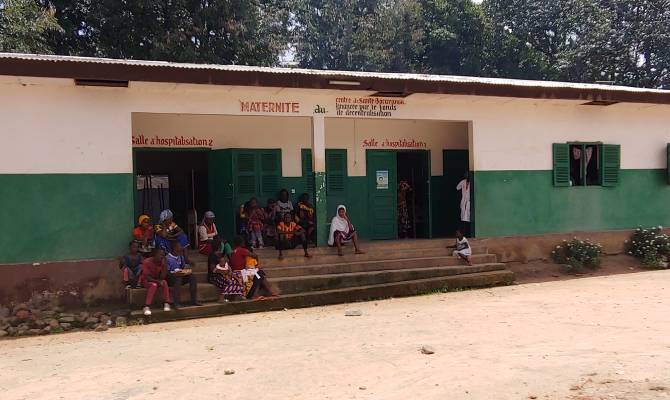
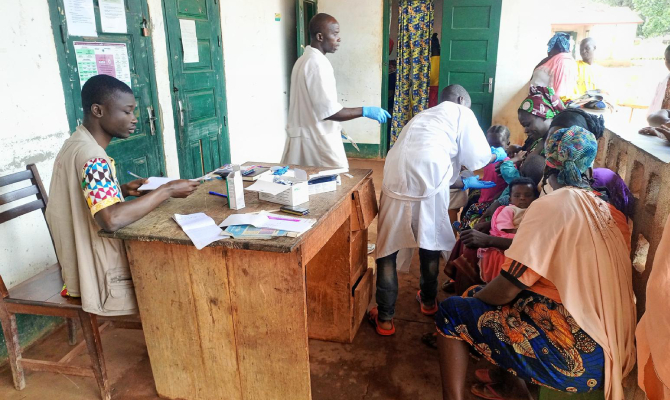
The project supports Bocaranga Hospital, Koui Secondary Hospital and five peripheral health facilities (FOSA). Particular attention is given to people who face the greatest barriers to healthcare, with targeted free services for children under five, women of reproductive age, pregnant and breastfeeding women, and patients requiring emergency surgical, paediatric or obstetric care.
The project also strengthens disease surveillance and the ability of local health services to detect and respond to outbreaks and other health threats.
Bringing vaccination closer to families
For many families living in remote areas, reaching a health facility can be a challenge. During the third year of the project, we are expanding our outreach vaccination strategy to all peripheral health facilities in Koui, helping bring essential vaccines closer to children and their families.
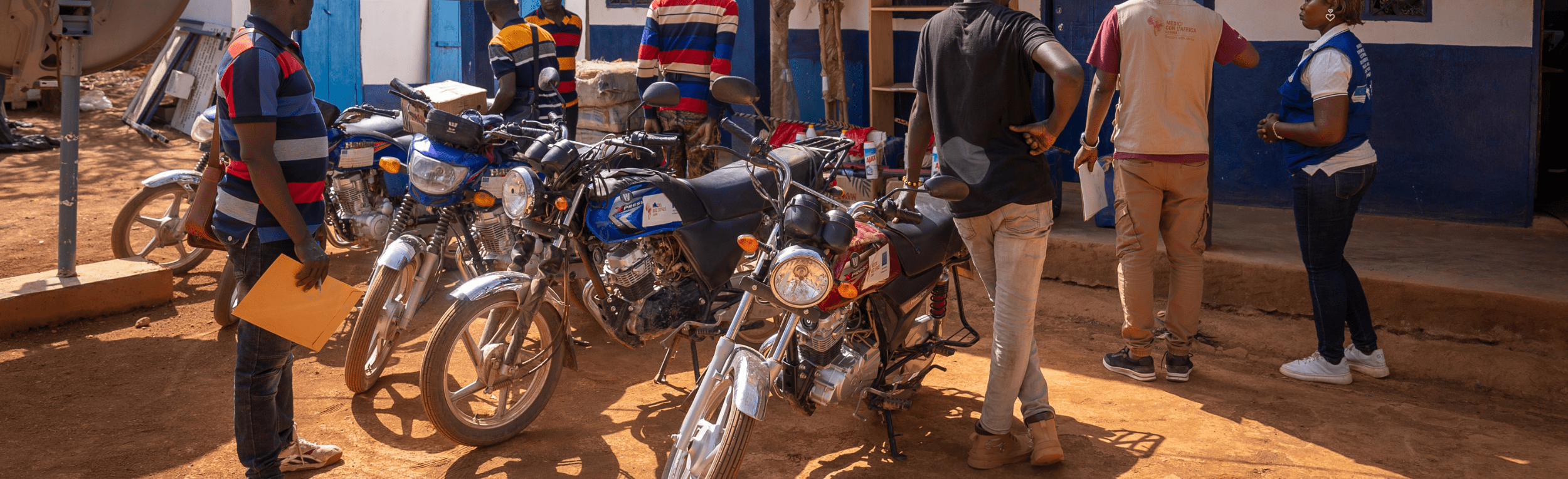
To make this possible, we have strengthen the project’s activities by funding the donations of six motorcycles that have been officially handed over to the peripheral health facilities in Koui, allowing health workers to travel more easily to remote communities and carry out vaccination activities beyond the health centre.
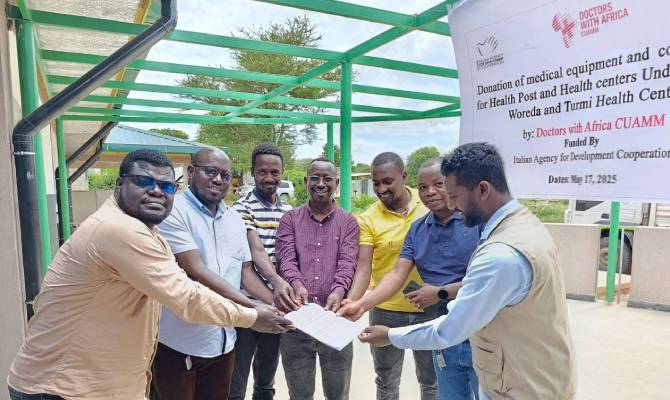
In addition, an electric generator has also been handed over to Bocaranga Hospital, strengthening its capacity to maintain essential services.
Building the skills to respond to emergencies
Access to healthcare is only part of the challenge. Health workers also need the right skills and confidence to respond when emergencies occur.
As part of the project, we are piloting a cascade training programme to strengthen emergency care in a humanitarian setting.
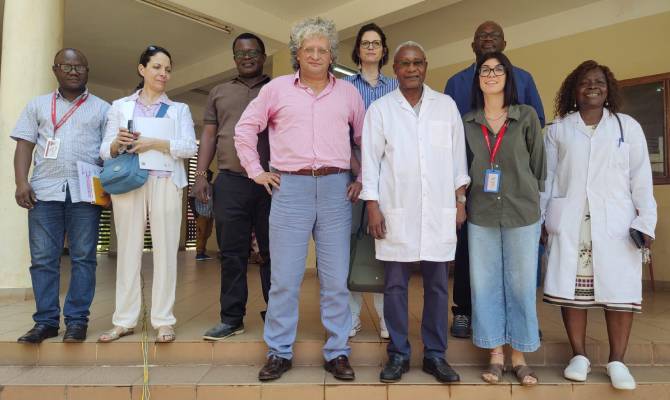
The programme draws on the expertise of the Paediatric University Hospital Complex of Bangui (CHUPB). Paediatricians from the hospital are sharing their knowledge with healthcare workers from regional and district hospitals, with a particular focus on paediatric and neonatal emergencies.
The first pilot training took place in Bocaranga from 29 July to 5 August 2026, bringing together 15 healthcare workers, including doctors, nurses and auxiliary health workers.
In a context where health workers often have to manage complex emergencies with limited resources, strengthening their skills can make a critical difference.
When a community comes together
Healthcare also depends on solidarity.
Ahead of World Humanitarian Day on 19 August, we joined OCHA and the wider humanitarian community in Bocaranga for a large clean-up activity at Bocaranga District Hospital.
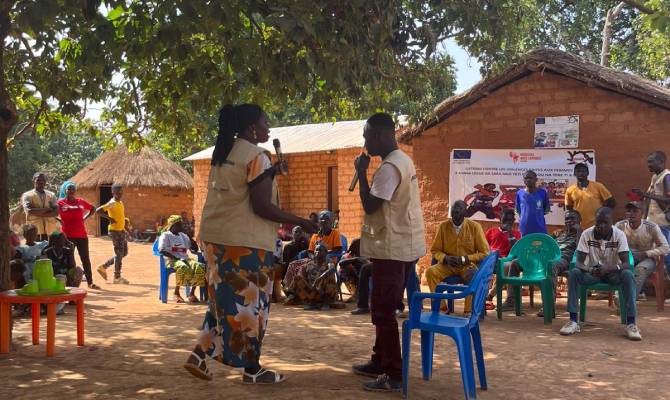
The initiative brought people together around a shared goal: supporting a hospital that plays a vital role for the local community. It also provided an opportunity to support a blood donation campaign, bringing together humanitarian workers and community members who donated blood to help save lives.
At Bocaranga Hospital, blood supplies remain critically scarce, while transfusions can be urgently needed for patients requiring emergency care. Regular blood donation campaigns could therefore make a vital difference for patients and families.
Bringing care closer, strengthening local health services
From vaccination and emergency care to training and community engagement, our continued work in Koui and Bocaranga is about more than delivering services. It is about helping make essential healthcare more accessible, supporting health workers with the skills and resources they need, and strengthening the capacity of local health services to respond to communities affected by crisis.
With the support of ECHO, we are continuing to work alongside local health authorities, healthcare workers and communities to bring care closer to those who need it most.