“I had coughed for more than 5 months without stopping. I went to Napumpum health center and other peripheral private clinics in Kotido town; initially, they gave me Amoxicillin capsules and other medicines for pneumonia, but my cough was not responding to any of these medicines. I was getting worse day by day, and I thought the cause was an evil spirit”.
This is the story told by Adome Lochul, a 32-year-old peasant who lives with his wife and two children in a village in the Kotido district, within the Karamoja region of Uganda.
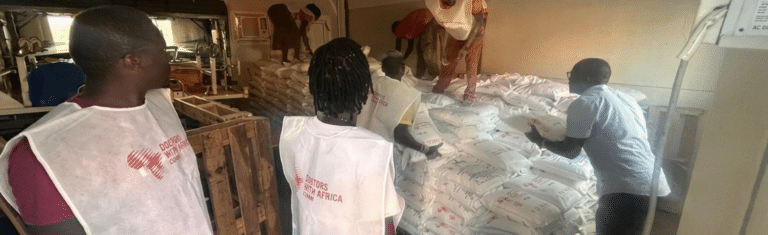
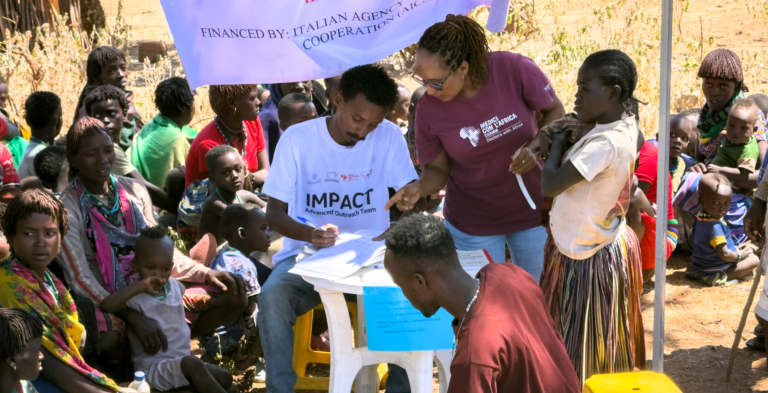
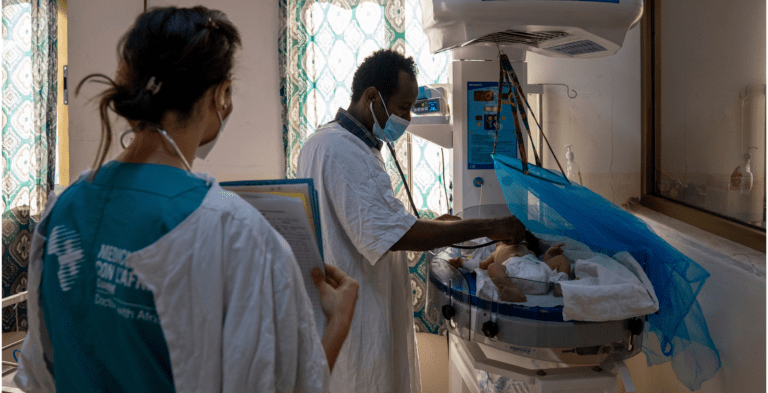
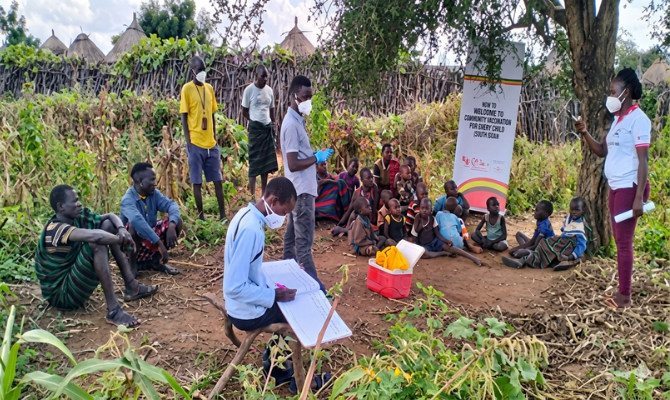
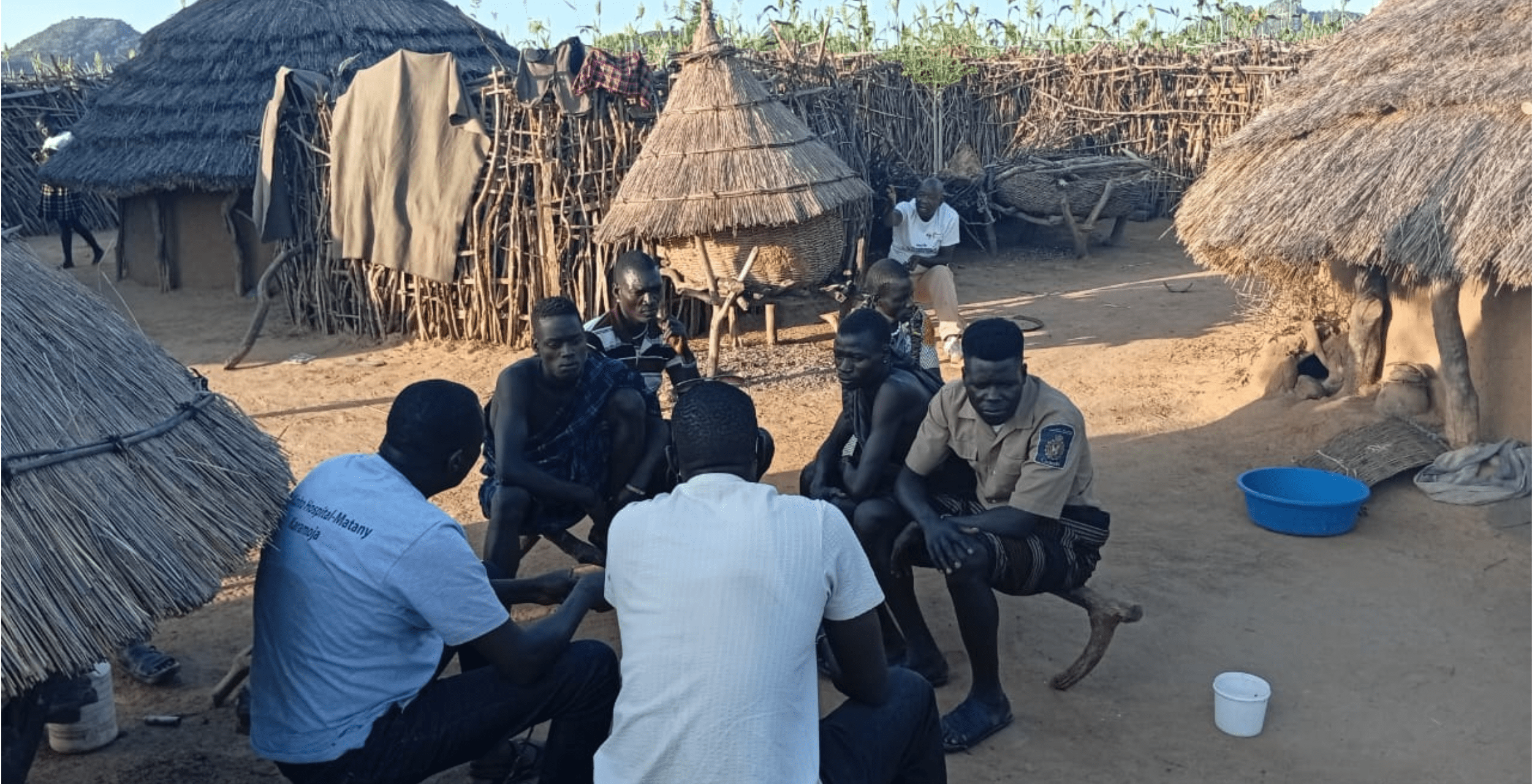
“I was referred to Kotido General Hospital where they took a sample of my sputum, and I was diagnosed with multi-drug resistant tuberculosis (MDR-TB). I didn’t understand what it meant; it was only explained to me that it needed to be treated at Matany Hospital, far away from my village. I was really scared and worried, but the health workers and Dr. Paul encouraged me, assuring me that I would recover and explaining that a team of doctors from the Hospital and CUAMM would come to pick me up for treatment. I accepted and, as promised, the team reached my village, where they sensitized the community on TB, screened people, and collected samples from those who were coughing; then they transported me to Matany Hospital for care. They performed various tests, a chest X-ray to check my lungs, and provided me with the necessary medications. The doctors and nurses checked the ward every day, and during my stay, I met other patients who came from Kotido and Kaabong districts, which are very far from Matany; we became friends and encouraged each other to adhere to the therapy and get cured,” Adome added. “When I was discharged, food items such as sugar, salt, cooking oil, and flour were delivered to my home to help support my therapy. I also receive financial support to cover travel expenses on clinic days and to refill medicines at Matany Hospital”.
Since April 2025, Doctors with Africa CUAMM has been implementing the project “PRO-TB: Strengthening the Organized Network for Tuberculosis in Karamoja,” supported by the Charitable Fund and social and cultural initiatives of Intesa Sanpaolo. In this north-eastern region of Uganda, tuberculosis continues to hit hard, much more so than in the rest of the country.
The intervention has had a clear objective: to strengthen the existing networks for tuberculosis screening, case notification, and treatment in Napak and Moroto, while expanding access to care for drug-resistant tuberculosis (DR-TB/MDR-TB) across all nine districts of the sub-region.
TB control in areas like Karamoja is challenging and complex. The communities are predominantly pastoralist, health facilities are scattered across a vast and often inaccessible territory, and healthcare-seeking behavior is heavily influenced by cultural practices and a certain mistrust towards formal healthcare systems.
“We, who are uneducated peasants, don’t have much of an idea of what TB is and sometimes mistake it for something else, just like what happened to me. It is thanks to programs like this from the Government and CUAMM that my people and I were informed, changing our beliefs and later supporting us throughout the treatment. For this reason, people need to be aware. The real challenge comes with home-based care, when taking medications every day becomes difficult and food is scarce. I, however, do my best with the support of my wife”.
Over the course of the project, 4,690 people were screened in the health facilities of the two districts; 1,558 presumptive cases of tuberculosis were identified, and 78 new cases were diagnosed using GeneXpert technology. Furthermore, 968 health workers were trained through on-the-job mentorship, and 145 multi-drug resistant tuberculosis patients were transported and initiated on treatment across the two DR-TB centers of the two districts; 413 patients with various forms of TB were managed at Matany Hospital. Additionally, 20,609 people were reached by awareness-raising activities on the disease during community outreach campaigns, thanks to the invaluable contribution of Village Health Teams (VHTs).
“Closing a project like PRO-TB means much more than presenting a final report; it means laying the foundations for the work to continue. We wanted this final meeting to recognize the extraordinary commitment of the healthcare teams and the DR-TB centers of Matany and Moroto, but above all to encourage the districts to learn from the collected data, results, and treated cases. Sustainability is not automatic: it requires clear agreements and defined responsibilities. By validating the milestones achieved and analyzing the experiences lived, the goal is to define a shared and concrete action plan. We want the health systems of Napak, Moroto, and the entire Karamoja sub-region to be ready to own and implement these activities, ensuring that this moment marks a new beginning for tuberculosis care in the territory, and not an end,” concluded Dr. Solomon Aleper, CUAMM Project Manager.
Cuamm’s philosophy is to accompany local authorities and communities so that the legacy of this intervention is embraced with responsibility, for a more sustainable healthcare system that is deeply rooted in the territory.